Oklahoma Bills on Youth Helmets
Oklahoma youth helmet bills can be confusing because a proposal, an existing helmet rule and a riding-area policy are not the same thing. For families and visiting riders, the practical question is what applies on the day of the ride. Here’s how to read a bill’s status, understand what it could change and check the rules before heading out.
What a youth helmet bill does and does not mean
A bill is a proposal to change the law. Its introduction does not, by itself, make a new helmet rule effective. It must move through the legislative process and become law, and the final text and effective date determine what riders must do.
That distinction matters when headlines or social posts say lawmakers “want” helmets required for young riders. That wording might describe an idea, a bill that has not advanced, a measure that changed during consideration or a law that has already been enacted. The headline alone cannot tell you which one.
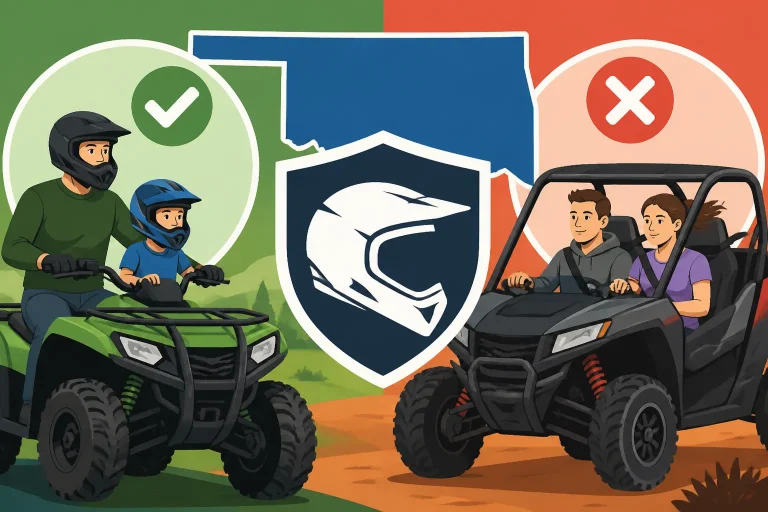
Oklahoma has an existing helmet requirement for ATV riders under 18 in situations covered by state law. The practical baseline is that young riders should wear a properly fitted helmet that meets the applicable safety standard. A bill might seek to broaden the locations where that requirement applies, adjust who it covers or change how compliance is handled. But those are possible subjects for legislation, not proof that a specific proposal has become law.
For the current baseline and its scope, see Oklahoma ATV Helmet Law Age and Oklahoma Helmet Standards for Young Riders. The key is to separate three questions:
- What does the current law require? Read the law in effect, not just a bill summary.
- What does a proposed bill say? Check its actual wording and where it is in the process.
- What does the riding area require? A park or land manager may set its own conditions for entry or riding.
A new bill could affect only a certain kind of land or riding situation. It might apply on public property but not address private parks, or it could define covered machines and riders differently from the existing rule. Small wording differences can matter: “operator” may not mean exactly the same thing as “operator or passenger,” and a requirement for a particular location is not automatically a statewide rule for every property.
Don’t assume that a bill would replace the existing rule, either. A proposal may add to current obligations rather than erase them. Until a measure is enacted and its effective date arrives, riders should follow the rules already in force and any stricter rules set by the place they plan to ride.
How to tell whether a bill has become law
To check the status of a youth helmet proposal, look for the measure’s official record and read beyond the title. Bill titles are short descriptions. They may not capture who is covered, where the requirement applies, what equipment qualifies or when a change would take effect.
A useful status check follows this order:
- Find the bill text. Confirm the measure is actually about the helmet issue you’re researching. Similar titles can refer to different subjects.
- Check its latest action. A bill may have been introduced, assigned for consideration, amended, passed by one chamber, passed by both chambers or stopped. Those steps are not interchangeable.
- Read amendments and substitute versions. The final proposal can differ from the version described in an early news story or social post.
- Look for enactment and an effective date. A bill that has not completed the process is not a new law. If enacted, the effective date tells you when the new requirement begins.
- Read the final law in context. Check what locations, machines, riders and exceptions it covers. Don’t rely on a brief summary if your situation depends on a detail.
A bill can also be amended so substantially that its original title or early description no longer gives a good account of what it would do. Conversely, a proposal may fail to advance even after receiving attention. That is why a claim like “the state is requiring helmets on all public land” needs a current legal basis, not just a reference to a bill being discussed.
The timeline matters for planning. If a measure is enacted with a future effective date, riders may have time to prepare, but the existing requirements still apply in the meantime. If the proposal does not become law, a proposed expansion does not take effect. When a riding trip is close, check official legislative information and the specific riding area rather than trying to infer the rule from an old article.
For practical background on the current rule, Helmets Are Required for Every Rider Under Eighteen explains the youth requirement, while Where the Under-18 Helmet Rule Comes From can help clarify its legal basis. Use those as starting points, then verify that the legal text and park rules have not changed.
What a proposed change could mean for families
A youth helmet proposal can matter even if it does not change the basic advice to wear a helmet. Families may need to know whether it changes the places where the law applies, which young riders are covered or what kind of helmet is accepted.
Location and land access
One important question is where the proposed rule would apply. A bill may refer to public land, state-managed recreation areas, roads or another defined location. Those terms should not be treated as synonyms. A state riding area, a private park and privately owned land open to visitors may each have different rules and oversight.
For a family using multiple riding areas, check each destination separately. A helmet requirement under state law is one layer; the facility’s own entry conditions are another. A park may require helmets for all riders, regardless of age, or may impose additional equipment rules. Not meeting a park’s policy can mean being turned away even if the rider believes the state law does not cover that setting.
Riders, passengers and vehicle types
Read how the bill defines the people it covers. A rule might refer to the operator, the passenger or everyone riding on the machine. Don’t assume a passenger is exempt just because they aren’t driving. Similarly, a measure may define the covered vehicles in a way that distinguishes an ATV from a UTV or another off-road machine.
The machine’s seating design also matters. A child should only ride as a passenger if the vehicle is designed for passengers and the child can be secured as the manufacturer intended. Helmet use does not make an unsuitable passenger setup safe or lawful. See Oklahoma Passenger Rules on a Quad and Oklahoma Rules for Passengers on a UTV for related questions.
Helmet standards and fit
A bill may refer to a safety standard, but a helmet’s appearance or marketing description is not enough to show that it meets that standard. Check the label and product documentation, and make sure the helmet fits securely. A loose helmet can shift; one that is too small may not sit correctly. A damaged helmet or one with an unknown history may also be a poor choice.
If purchasing online, inspect the actual product details and certification labeling rather than relying only on a listing title. On a marketplace such as Amazon, product descriptions and seller information can vary, so confirm the specific helmet being shipped meets the required standard. A youth helmet should fit the rider now, not simply be bought in a larger size for future use.
Enforcement and consequences
A proposal might address enforcement, penalties or the responsibilities of parents and guardians, but the details depend on the final text. Don’t assume that a bill creates a specific fine, changes who may issue a citation or makes an adult automatically liable for a young rider’s violation. Those are legal questions that require the enacted wording.
Whatever the proposal says, it is sensible to make helmets part of the pre-ride check. Confirm the helmet fits, fastens and is in usable condition before loading the machine. That reduces last-minute confusion at a trailhead and makes it less likely that a child will ride without required protection.
Permits and reciprocity are separate from helmet rules
Helmet legislation is not the same as a riding permit. A permit may govern access to a particular type of land or riding area; a helmet law governs equipment or conduct. Having one does not automatically satisfy the other.
That distinction is especially useful for visitors. A rider coming from another state may have a registration decal, permit or proof of ownership that is valid for a particular purpose, but that paperwork does not necessarily override Oklahoma safety requirements or a local park’s rules. Likewise, meeting Oklahoma’s helmet requirements does not grant access to land that requires a separate permit or fee.
Before a trip, check these items independently:
| Question | What to verify |
|---|---|
| Is a helmet required by law? | Current Oklahoma rules for the rider, machine and location |
| Does the riding area have its own helmet policy? | The park or land manager’s current entry and riding conditions |
| Is a permit needed? | The access requirements for that land or facility |
| Does an out-of-state document count? | Whether the relevant Oklahoma program recognizes it for that purpose |
| Is the machine allowed there? | Vehicle restrictions, trail designations and operating rules |
For land-access requirements, start with Oklahoma Land Access Permits Explained. For visiting riders, [Oklahoma Rules for an Out-of-State Decal] addresses a separate paperwork issue. Neither topic should be used as a substitute for checking the helmet rule that applies to the ride.
Private riding parks may also set conditions through posted rules or a waiver. A helmet policy at a private facility can be stricter than the minimum requirement under state law. Read the park’s information before traveling, especially when bringing children or passengers. If the policy is unclear, contact the facility and ask whether it requires helmets for every rider, what standards it accepts and whether it has any age-specific rules.
Don’t rely on reciprocity assumptions such as “my home-state decal is accepted, so all my home-state rules apply.” Recognition of a document and the safety rules for riding are different matters. A visitor should check Oklahoma’s current requirements and the destination’s policy, even if the machine is properly registered elsewhere.
A practical pre-ride check while bills are being discussed
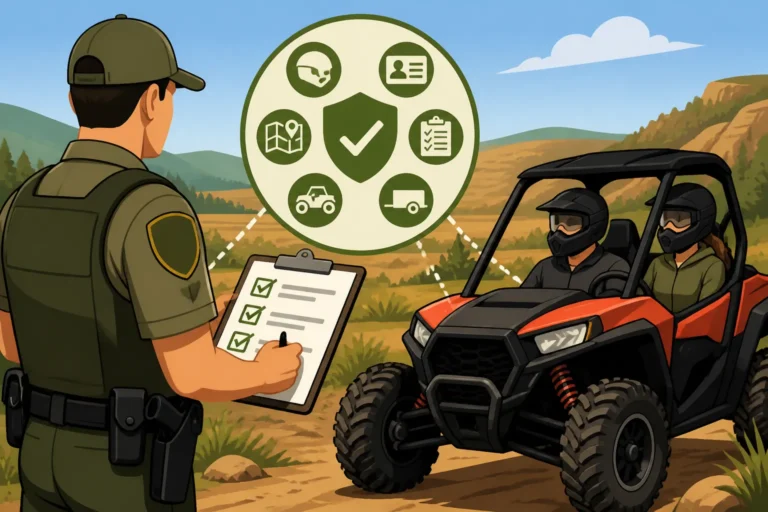
When a helmet proposal attracts attention, families do not need to wait for the political debate to settle before making a safe plan. They can use a short checklist that separates legal status, access and equipment.
- Confirm the rider’s age and role. Determine whether the young person will operate the machine or ride as a passenger, and check the rules that apply to that role.
- Identify the exact riding location. Rules may differ between public land, a state-managed area, a private park and other property.
- Check the law in effect. Look for the current requirement, not just a bill introduction or a news headline.
- Check the site’s own conditions. Review posted rules or ask the park or land manager about helmet standards and age requirements.
- Check permits and machine access separately. Make sure the machine and rider have the required access documents for that location.
- Inspect the helmet. Check fit, fastening, condition and safety labeling before leaving home.
- Bring a backup plan. If a riding area’s policy is stricter than expected, be ready to comply or choose another destination rather than putting a young rider on the trail without appropriate gear.
If you see a claim that a helmet bill “passed,” check what passed and whether it became law. A committee action, a vote in one chamber and enactment are different stages. Then check the effective date and the final language. If the claim says helmets are required “everywhere” or “for all youth,” look for the exact scope rather than treating a broad phrase as a legal definition.
This approach also helps avoid a common mistake: treating a legislative proposal as permission to ignore current rules until the bill is resolved. A proposed change does not suspend an existing requirement. Nor does a failed bill necessarily mean a riding area must allow riders without helmets; the site may have its own policy.
For a broader look at youth requirements, Oklahoma Rules for Young Riders covers related age and supervision questions. Keep safety equipment, land access and machine eligibility in separate parts of the trip plan. That makes it easier to spot what needs checking and prevents one valid document from creating false confidence about another rule.
Frequently Asked Questions
Did Oklahoma pass a new youth helmet bill?
A bill’s existence or introduction does not establish that it became law. Check the official bill record for its final status, enacted text and effective date before treating a proposal as a new requirement.
Do young ATV riders in Oklahoma need helmets now?
Oklahoma has an existing helmet requirement for riders under 18 in situations covered by state law. Check the current legal scope and the riding area’s rules, since location and facility policies matter.
Does an out-of-state permit or decal exempt a visitor from Oklahoma helmet rules?
Do not assume so. Access permits, registration documents and safety requirements serve different purposes. Visitors should check Oklahoma’s current rules and the destination’s conditions.
Can a private park require helmets even if a bill does not cover it?
A private riding area may set its own conditions for entry and use. Check the facility’s current rules before traveling, including whether it requires helmets for adults, children and passengers.
Disclaimer
This article is for general informational purposes only and does not constitute professional advice. Laws, prices and regulations vary by location and change over time. Consult a qualified professional for guidance on your specific situation.