Oklahoma Passenger Rules on a Quad
Oh, the age-old question that causes so much confusion and, frankly, a lot of unnecessary risk out on the trails and rural roads of Oklahoma: "Can I just hop on the back of my friend's quad?" Or, perhaps more commonly, "Is it okay if my child rides with me on my ATV?" It's a natural instinct to want to share the fun of off-road riding, but when it comes to carrying passengers on an ATV, especially a traditional quad, the rules are often misunderstood, and the dangers are very real. This comprehensive guide is here to untangle the complexities of Oklahoma's laws regarding ATV passengers, explain the critical differences between ATVs and UTVs, and, most importantly, help you make safe and legal decisions for every ride.
Understanding the Basics: Why Passenger Rules on ATVs Get Tricky
It's easy to look at an ATV, a quad specifically, and think, "There's enough room for two!" especially if it has a slightly longer seat. But the reality, from a design, safety, and legal standpoint, is far more nuanced. The way a machine is built from the factory plays a massive role in whether it's safe and legal to carry a passenger. Ignoring these distinctions can lead to serious accidents and legal trouble.
The Core Distinction: Quads vs. Side-by-Sides
This is where a lot of the confusion begins. When we talk about "ATVs," many people automatically picture a four-wheeled quad, where the rider straddles the machine like a motorcycle. These machines are inherently different from "UTVs," often called side-by-sides, which feature bucket seats or a bench seat, a steering wheel, and usually a roll cage. The fundamental design philosophy behind these two types of off-road vehicles dictates their passenger capacity. A quad is designed for active riding, leaning into turns, and shifting weight, all actions that become incredibly difficult and dangerous with a second person aboard if it's not specifically designed for it.
Think about it this way: a traditional quad, like a sporty Yamaha Raptor or a utility Honda Rancher, is built to respond directly to the operator's body movements. The rider uses their core, legs, and arms to control the machine's balance and direction. Adding a passenger, especially one who isn't experienced in mirroring these movements, throws off that delicate balance completely. The center of gravity shifts unpredictably, making the machine much harder to steer, brake, and control, particularly on uneven terrain, around corners, or during sudden maneuvers. This isn't just a minor inconvenience; it's a critical safety issue that drastically increases the risk of a rollover or loss of control.
Side-by-sides, on the other hand, are designed from the ground up for multiple occupants. They have stable, four-wheel stances, seatbelts, and often grab handles for passengers, along with the protection of a roll cage. They operate more like a small car, which is why carrying passengers in them feels much more natural and is generally safer, provided everyone is buckled in and the vehicle isn't overloaded. The engineering is completely different, and understanding this distinction is the first step to understanding Oklahoma's passenger rules.
Oklahoma's Definition of an ATV for Passenger Purposes
Oklahoma law, like many other states, is very particular about how it defines an ATV and, by extension, how many people can ride on it. When the statute refers to an "all-terrain vehicle," it's generally talking about a motor vehicle designed primarily for off-highway recreational use, traveling on four or more low-pressure tires, and having handlebars for steering. The key element here, especially concerning passengers, is that the law often presumes these machines are designed for one operator only, unless explicitly stated otherwise by the manufacturer.
This means that your standard recreational or utility quad, with a single, elongated seat, is legally and safely intended for just one person: the operator. The absence of specific footrests for a second rider, dedicated handholds, or a clearly delineated second seating position, are all indicators that the machine is not designed for a passenger. The law isn't just being difficult; it's responding to the inherent design and safety characteristics of these vehicles. Trying to squeeze another person on a seat meant for one, or worse, having them stand on the footpegs designed for the operator, introduces an unacceptable level of risk.
The distinction is important because Oklahoma's laws concerning off-road vehicles don't just lump every machine into one category. There are separate considerations for [Registering a Side-by-Side in Oklahoma] compared to a quad, and these distinctions extend to how passengers are viewed. If a machine is not purpose-built for two, carrying a passenger can put you at odds with both safety guidelines and the legal framework, potentially leading to citations and, far more seriously, accidents.
The Letter of the Law: What Oklahoma Statute Says About ATV Passengers
Oklahoma has specific statutes governing the operation of all-terrain vehicles, and these rules are designed to ensure safety on public and private lands alike. While you might see people bending these rules in practice, understanding the official stance is crucial for responsible riding and avoiding legal issues. The law isn't just about punishment; it's about preventing injuries and fatalities.
The One-Rider Rule for Quads
For most traditional, recreational, and utility quads, Oklahoma law generally aligns with the industry standard: these machines are intended for one operator. The statute specifically addresses riding ATVs and states that they should only carry the number of persons for which they were designed by the manufacturer. This is the absolute core of the passenger rule for quads. If your quad was manufactured as a single-rider machine, then that's how it should be operated – with just one person.
Imagine you're out at a popular riding spot like Cross Bar Ranch. You see a family with a traditional quad, and the dad has his young child sitting in front of him, or perhaps perched precariously behind. While this might seem harmless to some, it's a direct violation of the intent of the machine's design and Oklahoma law. The child's weight disrupts the operator's ability to shift their own weight and maintain balance, making maneuvers like turning or navigating obstacles far more challenging and prone to error. In an emergency braking situation, the child could easily be thrown forward or off the machine. This rule isn't an arbitrary restriction; it's a safety imperative rooted in decades of accident data and engineering principles. It’s also why specific youth ATVs exist – they are designed for smaller, lighter riders, but still typically for a single operator.
The rule applies whether you're riding on private property with permission, on designated public trails, or briefly crossing a county road where permitted. The design specification of the machine doesn't change based on location. So, while it might be tempting to give a buddy a lift to the campsite, if your quad is a single-seater, you're putting both yourself and your passenger at unnecessary risk, and potentially facing a citation.
The "Designed by the Manufacturer" Clause
This phrase, "designed by the manufacturer for carrying more than one person," is the linchpin of Oklahoma's ATV passenger laws. It means the manufacturer has explicitly engineered and tested the machine to safely accommodate an additional rider. This isn't just about having a slightly longer seat pad. A truly two-up ATV (often called a "tandem" or "2-up" model) will have several distinct features that set it apart from a single-rider quad.
These features typically include an extended, stepped seat that provides a more secure and comfortable perch for the passenger, rather than forcing them to squeeze onto the operator's space. More importantly, they will have dedicated passenger footrests that are separate from the operator's footpegs, allowing the passenger to maintain proper foot placement and stability. You'll also find integrated handholds or grab rails for the passenger to safely secure themselves during acceleration, braking, and turns. Without these specific design elements, any quad is unequivocally a single-rider machine, regardless of how much space you think there might be. Companies like SuperATV offer a huge range of accessories for UTVs, but generally, aftermarket parts don't suddenly make a single-seat quad into a legal two-up machine if the base design isn't there.
A crucial piece of advice for any ATV owner is to consult your machine's owner's manual. This document will clearly state the intended seating capacity as determined by the manufacturer. If it says "one rider," then that's the definitive answer. Trying to retrofit a single-seater with makeshift passenger accommodations not only voids any safety assurances but also demonstrates a clear disregard for the manufacturer's design intent and the legal requirements. Understanding and respecting this clause is paramount to riding safely and legally in Oklahoma.
Penalties and Enforcement for Violating Passenger Rules
You might be wondering what actually happens if you're caught with an unauthorized passenger on your quad in Oklahoma. The answer is, it can range from a warning to a citation, and in the event of an accident, the consequences can be far more severe. Law enforcement officers, including Oklahoma Highway Patrol troopers, county deputies, and even state park rangers or game wardens (especially on wildlife management areas or state parks), are authorized to enforce ATV regulations. They are well-versed in the visual cues that distinguish a single-rider quad from a two-up model.
A citation for violating passenger rules would typically fall under the broader category of unsafe operation of an all-terrain vehicle. The financial penalty can vary, but it's important to remember that [Oklahoma's Fine Cap for ATV Violations] generally means these aren't astronomical tickets for a first offense, but they still add up with court costs. However, the real teeth in these regulations come into play if an accident occurs. If you're involved in a crash while carrying an unauthorized passenger, you could face increased liability. Your insurance might deny coverage for the passenger's injuries, leaving you personally responsible for medical bills and other damages. This scenario can quickly escalate from a simple ticket to a financially devastating event.
Moreover, if the passenger is a minor, the situation becomes even more precarious. Parents or guardians who allow their children to ride as unauthorized passengers on quads could face additional charges related to child endangerment or negligence, depending on the severity of the situation and any injuries sustained. The enforcement isn't just about making money for the state; it's about upholding safety standards and ensuring that everyone who enjoys Oklahoma's beautiful outdoor spaces can do so responsibly. Ignorance of the law is rarely an excuse, so understanding these rules before you ever hit the trail is essential.
The Reality on the Trail: Common Misconceptions and Dangers
Despite the clear legal and safety guidelines, the temptation to carry an extra person on a quad persists. This often stems from common misconceptions, a belief that "it won't happen to me," or simply underestimating the inherent dangers. However, the reality on the trail, especially when an accident occurs, quickly dispels these myths and highlights the critical importance of adhering to passenger rules.
Why "Just for a Short Ride" is Still Risky
"Oh, it's just to the creek and back, it's really short." This is a phrase heard often, usually preceding a risky decision to carry a passenger on a single-seat quad. The problem is that "short rides" aren't inherently safer. Accidents can happen in a split second, whether you're traveling a hundred yards or a hundred miles. The physics of an ATV dictate that its stability and handling are profoundly affected by weight distribution, and an extra passenger, even a small child, can completely upset this balance.
Imagine you're navigating a gentle curve on a gravel path. On a single-rider quad, you instinctively shift your weight, lean into the turn, and subtly adjust the throttle and steering to maintain control. Now, add a passenger who isn't anticipating your movements or is unable to shift their weight in sync with yours. Suddenly, the machine feels heavier, less responsive, and prone to "pushing" through the turn rather than carving it. Braking distances increase, and the risk of the rear end sliding out or the machine tipping over on uneven ground skyrockets. Even at what seems like a "slow" or "safe" speed, the added instability and reduced maneuverability created by an extra passenger can turn a routine ride into a dangerous incident.
Furthermore, a "short ride" often means a casual approach to safety gear. Riders might skip helmets or other protective equipment for themselves or their passengers because they assume the risk is minimal. This compounds the danger significantly. In a rollover, even at low speeds, the impact can be severe, and the lack of a helmet can lead to devastating head injuries. The lesson here is clear: the duration of the ride does not mitigate the inherent risks of improper passenger loading.
The Role of Helmets and Safety Gear for Passengers
While the primary focus of Oklahoma's passenger rules for ATVs is on preventing the carrying of unauthorized passengers, it's vital to acknowledge that if, for some reason, a passenger is on a machine (even if illegally), they should be as protected as possible. Safety gear isn't just for the driver; it's for anyone on or around the machine. This includes wearing a DOT-compliant helmet, eye protection, sturdy over-the-ankle boots, long pants, and a long-sleeved shirt or jacket.
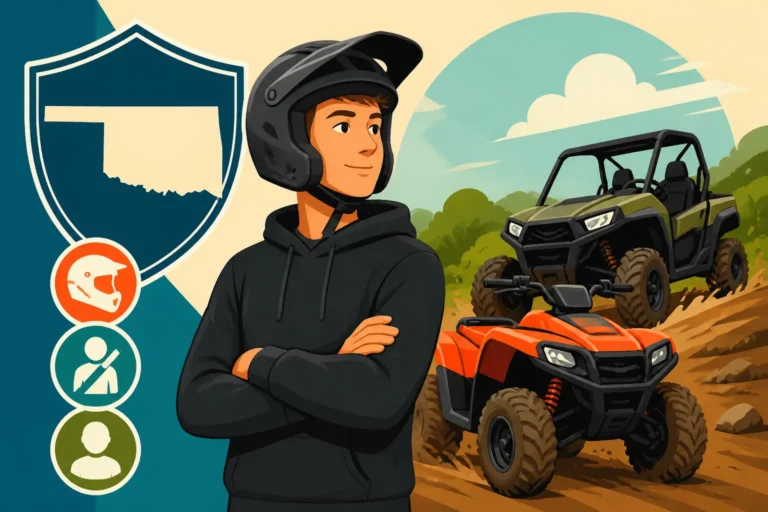
For young riders, this becomes even more critical. [Oklahoma Helmet Law for Riders Under 18] mandates that anyone under the age of eighteen operating or riding on an ATV must wear a helmet that meets federal safety standards. This law applies regardless of whether they are a legal passenger on a two-up model or an illegal passenger on a single-seater. While it's always best to adhere to the manufacturer's recommendations for single-rider machines, if a child is somehow on an ATV as a passenger, failing to ensure they wear a helmet is a double violation of safety and law.
The problem, of course, is that a helmet is designed to protect in a crash, but it doesn't prevent the crash itself. An unauthorized passenger on a single-seat quad increases the likelihood of an accident occurring in the first place. So, while you should always prioritize protective gear, the most effective safety measure is to ensure your ATV is only carrying the number of people it was designed for. No amount of padding can completely negate the risks associated with an improperly loaded machine.
Passenger Injuries and Liability Implications
The starkest reality of violating ATV passenger rules surfaces when an accident leads to injury. What might start as an innocent "short ride" can quickly turn into a nightmare of emergency room visits, medical bills, and potentially long-term recovery for a passenger. The human cost of such an accident is immense, and unfortunately, so can be the legal and financial repercussions for the operator.
If an unauthorized passenger is injured while riding on your single-seat quad, you, as the operator and owner, could be held legally liable. This liability extends beyond just paying a fine; it can involve lawsuits seeking compensation for medical expenses, lost wages, pain and suffering, and even permanent disability. Standard ATV insurance policies are often written with the assumption that the vehicle is being operated according to manufacturer specifications and state law. If you're found to be operating the machine outside these parameters (e.g., carrying an unauthorized passenger), your insurance provider might deny coverage for the passenger's injuries, leaving you to bear the financial burden entirely out of pocket. Imagine facing hundreds of thousands of dollars in medical bills because a casual ride went wrong. It's a risk few can afford.
The legal landscape in Oklahoma allows for injured parties to seek redress if negligence can be proven. Allowing someone to ride on a machine not designed for passengers could very well be construed as negligence, especially if the risks are commonly known or explicitly stated in the owner's manual. Moreover, if you're ever in a situation where you need to report an off-road incident, [Oklahoma Accident Reporting for an ATV Crash] will require you to provide details about all parties involved, and the presence of an unauthorized passenger will undoubtedly be a red flag. The bottom line is that while riding ATVs is a thrill, it comes with responsibilities, and protecting your passengers (and yourself) from injury and legal entanglements means strictly adhering to the "one-rider" rule for single-seat quads.
What About Side-by-Sides (UTVs)? A Different Set of Rules
When it comes to carrying passengers, side-by-sides (UTVs) exist in an entirely different category than traditional quads. Their design, purpose, and the regulations surrounding them reflect their inherent capacity for multiple occupants. This distinction is crucial for understanding how to legally and safely transport people in your off-road adventures across Oklahoma.
UTVs Are Designed for Multiple Passengers
Unlike most quads, UTVs are purpose-built from the ground up to carry multiple people. This is their defining characteristic. Whether you have a two-seat sport model, a four-seat family adventure vehicle, or a six-seat utility rig, these machines feature proper seating arrangements, seatbelts, and often robust roll cages to protect occupants. The design typically includes a steering wheel, foot pedals like a car, and a more stable, wider stance, making them less reliant on the operator's body weight shifts for control compared to an ATV.
This inherent design for passengers means that Oklahoma law recognizes and accommodates multi-occupant use for UTVs. You won't find the same "one-rider" restriction here, because the manufacturers have engineered these vehicles specifically for that purpose. This is a huge relief for families, work crews, or groups of friends who want to explore trails or get work done together. From the comfortable bench seats in a Polaris Ranger to the sport bucket seats in a Can-Am Maverick, the seating is clearly defined, with individual positions for each person. Many UTV owners enhance their machine's capabilities with aftermarket accessories like those from SuperATV, ensuring their UTV is always ready for any adventure.
The crucial point here is that the manufacturer's design intent is clear. When you buy a two-seater UTV, it’s understood it can safely carry two people. If it’s a four-seater, then four people are the limit. This isn't a gray area; it's a fundamental aspect of the vehicle's construction and operation. This distinction is vital for understanding [Oklahoma Passenger Rules on a UTV] and ensures that riders can enjoy their machines with friends and family while adhering to safety and legal standards.
Seating Capacity and Seatbelt Requirements in UTVs
Even though UTVs are designed for multiple passengers, it's not a free-for-all. The number of passengers you can legally and safely carry is strictly limited by the manufacturer's designated seating capacity. This is not a suggestion; it's a non-negotiable safety standard. If your UTV has two seats, it's for two people. If it has four seats, it's for four. Trying to squeeze an extra person into a space not designed for them, or having someone stand in the bed of the UTV, is incredibly dangerous and illegal.
Beyond seating capacity, the use of seatbelts is paramount. Nearly all modern UTVs come equipped with factory-installed seatbelts for every designated seating position. In Oklahoma, it is mandatory for all occupants in a UTV to wear their seatbelts at all times while the vehicle is in operation. This isn't just a good idea; it's the law. Seatbelts are your primary restraint system in the event of a sudden stop, a collision, or a rollover. A roll cage offers protection, but only if you are securely fastened within its confines. Without a seatbelt, you can be ejected from the vehicle, significantly increasing the risk of severe injury or fatality.
Imagine a situation at Little Sahara State Park. You're traversing the dunes in a four-seat UTV, with three passengers, all buckled in. The machine is stable, the passengers are secure, and everyone is enjoying the ride. Now imagine the same scenario, but one person isn't buckled, or you have five people in a four-seat machine. The moment the UTV hits a bump or takes a sharp turn, that unsecured person becomes a projectile, endangering themselves and potentially others. The rules regarding seating capacity and seatbelt use are fundamental pillars of UTV safety, designed to protect everyone on board.
Road Use and Passenger Rules for Street-Legal UTVs
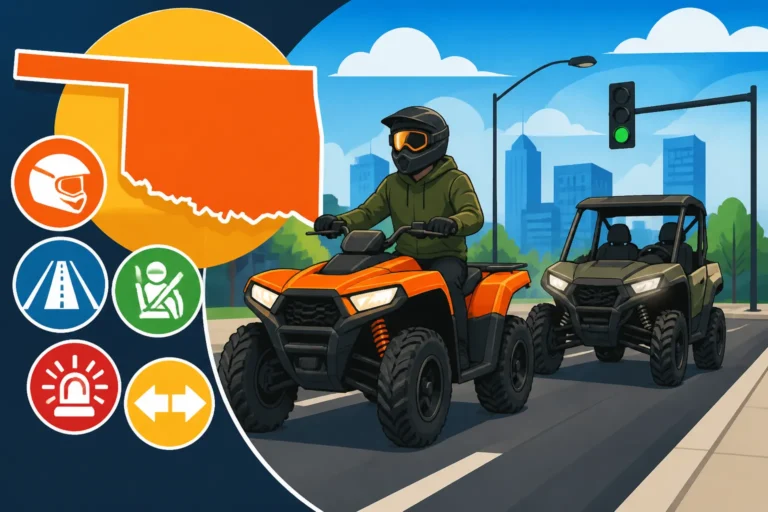
Oklahoma has a specific class of street-legal UTVs, allowing them to be operated on certain public roads. This opens up new possibilities for exploration and utility, but it also introduces additional layers of regulation, particularly regarding passengers. The good news is that if your UTV meets the [Oklahoma Street-Legal UTV Requirements], the passenger rules largely follow common sense and vehicle code standards.
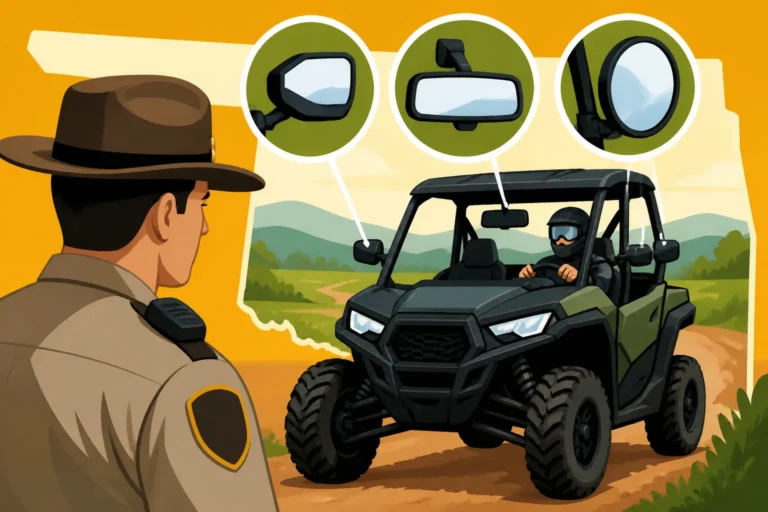
For a street-legal UTV, the same principles of manufacturer-designated seating capacity and mandatory seatbelt use apply. You can only carry as many passengers as there are factory-installed seatbelts and designated seating positions. This is consistent with rules for any road-going vehicle. Additionally, for street-legal operation, other equipment requirements come into play, such as mirrors, turn signals, and proper lighting, all of which contribute to the overall safety of carrying passengers on public thoroughfares.
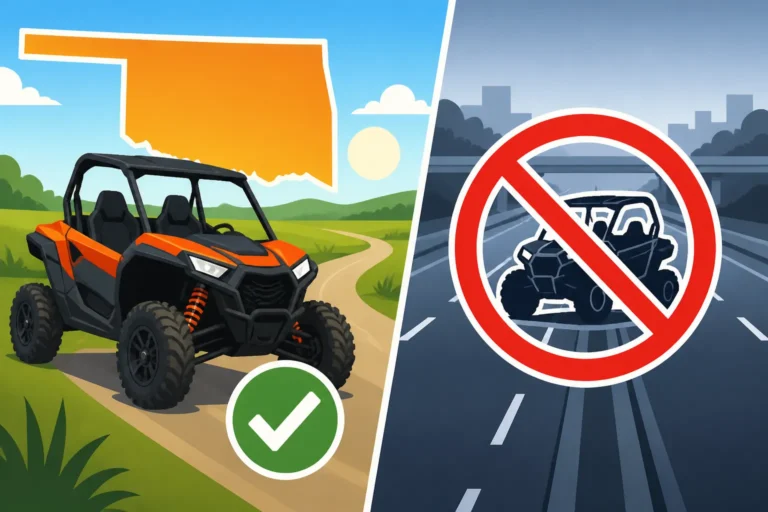
However, even with a road plate, a street-legal UTV is still subject to the limitations of its design. It's not a car, and certain roads, like interstates and most US highways, remain off-limits. Passengers must also adhere to age restrictions if applicable, and the driver must hold a valid driver's license (though typically not a motorcycle endorsement). The ability to drive your UTV on the road with passengers is a fantastic convenience, but it comes with the responsibility of understanding and adhering to all the specific statutes that govern both off-road and on-road operation. Always check local municipal ordinances as well, as some cities might have their own specific rules for UTVs on their streets.
Specific Scenarios and Practical Advice
The generalized rules around ATV passengers can sometimes feel a bit abstract until you start thinking about specific situations that arise in real life. From curious kids to carrying heavy equipment, knowing how to apply the law and prioritize safety is key. Let's delve into some common scenarios and offer practical, actionable advice.
Young Riders as Passengers: The Parental Dilemma
This is perhaps the most common and emotionally charged scenario. Every parent wants to share their passion for riding with their children, and the thought of a child sitting in front of them on a quad seems innocent enough. However, this is one of the riskiest practices imaginable on a single-seat ATV. A child, even a small one, alters the machine's center of gravity significantly. They cannot brace themselves effectively, their legs often can't reach the footpegs, and their small hands can't properly grip the handlebars or dedicated handholds (which don't exist on most quads).
Consider the mechanics: the operator needs to be able to shift their weight, not just for balance, but also to absorb impacts from bumps and to actively control the machine. With a child in front, the operator's ability to do this is severely hampered. In an emergency braking situation, the child could be crushed against the handlebars or thrown over them. In a turn, their weight, which can't shift independently or in sync with the driver, makes the machine unwieldy and prone to tipping. It's a lose-lose situation from a safety perspective.
Instead of putting your child at risk on a single-seat quad, consider safer alternatives. Many manufacturers produce youth-sized ATVs specifically designed for younger riders to learn on, always under adult supervision. Or, better yet, invest in a multi-passenger UTV where children can be securely buckled into their own seat, offering the protection of a roll cage. This way, the entire family can enjoy the trails safely and legally. Remember, the goal is to create positive memories, not emergency room visits.
Riding with Gear: Does That Count as a "Passenger"?
Another common question revolves around carrying gear. What if you're hauling a cooler, a toolbox, or hunting equipment? Does that fall under "passenger" rules? The short answer is no, carrying inanimate objects does not count as carrying a passenger. However, it does fall under the category of proper loading and weight distribution, which is just as critical for safe ATV operation.
Most utility and recreational quads come equipped with front and/or rear racks specifically designed for carrying cargo. The key here is to always respect the machine's stated weight limits for these racks, as found in your owner's manual. Overloading a quad with gear can have many of the same negative effects as carrying an unauthorized human passenger: it shifts the center of gravity, affects steering and braking, and makes the machine less stable, particularly on hills or uneven terrain. Securing your cargo properly is also paramount. A shifting load can be just as dangerous as a squirming passenger, potentially snagging on obstacles, falling off, or creating an unexpected weight shift that leads to a loss of control. Strong tie-downs and cargo nets are your best friends here.
So, while carrying a rifle for a hunting trip or a chainsaw for clearing trails doesn't violate passenger laws, it absolutely requires careful consideration of weight, balance, and secure attachment. You're still responsible for safely operating your machine, and that includes managing any load you're carrying. An off-road machine is designed to handle certain loads, and exceeding those limits, whether with people or gear, compromises its safety and performance.
When a "Quad" Isn't Just a Quad: Specialized Machines
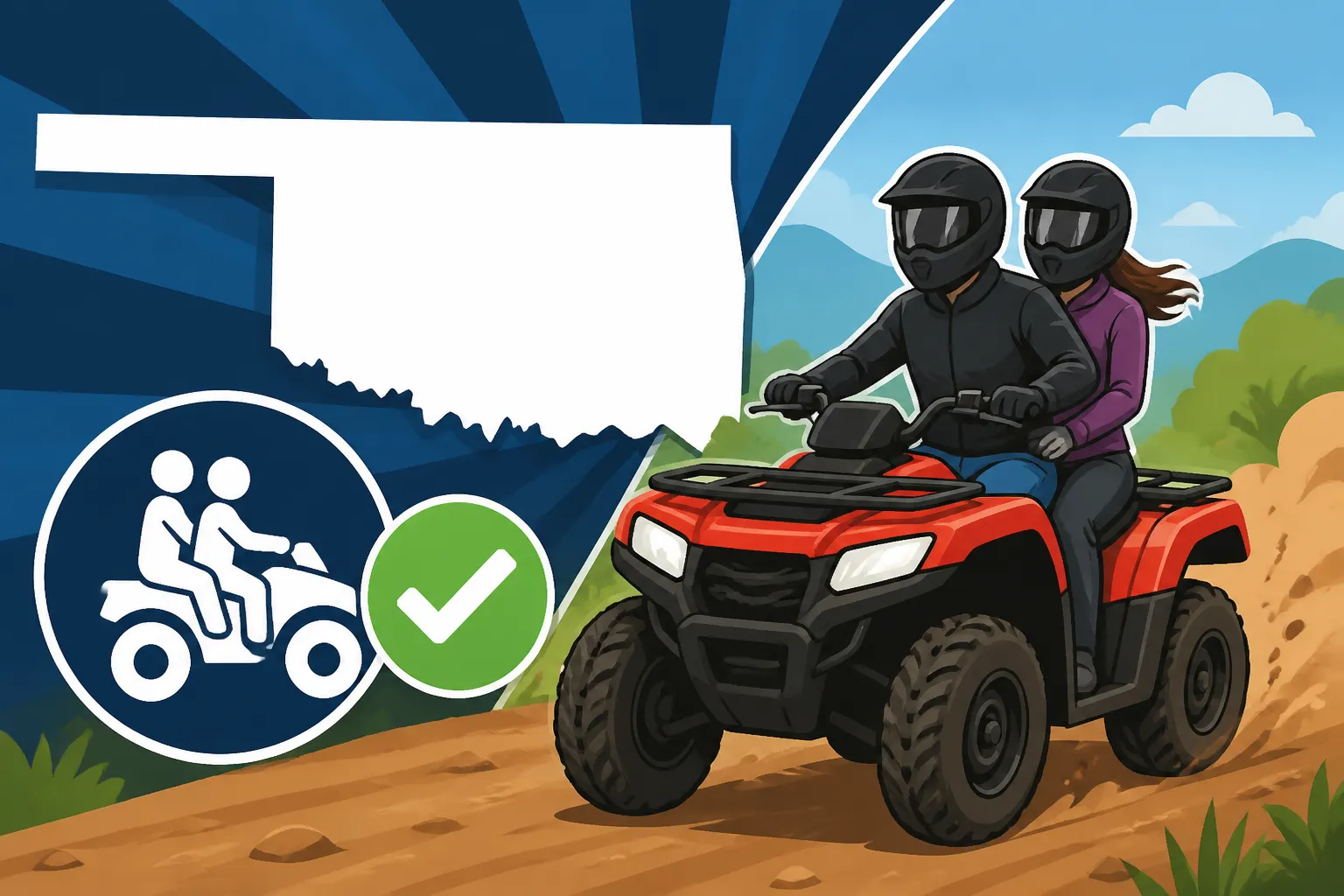
While the general rule is "one operator" for a quad, there are specific, specialized ATV models that are factory-designed for two riders. These are often marketed as "2-up," "tandem," or "MAX" models by manufacturers. These aren't your typical sport quads or even standard utility ATVs. They are distinctly longer, with an extended, ergonomically designed seat that provides comfort and safety for both the operator and a passenger.
How can you tell if a quad is truly designed for two? Beyond the extended seat, these machines will have distinct, sturdy footpegs specifically for the passenger, located further back and often at a slightly different height than the operator's. Crucially, they will also feature integrated grab handles or backrests for the passenger to hold onto, providing stability and security. These are not aftermarket add-ons; they are factory-installed components that are part of the machine's original engineering. Always check the manufacturer's specifications and the owner's manual. If it doesn't explicitly state "two-up" or have these specific design features, assume it's a single-rider machine.
These specialized two-up ATVs are legal to carry a passenger in Oklahoma, as they meet the "designed by the manufacturer for carrying more than one person" clause. However, even with these machines, it's essential that the passenger is capable of holding on, following the operator's lead, and adhering to all safety guidelines, including wearing a helmet and proper protective gear. These are not typically youth machines, but rather designed for an adult passenger. If you're considering buying an ATV with the intention of carrying a passenger, specifically seek out these "2-up" models rather than trying to adapt a single-seater.
Ensuring a Safe and Law-Abiding Ride
The ultimate goal for any off-road enthusiast in Oklahoma is to have an enjoyable, safe, and worry-free experience. Understanding and adhering to passenger rules is a major component of achieving that. It's not just about avoiding a ticket; it's about protecting yourself, your passengers, and preserving the future of off-road recreation. A proactive approach to safety and legality goes a long way.
Operator Training and Skill Level
Operating an ATV, especially on varied terrain, requires a certain level of skill and experience. When you introduce a passenger, even on a machine designed for two, the demands on the operator increase significantly. The machine handles differently, braking distances are longer, and the operator must be acutely aware of how their actions impact the passenger's safety and comfort.
For this reason, it's highly recommended that operators only carry passengers if they are confident in their riding abilities and have a thorough understanding of their machine's capabilities and limitations. While [Oklahoma Has No Mandatory Safety Course] for ATVs, taking a voluntary rider safety course can provide invaluable training on proper riding techniques, obstacle negotiation, and emergency maneuvers, all of which are enhanced skills when carrying a passenger. Such courses teach you how to anticipate terrain changes, maintain proper control on hills, and react safely to unexpected situations.
Even if you're an experienced rider, remember that your skills are finely tuned to your machine's usual behavior. An added passenger fundamentally changes that. Take it slow, practice in open areas, and allow yourself to adjust to the new dynamics before tackling challenging trails. Never push your limits or the machine's limits when you have someone else's safety in your hands.
Pre-Ride Checks and Machine Maintenance
Before any ride, but especially one where you plan to carry a passenger (on an approved two-up machine), a thorough pre-ride check is non-negotiable. This routine inspection helps ensure that your ATV is in optimal working condition and ready to handle the increased load and demands of a second rider. Neglecting maintenance can lead to mechanical failures that are dangerous even with a single rider, let alone with a passenger.
What should you check? Start with your tires: ensure they are properly inflated to the manufacturer's recommended pressure (often slightly higher for an increased load) and check for any damage or excessive wear. Test your brakes thoroughly, both front and rear, to confirm they are responsive and effective. Remember, a heavier machine will require more stopping power and longer braking distances. Inspect your suspension components, making sure shocks aren't leaking and connections are secure. Check your throttle for smooth operation, and ensure all lights are working if you anticipate riding near dusk or in low-light conditions.
Regular maintenance, such as oil changes, air filter cleaning (especially after dusty rides), and chain adjustments, all contribute to a reliable machine. Consider durable parts and accessories from reputable brands like SuperATV to keep your machine in top shape and ready for any adventure. A well-maintained ATV is a predictable ATV, and predictability is a cornerstone of safe riding, especially with a passenger.
Making Informed Decisions for Group Rides and Family Outings
When planning a group ride or a family outing, the temptation to "make it work" with fewer machines than people can be strong. However, this is precisely where informed decisions about passenger capacity become most critical. Prioritize safety and legality above convenience or cost savings. If you have more people than your legally compliant machines can safely carry, it's time to adjust your plan.
This might mean bringing an extra UTV or two-up ATV, or arranging for a buddy to bring their multi-passenger machine. If that's not possible, consider rotating riders, or even opting for activities where everyone can participate without compromising safety. Many [Oklahoma ATV Trails: Where to Ride] offer various terrain types, and some even have rental options for UTVs, which can be a great way to accommodate larger groups without putting anyone at risk on an improperly loaded quad.
Communicate clearly with your riding group about passenger rules. Educate new riders or parents about the dangers of single-seat ATVs for passengers. Lead by example by always adhering to the manufacturer's seating limits and ensuring everyone wears appropriate safety gear. By making these informed decisions, you not only ensure the safety and well-being of everyone in your party but also contribute to a positive and sustainable riding culture in Oklahoma. Ultimately, riding should be fun and memorable for all the right reasons, not for the wrong ones.
| Feature | Typical Quad (ATV) | Side-by-Side (UTV) |
|---|---|---|
| Primary Design | Straddle-style, handlebars, single operator | Automotive-style seats, steering wheel, multiple occupants |
| Passenger Capacity | One operator unless factory-designed "2-up" model | Manufacturer-specified, typically 2, 3, 4, or 6 occupants |
| Seating Type | Saddle-style seat, often elongated | Bucket seats or bench seats, clearly delineated |
| Foot Rests | Operator footpegs only (standard quad); dedicated passenger pegs (2-up) | Dedicated footwells for all occupants |
| Hand Holds | None for passenger (standard quad); dedicated grab handles (2-up) | Integrated grab handles for passengers |
| Seatbelts | Not applicable (standard quad); some 2-up models may have | Mandatory for all occupants, factory-installed |
| Roll Cage | Not applicable | Standard, integrated into design |
| Legal Status for Passengers | Illegal for unauthorized passengers; Legal only on designated 2-up models | Legal for manufacturer-specified number of passengers |
| Safety Concerns | Instability, control loss, ejection risk (standard quad) | Lower risk if properly belted and within capacity |
| Example | Honda TRX250EX, Yamaha Raptor 700 | Polaris RZR, Can-Am Defender, Kawasaki Mule |
Disclaimer
This article is for general informational purposes only and does not constitute professional advice. Laws, prices and regulations vary by location and change over time. Consult a qualified professional for guidance on your specific situation.