Oklahoma Safety Course Options
Oklahoma riders can find online lessons, hands-on instruction and park-specific orientations, but it is not always clear which one is required—or whether any course is required at all. The key distinction is between a state rule, a riding-area policy and a course you choose for safety. Here’s how to sort out the options before you sign up or head out.
Is an ATV safety course required in Oklahoma?
Oklahoma does not have a general state requirement that every ATV or UTV rider complete a safety course before riding. Taking a course can still be worthwhile, especially for new riders and families, but it does not replace other rules that may apply to the machine, rider or riding area. For the broader rule, see Oklahoma Has No Mandatory Safety Course.
A course also is not the same as a permit. Some public-land access rules call for a land access permit, while private riding areas may set their own entry conditions. Completing a class does not automatically provide permission to ride on public or private land. Check the requirements for the specific place you plan to visit; Oklahoma Permit Questions Riders Ask covers the distinction between access requirements and training.
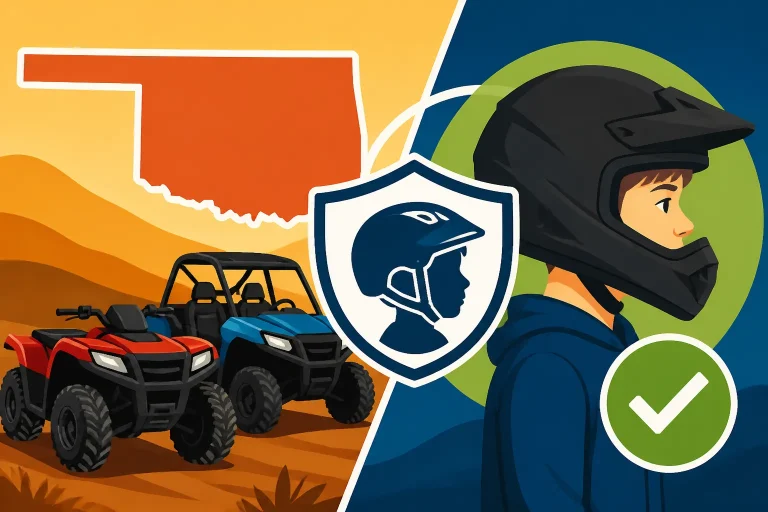
There are other rules to consider even when no course is required. Riders under 18 are subject to Oklahoma’s helmet requirement, and parks can have additional safety rules of their own. A training certificate does not waive those requirements. Review Oklahoma Helmet Rules Bind Under 18 before taking a young rider out.
A course may still be required by someone other than the state. A private park, organized ride, employer, insurer or family may have its own training expectations. Those conditions can differ by location and event, so ask the organizer or park directly rather than assuming an online certificate will satisfy them.
Course options for Oklahoma ATV and UTV riders
The right option depends on what you want to learn. A short online course can introduce basic concepts, while hands-on instruction gives riders a chance to practice with a machine and receive feedback. A park orientation, meanwhile, is usually about that property’s rules and hazards—not a substitute for comprehensive rider training.
| Option | What it can help with | What to confirm |
|---|---|---|
| Online safety course | Basic concepts, terminology and planning | Whether a park or organizer accepts it for its own requirements |
| Hands-on class | Starting, stopping, turning and riding within your ability | Available machines, age rules, equipment and practice time |
| State safety program or session | Local safety education and practical guidance, depending on the offering | Current schedule, eligibility and what the session covers |
| Dealer or manufacturer instruction | Familiarization with a particular machine or its controls | Whether it includes practical riding instruction |
| Park orientation | Site layout, rules, hazards and local procedures | Whether it is required and whether it replaces any other training |
Online courses
An online course can be convenient for learning basic safety principles before a ride. Topics may include protective gear, riding within your ability, passenger safety and recognizing hazards. A digital lesson can also help a parent and child talk through expectations before they get to a trailhead.
But online instruction has a limit: it cannot watch a rider operate a machine and correct their technique in real time. It also may not address the model, terrain or park where you plan to ride. Treat an online course as preparation, not proof that a new rider is ready to handle every situation. For questions about what these lessons can offer, see Oklahoma Online Safety Courses.
If a park or event says training is required, ask whether it accepts the specific online course you are considering. “Safety certificate” does not necessarily mean a course meets another organization’s policy. Confirm the provider, course name and documentation before paying or enrolling.
In-person and hands-on instruction
Hands-on instruction is useful for riders who need practice as well as information. A structured session can let a beginner learn basic controls and movement under supervision, with a chance to ask questions and build confidence at a manageable pace.
Before signing up, ask what the session actually includes. Does the rider use a machine, or is the class classroom-based? Is instruction tailored to the rider’s age and experience? What protective equipment is needed, and does the provider supply a machine? These practical details matter more than a certificate alone.
Oklahoma’s Safe Riders program is one local option to look into. Check current information from the program or the responsible state agency to confirm whether sessions are being offered, who can attend and what is covered. The program’s name alone does not tell you whether a session is hands-on, what machine types it addresses or whether it suits a particular rider. What a Safe Riders Session Actually Teaches can help frame the questions to ask.
Dealer, manufacturer and park instruction
Some dealers or manufacturers may offer new-owner familiarization, and some parks provide a briefing or orientation. These can be helpful for understanding machine controls or local rules. However, their scope varies. Ask whether the instruction includes actual riding practice, and do not assume that a machine walk-through is a complete safety course.
A park orientation is especially useful for learning site-specific information: where riders may go, how trails are marked, what equipment is required and what to do if a machine breaks down. It does not necessarily cover general riding skills. If you are visiting a private property, check its policies in advance; Oklahoma Private Park Helmet Rules is a useful reminder that private-park rules can be separate from statewide requirements.
Choosing a course for your rider and machine
Start with the rider’s experience, not the certificate. A first-time rider may need slow, supervised practice with starting, braking, turning and stopping. Someone who has ridden for years but is new to a side-by-side may need to learn about that machine’s controls, handling and passenger setup. A course that does not match the rider or machine may leave important gaps.
For children and teens
Children benefit from instruction that matches their size, maturity and ability to follow directions. An adult should check that the machine is suitable for the rider and that the child can reach and operate its controls as intended. A course cannot make an oversized or unsuitable machine appropriate.
Before enrolling, ask whether the session is designed for the child’s age group and whether a parent or guardian must attend. Find out how much practice is supervised and how instructors handle riders who are not ready to continue. For related age and supervision considerations, see Oklahoma Rules for Young Riders and [Oklahoma Rules for a Ten-Year-Old Rider].
A course should support adult supervision, not replace it. Children need clear limits about where they can ride, when an adult must be present and what to do if they feel uncomfortable. Helmets and other protective gear remain important regardless of whether the rider has completed training.
For adults and returning riders
Adults who are new to ATVs or UTVs can benefit from a beginner session just as much as young riders. Experience driving a car or operating farm equipment does not automatically translate to controlling an off-road machine on uneven ground, loose sand or mud.
Returning riders may want instruction if they have changed machine types, have not ridden in a long time or plan to visit unfamiliar terrain. A refresher can help identify habits that are unsafe, such as carrying too much speed into a turn or riding beyond the machine’s limits. Be candid about experience when choosing a class; a beginner course is not a setback if it covers skills that need practice.
Match the course to where you will ride
Think about the terrain and riding conditions you expect. A class focused on basic machine control may be a sensible start, but it may not prepare a rider for every challenge on dunes, wooded trails or rough ground. Ask whether the instruction is general or tailored to a specific environment, and build experience gradually.
Also check whether the course covers the machine you intend to use. ATV and UTV controls and handling differ, and some lessons may focus on only one type. If you plan to switch between a quad and a side-by-side, ask whether the instructor addresses that difference instead of assuming a single session covers both equally well.
How to verify a course before you enroll
Course descriptions can be broad, so check the details before treating a class as a solution. A little preparation helps you avoid paying for a course that does not meet a park’s requirement or provide the kind of practice the rider needs.
- Ask who requires the course. If a park, event or organization says training is mandatory, contact that organization directly. Ask for its accepted providers or course names.
- Confirm the machine type and age range. Make sure the lesson fits the rider and the ATV or UTV they will use.
- Ask what the training includes. Check whether it is online, classroom-based or hands-on, and whether supervised machine practice is part of it.
- Check equipment and participation rules. Ask what the rider must bring, whether the provider supplies a machine and whether a parent or guardian must attend.
- Find out what proof is issued. If a certificate or record is provided, confirm what it says and whether the receiving organization accepts it.
- Verify current availability and terms. Schedules, eligibility and course details can change. Use the program or provider’s current information rather than relying on an old listing.
Do not choose a course solely because it promises a certificate. The practical question is whether it helps the rider become safer and whether it satisfies the specific requirement, if there is one. A well-matched, supervised session can be more useful than a credential that does not fit the rider’s experience or riding plans.
Training is only one part of preparation. Before a ride, make sure the machine is in suitable condition, the rider has protective equipment, passengers are allowed on that machine and the destination permits the planned activity. For a child or first-time rider, keep the first outing controlled and easy to end if conditions or confidence change.
Frequently Asked Questions
Does Oklahoma require an ATV safety certificate?
There is no general state requirement for every ATV or UTV rider to complete a safety course before riding. A particular park, event or organization may set its own training policy, so check with that group.
Does an online course count as hands-on training?
No. Online instruction can cover safety information, but it does not provide supervised practice on a machine. If an organization requires hands-on training, ask whether it accepts the online course before enrolling.
Can a safety course replace a land access permit?
No. A course and a land access permit serve different purposes. Confirm the access rules for the property or riding area you plan to visit.
Should an experienced adult take a course?
It can be useful when changing machine types, returning after a long break or preparing for unfamiliar terrain. Choose instruction that addresses the rider’s actual experience and plans.
Disclaimer
This article is for general informational purposes only and does not constitute professional advice. Laws, prices and regulations vary by location and change over time. Consult a qualified professional for guidance on your specific situation.