Oklahoma Land Access Permits Explained
A permit question can derail an Oklahoma ride before the truck even leaves the driveway: an ATV registration decal, a hunting license, and a land access permit are not interchangeable. This guide explains where Oklahoma’s land access permit applies, who may need one, how the rules differ by location and purpose, and what to check before riding so you do not arrive at a gate with the wrong paperwork.
What an Oklahoma land access permit covers
It is tied to particular lands, not every Oklahoma trail
An Oklahoma land access permit is not a general pass for riding anywhere in the state. It is associated with access to specific timber company lands, including the areas known as Honobia Creek and Three Rivers. Those properties are managed under access rules that differ from a state park, a private off-road park, or an ordinary Wildlife Management Area.
That distinction matters because riders often hear “public land” and assume one permit covers all public riding. It does not. A land access permit for timber company property does not automatically authorize riding at Little Sahara, Robbers Cave, or a privately operated ranch. Likewise, a park’s entry fee or waiver does not replace a permit required for a different property.
Before you set out, identify the exact place you plan to ride and check its access rules separately. If your route includes more than one property, you may have to meet more than one set of requirements. The specific rules for Oklahoma Permits for Honobia Creek and Oklahoma Permits for Three Rivers can help you sort out which land you are visiting.
It does not replace registration, ownership paperwork, or riding permission
A land access permit is only one part of getting ready to ride. It does not establish that you own your ATV or UTV, and it does not replace Oklahoma’s registration requirements. Keep your registration and ownership documents in order as well as any permit required for the property. For a separate look at registration, see How to Register an ATV in Oklahoma.
Nor should you treat a permit as permission to ride every road, trail, or clearing on the land. Access can be restricted by season, designated-road rules, closures, and the purpose of your trip. You may have permission to enter a property while still being prohibited from riding off designated routes or entering a closed area.
Think of the permit as an entry condition, not a free-roaming pass. A rider who has the right permit but ignores posted restrictions can still be turned around or cited. Before unloading, make sure your permit, machine paperwork, and intended route all match the property’s rules.
Who may need a permit
Residents and nonresidents may face different requirements
Oklahoma residents and visitors from other states should not assume that the same permit category applies to both. The permit rules distinguish between resident and nonresident access, and the available options may depend on why you are visiting, how long you plan to stay, and which property you intend to use.
For residents, start by confirming which permit applies to your activity rather than choosing a category based only on where you live. A non-hunting visitor may need a different permit from someone accessing the property under a hunting-related permit. The details of Oklahoma’s Resident Land Access Permit and [Oklahoma’s Nonresident Land Access Permit] are useful starting points, but verify the exact requirements for your plans before buying.
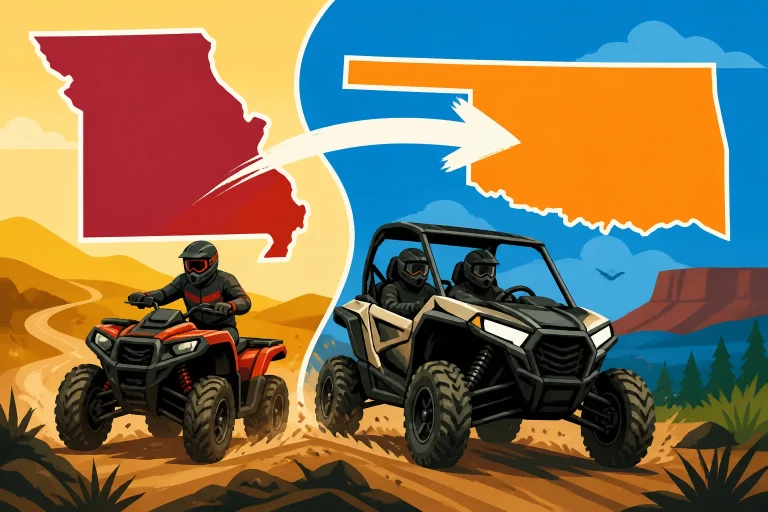
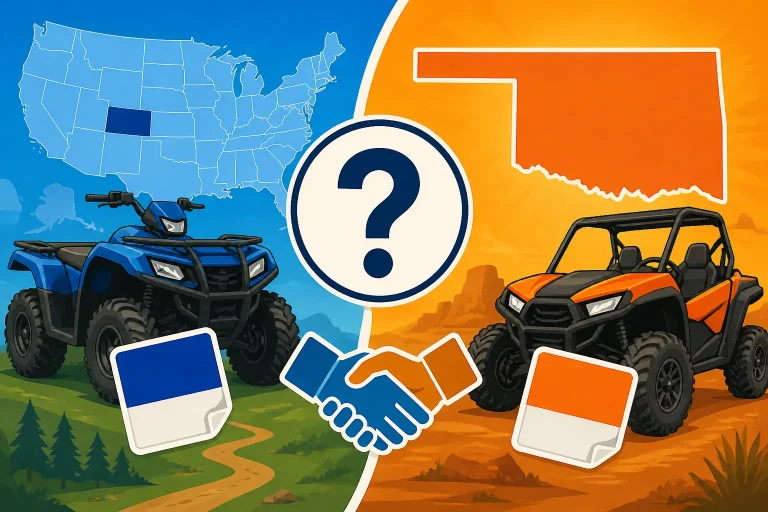
Out-of-state riders should pay particular attention to the nonresident rules. A decal or permit from Texas, Kansas, Arkansas, or Missouri should not be treated as an Oklahoma land access permit unless the Oklahoma rules specifically say it is accepted for the property and activity in question. For a broader look at the distinctions, read Oklahoma Resident vs Nonresident Permits.
Age and other exemptions can change the answer
Some riders may qualify for an exemption based on age or other criteria. Oklahoma residents under 18 and residents 64 and older are identified among the age groups exempt from the land access permit requirement. That does not mean every other rule disappears: a rider may still need to follow property access restrictions, youth safety requirements, and rules applying to the machine.
A family can find this confusing when adults and children are traveling together. For example, an exempt resident child may be riding with an adult who needs a permit. The child’s exemption does not automatically cover the adult, and an adult’s permit does not automatically exempt every other rider in the group.
Nonresidents should be especially careful not to assume that an age exemption available to Oklahoma residents also applies to them. If a rider’s status is unusual—such as a child traveling with relatives, a resident who recently moved, or a visitor with an out-of-state license—confirm the rule before the trip. The Oklahoma Permit Exemptions by Age guide can help you identify the right question to ask.
Choosing between permit options
Annual permits suit repeat access, but check what they include
An annual permit can be convenient for someone who expects to visit covered timber lands more than once. It reduces the hassle of making a separate purchase before each short visit, but it is not a year-round promise that every road or area will be open. The land’s seasonal and operational rules still apply.
Permit amounts and categories can change, so check the official permit sales information before relying on a figure you saw in an old post or heard from a riding friend. The commonly listed annual options distinguish resident and nonresident riders, with different amounts for each. Confirm the current amount, the covered dates, and whether the permit is valid for the particular activity you have in mind.
An annual option may be a poor fit if you are making a single trip or if your visit is limited to a short period. Compare the annual permit with shorter-term options, then factor in the actual dates you expect to ride. The goal is not simply to buy the longest permit available; it is to obtain the correct authorization for the property and use.
A short-term permit may fit a brief visit
A short-term option can make more sense for a visitor who is going once or staying only a few days. Oklahoma has a three-day permit option, which may be relevant for some riders. Check the official purchasing details to confirm eligibility, validity dates, and covered locations before choosing it. See Oklahoma’s $10 Three-Day Permit for a focused explanation of that option.
For a weekend trip, count the actual days you need access rather than assuming a calendar weekend automatically fits the permit’s validity period. A Friday arrival and Monday departure, for instance, may require a closer look at the start and end dates than a Saturday-to-Sunday outing. If your plans change after you buy, do not assume the permit can be shifted or refunded.
| Your situation | What to check | Common mistake to avoid |
|---|---|---|
| You ride covered timber lands several times | Whether an annual permit matches your residency and activity | Assuming the annual permit opens every property |
| You are visiting for a few days | Whether a short-term permit covers your dates and location | Buying based on the trip’s name, such as “weekend,” without checking validity |
| You are an out-of-state rider | The nonresident category and any activity-specific conditions | Assuming your home-state decal substitutes for an Oklahoma permit |
| You are riding with children | Each rider’s age, residency, and applicable exemption | Assuming one adult permit covers the whole group |
| You plan to hunt and ride | Both access rules and hunting-related requirements | Treating a hunting license as a land access permit |
Use the table as a planning aid, not as a substitute for the rules for the particular property. If two conditions apply—for example, a nonresident rider who is also a hunter—check both rather than relying on the first category that seems to fit.
Where and when the permit applies
Honobia Creek and Three Rivers have their own access conditions
Honobia Creek and Three Rivers are commonly discussed together because they involve timber company land access, but riders should still check each area’s details. The lands are not simply open trail parks with unrestricted riding. Access is governed by land-use rules, seasonal conditions, permitted routes, and any check-in or entry instructions that apply.
Before traveling, verify that the particular area is open for your activity on the day you plan to visit. A permit alone does not guarantee that all roads are available, that recent weather has left them passable, or that a temporary closure is not in place. This is especially important if your group is towing a large side-by-side or has driven a long distance to reach the property.
The Oklahoma Land Access Permits Explained topic is part of a broader set of rules that includes Oklahoma WMA Access for a Quad. Read the area-specific guidance for Oklahoma Timber Land Access Rules as well. A little advance checking can prevent a frustrating arrival at a locked gate, a closed entrance, or a route that is not legal for your machine.
Riding seasons and route limits matter as much as the permit
Timber land access for riding is seasonal. The access window is generally associated with October through January, with machines required to be off the land after January 15. Treat that as a planning boundary, not a suggestion to stretch your ride into a period when access is no longer allowed. Confirm the dates and any seasonal conditions for your intended area before loading up.
Riding may also be limited to designated roads. A permit should not be read as permission to cut across timber, explore an unmarked track, or create a shortcut around a closed route. Road conditions can change, and an old tire track is not proof that the route is authorized. Use posted signs and the property’s official directions rather than following another rider’s tracks.
The rules described for timber land also include a posted speed limit of 25 mph, limits on leaving designated roads, and a narrow allowance to travel a short distance off-road to retrieve a downed animal in the applicable hunting context. Those exceptions are not a general invitation to ride off-road. For more detail on route and speed expectations, see Oklahoma WMA Road Rules for Riders.
How to buy and carry the right permit
Confirm the exact permit before you pay
Start by writing down four details: the property, your residency, the reason for access, and the dates you intend to visit. Those details help prevent the common mistake of buying a permit that sounds right but is not valid for the activity or location. If your group includes both residents and visitors, check each rider’s situation rather than assuming the group qualifies as one unit.
Use the official permit sales channel or the designated seller listed for the access program. Review the permit name carefully before completing the purchase. If there are separate options for hunting, non-hunting access, or different residency categories, do not choose based on price alone. The correct permit category is the one that matches your planned use.
Save the confirmation and read the conditions attached to it. Check the effective dates, covered lands, and any instructions about check-in, display, or proof of purchase. If any detail is unclear, contact the relevant permit provider before your trip. The guide Where to Buy an Oklahoma Land Access Permit can help you understand the purchase path.
Keep proof available without assuming a phone screen is enough
After buying a permit, make sure you can show proof when asked. Some riders keep a printed copy in a waterproof pouch, while others keep a digital record on their phone. Do not assume a screenshot is accepted in every circumstance unless the program’s instructions say so. If you rely on a phone, consider battery life, service gaps, weather, and the possibility of a cracked or wet screen.
A sensible backup is to save the confirmation offline and carry a printed copy if the permit instructions allow or recommend it. Store the proof where you can reach it without unpacking your whole trailer. A small waterproof document sleeve can help protect paper from rain, mud, or condensation; some riders find one through outdoor retailers or Amazon. The important part is that you can produce the proof and that it matches the rider and permit category.
If your group carries permits on phones, avoid keeping everything on one person’s device. The phone’s owner might get separated from the group, lose power, or be unavailable when a ranger asks another rider for proof. Each person should understand what they are required to carry. For more on digital proof, read Showing a Land Access Permit on Your Phone.
Common misunderstandings that cause trouble
A hunting license and an access permit are different things
A hunting license and a land access permit serve different purposes. A hunting license does not automatically replace the access permit required for covered timber land, and an access permit does not necessarily authorize hunting. When a trip combines riding and hunting, check both sets of requirements, including any rules about who may ride, where machines may travel, and what is allowed during the season.
This distinction can catch people who have hunted the area for years. They may remember buying a license or completing a check-in and assume the same step covers every use. But riding access can have its own conditions. Confirm whether the relevant permit is required for each adult and whether a hunting-related exception or category applies to your specific trip.
It is also wise to ask before assuming that a non-hunting rider can accompany a hunting party under the same permit. The rules may distinguish between a licensed hunter and someone who is present for another purpose. If you are bringing a passenger, a family member, or a friend who will not hunt, verify that person’s access status rather than relying on the group leader’s paperwork.
A permit does not make every road or machine legal
A permit does not override a closure, open a road that is restricted, or change a machine’s registration status. It also does not guarantee that a particular trail accommodates every type of machine. A narrow forest route, for example, may be unsuitable for a wide side-by-side even if the operator has valid access paperwork.
Before riding, check the vehicle-specific rules and route restrictions. If you are taking a UTV, confirm that the route allows its width and type. If you are bringing a quad, make sure the designated roads are appropriate and that your machine meets any separate registration or equipment obligations. The Oklahoma WMA Access for a Quad and timber-road guidance are useful when planning around machine type.
Finally, do not confuse an access permit with permission to ride on private land outside the designated program. A nearby property, driveway, field, or forest road may belong to someone else and may not be included in the access arrangement. Stay on authorized routes, respect gates and signs, and turn back when an area is marked closed. Those habits protect access for the next group as well as your own trip.
A practical pre-ride checklist
Check the people, place, and dates
Before paying for a permit, confirm the exact property and the planned riding dates. Then check each person’s residency and age, and identify whether the trip is for hunting, non-hunting access, or another permitted purpose. If a rider appears exempt, confirm the conditions of that exemption rather than assuming it applies automatically.
Next, check the area’s access window and any seasonal restrictions. Timber land riding is not a year-round activity, and the dates matter even when the permit itself is described as annual. Confirm that your intended route is open and that any check-in requirement has been completed. If weather or an official closure changes your plans, do not treat an already purchased permit as proof that the property remains open.
Finally, review the machine paperwork and the rules that apply to your ATV or UTV. The access permit is only one piece of the trip. A quick check of registration, ownership documents, permitted routes, and safety requirements can prevent a small paperwork oversight from becoming a long drive home.
Prepare for a gate or ranger check
Keep your permit proof accessible, along with any other documents the property rules require. Make sure each rider knows where their proof is and can explain the group’s destination. If a ranger or land manager asks you to stop, pull over safely, follow instructions, and answer clearly. A calm, organized response is much easier when the group has checked its paperwork in advance.
Have a simple plan for weak phone service. Save directions and confirmations offline, tell someone where you are going, and avoid relying on a live connection to retrieve essential information at the gate. A printed map or written directions can also help if navigation service drops out. Store paper copies in a dry place, especially if you expect rain, creek crossings, or muddy conditions.
If anything about the permit or route still feels unclear, resolve it before the ride rather than guessing at the entrance. Check the official permit information, contact the relevant office, and ask a specific question about the property, dates, rider category, and machine. That extra call is less frustrating than finding out after the trailer is unloaded that your permit does not cover the trip.
Disclaimer
This article is for general informational purposes only and does not constitute professional advice. Laws, prices and regulations vary by location and change over time. Consult a qualified professional for guidance on your specific situation.