Oklahoma State Park Camping Fees
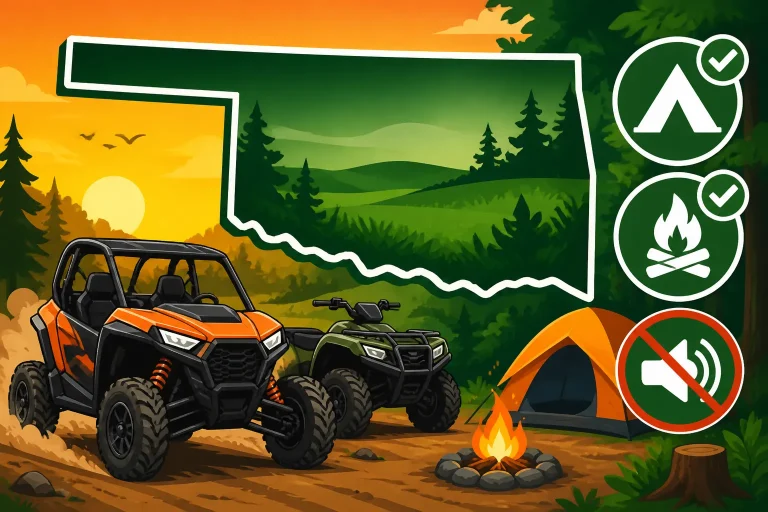
Camping costs for an Oklahoma ATV trip can be harder to estimate than the ride itself: a campsite, hookups, reservation charges and OHV access may be billed separately. The key is to price the campsite and the riding area as distinct parts of your trip, then confirm which fees apply to your dates, equipment and group.
What Oklahoma State Park Camping Fees Usually Cover
Oklahoma state park camping fees generally depend on the type of accommodation and the facilities you choose. A basic tent site, an RV site with utility hookups and a cabin are different products, so their rates and included amenities can differ. The amount shown for a site is not automatically the full cost of the weekend.
Think of camping as a reservation for a particular site, not an all-inclusive ticket to every activity nearby. A reservation may cover the use of the campsite for a specified stay, but it may not cover OHV riding, rental equipment, special events or other services. Read the listing for the exact site and dates rather than relying on an old screenshot or a general description of the park.
| Cost item | What to check before booking |
|---|---|
| Campsite | Site type, capacity, dates and whether it suits a tent or your RV |
| Hookups | Which utilities are provided and whether the site accommodates your setup |
| Reservation charges | Whether booking or transaction charges appear separately |
| Extra vehicles or visitors | Whether the site has limits or additional charges |
| Cabins or other lodging | What is included, what you must bring and what rules apply |
| OHV access | Whether riding access has a separate entry fee or other requirements |
| Optional services | Whether any amenities or activities require separate payment |
A useful first step is to select a real site and date in the park’s official reservation system. A park’s general camping page can describe its facilities, but the reservation listing is more useful for checking availability, the site’s features and the amount due for your planned stay. Charges can change, so confirm the current total before you complete the reservation.
Pay attention to the site’s capacity and vehicle details. A campsite may have limits on how many people or vehicles can use it, and an RV site may have practical restrictions on vehicle length or equipment. If you are hauling an ATV or UTV, check whether your tow vehicle, trailer and recreational vehicle can all be accommodated without blocking an access lane or exceeding the site’s limits. Do not assume a campsite reservation automatically allows an unlimited number of vehicles.
Also check what the site provides. A hookup site may offer some utilities but not necessarily every connection your RV needs. A tent site may not have the same facilities as a developed RV site. If your group is comparing a basic campsite with a cabin or another lodging option, compare the amenities and restrictions as well as the nightly charge. A lower site rate may mean bringing more equipment or planning for less convenience.
The booking process can add cost or conditions that are easy to miss when looking only at a nightly rate. Review any charges displayed during checkout, along with cancellation terms, arrival and departure times, and rules about changes to a reservation. If you are booking several sites for a group, check each reservation rather than assuming one booking covers everyone.
For a broader look at camping near riding areas, Oklahoma OHV Camping With Trail Access and Oklahoma Camping Beside an OHV Area can help you compare the lodging side of trip planning with access to the trails.
Camping Is Not the Same Fee as Riding
For an ATV or UTV trip, the most important budgeting distinction is that a place to sleep and permission to ride are separate things. A campsite reservation does not, by itself, establish that you have paid any required riding or day-use fee. Likewise, paying an OHV area’s entry fee does not necessarily reserve a campsite.
The exact arrangement depends on the location. Some parks have riding areas or nearby trails; others are primarily a place to camp, hike or enjoy other activities. Even at a park associated with OHV riding, check the current fee information for both camping and riding. Oklahoma State Park Fees for Riders is useful background, while Oklahoma Camping Permits at Riding Areas covers why a campground and an access requirement should not be treated as interchangeable.
Little Sahara is a clear example of why it helps to separate the line items. A camping reservation and access to ride the dunes are different parts of trip planning. Check the current campground details and riding fee information independently, including the details in Little Sahara State Park in Oklahoma and Oklahoma Little Sahara Day Fees. An annual pass may have specific limits, so review What a Little Sahara Annual Pass Leaves Out before treating it as a substitute for every trip expense.
At Robbers Cave, check both the campground information and the OHV area’s rules and charges. The riding area and your lodging plans are related, but they are not automatically one purchase. Robbers Cave OHV Area in Oklahoma can help you understand the riding side of a visit.
The same separation applies to permits. A land access permit, where required for particular public lands, is not a campground reservation. A permit or decal issued elsewhere also does not necessarily pay an Oklahoma park’s campsite or riding charges. If you are visiting from another state, do not assume that your home-state ATV registration, decal or pass replaces an Oklahoma requirement. Check the rules for the exact riding location and the exact type of access you plan to use. For decal questions, see Does Oklahoma Recognize Another State’s ATV Decal?.
Before paying, write down the separate items you expect to need:
- Your campsite or lodging reservation.
- Any riding-area entry or day-use charge.
- Any permit required for the particular land you will ride.
- Any optional services, rentals or amenities.
- Any additional site, vehicle or visitor charges shown in the booking details.
This simple list prevents a common planning mistake: comparing one destination’s camping rate with another destination’s total trip cost. A site may look less expensive at first but require a separate riding fee. Another location may bundle some access into a particular arrangement, while still charging separately for other activities. Compare the actual totals for your itinerary, not just the first price you see.
How to Estimate the Total for an ATV Camping Trip
Start with the number of nights, the type of site and the size of your group. Then build a total that includes both campground costs and riding-related expenses. If your travel dates are flexible, check more than one date; availability and the rates displayed for a particular site can vary. Do not assume that a holiday weekend, a weekday and a shoulder-season visit will have identical availability or charges.
For each possible campground, confirm:
- Whether your preferred dates are available.
- Whether the site type fits your tent, RV or trailer.
- Which utilities and facilities are included.
- The site’s occupancy and vehicle limits.
- Whether booking or other charges are displayed separately.
- The arrival, departure, cancellation and change rules.
- Whether the campground is close to your intended riding area.
- Whether riding access is paid separately and what requirements apply.
Location matters as much as the campsite price. A site close to the trails may reduce the hassle of moving a trailer or hauling machines between locations. A less expensive site farther away could mean extra driving, fuel and time. Compare the total plan: campsite, riding access, transportation and any extra overnight stay needed because of travel distance.
For an RV, confirm that the site fits the actual vehicle and trailer combination. For a tent trip, find out whether the site has the facilities your group needs and what you are expected to bring. If you are carrying charging equipment, lights or other electrical gear, make sure the site’s available hookups suit your setup rather than assuming every RV site is the same.
Equipment purchases are not park fees, but they can affect the trip budget. If packing reveals missing basics such as tent stakes or RV leveling blocks, Amazon can be one place to compare options; check dimensions and compatibility before ordering. For riding-specific preparation, start with Oklahoma Trail Conditions Before You Tow so the destination and equipment plan fit the conditions you may encounter.
A small worksheet can make the comparison clearer:
| Trip detail | Plan |
|---|---|
| Nights and dates | Record the exact stay you are pricing |
| Site type | Note tent, RV, cabin or another option |
| Campground total | Use the amount shown for the selected site and dates |
| Riding access | Check the fee and requirements for the specific riding area |
| Permits | Confirm whether the land you will ride requires one |
| Extra costs | Include applicable vehicle, visitor, service or equipment charges |
| Total for the group | Add the separate items instead of comparing one fee alone |
Do not budget from a friend’s old receipt without checking what was included. Their booking might have been for different dates, a different site or a different number of nights. They may also have paid riding access separately or used a pass that does not suit your trip. A past cost can help identify questions to ask, but it is not a reliable quote for your reservation.
Booking and Confirming Fees Before You Go
Once you have chosen a destination, verify the campground details through the official booking information or by contacting the park. Ask specific questions rather than simply asking, “How much is camping?” For example: “Does the amount shown cover the full stay at this site?” “Is riding access separate?” “Can our truck and trailer fit within the site’s vehicle limits?” and “Are there any additional charges for our group or setup?”
If you are comparing several locations, keep notes on what each price includes. The word “camping” may refer to very different arrangements: a primitive site, an RV site with utilities or a cabin. Separating these options prevents a misleading comparison and makes it easier to explain the total to everyone in your group.
Before you leave, keep your reservation confirmation and any riding permits or payment records accessible. Follow the park’s directions for check-in and display or provide confirmation as instructed. Make sure every person in the group understands where riding is permitted and whether they need a separate entry payment or permit. A campsite is permission to occupy that reserved site under its rules, not permission to ride on every nearby road or piece of public land.
If your plans change, read the reservation’s cancellation and modification conditions before assuming that a refund or date change is available. Those conditions can affect the real cost of a booking, especially when weather or trail conditions make a trip less appealing. Check riding-area updates as well as campground information; a campground can remain open even when conditions or access at the riding destination have changed.
For a trip that includes multiple locations, confirm fees with each one separately. State park camping, a privately operated OHV area, a wildlife management area and public timber land can have different access systems. A permit that applies in one setting should not be treated as proof that you have paid for another. Questions to Ask the Park Office Before You Go is a useful checklist for resolving details directly with the destination.
The practical takeaway is to price the night’s stay and the ride as separate parts of the same trip. Confirm the current site total, verify the site can accommodate your group and trailer, and check whether the riding area has separate fees or permit rules. That approach gives you a more realistic budget than relying on a single advertised camping charge.
Disclaimer
This article is for general informational purposes only and does not constitute professional advice. Laws, prices and regulations vary by location and change over time. Consult a qualified professional for guidance on your specific situation.