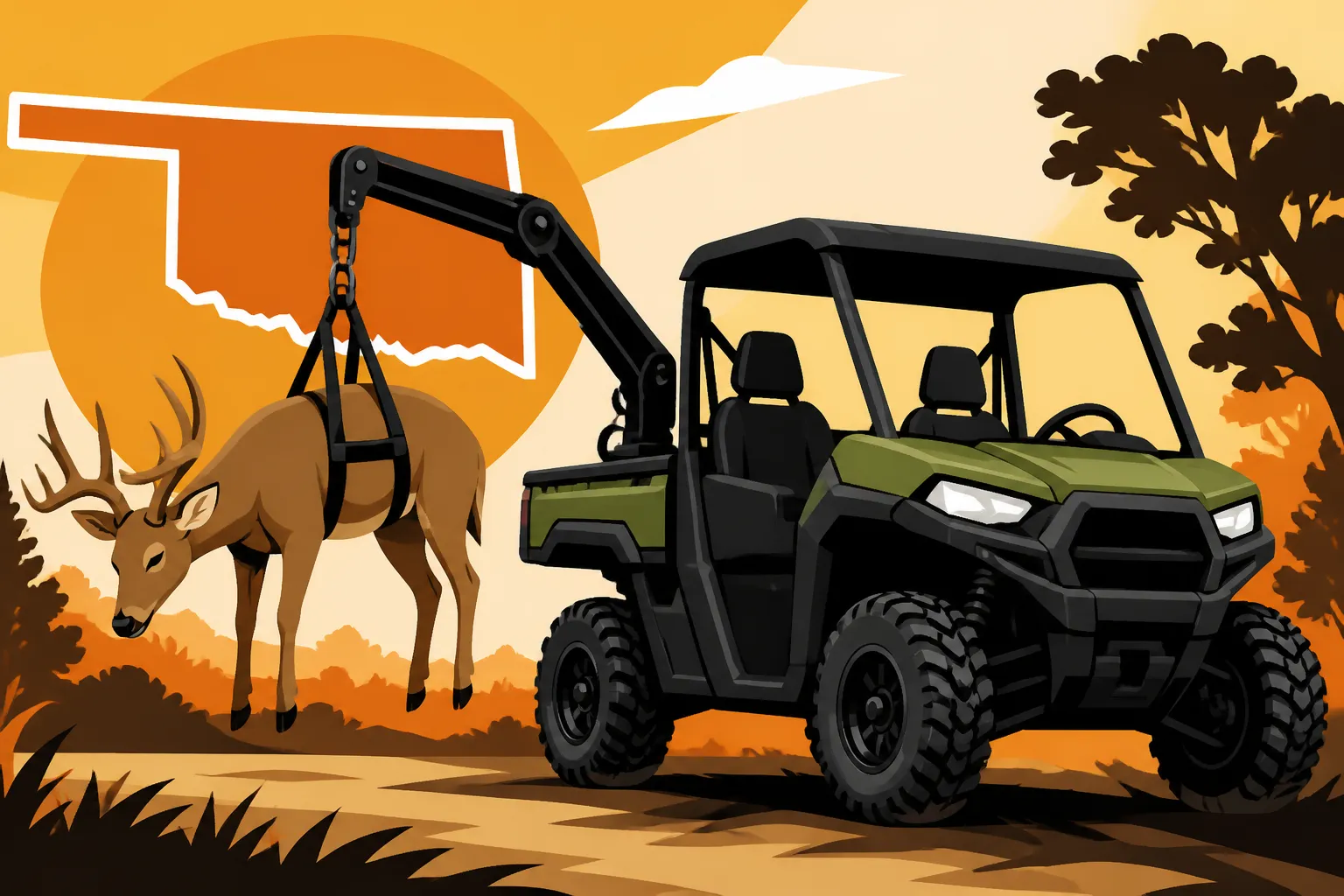
Oklahoma Deer Retrieval by Machine
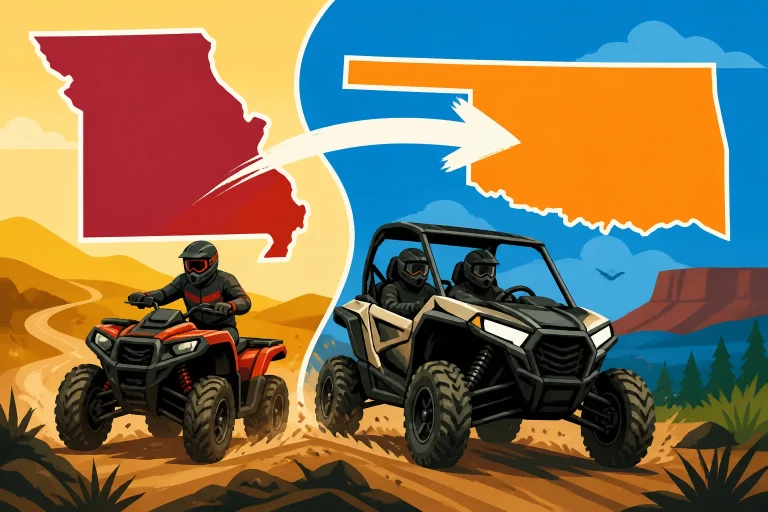
A deer can fall well beyond a road, and carrying it out by hand is hard work. In Oklahoma, whether you can use an ATV or UTV for retrieval depends on the land and its access rules—not simply on having a hunting license or owning the machine. The key is to confirm where machine travel is allowed, how far it may go, and what permits apply before you hunt.
Start With the Land, Not the Machine
There is no single deer-retrieval rule that automatically applies to every Oklahoma hunting area. A machine may be allowed on one property and restricted to designated roads on another. A landowner’s permission, a public-land rule, or a timber-company access permit may each set different limits.
A useful distinction is whether you are riding on an authorized road or leaving it to reach a deer. Permission to drive on a road does not necessarily mean permission to cross the surrounding ground. Likewise, permission to hunt does not always include permission to ride an ATV or UTV.
| Where the deer is | What to check before using a machine |
|---|---|
| Timber-company access land | Whether the access program permits deer retrieval off road, the distance limit, permit requirements, and seasonal restrictions |
| Wildlife Management Area | The area’s current vehicle rules, including whether machine travel is limited to designated roads or otherwise restricted |
| Private land | The landowner’s specific permission for both machine access and off-road retrieval |
| Other public or managed land | The managing agency’s current rules for motorized travel and game retrieval |
The most useful first step is to identify the property precisely. A hunting area can include land with different owners, access agreements, or restrictions. A map pin or the name of a nearby road is not enough if you are uncertain which side of a boundary the deer is on.
For an overview of the different situations, see Oklahoma Hunting Access by Machine. If you are planning a trip to land covered by an access program, review Oklahoma Land Access Permits Explained before setting out.
Timber-Company Land and the Half-Mile Retrieval Allowance
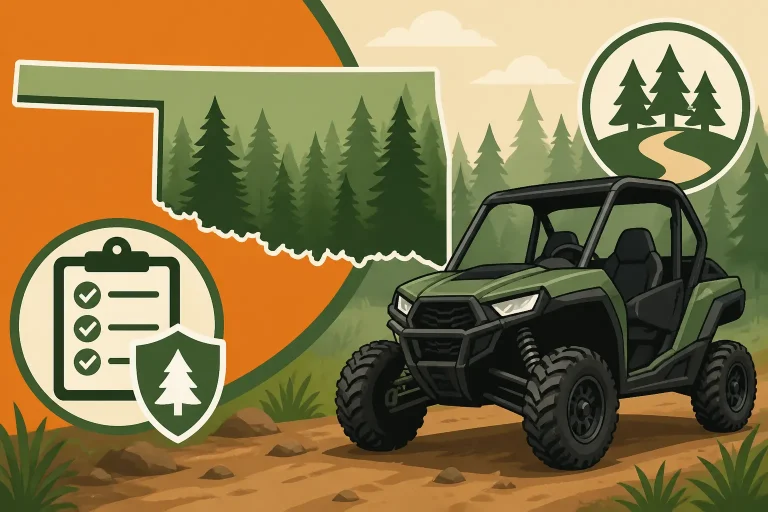
Some Oklahoma timber-company access rules provide a specific allowance to travel off a designated road to retrieve a downed deer. The stated limit is up to half a mile for retrieval. Treat that as a narrow exception for recovering game, not as permission to ride cross-country for convenience or to explore beyond the road system.
The details matter. Confirm that the property is included in the program, that your access and hunting qualifications are in order, and that the rules allow the machine you plan to use. The half-mile limit does not override other restrictions, such as designated-road requirements, seasonal access dates, speed limits, or instructions to stay out of certain areas.
The associated access rules can include a requirement to hold the relevant land access permit and a valid deer license. Timber-company access may also be limited to a specified hunting-season window. Rules can differ by property or program, so check the current requirements for the exact land you intend to hunt rather than assuming every timber tract has the same terms.
Useful background includes Oklahoma Timber Land Access Rules, Riding Timber Land Requires a Deer License Too, and October to January: The Timber Land Riding Window. For the specific distance and purpose, see Half a Mile for a Downed Animal.
What the half-mile limit does and does not mean
A half-mile retrieval allowance should be understood as a maximum off-road distance for a qualifying retrieval under the applicable rules. It is not a general travel radius around every road, and it does not make an unauthorized route legal. It also does not turn a retrieval trip into permission to drive to a hunting spot, move between locations, or take a shortcut through timber.
If a deer is farther from the road than the allowed distance, do not assume that you can ride the remaining distance because the animal is already down. Consider hand retrieval, getting help from other hunters, or asking the land manager what options are permitted. The right answer may be less convenient, but crossing a boundary or exceeding a limit can create a much bigger problem than the extra work of getting the deer out by another method.
The rule is also tied to the purpose of the trip. If you are using a machine to retrieve a deer, keep the trip focused on that task. Avoid bringing additional riders or making unrelated stops that could look like general off-road riding. If an official or land manager asks why you are off the road, be ready to explain where the deer is and how your route complies with the property’s rules.
Confirm the route before the hunt
If possible, check the roads and property boundaries before hunting. Do not wait until after dark, when a deer is down and time is short, to figure out whether a track crosses onto a different property. Carry a map that works where you are hunting, and use it to check the route against posted boundaries and the rules for that access area.
A phone map can help, but cell service may be unreliable in remote areas. Save maps for offline use or carry another dependable way to identify your location. Follow posted signs and any instructions provided by the property manager. If signs, maps, or directions appear to conflict, stop and ask before riding farther.
Wildlife Management Areas and Private Land Have Separate Rules
A timber-company retrieval allowance should not be assumed to apply on a Wildlife Management Area, a state park, or private land. Each place can have its own rules for motorized travel, game retrieval, and access. In some areas, vehicles may be restricted to designated roads; in others, machine use may be limited or prohibited except under specified conditions.
For a WMA, check the current rules for that particular area before hunting. Look for instructions on vehicle access, road closures, seasonal restrictions, and deer retrieval. A general statement that machines are permitted somewhere in a WMA does not necessarily mean you can drive off road to reach a deer. The applicable area rules control. See Oklahoma WMA Deer Retrieval Rules and Oklahoma WMA Access for a Quad for related details.
Private land is different again. Get clear permission from the owner or person authorized to grant access. Ask specifically whether you may bring an ATV or UTV, whether you may leave established roads, and whether retrieval is allowed across the part of the property where the deer may fall. Permission to hunt does not automatically settle those questions.
If the deer crosses a property line, do not follow it onto land where you lack permission. The same caution applies if your machine can reach the deer only by crossing another owner’s land. Ask for permission before entering, even if the route seems short or the boundary is difficult to see. Oklahoma Landowner Permission Rules covers the importance of sorting out access before you ride.
Do not confuse a hunting permit with machine permission
A hunting license, land access permit, or permission to enter a property serves a different purpose from permission to operate a machine. You may need more than one of these, and having one does not necessarily satisfy the others.
Before the season, confirm each requirement separately:
- Hunting authorization: Make sure your license and any required hunting permissions cover the activity and location.
- Land access: Check whether an access permit is required for the property or program.
- Machine access: Confirm whether an ATV or UTV is allowed, and where it may be operated.
- Retrieval limits: Check whether off-road recovery is allowed, what distance or route limits apply, and whether the rule is limited to a downed animal.
- Seasonal and local conditions: Verify dates, closures, posted restrictions, and any temporary instructions.
If a rule is unclear, contact the land manager or relevant agency before the hunt. Ask about the specific property and the specific use: retrieving a legally harvested deer with an ATV or UTV. A broad question such as “Can I ride here?” may not get you the detail you need.
Plan the Retrieval Before You Need It
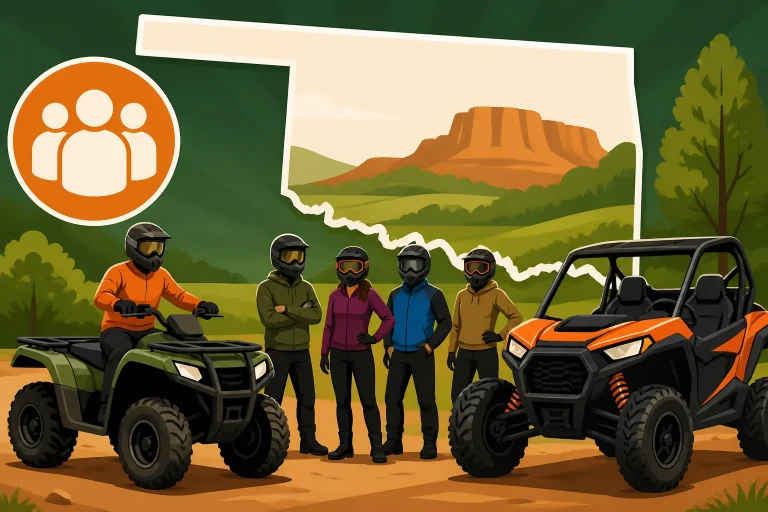
A retrieval plan saves time and reduces the chance of making a rushed decision. Decide how you will reach the deer, what equipment you will carry, and what you will do if the route is blocked or the animal is outside the permitted travel area. Make sure every person in your group understands the property rules, not just the person driving.
A machine can help move a deer, but it also creates risks. Loose straps can snag, a loaded rack can affect balance, and a winch can pull a machine toward the animal or a tree. Keep people clear of tensioned cables and straps. Use attachment points intended for recovery, secure the load, and travel slowly over uneven ground. Do not overload the machine or let a passenger ride in an unsafe position while carrying a deer.
The equipment needed depends on the machine and terrain. A suitable strap, gloves, and a way to keep the deer secured may help; a winch may be useful in some settings, but it is not a substitute for following the access rules. If you are assembling basic recovery gear, compare equipment carefully and check that its ratings and attachment method suit your machine. Amazon may offer a broad selection, but the seller’s description alone is not a reason to exceed a machine’s capacity or use gear in a way its manufacturer does not permit.
A practical pre-hunt checklist
Before leaving home, confirm the following:
- The exact property boundary and the rules for that land.
- Whether the machine is permitted and which routes are open.
- Whether off-road retrieval is allowed and, if so, the applicable limit.
- Any permit, license, or seasonal access requirements.
- How you will communicate if cell service is poor.
- Whether the machine, tires, recovery equipment, and load capacity are appropriate.
- A backup plan if the deer is beyond the allowed area or the route becomes unsafe.
If you cannot confirm that off-road travel is allowed, stay on an authorized route and contact the land manager for direction. Do not rely on another hunter’s account of what was allowed on a different property or in a previous season.
Keep the animal and the machine under control
Once you reach the deer, take time to secure it properly. Keep the load low and balanced where possible, and make sure it cannot slide into a wheel, exhaust, or moving part. Avoid sudden turns, steep side slopes, and high speeds. If terrain or the load makes the machine unstable, stop and use a safer method or get help.
Follow the current hunting rules for tagging, checking, transporting, and handling the deer. Machine access does not change those responsibilities. Keep required documents available, and be prepared to show that you are on authorized land and complying with the applicable access conditions.
The simplest rule is also the safest one: retrieve only where you are allowed to travel, and use the narrowest interpretation of an exception when its limits are unclear. Oklahoma’s half-mile allowance is relevant to certain timber-company access rules; it is not a statewide license to ride off road for any deer. Check the land-specific requirements before hunting, not after the animal is down.
Disclaimer
This article is for general informational purposes only and does not constitute professional advice. Laws, prices and regulations vary by location and change over time. Consult a qualified professional for guidance on your specific situation.