What a Little Sahara Annual Pass Leaves Out
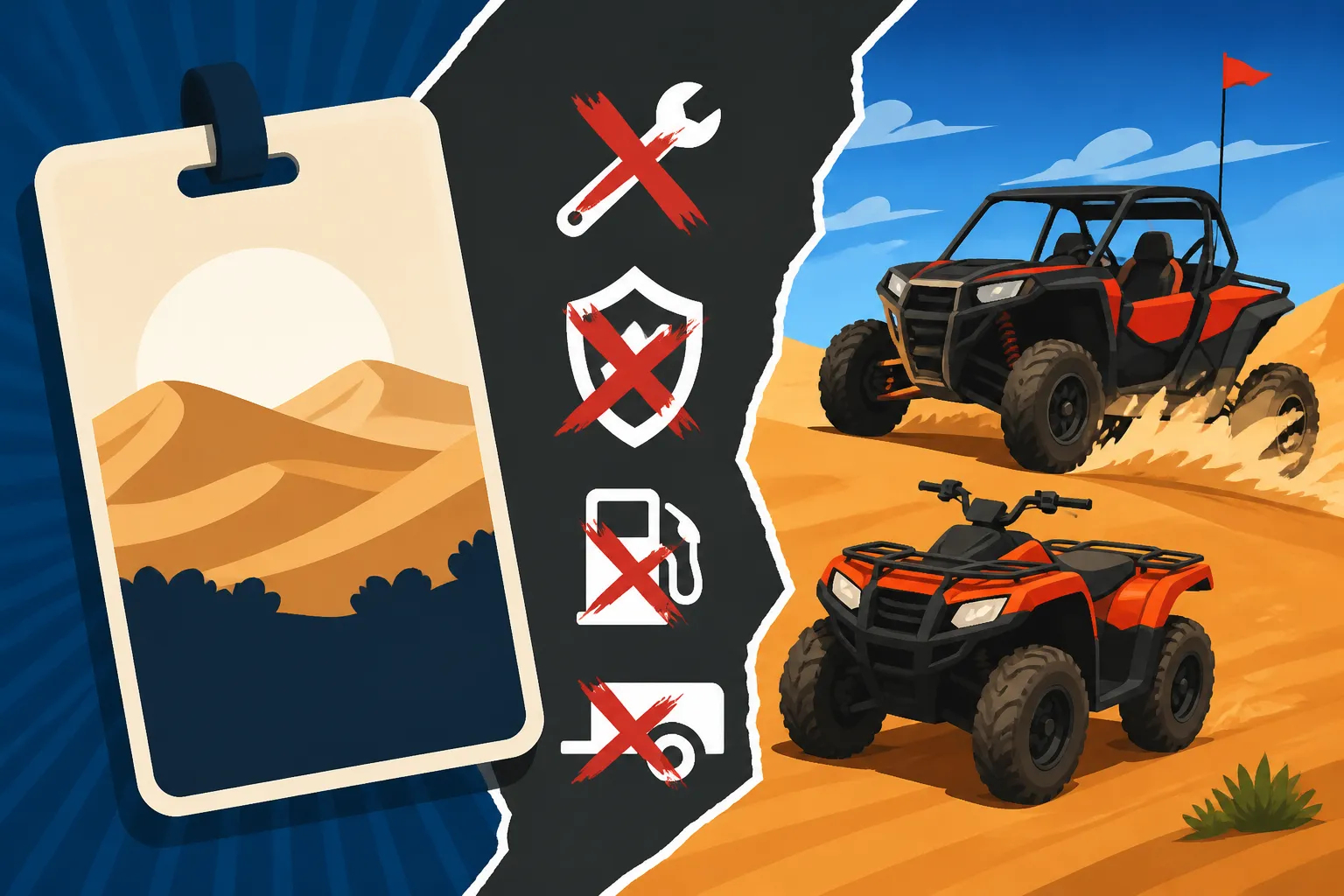
A Little Sahara annual pass can make repeat visits easier to budget, but it is not an all-inclusive ticket for every part of an off-road weekend. Riders may still need to plan separately for camping, equipment, travel, and access rules. This guide explains what to check before you rely on the pass and how to avoid surprises at the park.
What a Little Sahara annual pass is meant to cover
Park access is not the same as a complete weekend package
Little Sahara State Park, near Waynoka in northwestern Oklahoma, is known for its open sand dunes and off-highway vehicle riding. An annual pass is best understood as an access credential with defined terms—not as a bundle that automatically pays for every service or expense associated with a visit.
That distinction matters when you’re planning a family trip. A pass may cover only the type of park entry described in its terms, while your group still has to account for where you will sleep, what equipment you need, and any separate rules that apply to riders or vehicles. Before you buy, check exactly who or what the pass covers and how it must be presented.
If you’re comparing a pass with paying for individual visits, start with [Oklahoma Little Sahara Annual Passes] and [How Long a Little Sahara Day Fee Lasts]. Read the details for the specific pass you intend to use rather than assuming every annual pass works the same way. Pay particular attention to whether the credential is tied to a person, a vehicle, a household, or another condition.
A practical example: one household may arrive in a truck with several riders and more than one off-road machine. It is easy to assume that one pass covers everyone because the group is traveling together. Don’t make that assumption. Confirm how the pass applies to the people and machines in your party before setting out.
A pass for Little Sahara does not cover other riding areas
An annual pass for Little Sahara should not be treated as a statewide OHV pass. Oklahoma has other riding destinations with their own access policies, operating conditions, and possible fees. A credential for one park does not automatically authorize riding at a different park or on other public or private land.
This is worth remembering if your trip includes several stops. A weekend itinerary that starts at Waynoka and continues to another riding area may involve separate admissions, permits, reservations, or land-access rules. Check each destination independently rather than building your budget around the Little Sahara pass alone.
The same principle applies to public-land access requirements. For example, land-access permits and park admission are different categories of permission. Read [Oklahoma Land Access Permits Explained] if your plans include other kinds of public land, and confirm directly with each destination what applies there. A Little Sahara pass does not replace a separate requirement that another area may impose.
What the annual pass leaves out
Camping and campsite arrangements
A park-access pass does not automatically mean you have a campsite reserved. Camping involves its own planning: where overnight stays are allowed, whether a particular campground has space, what facilities are available, and whether the campground uses a separate payment or reservation process.
That difference can catch visitors who buy a pass well ahead of a busy weekend and assume their overnight arrangements are settled. The pass may address access under its terms, but a campsite is a separate question. Check the campground rules and availability before loading the trailer, especially if your group needs room for an RV, multiple tents, or a large vehicle-and-trailer combination.
For planning, read [How to Reserve a Little Sahara Campsite Online] and [Oklahoma Campgrounds With Fee Kiosks]. Those topics can help you understand the distinction between getting into the riding area and arranging a place to stay. Confirm the process for your intended dates, and keep any reservation details or required confirmations accessible during the trip.
Camping also brings costs and practical needs that an admission pass does not settle. Think about water, food, fuel, lighting, bedding, waste disposal, and the possibility that services or facilities may be limited. If your group is arriving late or leaving early, make sure you know how campground access and check-in work rather than relying on the park-access pass to answer those questions.
Equipment, fuel, and personal expenses
An annual pass does not outfit your machine or cover the costs of getting to the dunes. Visitors still need to plan for fuel, trailering, riding gear, food, water, maintenance, and any equipment required by the park’s rules. These costs can add up even when admission is already handled.
Sand riding can also place different demands on a machine than a casual ride on a firm trail. Before leaving home, inspect tires, brakes, steering, belts, lights, and other key parts according to the machine’s owner guidance. Bring the tools and basic supplies your group is prepared to use, and avoid treating park access as a substitute for a pre-ride check.
For a first visit, it can help to map out nearby fuel and supply options before you leave. A navigation tool such as onX Offroad can be useful for organizing a route and saving trip-planning information, but it is not a substitute for park directions, posted signs, or official rules. Check that your route is appropriate for your vehicle and trailer, and don’t assume a map app shows every current restriction or access condition.
How to check the pass terms before you go
Verify who and what the pass applies to
The most important step is confirming the pass’s scope in plain terms. Look for its eligibility rules, the covered access, any limits on use, and what proof you need to carry. If the wording is unclear, ask the park office before your visit instead of trying to resolve the question at the entrance.
Make a short checklist for the group:
- Confirm the pass is valid for the planned visit and the type of access you need.
- Check whether it applies to each rider, each vehicle, or another defined unit.
- Ask whether passengers or additional machines require separate admission.
- Find out whether the pass can be transferred or shared, if that matters to your group.
- Keep the pass and any required confirmation available when you arrive.
Do not assume that a pass purchased for one person or machine can be used by another. Likewise, don’t assume that a pass covers every passenger simply because they arrive in the same vehicle. The coverage terms—not the group’s interpretation of them—determine what is included.
If you need details that are not obvious from the purchase information, use [Little Sahara's Office Hours and Phone Number] to plan how to contact the park. Ask specific questions and write down the answer, especially if your visit involves multiple riders, a second machine, or an overnight stay.
Keep park rules separate from pass benefits
A pass is about access under its stated conditions. It does not necessarily change riding requirements, safety rules, operating hours, camping policies, or equipment requirements. Those rules still matter whether you pay for a single visit or use an annual credential.
Before riding, review the current park information for requirements that apply to your machine and group. Little Sahara visitors may need to plan around rules for flags, lighting, helmets, and other safety matters. A pass does not make a machine compliant or excuse a rider from following posted instructions.
Digital maps can support preparation, but use them carefully. onX Offroad may help you organize routes or keep useful map information available, while the park’s official materials remain the place to confirm its policies. If a route shown in an app conflicts with a sign or park direction, follow the applicable on-site instruction and ask staff when you are unsure.
A practical Little Sahara trip-planning checklist
Build your budget around separate categories
Instead of asking only whether the annual pass pays for itself, list the expenses and arrangements that sit outside park access. This gives you a more realistic picture of what the trip will require and makes it easier to compare an annual pass with paying for individual visits.
| Trip item | What to confirm |
|---|---|
| Annual pass | Who or what it covers, how it is presented, and any limits |
| Other riders or machines | Whether separate admission or credentials apply |
| Camping | Reservation process, availability, campground rules, and any separate charges |
| Transportation | Fuel, towing needs, parking arrangements, and travel time |
| Machine preparation | Maintenance, tires, tools, and safety equipment |
| Food and supplies | Water, meals, first-aid supplies, and items not available on site |
| Riding rules | Current park requirements for flags, lights, helmets, and operation |
This kind of checklist is especially useful for families and groups. One person may buy the pass while another handles the campsite, and a third may be responsible for the trailer. Writing down each responsibility helps prevent the familiar last-minute scramble when everyone assumed someone else had checked the details.
If your group expects to visit more than once, compare the annual-pass terms with the separate-visit option and your actual plans. Consider how many eligible visits you expect to make, whether all intended riders and machines qualify, and whether your schedule is flexible enough to use the credential. Don’t count camping, fuel, or equipment as savings unless the pass terms explicitly include them.
Prepare for arrival and changing conditions
Have your pass information ready before reaching the entrance. Save any confirmation in a place you can access without a strong cell signal, and keep a backup record if the park’s instructions allow it. If you are traveling with other riders, tell them what the pass covers and what they may need to arrange separately.
Check your route and expected arrival time before leaving. Use onX Offroad or another navigation option as a planning aid, and download or save useful information when possible. Still, verify directions and access conditions through official park information. Rural routes, weather, and connectivity can complicate the final stretch of a trip, especially when towing.
Finally, leave room in your plan for ordinary surprises: a machine that needs attention, a missing piece of gear, a change in weather, or a campsite arrangement that takes longer than expected. An annual pass can simplify one part of a Little Sahara visit, but the best trip planning treats it as one line on a broader checklist—not as a guarantee that everything else is included.
Disclaimer
This article is for general informational purposes only and does not constitute professional advice. Laws, prices and regulations vary by location and change over time. Consult a qualified professional for guidance on your specific situation.