Oklahoma Camping Beside an OHV Area
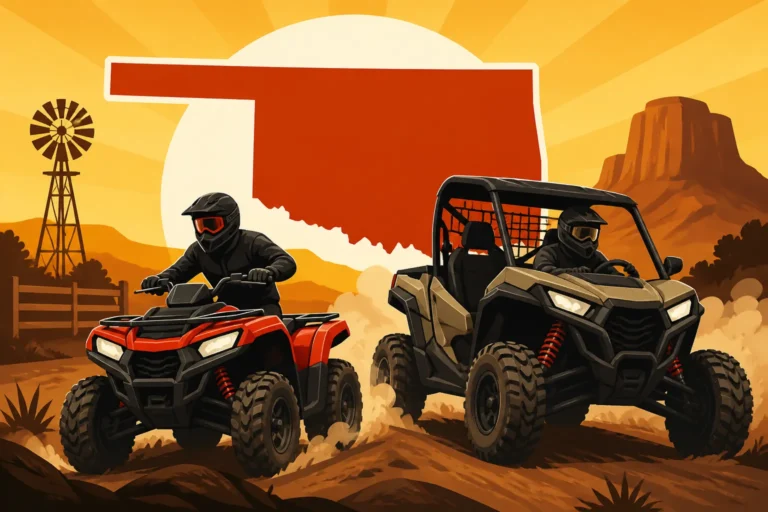
Camping beside an OHV area sounds simple until you arrive with a trailer, find the campground is separate from the riding entrance, or discover your preferred site is unavailable. This guide explains how to choose a practical base near Oklahoma trails, check camping and riding rules separately, and plan for access, noise, weather, and the everyday logistics that make a weekend run smoothly.
Choose a Campground That Matches Your Riding Plans
A campsite close to a riding area can save towing time and make breaks easier, but “near the trails” does not always mean direct trail access from your tent or RV. Some parks have camping within or beside the riding area; other trail systems sit near campgrounds that require a drive to the designated riding entrance.
Before booking, map the campground, parking or staging area, and legal trail entrance as separate destinations. A short distance on a map can involve a long tow on local roads, a gate with limited hours, or a route where off-road machines are not allowed. For an overview of the choices around the state, see [Oklahoma OHV Camping With Trail Access].
Decide how close you need to be
If you want to ride early, return to camp for lunch, or take a young rider back for a rest, proximity matters. A campground inside or immediately beside an OHV property can make those breaks much simpler. It may also mean more engine noise, dust, headlights, and traffic than you would find at a campground farther away.
If you prefer quiet evenings, consider staying a little farther from the main riding area. That can give you a calmer place to sleep while keeping the trails within a reasonable drive. The tradeoff is that you may need to pack the machine onto the trailer again, drive to the staging area, and deal with parking each day.
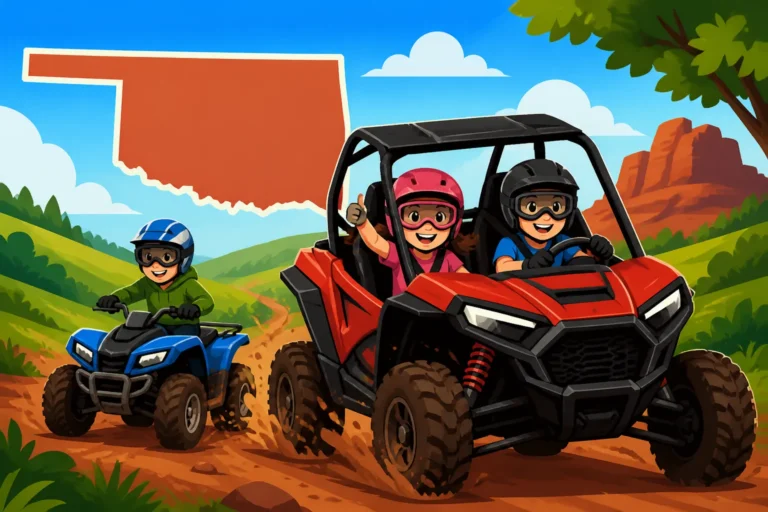
Think about your group’s actual rhythm rather than choosing by distance alone. A family with small children may value quick access to restrooms and a quiet bedtime more than a campsite beside the trail. A group planning to ride most of the day may be happier with an easy route back to camp, even if there is some background noise.
Compare the main Oklahoma camping setups
Oklahoma offers several different kinds of riding trips, and the camping arrangements can differ widely. Little Sahara State Park near Waynoka is known for sand riding, while Robbers Cave State Park’s OHV area near Wilburton offers a different, more wooded and hilly setting. Cross Bar Ranch near Davis is a private riding destination, so its camping and riding rules are set by the property. Other riding opportunities in southeast Oklahoma can involve public access arrangements where permits, seasons, or designated routes matter.
| Camping and riding setup | What can work well | What to verify before you go |
|---|---|---|
| Campground within or beside an OHV property | Shorter trips between camp and riding; convenient breaks | Whether your site is near riding, where machines may be driven, and which areas are open |
| Nearby state park campground | Often a useful base for a park visit and nearby recreation | Whether OHV access is part of the stay or requires separate staging and travel |
| Private riding park with camping | Rules, site options, and riding access may be organized by one operator | Reservations, waivers, age rules, quiet hours, machine limits, and current operating conditions |
| Public land or timber access area | A more remote, outdoors-focused experience | Permits, seasonal access, road restrictions, camping limits, and landowner requirements |
| Campground in a nearby town or recreation area | May suit riders seeking more services or a quieter night | The real drive time to the trail entrance and whether overnight trailer parking is allowed |
Use the table as a starting point, not a substitute for checking with the campground or riding-area operator. Facilities, access arrangements, and rules can change, and a campground’s general reservation confirmation does not necessarily confirm that your machine can use nearby trails.
Check Camping Rules and Riding Rules Separately
One of the easiest mistakes is assuming that permission to camp also means permission to ride from the campsite. Camping access and OHV access can be controlled by different rules, offices, or land managers. You might have a campsite reservation but still need a separate riding fee, permit, waiver, or access authorization.
Make a short pre-trip checklist and confirm each part with the relevant operator. If you are comparing state park facilities, the guidance in [Oklahoma State Park Camping Fees] can help you think through the camping side, while [Oklahoma Private Park Waivers and Rules] is useful when your plan involves a privately operated riding property.
Confirm where machines may travel
Ask whether you can ride directly from your campsite to the designated riding area, or whether you must trailer the machine to a separate staging point. Do not assume that a campground road is an OHV trail. A route that is open to campground traffic may not be open to quads or side-by-sides, and a marked trail may not connect to the campground at all.
This matters especially when the campground and riding area are close but managed separately. A family might book a site near Robbers Cave, for example, and expect to unload once and ride everywhere. The actual arrangement may require following a specific access route or using a separate parking area. Confirm the machine route, not just the driving directions for your truck.
For public land and timber access, ask which roads or trails are open to your machine and when. Do not rely on a trail line visible in an app as proof that riding is permitted. onX Offroad can help you review routes and orient yourself, but local signs and land-manager rules should guide the final decision. Before relying on any mapped route, see [Oklahoma Trail Conditions Before You Tow] and [Oklahoma Ordinance Lookups Before You Ride].
Ask about permits, fees, waivers, and age rules
A riding area may require an access permit, day-use payment, waiver, or other check-in step that is separate from campsite charges. Public access areas can have their own land-access conditions, and private parks can set rules for riders, passengers, and minors. If you are visiting a location such as Honobia Creek or Three Rivers, confirm access conditions for your planned dates rather than assuming a previous visit or an old trip report still applies.
For a private park, ask whether every rider must check in, whether a parent or guardian must sign for a minor, and whether passengers have separate requirements. Some properties also limit machine types, rider ages, or the places where children can ride. A quick call can prevent an awkward arrival when the group has already unloaded.
Keep proof of whatever you are required to carry, whether it is a reservation, permit, waiver confirmation, or registration document. A phone screenshot can be useful, but it is sensible to save important information offline and carry a paper copy when reception may be unreliable. For broader planning, [Oklahoma Land Access Permits Explained] covers why access requirements should be checked independently from camping arrangements.
Pick a Campsite That Works for Your Machine and Group
A campsite that looks spacious in a listing may feel cramped once a truck, trailer, side-by-side, tent, and supplies are all in place. Before choosing a site, picture the entire setup rather than only the sleeping area. You need room to park, unload safely, secure equipment, and move around without blocking a road or a neighbor’s access.
This is especially important for a multi-machine group. Several trailers can take up more space than people expect, and a site suitable for one RV may not have a convenient area for extra vehicles. Ask about the maximum number of vehicles, trailer dimensions, overflow parking, and whether a separate staging area is available.
Think through access, parking, and unloading
A tight turn can become a stressful problem when towing a long trailer, particularly after dark or when the campground road is busy. Ask whether the site is pull-through or back-in, what the road surface is like, and whether there are branches, narrow approaches, or low clearances that could affect your rig. If you are hauling a side-by-side, check that the trailer and machine combination can fit in the space you reserve.
Plan where the machine will sit overnight. You may want to unload only after confirming that the campsite allows it and that the machine can be secured without obstructing shared space. Bring a lock or other practical theft-deterrent equipment, and keep keys, helmets, and riding gear organized. If your group has several vehicles, decide in advance who is towing, who is driving the support vehicle, and where each one will park.
Navigation can help reduce last-minute confusion, especially when a campground has several entrances or a staging area is not beside the campsite. An app such as onX Offroad can be useful for reviewing a route before leaving home and keeping a map available when cell service drops. Still, follow posted signs and the campground’s directions if they differ from the route you planned.
Balance comfort with campsite location
A site closest to a trail entrance may be convenient but can also receive more dust, noise, and vehicle traffic. A site farther back may feel more private and restful, though it could add a walk or drive to shared facilities. Think about who is traveling: a group of adults with early starts may tolerate a busier location, while a family with a toddler may prefer distance from late-night activity and headlights.
Check what the listing actually includes. A campsite may provide a pad or parking area without offering water, electrical service, a dump station, or nearby showers. Do not assume that a riding property has the same facilities as a full-service campground. Ask where restrooms are, whether water is available at the site, and what you should bring if facilities are basic.
If you are traveling with a large group, agree on quiet hours and generator expectations before arrival. A generator that seems reasonable to one person can be disruptive to a neighboring tent site. Likewise, a machine parked with its lights on or a trailer positioned across a shared lane can turn a convenient campground into a frustrating one for everyone nearby.
Plan for Oklahoma Weather, Dust, and Trail Conditions
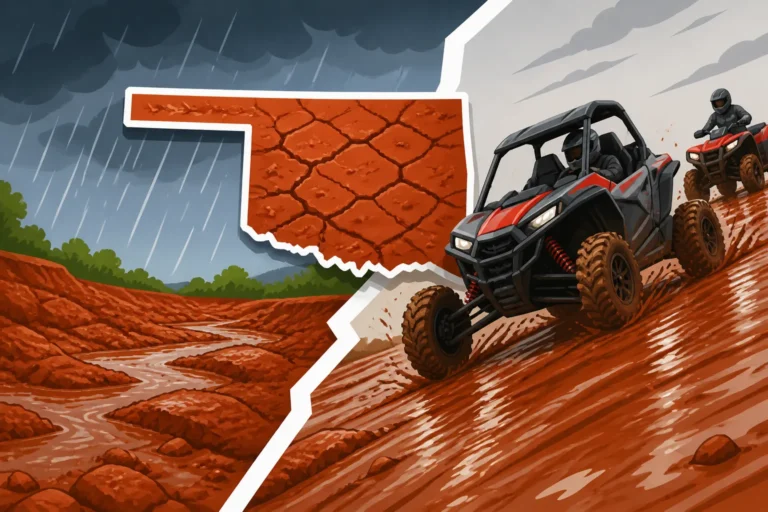
A camping plan can look perfect on a clear forecast and become difficult after rain, wind, or extreme heat. Oklahoma’s varied terrain brings different concerns: loose sand around Waynoka, wooded and rocky ground in parts of the southeast, and red clay that can become slippery after a soaking rain. Conditions at camp and on the trails may also differ, so check both before you tow.
Your goal is not to predict every weather change. It is to make sure the group can adjust without creating unnecessary risk or damage. Have a backup activity, know how to reach the campground operator, and be prepared to delay riding if conditions make the route unsafe or the property closes access.
Prepare for heat, rain, and changing ground
In hot weather, a riding day can take more water and energy than expected. Carry drinking water for camp and for the ride, plan breaks, and make sure children have a shaded place to cool down. Keep food and supplies protected from heat, and avoid leaving gear that can be damaged by sun in a hot vehicle or exposed trailer.
After rain, do not assume that every trail is usable because the campground entrance is open. Clay, creek crossings, wooded routes, and low-lying areas can change quickly. Ask the riding-area operator about closures and current conditions. If a route is posted closed, do not ride around the barrier; the closure may protect riders, the trail surface, or both.
Sand brings a different set of preparations. Loose terrain can demand more from a machine and rider than a short neighborhood test ride. Check tire condition and equipment before the trip, and keep a basic recovery plan in mind. For destination-specific advice, [Oklahoma Dune Riding Explained] and [What Tires Work on Loose Sand and Clay] can help you prepare for a sand-focused weekend.
Plan around dust, noise, and changing light
Dust is part of many dry-weather riding trips, and wind direction can carry it across campsites. Bring eye protection, a way to cover food and bedding, and clothing that can be separated from clean gear. If someone in your group is sensitive to dust, ask about campsite placement and consider choosing a location away from the main access road.
Noise can be a bigger issue than people expect. Engines may start early, trailers may arrive or leave, and riders may return to camp at different times. Be considerate about warm-ups and avoid unnecessary engine running near tents or neighboring sites. Follow posted quiet hours even if the riding area itself remains open later.
Dusk also affects campsite safety. Make sure people can see where they are walking, keep lights aimed away from neighboring tents, and do not ride around the campground unless the operator expressly permits it. Headlamps and lanterns are helpful for camp tasks, but they do not make an unauthorized campground route an approved riding trail.
Build a Practical Weekend Plan Before You Leave
The smoother trips usually have a few unglamorous details settled before the truck is loaded: where to check in, where to park, who has the reservation, what happens if the weather changes, and how the group will communicate if someone gets separated. These small choices matter more when the destination is rural or cell coverage is limited.
Use a map to plan the drive, but also save the campground’s address, entrance instructions, and contact details where you can access them offline. onX Offroad can help with route awareness and offline planning, while posted signs and staff instructions remain the authority for current access. If your group is visiting unfamiliar terrain, agree on a meeting point and a turnaround time before starting a ride.
Make a simple arrival and departure checklist
Before leaving home, confirm the reservation dates, site type, vehicle limits, check-in process, and cancellation or weather policy. Ask whether the campground has separate check-in for the riding area and whether you need to arrive during office hours to collect a wristband, permit, or other required item. If you expect to arrive late, find out how late arrivals are handled rather than assuming you can sort it out at the gate.
Pack documents and essentials where they are easy to find. That may include registration paperwork, identification, reservation details, medication, a first-aid kit, charging equipment, and the tools needed for your machine and trailer. Keep the loading plan organized so a helmet or tie-down does not disappear under camping supplies.
Before leaving the campground, check that the campsite is clean, food and rubbish are secured, and all personal items are accounted for. Inspect the machine and trailer after the ride, especially if you have traveled through sand or mud. A quick cleanup and equipment check can make the trip home safer and reduce the amount of grit and debris that ends up in your vehicle.
Have a backup plan for closures or poor conditions
A riding weekend can be disrupted by heavy rain, a closed trail, a full campground, or a machine problem. Decide in advance what your group will do if riding is limited. That might mean shifting to a permitted route, enjoying other park activities, taking a rest day, or heading home early. A backup plan is much less stressful than trying to negotiate one while everyone is tired and already unpacked.
Avoid treating nearby land as a substitute riding area. A visible track, open gate, or empty field does not establish permission to ride. Confirm access with the land manager or property owner, and respect posted restrictions. If you are uncertain whether an area is open, stop and ask before entering.
For longer trips, consider whether the campground and riding area have fuel, groceries, repair help, and reliable phone reception nearby. Do not assume every rural destination has services just because a town appears on the map. [Oklahoma Riding Areas With Fuel Nearby] and [Oklahoma Riding Areas With Cell Service] are useful planning topics when you are deciding what to bring and how self-sufficient your group needs to be.
Disclaimer
This article is for general informational purposes only and does not constitute professional advice. Laws, prices and regulations vary by location and change over time. Consult a qualified professional for guidance on your specific situation.