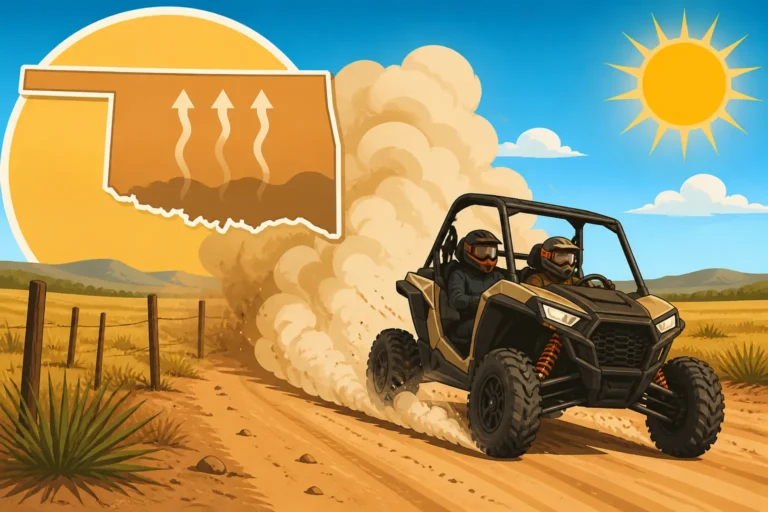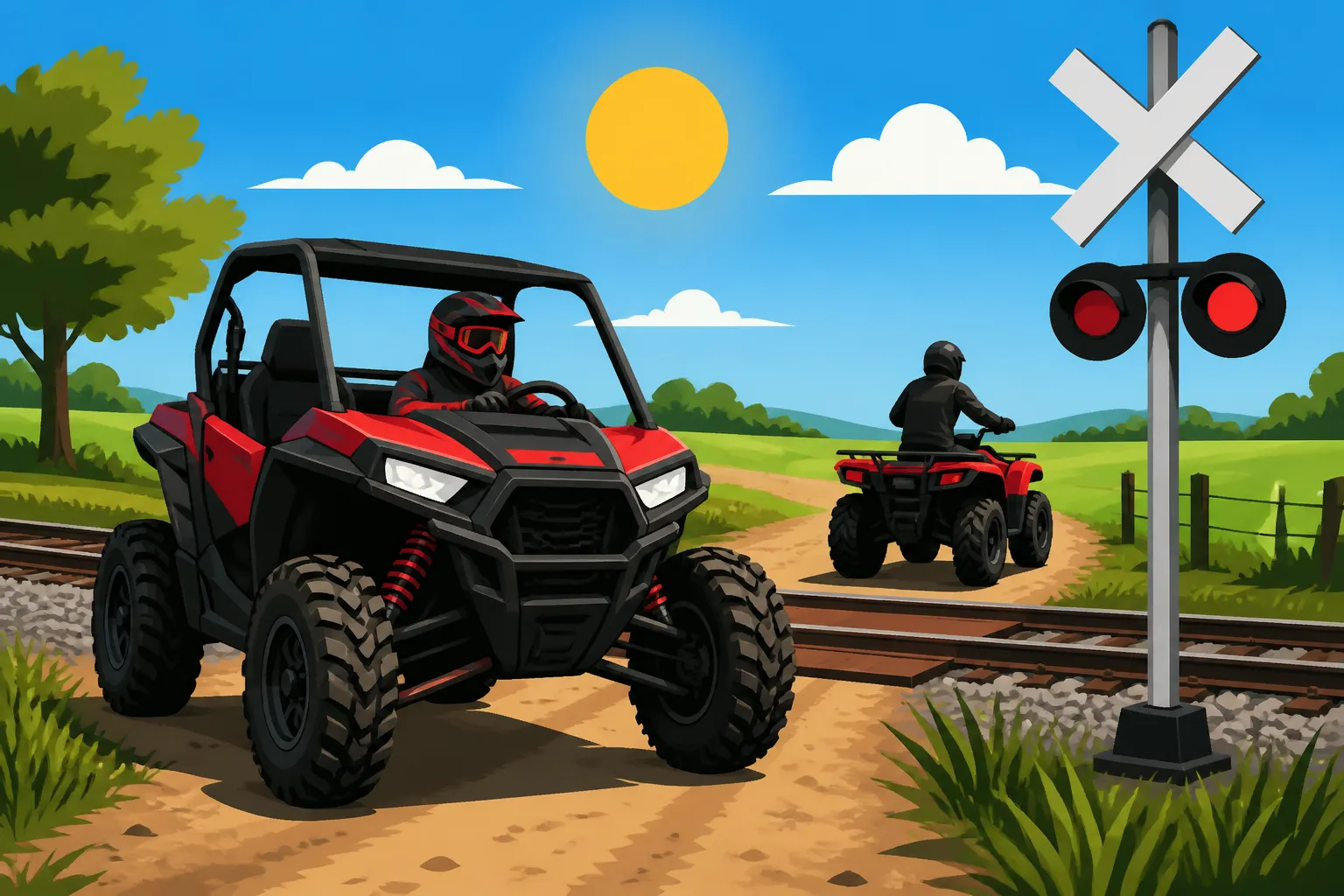
Oklahoma Railway Crossings in Daylight
Riding your ATV or UTV in Oklahoma can be an absolute blast, whether you're tackling the dunes at Little Sahara or working on your land. But that joy can quickly turn to anxiety when you find yourself needing to cross a paved road or, even more intimidating, a set of railway tracks. It’s a common point of confusion and frustration for many riders: how do you legally navigate these public thoroughfares without breaking the law or, worse, putting yourself in danger? This guide is here to untangle the specific rules around railway crossings for off-road machines in Oklahoma, ensuring you can ride with confidence and keep yourself, and others, safe.
Understanding Oklahoma's ATV/UTV Road Rules
Before we dive into railway specifics, it's crucial to grasp the overarching philosophy Oklahoma has regarding off-road vehicles and public roads. It's not always intuitive, and many riders find themselves scratching their heads when trying to interpret the various statutes and local ordinances.
The Core Restriction: Off-Road Machines on Public Ways
The fundamental rule in Oklahoma is pretty straightforward: ATVs and UTVs are classified as off-road vehicles. This means they are generally designed and intended for use on unpaved terrain, private land, or designated off-road parks. They are not built to meet the same safety and equipment standards as cars, trucks, or motorcycles for public road use. This core restriction is in place for several very practical reasons, primarily public safety. The differences in braking, handling, speed capabilities, and visibility between an off-road machine and a street-legal vehicle make mixing them on busy roads a risky proposition.
Think about it: your typical sport quad, while nimble on the trail, often lacks turn signals, proper headlights for night driving, or even side mirrors that are standard on street vehicles. These aren't just minor omissions; they're critical safety features for interacting with other traffic. Furthermore, the knobby tires ideal for gripping dirt and mud can be less stable on pavement, especially at higher speeds, and they can also contribute to faster wear and tear on public roads, which isn't what they were designed for. It's a system designed to keep everyone safe, even if it sometimes feels inconvenient when you just need to get from point A to point B.
Exceptions and Local Ordinances
Now, like many rules, there are exceptions, and this is where things can get a bit muddy for riders. While the general prohibition on public road use stands, Oklahoma law does provide pathways for limited access, especially for essential crossings or in areas where local communities have decided to open up certain roads. It's not a free-for-all, but it acknowledges the practical needs of riders.
For instance, county commissioners in rural areas have the authority to designate certain county roads as open for ATV and UTV use, often for agricultural purposes or to connect trails. Similarly, municipal governing bodies in towns and cities might pass ordinances to allow limited ATV access on specific city streets. These local decisions are crucial, and what's allowed in one county or town might be strictly prohibited just down the road. It’s why you hear varying stories from riders across the state. This patchwork of rules can be confusing, but it highlights the importance of checking local regulations. Beyond these local decisions, Oklahoma also has a specific designation for [Oklahoma's Street-Legal UTV Class Explained], which are machines that have been modified and registered to meet specific equipment standards, allowing them much broader (though still restricted) access to public roads. However, it's vital to remember that a standard off-road ATV or UTV does not automatically fall into this category, even if you've added a few aftermarket accessories.
The Specifics of Crossing Railways in Oklahoma
When it comes to railway crossings, Oklahoma has a very clear and non-negotiable rule for off-road machines. This isn't just about convenience; it's about life-or-death safety. Getting this wrong can have severe consequences, not only legally but physically.
Why Railway Crossings Are Allowed in Daylight Only
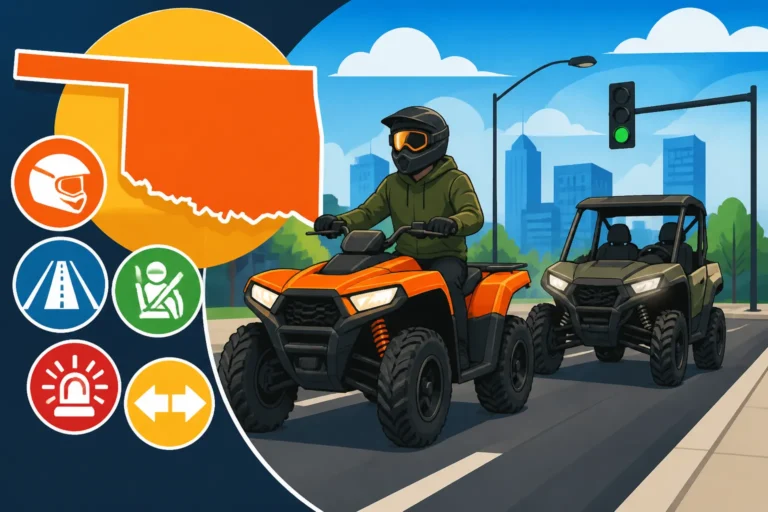
Here's the critical distinction for off-road machines: [Oklahoma Railway Crossings in Daylight] is the law. You cannot, under any circumstances, cross railway tracks on your ATV or UTV after dark. This rule isn't arbitrary; it's born out of practical safety concerns. When the sun goes down, visibility drastically drops, both for you and for any train operator. Many standard off-road ATVs and UTVs, while they might have headlights for trail riding, often lack the high-intensity, wide-beaming illumination, or the reflective markers that street-legal vehicles are required to have. This makes them incredibly difficult to see for an approaching train engineer, especially if your machine isn't directly aligned with the tracks.
Consider the speed and mass of a train. It cannot stop quickly, and even a slow-moving train can be deadly if it strikes an off-road vehicle. Crossing at night introduces too many variables: shadows, glare, and the simple fact that you might not see an approaching train until it's too late, and the train operator might not see you at all. It's a rule designed to eliminate preventable tragedies. The risks of low visibility, combined with the often limited lighting on many off-road machines, create an unacceptable hazard for crossing active rail lines in darkness.
Procedures for a Safe Railway Crossing
Even in daylight, crossing railway tracks demands extreme caution. It's not just about legality; it's about personal safety. Treat every railway crossing as a potential hazard, whether there are warning lights or not. The standard safety mantra for railway crossings applies doubly to off-road machines due to their smaller profile and different handling characteristics.
First and foremost, always STOP before the tracks. Don't assume anything. Bring your machine to a complete halt, at a safe distance from the rails. Then, LOOK in both directions for an approaching train. Your machine's engine might be loud, so it's also crucial to LISTEN carefully. Turn off your radio or intercom if you have one, and remove your helmet if it impedes your hearing. Once you've confirmed no train is approaching from either direction, YIELD to any crossing signals or gates. Never try to beat a crossing gate or go around it; it's illegal and incredibly dangerous. When the path is clear, cross the tracks quickly and directly. Avoid making sudden turns or lingering on the tracks. Ensure there's enough space on the other side for your machine before you commit to crossing. Pay attention to the condition of the crossing surface itself; some railway crossings can be rough or have significant gaps between the rails and the road surface, which can snag smaller tires or throw your machine off balance. Maintaining situational awareness is key to avoiding incidents and ensuring a safe passage.
Distinguishing Between ATV/UTV Classes and Road Use
The regulations can feel like a labyrinth, especially when you start to consider the different types of machines and how they're categorized. It's not a one-size-fits-all approach, and understanding the nuances is essential for staying compliant and safe.
Standard Off-Road ATVs and UTVs
For the vast majority of ATVs and UTVs in Oklahoma, the ones used for recreation, hunting, or light farm work, their road privileges are extremely limited. As we've discussed, these are primarily off-road vehicles. Their road use is generally restricted to crossing public roads to get from one private property to another, or to access an adjacent trail. This also includes specific county roads that have been explicitly opened by local commissioners for off-road vehicle use, often under an "instrument of husbandry" exemption if used for farming or ranching. Even then, when you're crossing a highway, there are often speed restrictions, such as the rule that [Oklahoma Highway Crossings in Daylight] must occur where the posted speed limit is 35 mph or less. This limitation is another layer of protection, as it ensures you're not trying to merge into high-speed traffic on a machine ill-suited for it.
While it might be tempting to deck out your standard off-road machine with accessories that look street-legal – brighter lights, turn signals, or even a full windshield – these additions alone do not change its fundamental classification. A great example is when riders look to companies like SuperATV for robust aftermarket parts, such as their heavy-duty bumpers, winches, or suspension lifts, to enhance their machine's trail performance. These parts are fantastic for off-road adventure, but they don't magically confer street-legal status. It's a common misconception that simply adding a few lights makes an off-road ATV or UTV road-worthy in the eyes of the law. Without going through the proper channels for street-legal conversion (if available for your specific machine type and model), and obtaining the necessary registration and plates, it remains an off-road vehicle with very limited road access.
Street-Legal UTVs and Their Different Rules
To make things even more interesting, Oklahoma passed legislation that created a specific class of "street-legal UTVs." These are a distinct category, separate from your average trail machine. For a UTV to be considered street-legal, it must meet a specific set of equipment requirements, including things like headlights, taillights, brake lights, turn signals, a horn, mirrors, and often a windshield. Once these modifications are made and the vehicle passes inspection, it can be registered and receive an annual road plate and decal. This allows these UTVs much broader access to public roads.
However, even these street-legal UTVs have limitations. They are generally prohibited from using interstate highways and many U.S. highways. For instance, [Oklahoma Street UTVs Stay Off Interstates] is a hard rule. The idea is to provide practical utility for UTV owners to use roads for transportation, but still keep them off the fastest and highest-traffic thoroughfares where they might pose a safety risk due to speed differences or lack of full automotive crash protection. If you're riding a true street-legal UTV, you'll still need to be aware of the specific road types it's allowed on and understand that its privileges are distinct from a standard off-road machine merely crossing a road. This distinction is paramount when discussing railway crossings, as a street-legal UTV might have different lighting and signaling capabilities than its off-road counterpart, though the daylight-only rule for crossing railways still prioritizes maximum visibility.
Consequences of Non-Compliance and Enforcement
Ignoring Oklahoma's ATV and UTV laws, especially those concerning road use and railway crossings, isn't just a minor infraction; it can lead to serious legal and financial repercussions, not to mention the potential for dangerous accidents. Ignorance of the law is rarely an excuse that holds up when you're facing a peace officer.
Fines and Penalties for Illegal Road Use
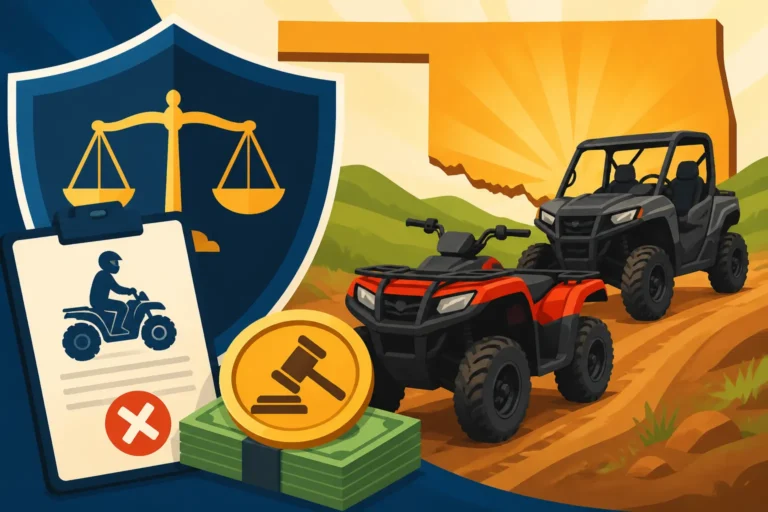
If you're caught using your off-road ATV or UTV on a prohibited public road, or crossing railway tracks after dark, you could face fines and other penalties. While it's true that for minor infractions, [Oklahoma Penalties Capped at $25] might apply, this doesn't mean every violation will be that cheap. More serious or repeated offenses, especially those involving public safety risks, can result in higher fines, court costs, and even impoundment of your machine. Imagine having your prized UTV towed and impounded, racking up storage fees in addition to the ticket. It's a significant financial hit that can quickly sour your riding experience.
Beyond the immediate financial penalties, there's also the risk of having the incident recorded on your driving record, depending on how the citation is issued. This could potentially impact your insurance rates or even lead to points on your driver's license, even though you don't need a special license for a standard off-road ATV. The state takes these rules seriously because they are designed to prevent accidents and protect everyone using public thoroughfares, whether by car, truck, or train. It's far better to understand and abide by the rules than to face the headache and expense of a citation.
Who Enforces the Rules
You might think that because you're on a less-trafficked road, nobody will notice. That's a dangerous assumption. Various law enforcement agencies in Oklahoma are tasked with enforcing these ATV and UTV regulations. You could encounter a state trooper from the Oklahoma Highway Patrol, a county deputy, or even a local police officer if you're in an incorporated area. If you're on public lands or near state parks, [Oklahoma Park Rangers as Enforcers] also have the authority to issue citations for illegal road use or unsafe riding practices.
These officers are trained to recognize illegal activity and have the authority to pull you over. They'll be looking for things like whether your machine is registered (if required for its use), if you're operating it safely, and if you're on a legally permitted road. If you're pulled over, [What a State Trooper Can Ask to See] might include proof of ownership, your ID, and asking you about your intended route. It's always best to be courteous and cooperate with law enforcement. Understanding that multiple agencies are on patrol should reinforce the importance of knowing and following the rules, especially around critical infrastructure like railway crossings.
Best Practices for Riding Near and Crossing Railways
Riding an ATV or UTV is about freedom and adventure, but it also comes with a responsibility to operate your machine safely and legally. When you're near railway tracks or any public road, this responsibility takes on even greater importance. A few smart practices can make all the difference.
Planning Your Route and Staying Informed
One of the best things you can do as an ATV or UTV rider in Oklahoma is to plan your route in advance and stay informed about local rules. Don't rely on hearsay or assumptions. If you're planning to ride in a new area, take the time to research. Look up county ordinances to see which roads, if any, are open to off-road vehicles. Many counties and cities have this information available online, or you can contact their administrative offices. For instance, [Oklahoma Ordinance Lookups Before You Ride] can save you a lot of trouble by confirming specific allowances or restrictions in a particular municipality.
Always have a clear understanding of where you're allowed to ride and where you're not. This means knowing if a particular road is open for ATV use, where you can legally cross a highway, and, critically, where railway crossings exist and how to approach them. Maps, both digital and physical, can be invaluable tools for identifying these features and planning a safe, legal route that avoids unnecessary risks or surprises. Taking a few minutes to prepare before you hit the trail can prevent hours of headaches later.
Enhancing Visibility and Safety Gear
While adding accessories won't magically make your standard off-road ATV or UTV street-legal, certain modifications and choices in safety gear can significantly enhance your visibility and safety, especially during necessary railway or highway crossings in daylight. These are practical steps you can take to protect yourself and make your presence known to others.
Consider using brighter aftermarket lights on your machine. While not a substitute for proper street-legal lighting, enhanced forward and rear lighting, particularly during dusk or dawn conditions, can make you more noticeable. Reflective tape strategically placed on your machine or helmet can also dramatically increase your visibility, especially to other drivers or train operators. Mirrors, even if not legally required for your off-road machine, offer a valuable safety advantage by allowing you to see traffic approaching from behind without having to turn your head. Products from companies like SuperATV often include various lighting solutions and mirrors designed for off-road durability, which can be adapted for better visibility during those brief, legal road encounters. Always wear bright, highly visible clothing. Fluorescent colors like neon yellow or orange stand out much better against natural backgrounds than earth tones. And for all riders, regardless of age, wearing a helmet is a smart choice. Oklahoma law mandates [Oklahoma Helmet Law for Riders Under 18], but every rider benefits from head protection, especially when sharing space with vehicles that are much larger and faster. Making yourself as visible as possible is a proactive step that can help prevent accidents during the limited times you are allowed on or crossing public roadways.
Oklahoma ATV/UTV Road Use and Crossing Summary
To help clarify the differences between standard off-road ATVs/UTVs and street-legal UTVs, particularly concerning their interaction with public roads and railway crossings, here's a quick comparison.
| Feature | Standard Off-Road ATV/UTV | Street-Legal UTV (Registered) |
|---|---|---|
| Primary Use | Off-road trails, private land, designated OHV areas | On-road transportation, also off-road capable |
| General Road Use | Highly restricted; crossing roads, specific county roads | Broader road access, but with some restrictions |
| Railway Crossings | Daylight only, with extreme caution | Daylight only, with extreme caution |
| Night Crossing Railways | Strictly prohibited | Strictly prohibited |
| Highway Crossings | Allowed for crossings (e.g., [Oklahoma Crossing Rules at 35 mph]) | Allowed, but still [Oklahoma Street UTVs Stay Off Interstates] |
| Required Equipment | Basic headlights/taillights for off-road use | Full DOT-compliant lighting (head, tail, brake, turn), horn, mirrors, etc. |
| Registration/Plates | [Oklahoma ATV Registration You Pay Once] for decal | Annual road plate and registration |
| Enforcement | State Troopers, Deputies, Park Rangers | State Troopers, Deputies, Local Police, Park Rangers |
| Local Ordinances Impact | Heavily influenced by county/city decisions | Less impacted, as state law defines broader road access |
| Passenger Rules | Generally passengers only where factory designed | Generally passengers only where factory designed |
| License Needed | No special license for ATV | Valid driver's license (16+ years old) for UTV |
Navigating the rules for ATVs and UTVs on Oklahoma roads can feel like a complex puzzle, but with the right information, it becomes much clearer. The critical takeaway, especially regarding railway tracks, is that safety is paramount. Always exercise extreme caution, and remember that for standard off-road machines, railway crossings are strictly a daylight-only affair. By understanding and respecting these rules, you can enjoy your machine responsibly and keep your adventures safe for years to come. For broader questions about road use, it's always good to consider the overall question of [Can You Drive a UTV on the Road in Oklahoma?].
Disclaimer
This article is for general informational purposes only and does not constitute professional advice. Laws, prices and regulations vary by location and change over time. Consult a qualified professional for guidance on your specific situation.