Tag Agencies Processing From July
For years, many Oklahoma UTV enthusiasts have dreamed of taking their side-by-sides from the trails to the town streets, only to be met with a maze of complex rules and limitations. The sheer frustration of owning a versatile machine that couldn't legally traverse a short stretch of pavement to get to a local store or connect two trail systems was a real pain point for countless riders. This guide is here to clear the air, diving deep into how Oklahoma’s tag agencies have become the central hub for making that dream a reality for street-legal UTVs, specifically after a pivotal change took effect.
The Landmark Shift: Oklahoma Tag Agencies and Street-Legal UTV Processing
If you've been holding your breath, hoping for a clearer path to make your UTV street-legal in Oklahoma, you're not alone. For a long time, the rules were murky, and the avenues for registering an off-road machine for on-road use felt nonexistent. That all changed significantly with the passage of new legislation. Before this, local tag agencies primarily handled traditional vehicle registrations and off-road ATV/UTV titles, but the concept of a street-legal UTV plate was largely foreign to their daily operations.
The real game-changer came with the implementation of the new law, which officially designated local tag agencies to process applications for what's now known as a "street-legal utility vehicle" – often just called a street-legal UTV. This crucial update meant that starting in July, riders finally had a clear, local point of contact to get their machines road-ready and legally compliant. Imagine the relief: no more confusion, no more endless phone calls to state offices, just a straightforward process at your local tag agency, the same place you'd register your car or truck. This was a massive step forward for the UTV community, recognizing the growing popularity and utility of these machines beyond just recreational trails. It’s definitely worth looking into [How Oklahoma Created a Street-Legal UTV Class] if you're curious about the legislative journey.
This shift at the tag agencies wasn't just a procedural tweak; it signaled a broader acceptance and integration of UTVs into Oklahoma's transportation landscape. Suddenly, the local tag agency clerks, who are often the first point of contact for many vehicle-related inquiries, became equipped to handle this new class of vehicle. They received the training, the forms, and the mandate to help riders navigate this exciting new opportunity. For riders, this meant a familiar and accessible place to get their questions answered and their machines registered, cutting down on previous hurdles and streamlining the entire experience. If you’re unsure what this new class entails, learning about [Oklahoma's Street-Legal UTV Class Explained] is a great next step.
Unpacking What a Street-Legal UTV Plate Actually Gets You
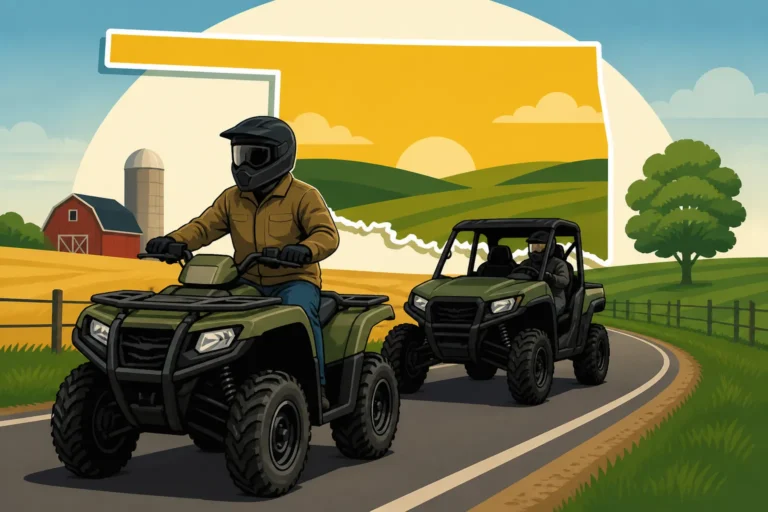
So, you've heard the good news about tag agencies and street-legal UTVs. But what does getting that special plate actually mean for your riding adventures? It’s not a blank check to drive anywhere, anytime, but it does open up a lot of possibilities that were previously off-limits. First and foremost, a street-legal UTV plate allows you to operate your side-by-side on certain public roads within Oklahoma. This is a huge distinction from the standard off-road ATV registration, which only allows for very limited road crossings and strictly off-highway use.
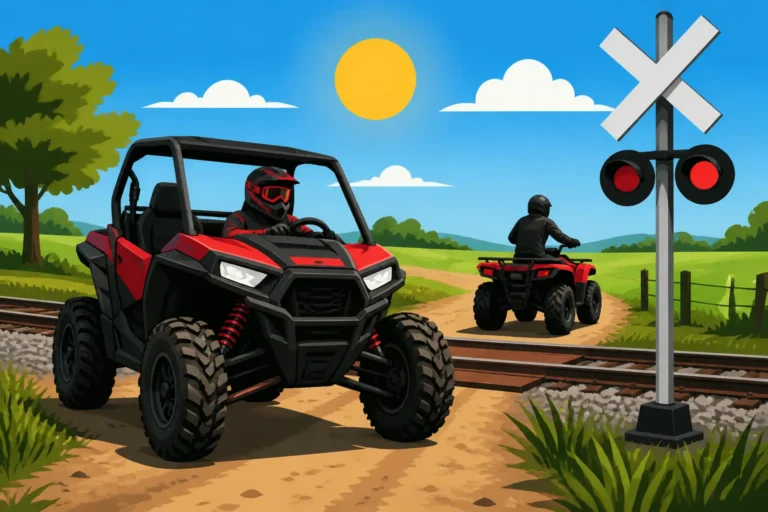
However, there are important caveats. Your street-legal UTV can generally use county roads and city streets where local ordinances permit. You're explicitly prohibited from interstates and U.S. highways. Speed limits also come into play; often, your UTV will be restricted to roads with posted speeds of 35 mph or less, especially when it comes to crossing higher-speed routes. This means those long stretches of four-lane highway are still a no-go, but getting to a gas station, a local diner, or connecting sections of trail via a county road becomes entirely feasible. Understanding [Oklahoma Street UTVs Stay Off Interstates] is key to staying legal.
To qualify for this special plate, your UTV isn't just checked for existing off-road registration; it needs to meet a specific set of equipment requirements, transforming it from a pure trail machine into a road-worthy vehicle. This typically includes items like a horn, headlights, taillights, brake lights, turn signals, and mirrors. Many riders upgrade their machines with aftermarket parts to meet these standards. For instance, companies like SuperATV offer a wide range of UTV accessories, from signal kits to mirrors and windshields, that help ensure your machine complies with all the necessary street-legal requirements. Drivers also need to be at least 16 years old and possess a valid driver's license, though thankfully, no special motorcycle endorsement is required. Don't forget that [Oklahoma Equipment Required for Street UTVs] outlines all the specifics you'll need.
The Practical Steps: Registering Your Street-Legal UTV at a Tag Agency
Now that you know what's involved, let's talk brass tacks: how do you actually get your street-legal UTV plate through the tag agency? The process, while new to some, is designed to be as straightforward as registering any other vehicle, with a few UTV-specific considerations. Your journey typically begins by ensuring your UTV meets all the equipment requirements we just discussed. Double-check your turn signals, mirrors, horn, and lighting, as these are critical for passing any potential inspection, either informal at the tag agency or if you ever get pulled over.
Next, you'll need to gather your paperwork. For a new UTV, you’ll definitely need the Manufacturer’s Statement of Origin (MSO), which is essentially the birth certificate for your machine. If you're registering a used UTV, you'll need the existing title, properly signed over to you. You'll also need proof of liability insurance. Unlike standard off-road ATV registrations, which don't typically require insurance, a street-legal UTV needs to be insured just like any other vehicle operating on public roads. It's crucial to have this in place before you head to the tag agency. This requirement is detailed in [Oklahoma Insurance at Street Registration].
Once your paperwork is in order and your UTV is equipped, head to your local Oklahoma tag agency. You’ll complete a specific application form for street-legal utility vehicles – you might want to review [Which Form You File for a Road Plate] beforehand. The tag agency will verify your documents, collect the appropriate fees, and issue you a street-legal UTV license plate and decal. The fees for street-legal UTVs are different from the one-time, $11 fee for an off-road ATV registration. Instead, street-legal UTVs require an annual renewal, similar to your car or truck. This is a crucial distinction that many new owners might overlook, so be prepared for yearly renewal notifications. This annual renewal is covered in [Oklahoma Annual Plates for Street UTVs].
| Feature | Standard Off-Road ATV/UTV Registration | Street-Legal UTV Registration |
|---|---|---|
| Purpose | Off-road use, limited road crossings | On-road use on approved roads |
| Issued By | Oklahoma Tag Agency | Oklahoma Tag Agency |
| Decal Placement | Front of machine | Front decal, plus rear license plate |
| Renewal Cycle | One-time registration, never renews | Annual renewal |
| Insurance Required | No | Yes, liability insurance |
| Equipment Requirements | Basic safety (lights, spark arrestor) | Full road-ready (horn, signals, mirrors, etc.) |
| Road Access | Very limited crossings | County roads, city streets (local laws apply) |
| Driver Age/License | Varies by machine/area | 16+ with valid driver's license |
| Cost Structure | Low one-time fee | Annual fees, higher initial cost |
Important Rules and Restrictions for Oklahoma Street-Legal UTVs on the Road
Getting that coveted street-legal plate is a huge win, but it doesn't mean the Wild West for your UTV. Oklahoma has specific rules and restrictions that riders must adhere to when operating their street-legal UTVs on public roads. Understanding these limitations is not just about avoiding a ticket; it's about ensuring safety for yourself, your passengers, and other motorists sharing the road. Ignoring these rules can lead to fines, impoundment, or worse, so let’s dive into what you need to know to ride responsibly.
As mentioned before, while you can now cruise down many county roads and city streets, certain major arteries remain off-limits. Interstates and US highways are generally prohibited for street-legal UTVs. These high-speed thoroughfares are simply not designed for the typical performance capabilities of a UTV, and integrating them into that traffic flow would pose significant safety risks. So, plan your routes carefully, using local maps to ensure you stick to approved roads. Even on approved roads, be mindful of speed limits. Often, your UTV will be restricted to roads posted at 35 mph or less, and it's always wise to err on the side of caution. Keeping an eye on [Oklahoma Highway Crossings in Daylight] is crucial for safe navigation.
Beyond where you can ride, there are also rules about who can ride and how. Oklahoma's helmet law, for instance, still applies to street-legal UTVs. Any rider or passenger under the age of 18 is required to wear a helmet that meets federal safety standards. This is a non-negotiable safety measure, regardless of whether you're on a trail or a public road. Additionally, passenger rules typically stipulate that you can only carry as many passengers as the manufacturer originally designed the UTV to hold. Overloading your machine is dangerous and illegal. While your UTV might be street-legal, remember that standard traffic laws apply, including DUI laws. Operating any vehicle, including a UTV, while impaired is strictly prohibited and carries severe penalties.
Finally, while the state legislation opened the door for street-legal UTVs, individual cities and counties still have a say in which of their local roads are open to these machines. This means that while state law allows for it, a specific city or county might have an ordinance that further restricts or opens up certain roads. It's always a good idea to check with local authorities if you're planning to ride your street-legal UTV extensively in a new area. Websites for county commissioners and city councils often publish this information. Being aware of [Oklahoma County Commissioners and ATV Roads] can help you determine where you can legally ride in different parts of the state.
Disclaimer
This article is for general informational purposes only and does not constitute professional advice. Laws, prices and regulations vary by location and change over time. Consult a qualified professional for guidance on your specific situation.