Oklahoma Highway Crossings in Daylight
Riding your ATV or UTV in Oklahoma offers an incredible sense of freedom, whether you're working a ranch or hitting the trails. But let's be honest, that freedom often comes with a dose of anxiety when you need to get your machine from one patch of land to another, especially if a paved road stands in your way. It’s a common frustration to feel like you're stuck, wondering how to legally and safely cross a state highway without getting into trouble. This guide is here to clear up that confusion, diving deep into Oklahoma’s specific rules for highway crossings during daylight hours.
The Basics of Crossing a Paved Highway in Oklahoma
There’s a world of difference between legally riding your ATV or UTV on a public road and simply crossing one to access another area. Many riders, especially newcomers to Oklahoma’s off-road scene or those who’ve moved from states with different regulations, often misunderstand this crucial distinction. They assume that if they can’t ride on a highway, they can’t even cross it. This isn't entirely true, but there are very specific conditions that must be met. The goal here is to ensure you can move your machine efficiently and legally, minimizing risk for everyone on the road.
Why Crossing is Different from Riding On
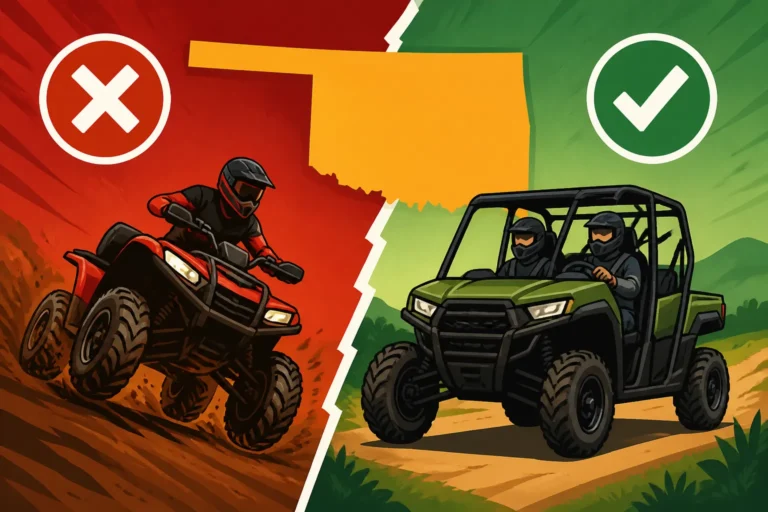
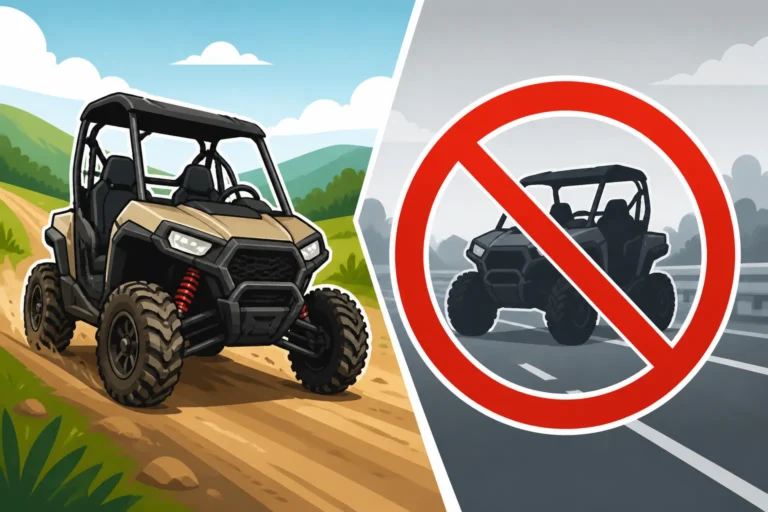
Let’s be clear: in Oklahoma, ATVs and UTVs are generally not street-legal for sustained travel on state highways, county roads (unless specifically opened by county commissioners), or city streets (unless a local ordinance permits it). The big, fast-moving arteries like the interstates and most U.S. highways are absolutely off-limits for off-road machines, full stop. This is a primary source of frustration for many riders who just want to connect the dots between their favorite riding spots or simply get from their pasture to a neighbor's field. You might own a machine built for utility, for hunting, or for pure recreation, but its design and capabilities are typically not suited for high-speed highway travel, and the law reflects that safety concern.
However, the law does recognize the practical need for off-road enthusiasts and land owners to move their machines from point A to point B when a public road separates private property, or connects one designated riding area to another. This is where the concept of "crossing" comes in. It's a very limited, very specific allowance designed to prevent riders from having to trailer their machine for every short hop across a road. Think of it as a brief, regulated transit, not a joyride. The key is understanding these precise legal boundaries – what’s allowed, under what conditions, and what absolutely remains off-limits. You're not looking to share the lane with a semi-truck for miles, but rather to traverse a defined segment of pavement as quickly and safely as possible.
The Speed Limit Rule: 35 MPH or Less
This is the golden rule for crossing paved highways in Oklahoma: your off-road vehicle can only cross a public road if the posted speed limit on that road is 35 miles per hour or less. This specific statutory requirement is in place for a very good reason – safety. When an ATV or UTV, which typically has slower acceleration and top speeds than a conventional car, enters or crosses a roadway, it creates a speed differential with other vehicles. This difference in speed is a primary factor in many accidents. By limiting crossings to roads with lower speed limits, the state aims to reduce the risk of high-speed collisions.
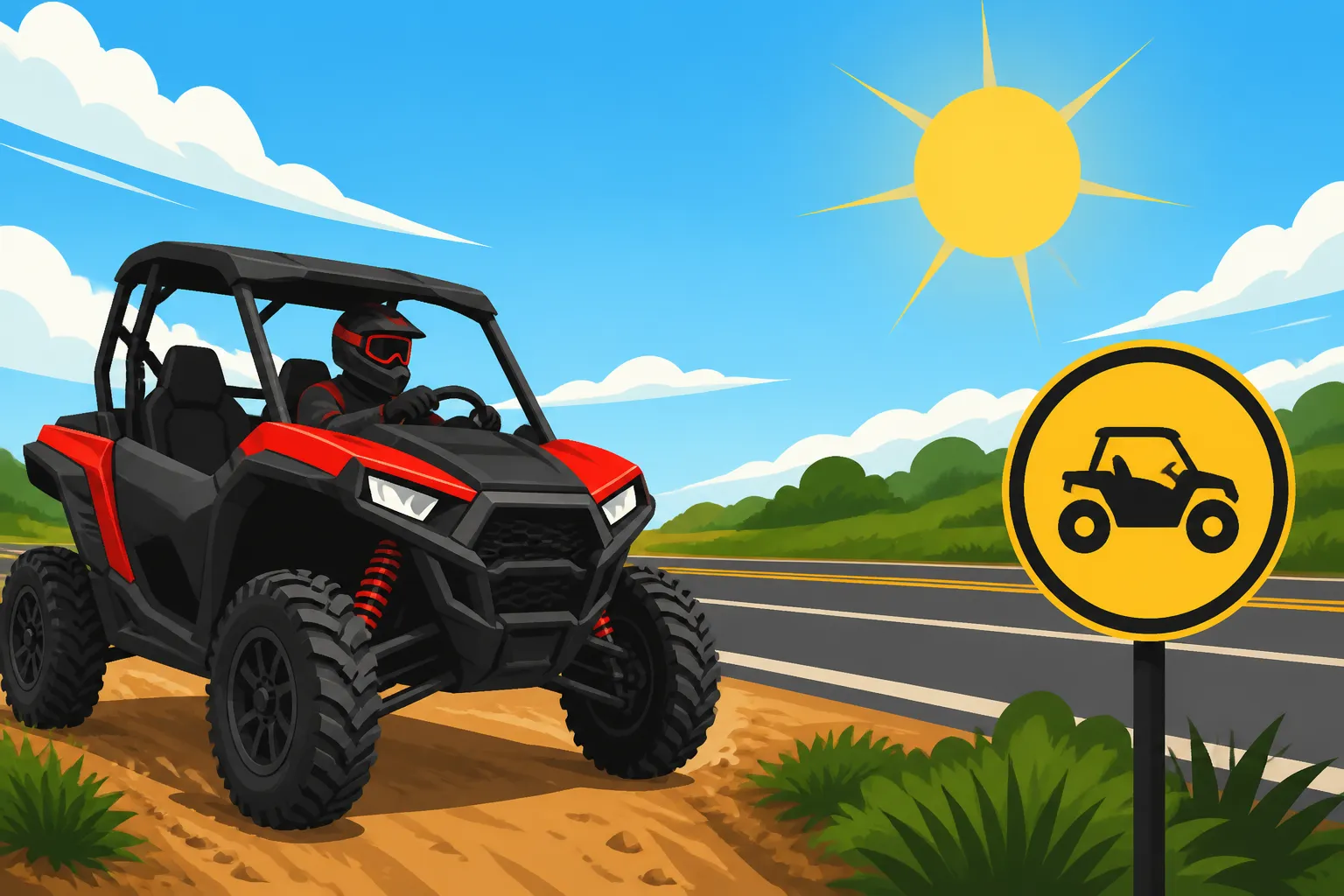
So, how does this play out in the real world? You’ll typically find these opportunities on smaller state highways, often those that run through rural areas, connect small towns, or serve as access roads to less populated regions. These are not your major four-lane thoroughfares. Imagine a two-lane highway cutting through farmland with a 35 MPH sign—that’s your window. However, the rule isn't just about the speed limit; it also specifically states that these crossings must occur in daylight hours. This dual requirement of low speed limit and adequate visibility is critical. You can't just pick any 35 MPH road; it has to be during the day. For a detailed look at this specific regulation, check out [Oklahoma Crossing Rules at 35 mph].
It’s important to distinguish between a county road (which may or may not be opened to ATVs by local commissioners) and a state highway. Even if a county road you're riding on is legally open, if it intersects with a state highway that has a speed limit above 35 MPH, you cannot legally cross that state highway. You'd have to find an alternate route or trailer your machine. This can be a source of real frustration when you're trying to connect two properties that are just a stone's throw apart but separated by a faster state route. Knowing the exact speed limit of the road you intend to cross is non-negotiable for compliance. Remember, these are specific rules that help define [Oklahoma Daylight Crossing Rules] as well.
Understanding "Daylight Hours" for Off-Road Crossings
The requirement for highway crossings to occur only during "daylight hours" isn't just a suggestion; it's a critical safety mandate rooted in visibility. While it might seem obvious – "when the sun is up" – the legal definition can sometimes be a bit more precise than just a general feeling of brightness. Understanding this distinction is vital to ensure you're always on the right side of the law and, more importantly, maximizing your safety and the safety of others.
What Exactly Qualifies as Daylight?
In legal terms, "daylight hours" typically refers to the period between a half-hour before sunrise and a half-hour after sunset. This isn't just arbitrary; it accounts for the twilight periods when ambient light is sufficient for visibility but the sun isn't fully above or below the horizon. The moment you push past that half-hour after sunset, even if it feels like there's still some light, you're officially in "night" territory from a legal standpoint for ATV/UTV highway crossings. This means if you're on a trail ride and lose track of time, rolling up to a crossing point as the sky darkens, you need to hold up, or find an alternative to avoid a citation.
The safety reasons behind this rule are paramount. ATVs and UTVs, by their nature, are often smaller and less conspicuous than traditional road vehicles. Their lighting systems, while adequate for off-road trails, might not be designed for the same level of visibility required for safe interactions with high-speed road traffic in low-light conditions. Even if your machine is equipped with decent headlights, it's the overall conspicuity – how easily other drivers can see you and predict your movements – that drops dramatically after dark. When you're crossing a paved highway, you want every possible advantage to be seen by oncoming traffic, and natural daylight provides the best possible conditions. It's about being visible to the greatest extent possible to prevent tragic accidents.
Safety Gear and Visibility During Crossings
Even though you’re legally allowed to cross a 35 MPH highway during daylight, that doesn’t mean you should throw caution to the wind. In fact, clear visibility is absolutely paramount. Think of it this way: your ATV or UTV, even in bright sunshine, might still be smaller and less expected on the road than a car or truck. You need to do everything in your power to make yourself as noticeable as possible to other drivers who might not be looking for an off-road machine to pop out from a field access road.
Brightly colored clothing, like neon vests or helmets, can make a huge difference. Imagine you're crossing a highway with a treeline on one side; a flash of bright orange or green can catch a driver's eye much faster than camouflage. While not strictly required for a highway crossing, having your machine's lights (headlights and taillights) on, even in the daytime, is a smart defensive riding tactic. It adds another layer of visibility. For riders who spend a lot of time in sand dunes or open areas, a brand like SuperATV offers fantastic accessories like brightly colored LED whip lights and flags. While these are often associated with dune riding (like at Little Sahara State Park), a tall, bright flag can significantly increase your profile and make you much more visible to oncoming traffic during a brief highway crossing, helping you stand out above the vehicle you're driving.
It's about proactive safety. The more visible you are, the less chance of a misunderstanding or a driver simply not seeing you. Before you even approach the edge of the pavement, make sure your line of sight is clear in both directions, and consider how you can make yourself unmistakable to anyone approaching. This isn’t just about following the letter of the law; it's about adhering to the spirit of safety that the "daylight hours" rule embodies.
Navigating Different Types of Roads for Crossing
Understanding the nuances of Oklahoma's road classifications is key to avoiding trouble when you're out on your ATV or UTV. The state treats different types of roads—state highways, county roads, and city streets—with distinct sets of rules, and these distinctions are particularly important when it comes to the legality of crossing. What might be permissible on one type of road could land you a hefty fine on another.
State Highways vs. County Roads vs. City Streets
As we've discussed, the specific rule allowing ATV/UTV crossings on roads with a speed limit of 35 MPH or less primarily pertains to state highways. These are roads maintained by the Oklahoma Department of Transportation (ODOT) and are identified by specific highway numbers. They often connect towns and cities, but in rural areas, some sections might indeed have a 35 MPH limit. The crucial point is that even on these lower-speed state highways, you are only allowed to cross them – not ride alongside them for any significant distance.
County roads, on the other hand, fall under the jurisdiction of individual county commissioners. This means the rules for riding on county roads can vary significantly from one county to the next. Some county commissioners have passed resolutions to open certain county roads to ATV and UTV traffic, while others have not. Even if a county road is "open" for riding in a particular county, the moment that county road intersects with a state highway, the state highway crossing rules (35 MPH or less, daylight only) take precedence for that intersection. It's a layer-cake of regulations, and it means you always need to know the specific rules for your location. For more insights on this, you can look up [Oklahoma County Commissioners and ATV Roads]. This variability is a common headache for riders, making local knowledge or a quick check with the county sheriff's office essential.
City streets add yet another layer of complexity. Within city limits, municipal ordinances dictate whether ATVs and UTVs can be ridden on city streets at all. Some smaller towns, especially those with significant off-road tourism, might have ordinances that allow limited street use. Others will strictly prohibit it. Even if a city street is open to ATV/UTV use, the moment it crosses a state highway, you're back to the state's 35 MPH daylight crossing rule. It's a patchwork, and assuming one rule applies everywhere is a mistake many riders make. For a deeper dive into these distinctions, explore [Oklahoma Rules for Riding a County Road] and [Oklahoma Rules for Riding a City Street]. Always verify the local rules before venturing out.
Railway Crossings and Other Obstacles
Beyond paved highways, riders in Oklahoma frequently encounter other types of obstacles that require careful navigation, particularly railway crossings. Just like with state highways, there are specific rules about how ATVs and UTVs can interact with railway tracks, and generally, this interaction is limited to direct crossings, again, only during daylight hours. You certainly aren't allowed to ride along railway tracks – that's both illegal and incredibly dangerous – but traversing them to continue your journey is often a necessity in rural Oklahoma.
When you approach a railway crossing, whether it's marked or an unmarked access point on a [Oklahoma Rules for Riding a Section Line], the same daylight principle applies as with highway crossings. The reason is pure safety: trains are fast, heavy, and cannot stop quickly. A small off-road machine is incredibly vulnerable in a collision with a train. Therefore, ensuring maximum visibility by only crossing during daylight is critical. You also have the added responsibility of exercising extreme caution. This means stopping, looking both ways (twice!), and listening intently for any approaching trains. Never assume the tracks are clear. Remember, a machine bogged down or stalled on railway tracks at night is almost invisible to an oncoming train. For more on this, specifically, [Oklahoma Railway Crossings in Daylight] provides essential information.
Think of a hypothetical scenario: You’re on an unpaved [Oklahoma Rules for Riding Farm Ground], heading toward another property, and you encounter a paved state highway with a 35 MPH limit, immediately followed by a railway crossing. Your sequence of action would be: approach the highway, ensure it’s daylight, stop, check traffic, cross the highway. Then, immediately approach the railway tracks, stop, look and listen for trains, and only then proceed to cross the tracks. Each segment presents its own legal and safety considerations, and treating them as distinct actions, even if they're back-to-back, is crucial for safe and lawful riding.
The "Why" Behind the Rules: Safety and Enforcement
It's easy to get frustrated with a litany of rules and regulations, especially when you feel like they're limiting your freedom to enjoy your off-road machine. However, when it comes to highway crossings in Oklahoma, every single rule – from the 35 MPH speed limit to the daylight-only restriction – is put in place with one overarching goal: safety. These aren't arbitrary hurdles; they are carefully considered measures designed to reduce the very real risks associated with off-road vehicles interacting with public road traffic. Understanding this underlying purpose can help riders appreciate the rules, even when they're inconvenient.
Reducing Risk for All Road Users
The inherent danger of slow-moving off-road vehicles intersecting with faster highway traffic cannot be overstated. A car traveling at 60 MPH covers 88 feet per second. If an ATV or UTV is pulling out to cross, even quickly, the closing speed can be terrifyingly fast for both the off-road rider and the motorist. ATVs and UTVs have different acceleration profiles, braking distances, and handling characteristics compared to passenger cars. They also lack many of the safety features of road vehicles, such as airbags and enclosed cabs (for most ATVs). This makes them incredibly vulnerable in a collision.
The rules in Oklahoma, such as restricting crossings to roads with 35 MPH speed limits or less, directly address this speed differential. By limiting where and when these crossings can occur, the state significantly reduces the potential for high-speed, high-impact accidents. Similarly, the "daylight only" rule enhances visibility, giving all drivers more time to see and react to an off-road vehicle crossing their path. These regulations are not just about protecting the ATV or UTV rider; they are also about protecting the occupants of passenger vehicles who might be involved in an accident, as well as minimizing traffic disruptions and emergency response incidents. It's a comprehensive approach to public safety, acknowledging that off-road fun needs to coexist safely with public infrastructure.
Who Enforces These Crossing Rules?
When you’re out on your machine, whether it's on a county road or briefly crossing a state highway, you need to be aware that various law enforcement agencies have the authority to enforce these rules. Ignorance of the law is never an excuse, and officers take these regulations seriously because of the significant safety implications.
The most visible presence on state highways will be the Oklahoma Highway Patrol (OHP). These troopers are specifically tasked with enforcing traffic laws on state routes, and that includes any violations related to off-road vehicles. If you attempt to cross a state highway with a speed limit higher than 35 MPH, or if you cross one after sunset, an OHP trooper is well within their rights to pull you over and issue a citation.
Within county lines, outside of incorporated cities, county sheriffs and their deputies are the primary enforcers. They are responsible for public safety on county roads and rural areas. If a county has not opened its roads to ATVs, or if you're violating other rules (like trespass, or riding where you shouldn't be), a sheriff's deputy will be the one to respond. Finally, within city limits, local police departments are responsible for enforcing municipal ordinances and state traffic laws on city streets. This means that depending on where your crossing occurs, you could encounter any of these agencies. For information on potential penalties, you might want to review [Oklahoma Fine Cap for ATV Violations], which highlights that fines for such infractions are typically capped, but can still add up with court costs.
Always be prepared to provide requested documents, even if you don't think they're strictly necessary for an off-road machine in every context. An officer might ask for proof of ownership (title), a bill of sale, or even your driver's license, especially if they are trying to identify you and ensure the machine isn't stolen. Knowing [What a State Trooper Can Ask to See] can help you be prepared and make any interaction smoother. The key is to be polite, cooperative, and understand that officers are simply doing their job to ensure everyone's safety on and around Oklahoma's public roadways.
Best Practices for a Safe and Legal Crossing
Navigating the rules for crossing highways in Oklahoma doesn't have to be a source of constant stress. By adopting a proactive mindset and following some best practices, you can ensure your crossings are always safe, legal, and as smooth as possible. It’s all about preparation, awareness, and executing the crossing with care and precision.
Planning Your Route and Scouting Crossings
The first step to a safe and legal crossing begins long before you even fire up your engine. Route planning is crucial, especially if you're venturing into unfamiliar territory. Don't just rely on GPS for cars; these systems won't tell you which county roads are open to ATVs or where the legal crossing points on state highways are. Instead, use detailed maps (paper or off-road specific apps) to identify potential crossing locations. Look for state highways with clearly marked speed limits of 35 MPH or less.
It’s an excellent idea to "scout" these crossings in advance, if possible, perhaps in your truck or car. This allows you to assess visibility at the intersection, note any blind spots, check traffic patterns, and confirm the posted speed limits. Are there any sharp turns leading up to the crossing? Is there adequate shoulder space to stage yourself before crossing? What are the sightlines for oncoming traffic? This pre-ride reconnaissance can save you a lot of headaches and dramatically increase your safety when you’re on your off-road machine. Additionally, make it a habit to check local resources for updated information. Some counties might have online maps detailing ATV-friendly roads, or you can contact the county commissioner’s office directly. For broader guidance, articles like [Oklahoma County Commissioners and ATV Roads] and [Oklahoma Rules for Riding a County Road] offer valuable context for understanding local access.
Executing a Safe Crossing
Once you've identified a legal crossing point on a 35 MPH state highway during daylight hours, the execution is everything. Treat every crossing as if it's the most dangerous part of your ride, because often, it is.
Here’s a step-by-step approach to executing a safe crossing:
- Approach with Caution: Slow down significantly as you near the pavement. Scan for any signage that might prohibit crossings (though rare on 35 MPH roads, always be vigilant).
- Stop Completely: Bring your machine to a full stop before entering the roadway. Do not roll through or assume you have the right-of-way.
- Look, Listen, and Look Again: Check for traffic in both directions multiple times. Don't rely solely on sound; vehicles can approach quietly. Pay special attention to blind spots, curves in the road, or dips that might obscure oncoming vehicles.
- Signal (If Possible): If your UTV has turn signals, use them. If you’re on an ATV, use clear hand signals to indicate your intention to cross, if it's safe to take a hand off the bars.
- Cross Directly and Quickly: Once the path is clear, cross the highway in as direct a line as possible. Don't meander or hesitate. Get across the travel lanes and onto the shoulder or other side swiftly. Maintain a steady speed.
- Maintain Awareness: Even after you’ve crossed the main travel lanes, remain vigilant until you are completely off the paved surface and safely on the other side.
For enhanced visibility, especially if you're leading a group or have a larger side-by-side, consider adding extra safety features. SuperATV offers a range of mirrors that can improve your situational awareness, allowing you to better see oncoming traffic and any vehicles behind you before and during your crossing. These aren't just for trail riding; they're valuable tools for any situation where you're interacting with public roadways. Remember, the goal is to minimize your time on the pavement and maximize your visibility to other drivers.
What to Do If You're Pulled Over After a Crossing
Despite your best efforts to ride safely and legally, there's always a chance you might encounter law enforcement. If a state trooper, sheriff's deputy, or local police officer pulls you over after a highway crossing, remaining calm and cooperative is your best strategy. Panicking or arguing will only escalate the situation.
Here's a breakdown of what to do:
- Pull Over Safely: As soon as you realize an officer is signaling you, find a safe spot to pull your ATV or UTV completely off the road. Turn off your engine.
- Keep Hands Visible: Place your hands on the handlebars or steering wheel where the officer can see them. Avoid sudden movements.
- Be Polite and Respectful: Greet the officer politely. Answer their questions truthfully and respectfully. Avoid volunteering excessive information or making excuses.
- Provide Requested Documents: The officer will likely ask for your driver's license (if you have one and are operating a UTV on a road, for example), proof of ownership for your ATV/UTV (title or bill of sale), and potentially registration if your machine is registered. Even if your off-road machine doesn't require registration for pure off-road use, it's always wise to carry proof of ownership. For a general idea of what an officer might ask, review [What a State Trooper Can Ask to See].
- Don't Argue: If you believe you were compliant with the law, state your case calmly and clearly. However, this is not the time or place for a prolonged debate. If a citation is issued, accept it, and you can address the matter in court if you choose.
- Understand the Offense: Ask the officer to explain why you were pulled over and what specific violation they believe occurred. This helps you understand your situation and what you might need to address later.
Remember, the officer's priority is public safety. If they perceive a violation, it’s usually rooted in that concern. By handling the stop professionally, you facilitate a smoother interaction, regardless of the outcome.
Disclaimer
This article is for general informational purposes only and does not constitute professional advice. Laws, prices and regulations vary by location and change over time. Consult a qualified professional for guidance on your specific situation.