Oklahoma Rules for Riding a City Street
Navigating the concrete jungle on your ATV or UTV can feel like a tempting shortcut or a necessary evil for many Oklahoma riders. It’s a common frustration: you’ve got this powerful, versatile machine, but the moment you hit a paved street in town, you're immediately wondering, "Am I breaking the law?" The truth is, figuring out the specific rules for riding your quad or side-by-side on city streets in Oklahoma can be incredibly confusing, fraught with misinformation, and constantly evolving. This guide is here to cut through the noise, validate those everyday challenges, and clearly lay out what's allowed, what's not, and how to stay on the right side of the law when it comes to city streets.
The Blanket Ban and Its Exceptions: Why Most City Streets Are Off-Limits
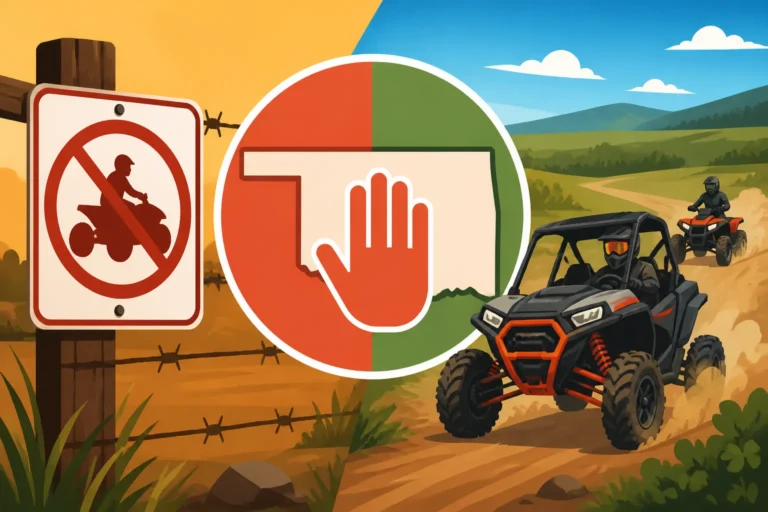
Let's get straight to it: for the vast majority of ATVs and UTVs in Oklahoma, city streets are a no-go zone. It's a tough pill to swallow when you just want to run across town to the gas station or connect two pieces of private land. This general prohibition is often misunderstood, leading to tickets, fines, and impoundments that could have been easily avoided with a bit more clarity.
Understanding the Default Rule: No ATVs on City Streets
Picture this: you've just spent a fantastic day tearing up the trails at Little Sahara or working hard on the back forty. Your machine is dirty, it's powerful, and it feels like it could handle anything. The thought crosses your mind – "It's just a couple of blocks to grab some ice for the cooler, what's the harm?" This is where the law steps in. Oklahoma statutes generally classify ATVs and UTVs as off-road vehicles, designed for unpaved terrain, not public roadways.
The reasoning behind this isn't to pick on riders; it's rooted in safety. These machines often lack the same safety features as street-legal vehicles. Things like turn signals, proper lighting for road use, crumple zones, and even the type of tires are designed for dirt, not asphalt and other traffic. They can be less stable at road speeds, harder to see by other drivers, and their open design offers less protection in a collision with a passenger car. For this reason, the default position of the state is that these vehicles simply don't belong in the flow of city traffic. It’s a frustrating reality for many, especially those who rely on their UTV for quick tasks, but it's the baseline rule everyone must understand.
The "Instrument of Husbandry" Exception: Farm and Ranch Use
Now, before you throw your hands up in despair, there are very specific, limited exceptions to the "no city streets" rule for traditional ATVs and UTVs. One of the most common, and most misunderstood, is the "instrument of husbandry" exemption. If you're using your ATV or UTV strictly for agricultural purposes – moving livestock, hauling feed, checking fence lines – and you need to traverse a public road to get from one piece of your property to another, this exception might apply.
Imagine you own a ranch outside of a small Oklahoma town. You've got pasture on one side of a city street and your barn on the other. Your UTV is absolutely essential for your daily operations. The "instrument of husbandry" rule allows you to cross or travel a very limited distance on a city street to perform these duties. The key here is "very limited distance" and "strictly for agricultural purposes." This is not a loophole that allows you to drive your quad to the local diner for breakfast, even if you own a farm. You're typically required to travel the shortest possible distance, in daylight, and must yield to all other traffic. Misusing this exemption is a quick way to get yourself into legal trouble, so be incredibly clear about whether your trip genuinely qualifies as an instrument of husbandry. This specific use case often comes up when discussing [Oklahoma Farm Use on County Roads], but it can extend to city streets in very narrow circumstances.
Municipal Ordinances: When Cities Open Their Own Roads
Here's where things can get a little tricky, and it's also where the most hope for city street riding lies, albeit on a highly localized basis. While the state generally prohibits ATVs and UTVs on public roads, Oklahoma law grants individual cities and towns the authority to pass their own ordinances that can open certain city streets to these machines.
This means the rules can vary dramatically from one town to the next, even if they're just a few miles apart. One small community might rely heavily on tourism from off-road enthusiasts and decide to open specific roads connecting campgrounds to trailheads or to allow residents to access businesses. Another city might be entirely against it due to traffic concerns or a lack of enforcement resources. It's not uncommon for a city to open certain roads but then prohibit others, especially those with higher speed limits or heavy traffic. Therefore, if you're ever considering riding your ATV or UTV on a city street, the absolute first step is to contact the local city hall or police department and inquire about their specific ordinances. You might be surprised by what you find, or you might confirm that the general ban holds true. Checking for [Oklahoma Municipal Ordinances That Open Streets] is crucial homework before you ever put a tire on pavement.
The Street-Legal UTV: Oklahoma's Game Changer
For years, the dream of a genuinely road-legal ATV or UTV in Oklahoma seemed like a distant fantasy. But that all changed with a significant piece of legislation, creating a pathway for UTV owners to register their machines for street use. This is a separate category entirely and comes with its own set of requirements and rules.
The 2021 Legislation: Creating a New Class of Machine
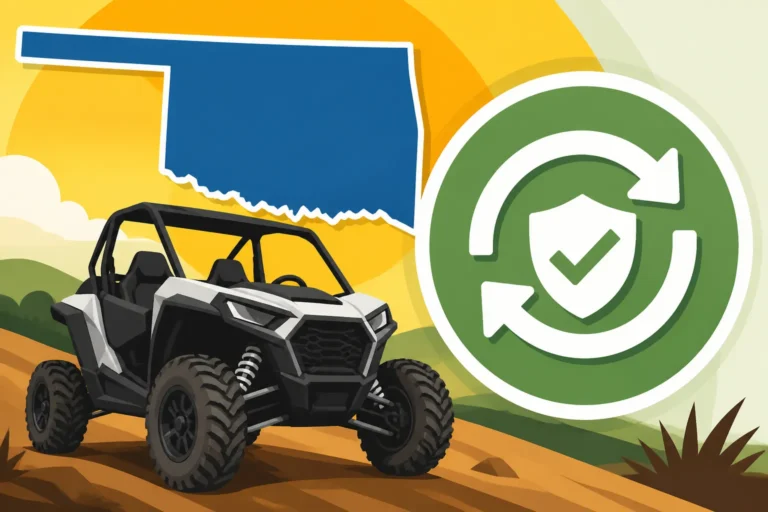
A few years ago, Oklahoma recognized the growing popularity and utility of UTVs, particularly side-by-sides, and the demand from owners who wanted to use them for more than just off-road adventures. In 2021, a new law was passed that specifically allowed for the registration of UTVs as "street-legal" vehicles. This was a monumental shift, creating a distinct class of machine that could, with the right modifications and paperwork, obtain [Oklahoma Road Plates for a Street-Legal UTV].
It's important to understand that this legislation specifically targeted UTVs, not traditional single-rider ATVs (quads). The intent was to provide a legal framework for these often larger, multi-passenger machines that already share some design similarities with cars, making them more adaptable to road use. This wasn't about opening up every road to every off-road vehicle; it was about defining a specific set of criteria that, if met, would allow a UTV to operate legally on certain public roads, including many city streets. This has been a huge win for many UTV owners who now have a legitimate path to broader utility for their machines.
Essential Equipment for Street Legality
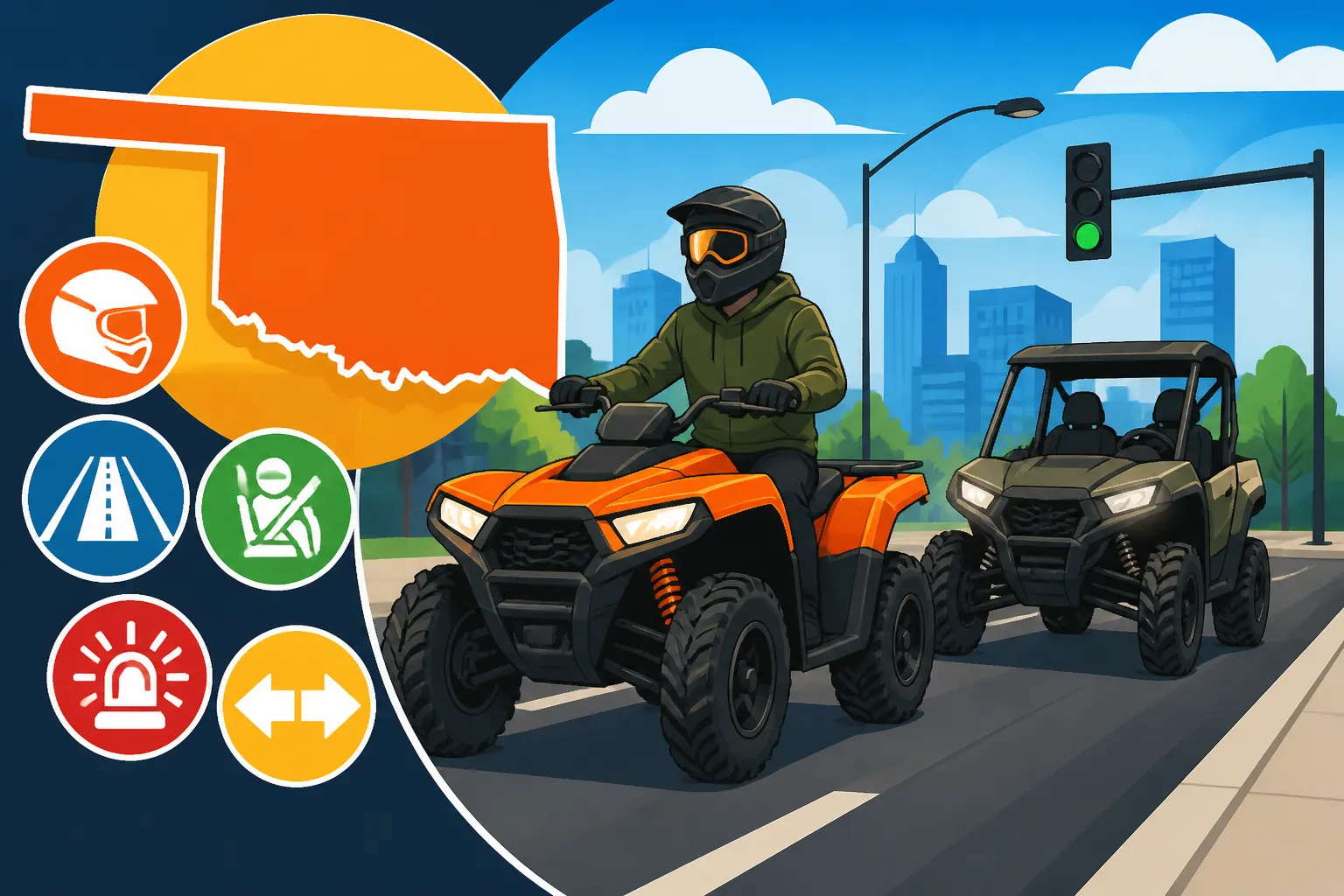
Converting your UTV to be street-legal in Oklahoma isn't just about slapping a license plate on it. There's a comprehensive list of equipment that must be installed and functioning properly before your UTV can pass inspection and be registered. This isn't just a suggestion; it's a mandatory checklist for anyone hoping to take their side-by-side onto city streets.
The requirements generally include:
| Requirement | Description | Importance |
|---|---|---|
| Headlights | Two headlights, white, visible from 500 feet. | Essential for visibility, especially during dawn, dusk, or night riding. |
| Taillights | Two taillights, red, visible from 500 feet. | Signals presence from the rear. |
| Brake Lights | Two brake lights, red, illuminating when brakes applied. | Crucial for signaling deceleration to following vehicles. |
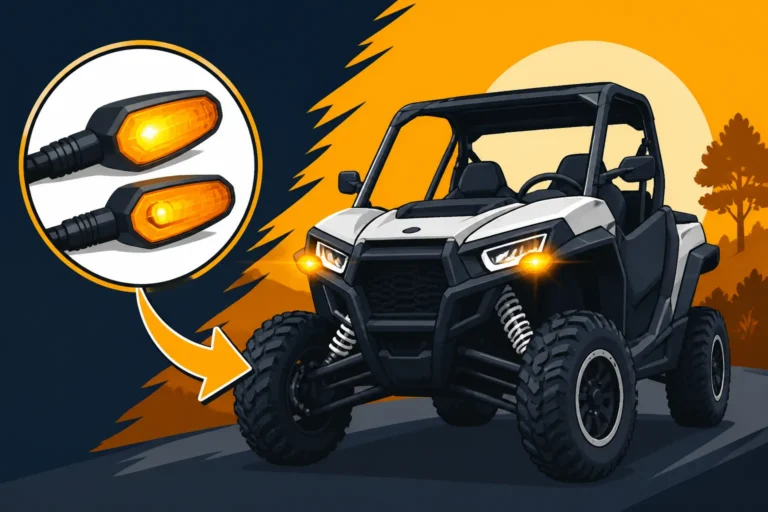
| Turn Signals | Front and rear turn signals, amber/red, clearly visible. | Absolutely necessary for communicating intentions in traffic. |
| Rearview Mirrors | At least one rearview mirror, providing a clear view of 200 feet to the rear. | Helps the driver monitor traffic behind them. |
| Horn | A working horn, audible from 200 feet. | For alerting other drivers to your presence or potential hazards. |
| Windshield | A windshield made of safety glass or other approved material. | Protects occupants from debris and weather. |
| Seatbelts | Seatbelts for all seating positions, meeting federal standards. | Critical safety feature for occupant restraint. |
| Tires | Tires rated for road use, not exclusively off-road. | Ensures proper traction and durability on pavement. |
| Spark Arrester | An approved spark arrester on the exhaust system. | Prevents fire hazards from hot exhaust. |
Many companies, including reputable brands like SuperATV, offer complete kits specifically designed to help UTV owners meet these requirements. You can find everything from universal turn signal kits to DOT-approved windshields and mirrors. Investing in quality components for your street-legal conversion is important not just for compliance, but for your safety and the safety of others on the road. Remember, it's not enough to just have these items; they must be fully functional and properly installed. Your UTV will need to pass an inspection, often by a certified mechanic, before it can be registered for street use. More details on the broader picture can be found by looking into [Oklahoma Street-Legal UTV Requirements].
Operational Rules for Street-Legal UTVs on City Streets
So, you've gone through the effort, installed all the necessary SuperATV gear, passed inspection, and now have your street-legal UTV registration and decal. Congratulations! But the journey isn't over. There are still specific operational rules you must follow when driving your street-legal UTV on city streets.
First and foremost, the driver must be at least 16 years old and possess a valid driver's license. The good news? You do not need a motorcycle endorsement to operate a street-legal UTV. This makes it much more accessible for many drivers. You will also be required to carry liability insurance, just like any other vehicle on the road. This is a non-negotiable part of operating a vehicle on public roads and protects you and others in the event of an accident.
When it comes to where you can actually drive your street-legal UTV, city streets are generally fair game, provided the city hasn't specifically prohibited them on certain high-traffic routes. However, there are significant statewide restrictions. Street-legal UTVs are strictly prohibited from interstates. Period. They also cannot be driven on US highways, except for the purpose of making a direct crossing when traffic permits. This means you can't cruise down Route 66 in your street-legal UTV for miles on end, but you could cross it at an intersection to get to another city street. It's critical to understand these limitations. While you can enjoy city streets, the state's major arteries remain off-limits. Keep in mind, [Oklahoma Street UTVs Stay Off Interstates] and [Oklahoma Street UTVs Stay Off US Highways]. Always adhere to posted speed limits, and drive defensively, as these machines still handle differently than a passenger car.
Navigating City Streets: Practical Advice and Common Pitfalls
Even with the option of a street-legal UTV, or in the rare case of a local ordinance, navigating city streets on an off-road machine requires careful consideration and a lot of homework. Don't assume anything; always verify the rules for your specific situation.
Researching Local Ordinances: Your First Step
Seriously, I can't stress this enough: before you ever think about riding your ATV or UTV on a city street, your absolute first step must be to verify the local ordinances. What's legal in one small town might land you a hefty fine in the next. There is no statewide blanket permission for non-street-legal ATVs or UTVs to cruise city streets, so any permission must come from the local municipality itself.
How do you do this? Start by checking the city's official website. Many cities will post their ordinances online. If you can't find clear information there, call the city clerk's office or the local police department (non-emergency number, of course!). Explain your situation clearly: "I own an ATV/UTV, and I'm trying to understand the rules for operating it on city streets within your jurisdiction." They are the ultimate authority for their city's specific rules. Never rely on hearsay from a friend or a forum. [Oklahoma Ordinance Lookups Before You Ride] should be a mandatory part of your pre-ride checklist if you plan to hit any paved roads. The consequences of not doing your due diligence can be costly and frustrating.
Crossing Roads and Intersections Legally
Even if you're not riding on a city street for an extended period, you might need to cross one to get from one section of private land to another, or to access an approved trail. If your ATV or UTV is not street-legal, Oklahoma law does allow for crossings under very specific conditions.
These crossings must be made at a right angle to the road, essentially going straight across. You must yield to all other traffic, ensuring the crossing can be made safely without impeding other vehicles. Crucially, these crossings must be done in daylight hours only. You cannot cross a city street in the dark if your machine isn't street-legal. And finally, you must take the shortest possible route across the roadway. This means no diagonal crossings, no cruising down the shoulder to get to a more convenient spot. It's about minimizing the time and distance your off-road machine spends on the public road for safety reasons. Understanding these rules is critical, especially when you're moving between properties or trying to connect to a trail system. You can find more specific details about these types of movements in guides covering [Oklahoma Highway Crossings in Daylight], which apply equally to city streets.
Consequences of Illegal Street Riding
Let's be realistic: a lot of people think they can get away with "just a block or two." But the consequences of illegally riding your ATV or UTV on city streets in Oklahoma can be significant and far-reaching. It's not just a slap on the wrist.
First, there are the fines. Oklahoma has a [Oklahoma Fine Cap for ATV Violations], but even at the lower end, a ticket can be a real hit to your wallet. Beyond the initial fine, there can be additional court costs. Second, your machine could be impounded. If an officer pulls you over and determines you're illegally operating your ATV or UTV on a public road, they have the authority to tow it. Retrieving an impounded vehicle involves towing fees, storage fees, and potentially additional administrative costs, which can quickly add up to hundreds of dollars. Third, depending on the severity and whether it's linked to a driver's license (which it likely would be if you're cited), it could lead to points on your driving record or affect your insurance rates. Many standard ATV/UTV insurance policies do not cover incidents that occur while illegally operating the machine on a public road, leaving you exposed to significant liability if an accident occurs. It's simply not worth the risk.
Beyond City Limits: Other Road Rules to Know
While city streets are often the most restrictive, it's helpful to understand how other types of public roads in Oklahoma – particularly county roads and those related to agricultural use – have different rules. This provides a broader context for off-road vehicle operation in the state.
County Roads and Section Lines: Different Rules Apply
Venturing out of city limits and onto county roads often presents a different set of rules for ATV and UTV riders. Unlike city streets, which are generally under strict municipal control, county roads can sometimes be opened up to off-road vehicles. This authority rests with the county commissioners, who have the power to designate specific county roads as open for ATV and UTV use.
This is a critical distinction, as a road that's legal to ride on in one county might be completely off-limits in a neighboring one, even if it looks identical. Riders need to consult with their specific county commissioner's office or the county sheriff's department to find out which roads, if any, have been opened. Just like with city ordinances, assuming is a dangerous game. [Oklahoma County Commissioners and ATV Roads] is a topic that requires localized research. Similarly, riding on section lines (the unpaved roads or tracks that typically run along property lines) or in ditches alongside public roads also has its own nuanced rules, often tied to property ownership and agricultural use, which further differentiates them from paved city streets.
Agricultural and Hunting Leases: Limited Road Use
The "instrument of husbandry" exemption, which we touched on earlier, is a perfect example of specific, limited road use. While it primarily applies to farm and ranch work, it's crucial to understand that even with an agricultural permit, you're not granted carte blanche to ride your UTV down city streets or even county roads for leisure. The exemption is very narrow, focusing on the necessary transport of the machine for agricultural operations, usually the shortest route, in daylight, and yielding to all other traffic. It doesn't waive the street-legal requirements for general road use. [Oklahoma Farm Use on County Roads] follows similar strict guidelines, designed for essential farm-related activities, not recreational riding.
The same often applies to accessing hunting leases. While you might need to cross a paved road or briefly use a county road to get to your hunting property, the act of hunting itself and the access to private land doesn't automatically confer the right to ride your ATV or UTV on public roads for any other purpose. Always ensure you have explicit permission from landowners if crossing private property, and respect all public road laws during any necessary crossings.
Safety First: Even When Legal, Be Smart
Regardless of whether you're riding a fully street-legal UTV on an approved city street, crossing a highway for agricultural purposes, or navigating a county road opened by commissioners, safety should always be your top priority. The rules exist to protect you and others, but your actions play the biggest role.
Visibility is paramount. Many UTVs, even with basic street-legal conversions, are still smaller than passenger cars and can be harder to spot. Consider adding extra lighting, reflective tape, or a brightly colored whip flag (like those often required in dune parks) if you're going to be on any public road. SuperATV, for example, offers a variety of LED light bars and accessory lighting that can dramatically improve your visibility. Always wear appropriate safety gear. While [Oklahoma Helmet Law for Riders Under 18] is specific to youth, it's a smart idea for all riders, regardless of age, especially on public roads. Drive defensively, anticipate the actions of other drivers, and maintain a safe speed. Just because you can drive at the speed limit doesn't always mean you should, especially in areas with heavy traffic or reduced visibility. Be aware of your surroundings, be courteous to other drivers, and always prioritize arriving safely over arriving quickly.
Disclaimer
This article is for general informational purposes only and does not constitute professional advice. Laws, prices and regulations vary by location and change over time. Consult a qualified professional for guidance on your specific situation.