Why US Highways Stay Closed to Street UTVs
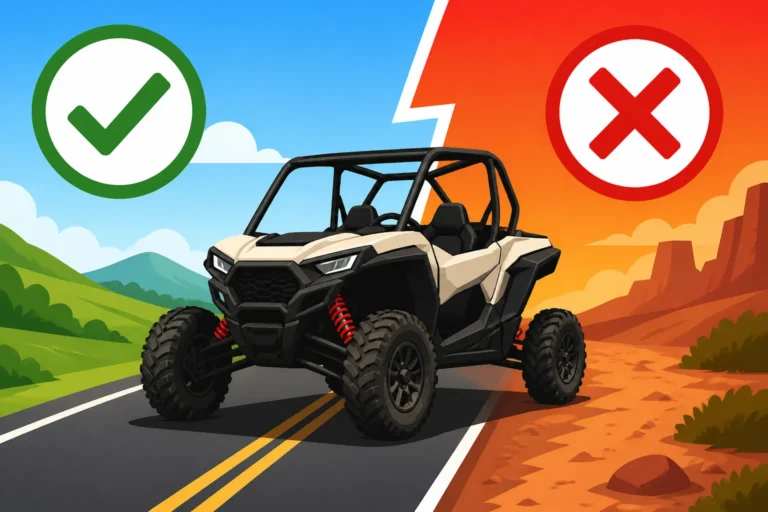
It can be incredibly frustrating to go through all the effort to make your UTV street-legal in Oklahoma, adding mirrors, turn signals, and a horn, only to find out there are still major roads you're prohibited from using. Many riders assume "street-legal" means "all roads," but that's simply not the case, especially when it comes to US Highways. This guide will walk you through the specific reasons why these major arteries remain closed to street-legal UTVs, clarify where you can legally ride, and help you avoid any costly misunderstandings.
The Core Rule: Why Federal Highways Are Different
When you invest in making your UTV street-legal in Oklahoma, it's easy to assume that all roads are now fair game. After all, you’ve put in the time, effort, and money to meet the state's requirements. However, the designation of a "US Highway" carries a different set of rules and jurisdictional oversight that sets it apart from your typical county road or even many state highways. This distinction is crucial for understanding why your street-legal UTV, despite its enhancements, still can't travel on them.
Distinguishing State, County, and Federal Roads
Oklahoma's laws regarding street-legal UTVs have evolved, primarily allowing for their use on certain roads to enhance rural transportation and recreation. The changes were largely focused on giving local authorities, like county commissioners and city councils, the power to open up roads under their jurisdiction. This means [Oklahoma County Commissioners and ATV Roads] can vote to open county roads, and [Oklahoma Municipal Ordinances That Open Streets] can allow UTVs on city streets. State highways, too, sometimes fall under these allowances, particularly for crossings or short distances on roads with lower posted speed limits.
However, US Highways operate under a different umbrella. These are often part of a national network, with routes and standards that align more closely with federal guidelines, even if maintained by the state. The regulations governing their use are designed with interstate commerce and higher-speed passenger vehicle traffic in mind. The legislation that created Oklahoma's street-legal UTV class was specific about where these machines could operate, and it generally did not extend to these federally designated, higher-volume, higher-speed routes. It's not just about the pavement; it's about the purpose and design criteria of the road itself.
The Legal Framework and Its Limitations
The state legislation, such as the bill passed in 2021 that truly solidified the street-legal UTV class in Oklahoma, created a framework for these machines to operate on public roads. This framework included specific equipment requirements like turn signals, mirrors, and horns, which are essential for safe operation alongside cars and trucks on local roads. You can find more details about these specific requirements in articles like [Oklahoma Street Legal UTV Requirements]. However, the same laws that granted this newfound road access also drew clear lines about its limitations.
The legislative intent behind opening roads to UTVs was typically to facilitate travel for agricultural purposes, local commuting in rural areas, or connecting trail systems. It wasn't to create an alternative to traditional passenger vehicles for long-distance or high-speed travel. Therefore, the statutes explicitly carve out exceptions for interstates and US Highways, recognizing that these roads present a different set of challenges and risks. While you might be able to cross a state highway at 35 mph or less during daylight hours, as detailed in [Oklahoma Highway Crossings in Daylight], this specific allowance does not extend to the vast stretches of a US Highway. The legal framework provides specific permissions, but it does not grant universal access, leaving US Highways off the list of approved routes.
Safety Concerns on High-Speed Roads
Beyond the legal distinctions, there are very practical and critical safety reasons why US Highways remain off-limits to street-legal UTVs. These roads are designed for vehicles traveling at much higher speeds, with different performance characteristics and crashworthiness standards than even the most robust UTV. Understanding these inherent safety differences is key to grasping the rationale behind the restrictions.
Speed Differentials and Vehicle Design
Imagine yourself driving a UTV on a road where cars and trucks are easily traveling at 60, 70, or even 80 miles per hour. Even a street-legal UTV, which might reach speeds upwards of 50-60 mph, struggles to maintain pace and acceleration compared to highway traffic. This significant speed differential is a recipe for disaster. When a UTV is moving considerably slower than the flow of traffic, it creates a serious hazard, forcing other drivers to brake suddenly or make aggressive lane changes to avoid a collision. The faster traffic means less time for drivers to react to a slower-moving vehicle.
Furthermore, UTVs, by their very design, are not built for sustained high-speed highway travel. While many are incredibly durable and capable off-road, their chassis, suspension, and braking systems are optimized for uneven terrain, not for long stretches of smooth, high-speed asphalt. They are typically lighter and have a higher center of gravity than passenger cars, making them less stable at high speeds, especially in crosswinds or during emergency maneuvers. Even a UTV equipped with top-tier aftermarket components from a brand like SuperATV is still fundamentally different from a car or truck in terms of its ability to absorb impact, protect occupants in a crash, or perform evasive maneuvers at highway speeds. The structural integrity and safety cages, while excellent for off-road protection, do not meet the same rigorous crash standards as vehicles designed for federal highways.
Visibility, Braking, and Handling Challenges
Another significant safety factor is visibility. UTVs are smaller and often sit lower than many passenger vehicles, let alone semi-trucks. On a busy highway, where traffic can be dense and fast-moving, a UTV can easily be overlooked, especially in blind spots or during periods of low light. Even with required lighting and reflective elements, their smaller profile makes them less conspicuous. This is particularly dangerous when merging onto a highway or changing lanes, where drivers expect faster-moving, larger vehicles.
Braking performance is also a major concern. Highway speeds demand excellent braking capabilities to stop quickly and safely. UTV braking systems, while effective for their intended use, may not offer the same stopping power or consistency as a car's at highway speeds. An emergency stop could be significantly longer, increasing the risk of a rear-end collision. Handling is another challenge; a UTV's steering response and stability, especially when encountering road imperfections, sudden gusts of wind, or debris, can be less predictable at high speeds compared to a purpose-built highway vehicle. These combined factors – poor visibility, compromised braking, and less stable handling at speed – collectively contribute to an unsafe environment for UTVs on US Highways, making the restrictions a matter of public safety rather than mere bureaucratic hurdles.
What Oklahoma Law Does Allow for Street-Legal UTVs
It's important to remember that while US Highways are restricted, Oklahoma has opened up a significant number of other roads to street-legal UTVs, providing ample opportunities for legal and enjoyable riding. The key is knowing which roads are permissible and ensuring your machine meets all the necessary equipment standards. This flexibility allows riders to use their UTVs for local errands, agricultural work, or connecting to trail systems without breaking the law.
The Types of Roads Open to Street UTVs
For riders in Oklahoma, the good news is that "street-legal" does mean legal on many types of public roads. The primary areas where you can operate your UTV are county roads and municipal streets. This comes with a caveat: individual counties and cities must pass ordinances to officially open their roads to UTVs. So, while one county might welcome UTVs on all its unpaved and paved county roads, a neighboring county might have stricter rules or might not have passed the necessary ordinance yet. It's always best to check local regulations. For detailed information on where to look, you can consult resources like [Oklahoma Ordinance Lookups Before You Ride].
State highways also have a limited allowance. You generally can't cruise down a state highway for miles, but Oklahoma law often permits crossing these highways, provided the posted speed limit is 35 mph or less and the crossing is done during daylight hours. This is a critical distinction that many riders misunderstand. It's about a quick, direct crossing, not sustained travel. Some specific state highway sections with lower speed limits, particularly in rural areas, might also be open by local ordinance, but these are exceptions rather than the rule. These allowances provide practical benefits for farmers, ranchers, and recreational riders needing to access different properties or connect between riding areas.
Required Equipment for Road Legality
To even consider riding on any public road in Oklahoma, your UTV must be equipped to meet specific street-legal standards. This isn't just a suggestion; it's a legal requirement that peace officers will check for. The list of necessary items is quite comprehensive and ensures your UTV can safely interact with other traffic.
Here's a quick rundown of what you'll need:
| Equipment Type | Specific Requirement | Purpose |
|---|---|---|
| Headlights | At least one, producing a white light visible from 500 feet | Illumination and visibility for oncoming traffic |
| Taillights | At least one, emitting a red light visible from 500 feet | Visibility from the rear |
| Brake Lights | At least one, red light, activated by brakes, visible from 100 feet | Signal braking action to following traffic |
| Turn Signals | Front (amber/white) and Rear (amber/red), flashing, visible from 100 feet | Indicate intended turns to other drivers |
| Mirrors | At least one, providing a clear view of the roadway 200 feet to the rear | Rearward visibility for lane changes and awareness |
| Horn | Audible from 200 feet | Alert pedestrians and other drivers to presence or danger |
| Windshield | Required if the UTV has an enclosed cab (not always mandatory for open UTVs) | Protection from debris, visibility in adverse conditions |
| Seatbelts/Restraints | For all occupants, in good working order | Occupant safety in case of sudden stops or collisions |
| Spark Arrestor | Required for machines operating on public land (good practice everywhere) | Prevents wildfires from exhaust sparks |
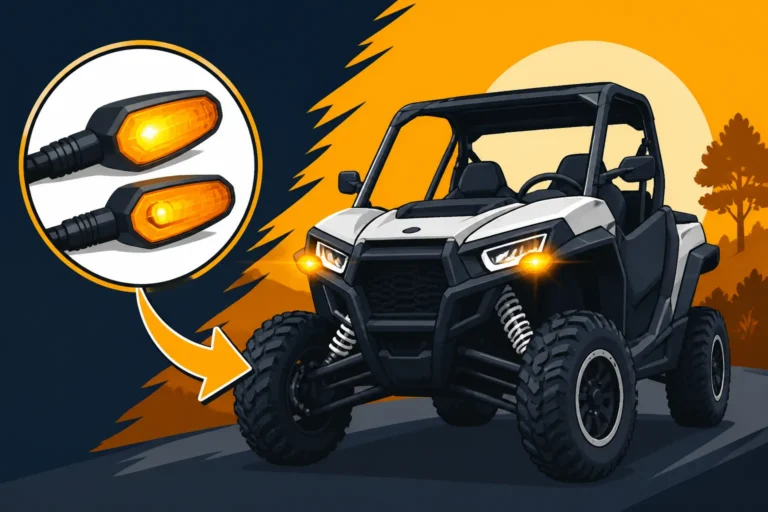
Meeting these standards is non-negotiable for road use. Many riders turn to aftermarket suppliers like SuperATV for high-quality accessories that help them meet these requirements, from durable mirrors to integrated turn signal kits. While having all this equipment makes your UTV "street-legal" for some roads, it doesn't automatically grant access to all roads, especially the restricted US Highways. It's about equipping your machine safely for permissible routes, not about overriding the inherent limitations for high-speed federal roads.
Navigating the Rules and Avoiding Penalties
The intricacies of Oklahoma's UTV laws can be a bit of a maze, and misunderstanding them can lead to more than just a ruined ride – it can result in significant legal and financial consequences. It's crucial for every rider to take responsibility for understanding where they can and cannot ride, and what the repercussions are for stepping outside those boundaries. Planning ahead and staying informed are your best defenses against unwelcome citations.
Planning Your Route and Local Ordinances
One of the most common pitfalls for UTV riders in Oklahoma is assuming that statewide rules apply uniformly everywhere. This isn't always the case, particularly when it comes to county roads and city streets. While the state provides the framework for street-legal UTVs, local governing bodies hold the power to actually open or close their specific roads. This means that [Oklahoma Rules for Riding a County Road] can vary dramatically from one county to the next. Similarly, [Oklahoma Rules for Riding a City Street] are determined by local municipal ordinances. A city might prohibit UTVs entirely, even if the surrounding county has opened its roads.
Before you ever head out, especially if you're exploring a new area, make it a habit to check the local ordinances for both the county and any cities you plan to enter. A quick call to the county clerk's office or city hall can often clarify the rules. Many communities are making this information more accessible online, so a quick search for "UTV ordinance [City/County Name] Oklahoma" can often yield results. Trust me, a few minutes of research is far better than the hours of hassle and expense that come with a traffic stop or, worse, an accident on an unauthorized road. It's your responsibility as the operator to know the specific rules of the road you're on, and that includes those pesky, but important, local variations.
Penalties for Illegal Highway Use
Ignoring the rules and taking your street-legal UTV onto a prohibited US Highway can have serious repercussions, far exceeding the typical off-road violation. While some minor off-road infractions in Oklahoma might carry a [Oklahoma Penalties Capped at $25], riding an unauthorized vehicle on a major highway is often viewed with greater severity. You could face significant fines, potentially hundreds of dollars, for operating an unregistered or unauthorized vehicle on a highway. Remember, even if your UTV is registered as street-legal, it's not authorized for US Highways.
Beyond monetary fines, law enforcement has the authority to impound your machine. Imagine the headache and expense of retrieving your UTV from an impound lot, which often involves daily storage fees on top of tow charges. This isn't just an inconvenience; it can be a major financial burden. In some cases, depending on the specifics of the situation and local laws, you could even face misdemeanor charges, leading to court appearances and a mark on your record. It's not worth the risk. The goal of Oklahoma's street-legal UTV laws is to provide safe and responsible access where appropriate, not to invite reckless behavior on major thoroughfares. Stick to the designated roads, understand the limitations, and ensure your ride is always compliant and safe.
Disclaimer
This article is for general informational purposes only and does not constitute professional advice. Laws, prices and regulations vary by location and change over time. Consult a qualified professional for guidance on your specific situation.