How Much Water to Carry in August Heat
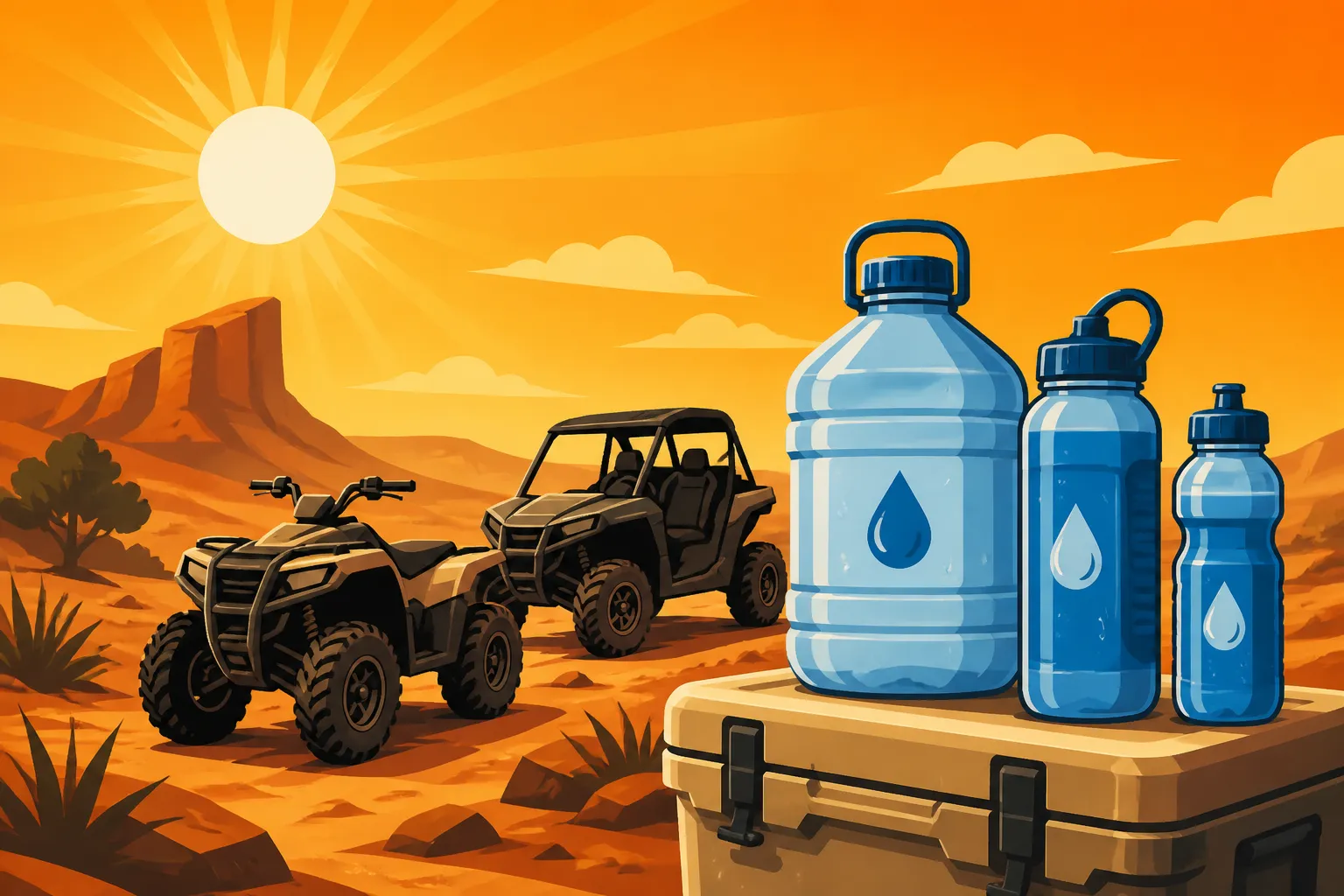
A full water bottle may feel adequate when you leave the truck, but August heat can turn a casual Oklahoma ride into a long, thirsty day—especially if a trail is slower, rougher, or farther from help than expected. This guide helps you estimate water for each rider, pack it so it stays accessible, and make a safer plan for heat, breakdowns, and changing conditions.
Estimate water for the whole ride, not just the mileage
Use time and effort to make a first estimate
Distance alone is a poor way to decide how much water to carry. A short route through deep sand or rocky, uneven ground can take much longer—and demand more effort—than a longer ride on an easy surface. Heat, humidity, sun exposure, riding pace, protective clothing, and how much a person sweats all affect what they need.
As a rough planning starting point for active riding in hot weather, consider about 0.5 to 1 liter of fluid per person per hour. That is an estimate, not a personal prescription or a target everyone should force themselves to meet. Riders vary, and the conditions can change during the day. Someone taking a slow, shaded ride may need less than someone working hard in full sun, while a rider in heavy gear may need more frequent opportunities to drink.
Plan for the time you expect to be riding, then add a reserve for delays. For example, if your group expects a three-hour ride, estimate the needs of every person for those three hours and bring extra for getting lost, waiting for a repair, or returning more slowly than planned. Do not treat the reserve as permission to extend the ride without reassessing conditions.
If you are new to riding in Oklahoma heat, start conservatively. Shorten the route, take breaks, and see how your body responds rather than trying to match another rider’s pace or water habits. More planning ideas are covered in [Oklahoma Riding in Summer Heat].
Calculate for every passenger and rider
Count people, not machines. Two adults on one side-by-side still need water for two adults. A child riding along needs their own supply, and it should be easy for a responsible adult to reach without unloading cargo or stopping somewhere unsafe. For a group, have each person carry some water rather than relying on one large container in one vehicle.
A simple planning worksheet can prevent an easy-to-miss shortfall:
| Ride plan | What to include |
|---|---|
| Expected riding time | Estimate the full outing, including stops and slower sections |
| People in the group | Count riders and passengers individually |
| Starting water | Use a personal estimate that reflects heat, effort, and experience |
| Reserve | Add water for delays, a wrong turn, or a mechanical problem |
| Access plan | Decide where water is stored and who can reach it |
| Turnaround point | Set a time or remaining-water threshold for heading back |
For instance, a family planning a two-hour ride should not pack for “two vehicles” or assume that a shared jug will be enough. Each adult should know where their own drinking water is, and the adults should be able to reach the child’s supply promptly. If one rider finishes their water early, the group should adjust the outing rather than quietly shifting the entire reserve to that person and continuing as planned.
If you are riding with a larger group, agree before departure on who carries the shared backup and how the group will handle a slower rider. [Oklahoma Group Ride Planning] can help you think through responsibilities beyond water, such as keeping the group together and deciding when to turn around.
Do not wait for thirst to start drinking
Thirst is useful, but it is not a complete plan for a hot ride. Take regular opportunities to drink instead of waiting until you feel parched. A short stop in shade can be a good moment to check in with yourself and other riders: Is anyone unusually tired, nauseated, lightheaded, or struggling to keep up?
At the same time, do not turn hydration into a contest. Drinking excessive amounts of plain water quickly can also be dangerous. Sip steadily, follow your own needs, and take breaks. For long, strenuous outings with substantial sweating, some riders may choose drinks or snacks containing electrolytes, but that does not replace water or make it safe to keep riding through concerning symptoms.
Anyone with a medical condition, a history of heat-related illness, or a clinician’s instructions about fluid or salt intake should follow their individual guidance. A general trail estimate cannot account for those personal needs.
Pack water so you can reach it safely
Keep drinking water separate from the emergency reserve
A bottle or hydration reservoir that is easy to access can make it more likely you will drink during the ride. Put your regular drinking supply somewhere you can reach during a planned stop, without digging through tools, recovery gear, or bags of spare clothing. Keep a separate backup container sealed and protected for an unexpected delay.
For an ATV, think about where the water will sit before you load it. It should be secured against bouncing, shifting, and falling off, and it should not interfere with steering, controls, exhaust heat, or your ability to get on and off safely. A loose bottle that rolls underfoot or spills across gear can create a problem at exactly the wrong time.
On a UTV, keep drinks within reach but secured so they cannot become projectiles if the machine jolts or stops abruptly. A cooler or storage box can protect backup water from dirt and direct sun, but do not assume that an enclosed cargo area will keep it cool all day. If your vehicle has added storage, racks, or other accessories from a company such as SuperATV, check the accessory’s fitment and load guidance before using it to carry water. Secure containers independently rather than assuming a storage accessory will prevent movement.
Protect water from heat and contamination
Water left in direct sun or in a hot vehicle can become unpleasant to drink. Insulated bottles, a shaded storage spot, or a small cooler can help it stay more appealing. Freezing some bottles before departure may provide cool water later, but leave room for expansion and make sure you still have liquid water available early in the ride. Do not rely on a frozen container as your only drinking supply.
Keep drinking containers closed when they are not in use. Dust, sand, mud, and fuel or oil residue can contaminate water, especially when containers are stored alongside tools or recovery equipment. Wash reusable bottles and hydration reservoirs after the ride and let them dry thoroughly. A reservoir left damp in a warm gear bag can develop an unpleasant smell and may be less likely to be used on the next outing.
If you carry a shared emergency jug, mark it clearly and make sure every adult in the group knows where it is. A reserve that nobody can locate quickly is not much of a reserve. If the group includes children, keep their regular supply separate and accessible rather than expecting them to ask for water from a container buried in cargo.
Adjust the plan for Oklahoma routes and heat
Consider the terrain and access to help
Oklahoma riding conditions can vary sharply by location. At Little Sahara State Park near Waynoka, soft sand and exposed terrain can make a ride tiring, while wooded routes in the southeast can involve different challenges: shade, uneven ground, changing trail conditions, and stretches where phone service may be unreliable. The right amount of water depends on your actual route and riding pace, not just the name of the destination.
Before leaving, check the route, current access information, expected weather, and where you can return to your vehicle or camp. A route that looks straightforward on a map may take longer if the ground is rough, visibility is poor, or the group needs to stop frequently. Planning information in [Oklahoma ATV Trails: Where to Ride] and [Little Sahara State Park in Oklahoma] can help you think about destination-specific details. For the wider trip, [Oklahoma Trail Conditions Before You Tow] is a useful reminder to check conditions before committing to a long drive and ride.
Do not assume a nearby campground or parking area will be available as a mid-ride refill point. Know where it is, whether you can reach it from the route, and whether the group can safely return there if a rider feels unwell. For overnight trips or rides with a base camp, [Oklahoma OHV Camping With Trail Access] can help you plan where supplies will be staged.
Build in shade, rest, and a turnaround rule
Water is only one part of managing heat. Start early when practical, take breaks, and use shade when it is available. Pay attention to the effort required to ride: repeatedly muscling a machine through sand, mud, or steep terrain can be more demanding than the group expected. Protective clothing is important, but it can also make heat management more challenging, so plan breaks rather than assuming riders will remain comfortable in full gear all day.
Set a turnaround rule before anyone gets tired. You might agree to head back when a chosen amount of water remains, at a set time, or if someone begins to feel unwell. The exact rule depends on the group and route, but making it in advance can reduce pressure to continue simply because the destination is close or the group has already driven a long way to get there.
If a route is unfamiliar, do not wait until the group is low on water to decide whether to turn around. A paper map or offline navigation plan matters when signals are weak. [Cell Dead Zones in Southeast Oklahoma] and [Carrying a Paper Map Where GPS Fails] are useful topics to review before riding in areas where a phone may not be dependable.
Recognize heat trouble and respond early
Watch for symptoms in yourself and other riders
Heat-related illness can develop during strenuous activity, and a rider may not recognize what is happening to them. Take unusual behavior seriously. Warning signs can include weakness, headache, dizziness, nausea, heavy sweating, muscle cramps, or feeling faint. Confusion, fainting, seizures, or a person who is difficult to wake are emergency signs.
Do not assume that someone who is quiet, irritable, or suddenly falling behind is merely tired or out of shape. Stop in a safe place, get the person out of direct sun, and assess what is happening. If symptoms are serious, worsening, or include confusion or fainting, call emergency services. Do not force fluids on someone who is confused, vomiting repeatedly, or unable to swallow safely.
For less severe symptoms, stop the activity, move to shade or a cooler place, loosen unnecessary gear, and cool the person with available methods such as wet cloths and airflow. Offer small sips only if they are alert and able to drink. If they do not improve promptly or you are uncertain about the severity, seek medical help rather than attempting to ride them back without a plan.
Make a delay plan before you need one
A breakdown, flat tire, wrong turn, or separated group can turn a planned outing into a much longer one. Carry enough reserve to account for a reasonable delay, and make sure the group has a way to communicate its location. Keep emergency water protected from damage and avoid using it casually during the first part of the ride.
Before departure, tell someone who is not riding where you plan to go and when you expect to return. Agree on what they should do if they do not hear from you. For remote or unfamiliar routes, review [What a First Aid Kit Needs on Timber Land] and [Oklahoma Trail Etiquette Locals Expect] alongside your route plan so the group is prepared to handle an unexpected stop responsibly.
A useful final check is to ask each person to point out their own water, the group’s backup supply, and the route back to the vehicle. If someone cannot answer, fix that before starting the machines. If you use add-on cargo equipment from SuperATV or another accessory maker, check that it is secured and does not obstruct access to essential supplies. On a hot day, the best water plan is the one everyone understands and can use without stopping to unpack the entire machine.
Disclaimer
This article is for general informational purposes only and does not constitute professional advice. Laws, prices and regulations vary by location and change over time. Consult a qualified professional for guidance on your specific situation.