Oklahoma Rules for a Visiting Texas Rider
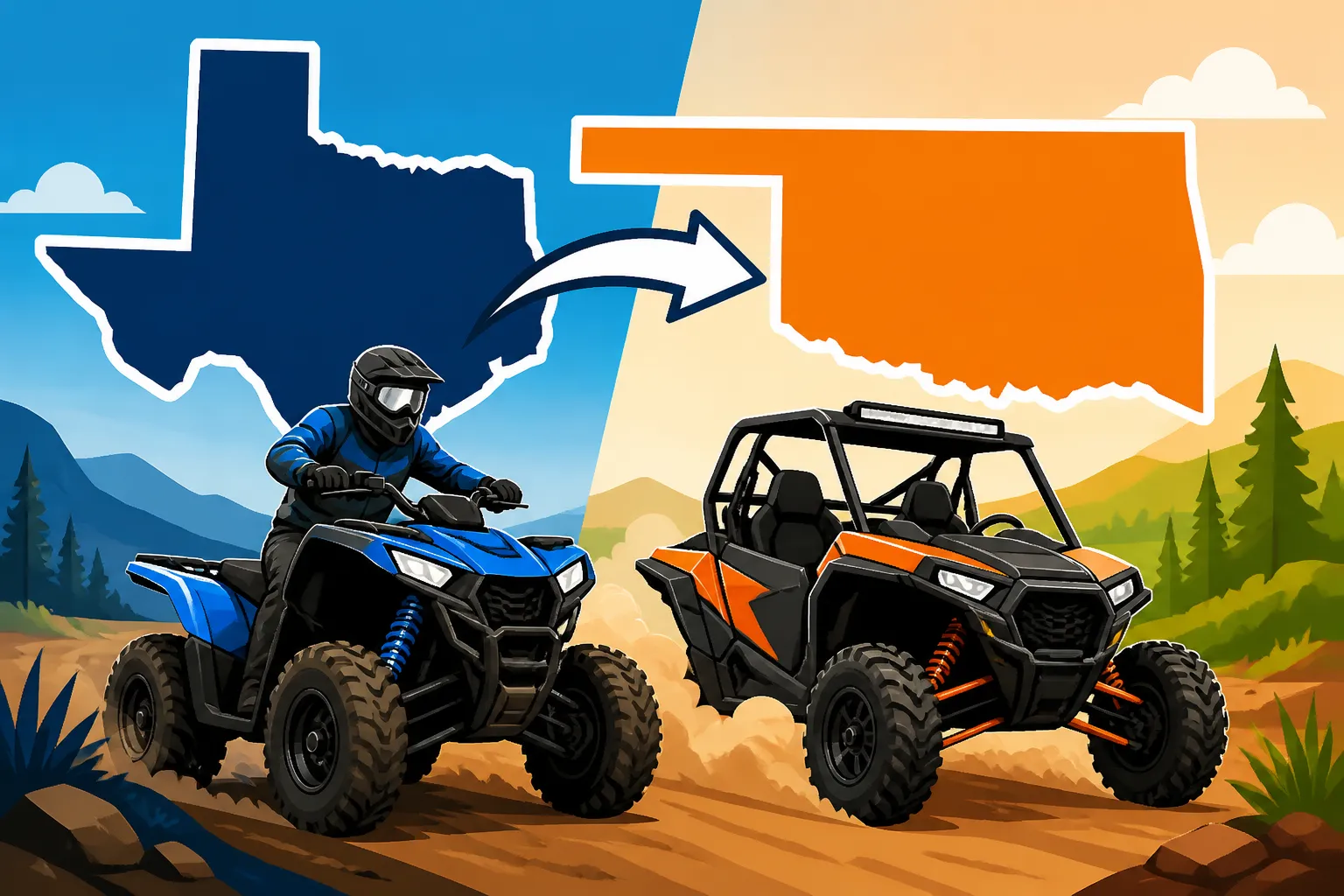
Texas riders often wonder if they can just pack up their ATV or UTV and head across the Red River to Oklahoma, expecting the rules to be the same as back home. The truth is, while both states embrace off-road fun, Oklahoma has its own distinct set of regulations concerning everything from road use to public land access and even how your machine is registered. This guide will walk you through what you, as a visiting Texas rider, need to know to ensure a smooth, safe, and ticket-free adventure in the Sooner State.
Understanding Oklahoma's Basic Rules for Out-of-State Machines
When you roll into Oklahoma with your ATV or UTV from Texas, one of the first questions you might have is whether your current registration and paperwork are going to cut it. It’s a completely fair concern, as nobody wants to run afoul of the law simply because they didn't know the local rules. Generally speaking, Oklahoma is quite welcoming to out-of-state riders, but there are a few important things to keep in mind regarding your machine's legal status and the documents you should carry.
Does Your Texas Registration Work Here?
Good news for you, Texas rider! Oklahoma generally recognizes the registration or titling of off-road machines from other states, including Texas. This means you typically don't need to register your ATV or UTV in Oklahoma if it's already properly registered or titled in your home state and you're just visiting. The key here is "properly registered." Make sure your Texas registration is current and your machine displays any decals or plates required by Texas law. Oklahoma understands that folks travel, and they're not looking to double-tax visitors for short-term recreational use.
However, this courtesy doesn't extend to becoming an Oklahoma resident. If you move to Oklahoma, even if you keep your Texas license plates on your truck, your ATV or UTV would be subject to Oklahoma's titling and registration laws, including [Oklahoma Registration for a New Resident]. For a quick trip to Little Sahara or an adventure in the Ouachita National Forest, your Texas paperwork should suffice. Always be prepared to show proof of ownership and home-state registration if asked by law enforcement or park rangers.
What Paperwork to Keep Handy
While your Texas registration is usually accepted, it's paramount to have all your essential documents readily accessible whenever you're riding in Oklahoma. Think of it like carrying your driver's license in your wallet – it's just good practice. You should always have your current Texas registration or title certificate, proof of ownership (like a bill of sale or previous title), and your driver's license or state-issued ID. Some riders even carry a copy of their insurance policy, though Oklahoma doesn't mandate insurance for off-road machines used strictly off-highway. If your machine is a street-legal UTV back in Texas, and you're hoping to utilize Oklahoma's own street-legal provisions (more on that later), carrying proof of any street-legal modifications and registration is wise.
Beyond official documents, consider keeping an emergency contact list and any medical information you might need. While not legally required, a well-prepared rider is a safer rider. It’s better to have it and not need it than to need it and not have it, especially if you find yourself in a situation where a ranger or deputy needs to verify details about you or your machine. Make sure these documents are stored in a waterproof bag or container, as creek crossings and sudden rain showers are part of the adventure.
Helmet Laws for Younger Riders
This is a crucial point of difference that every Texas family riding in Oklahoma needs to be aware of. While Texas has specific helmet laws for riders of certain ages, Oklahoma's regulations are quite clear: all riders and passengers under the age of 18 must wear a helmet when operating or riding an ATV or UTV on public lands, public easements, or designated riding areas. This applies whether they are driving their own youth quad or riding as a passenger in a side-by-side. The helmet must meet federal safety standards (like DOT approval). This rule is non-negotiable and enforced by park rangers and law enforcement alike.
Parents often ask about this, and it’s a rule that can sometimes catch visitors off guard. Even if your 16-year-old rides helmet-free back in Texas, they'll need one in Oklahoma. If your UTV has a roll cage and seatbelts, the helmet rule still applies to minors under 18 in many public riding areas. Don't risk a ticket or, more importantly, a serious injury. Ensure every young rider in your group is properly equipped. You can find more detailed information on this topic in articles like [Oklahoma ATV Helmet Law Age].
Navigating Oklahoma Roads with Your ATV or UTV
Driving an ATV or UTV on public roads is often one of the most confusing aspects for out-of-state riders, as laws vary wildly from state to state. Oklahoma has its own specific set of rules, and they're likely different from what you're used to in Texas. Understanding these distinctions is critical to avoid citations and ensure your trip stays fun.
Street-Legal UTVs: A Different Class of Machine
Oklahoma has a specific legal class for "street-legal UTVs," which are off-road utility vehicles that have been modified and registered to be driven on certain public roads. This is generally not the same as merely having a "license plate" in Texas. To qualify, a UTV must meet a list of equipment requirements, including things like headlights, taillights, brake lights, turn signals, mirrors, a horn, and a windshield. These machines get a special annual road plate and are subject to yearly renewal, unlike the lifetime decal for regular off-road machines.
If you have a street-legal UTV from Texas, you might be able to operate it under Oklahoma's rules, provided it meets their equipment standards and you adhere to their specific road use limitations. However, even with an Oklahoma road plate, these machines still have significant restrictions. For instance, [Oklahoma Street UTVs Stay Off Interstates] and [Oklahoma Street UTVs Stay Off US Highways] are strict rules. They are primarily intended for use on county roads, city streets where local ordinances permit, and for crossing certain highways. For a deeper dive into what it takes to get one street legal, check out [Oklahoma Street-Legal UTV Requirements]. If you're looking to upgrade your UTV with necessary safety gear to meet road requirements, many riders turn to aftermarket providers like SuperATV for their extensive range of turn signal kits, mirrors, and horns.
County Roads and Highway Crossings
Oklahoma's stance on ATVs and UTVs on public roads is generally restrictive, with exceptions. Off-road vehicles are typically not allowed on state or federal highways unless specifically designated, even for street-legal UTVs. However, county commissioners in Oklahoma have the authority to open county roads to ATV and UTV use within their respective counties. This creates a patchwork of rules, where one county might allow road riding, and the next might not. As a visitor, it's incredibly challenging to know every county's specific ordinances. Your best bet is to stick to designated off-road areas or private land, unless you have verified that the specific county road you intend to use is open. You can learn more about this authority in [Oklahoma County Commissioners and ATV Roads].
When it comes to crossing highways, Oklahoma does allow for brief crossings under very specific conditions, even for non-street-legal machines. Generally, this is permitted at a 90-degree angle, only in daylight hours, and only if the highway has a posted speed limit of 35 mph or less. This isn't permission to ride along the highway; it's strictly for crossing from one off-road section to another. Understanding these narrow windows for crossing is essential, and you can find more details in [Oklahoma Highway Crossings in Daylight].
Instrument of Husbandry: Farm Use Exceptions
Oklahoma law includes an "instrument of husbandry" exemption, which allows ATVs and UTVs used for agricultural purposes to operate on public roads under certain conditions. This means if you're visiting to help a relative on their farm or ranch, and your machine is being used directly for agricultural work (like checking fences, hauling feed, or tending livestock), it might qualify for this exemption. However, this is strictly for bona fide farm use and not for recreational riding. The machine must be operated directly related to the farming operation, often within certain distances of the farm property, and must still be operated safely.
It’s easy to misunderstand or misapply this rule. It doesn't grant carte blanche to ride a recreational quad down any county road just because you're driving to a pasture. The spirit of the law is to facilitate farming operations, not recreational passage. If you're a Texas rider simply looking for a fun trail ride, this exemption likely won't apply to your situation. Always err on the side of caution and assume that general recreational use on public roads is prohibited unless you have clear, specific information to the contrary for that exact location.
Accessing Oklahoma's Diverse Riding Areas
Oklahoma boasts a fantastic variety of off-road riding opportunities, from the unique sand dunes of Little Sahara to the rugged trails of the Ouachita Mountains. As a visiting Texas rider, knowing how to legally access these areas and what permits or fees are required is just as important as understanding the road rules.
State Parks: Dunes and Trails
Oklahoma's state parks offer some of the most popular riding destinations. Little Sahara State Park in Waynoka is arguably the most famous, with its vast, undulating sand dunes. Riders flock here for the thrill of dune riding. For a visitor, there's a day-use fee to enter the riding area, or you can purchase an annual pass if you plan multiple trips. Critically, Little Sahara has specific equipment requirements that every rider must meet: a 10-foot safety whip with a bright orange flag (at least 6×12 inches) attached near the top. This is to increase visibility on the dunes, especially when cresting blind hills. Night riding is allowed, but your machine must have appropriate lighting – white light to the front and red to the rear.
Another popular state-managed area is Robbers Cave OHV Area near Wilburton, which offers challenging wooded trails and rocky terrain. Like Little Sahara, there are fees to ride, and hours are typically daylight-only. When visiting any Oklahoma state park with an OHV area, be prepared for park-specific rules and signage. While your Texas registration is generally accepted, you will still need to pay any applicable [Oklahoma State Park Fees for Riders]. Many riders visiting these parks ensure their machines are well-equipped with durable tires and winches, often sourced from companies like SuperATV, to tackle the varied terrain.
Wildlife Management Areas and Public Timber Lands
Oklahoma offers extensive riding opportunities within its Wildlife Management Areas (WMAs), such as Honobia Creek WMA and Three Rivers WMA in the southeastern part of the state. These areas are vast and managed by the Oklahoma Department of Wildlife Conservation (ODWC). For visitors, accessing these lands for riding (even if it's not hunting-related) typically requires a Land Access Permit. [Oklahoma's Nonresident Land Access Permit] is crucial for Texas riders. These permits are usually available online through the ODWC website or from licensed vendors. It's important to understand that these permits often have different costs for residents versus nonresidents.
Beyond the permit, WMAs have very specific rules regarding when and where you can ride. Many WMAs are primarily managed for hunting, so riding seasons might be restricted to specific months (like October through January 15th for some timber lands), and speed limits (often 25 mph) are enforced. Riding is usually restricted to designated roads and trails, with strict limits on off-road travel. [Honobia Creek WMA Riding in Oklahoma] and [Three Rivers WMA Riding in Oklahoma] are vast but come with these specific limitations. Always check the current ODWC regulations for the specific WMA you plan to visit before heading out, as rules can change.
Private Riding Parks: Your Best Bet for Open Riding
For many visiting Texas riders, private off-road parks offer the most straightforward and least restrictive riding experience. Places like Cross Bar Ranch near Davis provide dedicated trails, obstacles, and open areas designed specifically for ATVs and UTVs. These parks often have amenities like camping, restrooms, and even wash stations. While you'll pay a day-use fee, the rules tend to be simpler, and you're typically not navigating a complex web of state and county ordinances.
Private parks will have their own set of rules, often posted prominently at the entrance or available on their websites. These usually cover things like operating hours, helmet requirements (which might extend beyond Oklahoma's state law to all ages), speed limits in campgrounds, and rules about alcohol or pets. You'll almost certainly be required to sign a liability waiver. These parks are fantastic options because they are designed for recreational riding and often accommodate a wide range of skill levels. You can find out more about what to expect in [Oklahoma Private Park Waivers and Rules]. Often, the staff at these parks are riders themselves and can offer excellent local advice on trail conditions and must-have gear, like a sturdy winch or upgraded suspension from SuperATV for tackling the more challenging routes.
Comparing Key Oklahoma Rules for Visiting Texas Riders
To help you quickly grasp the main differences, here's a table comparing some key aspects of ATV/UTV rules that a Texas rider might encounter in Oklahoma.
| Feature | Oklahoma Rules (General) | Texas Comparison (General) |
|---|---|---|
| Out-of-State Registration | Generally recognized for visitors. | Oklahoma registration generally recognized for visitors. |
| Street-Legal UTV Class | Specific class with annual road plate; strict equipment/road rules. | Varies by county/city; "road plates" may have different meanings. |
| Road Use (Non-Street Legal) | Highly restricted; generally only for highway crossings (35 mph, daylight) or specific open county roads. | Highly restricted; generally only on private land or specific public roads if ordinance allows. |
| Helmet Law (Minors) | Required for all riders/passengers under 18 on public lands/areas. | Required for riders under 15; otherwise, optional if on private land. |
| Public Land Access Permits | Nonresident Land Access Permit often required for WMAs/timber lands. | No general state-wide permit for OHV areas; specific park fees apply. |
| Dune Requirements | Little Sahara requires 10-foot whip and orange flag. | Specific requirements vary by park (e.g., Sam Houston National Forest, some private parks). |
Important Tips for a Smooth Oklahoma Riding Trip
Planning your trip well in advance can make all the difference, especially when you're visiting a new state with different regulations. Don't assume that what flies in Texas will necessarily be okay in Oklahoma.
First, research your destination thoroughly. Whether it's a state park, WMA, or private ranch, check their specific rules, fees, and any reservation requirements before you hitch up the trailer. Some areas have seasonal closures or specific restrictions during hunting seasons that might impact your plans. Calling ahead to the park office or checking their official website is always a smart move.
Second, be prepared for the terrain and weather. Oklahoma's terrain varies dramatically. Little Sahara is deep sand, while Robbers Cave and the Ouachita area are rocky and forested. Weather can also change quickly, from scorching summer heat to sudden thunderstorms that turn trails into mud. Pack appropriate gear, including plenty of water, first-aid supplies, and recovery equipment like a tow strap or winch.
Finally, always respect private property and land closures. Much of Oklahoma is private land, and riding without permission is trespassing. Stick to designated trails and public areas. When crossing a property line, even if it's a designated crossing, be mindful of gates and fences. A polite, respectful rider leaves a good impression and helps ensure access for everyone in the future. Enjoy your ride in the Sooner State!
Disclaimer
This article is for general informational purposes only and does not constitute professional advice. Laws, prices and regulations vary by location and change over time. Consult a qualified professional for guidance on your specific situation.