Trailering a Machine From Tulsa to Little Sahara
A trailer problem can turn a Tulsa-to-Little-Sahara ride into a stressful roadside stop: a loose strap, a machine that shifts over bumps, or a trailer that suddenly feels too heavy. This guide walks through planning the haul to the dunes near Waynoka, checking your trailer and load, navigating the final miles, and unloading with less chance of damage or delay.
Plan the Tulsa-to-Little-Sahara haul
Choose a route that works for your whole rig
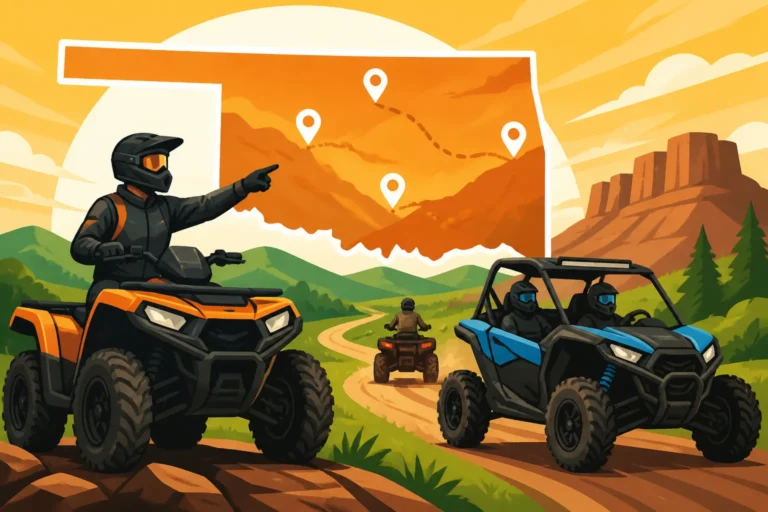
Little Sahara State Park is near Waynoka in northwestern Oklahoma. The route that looks shortest on a phone may not be the easiest one when you are pulling a loaded trailer. A practical plan is to follow major roads west from Tulsa toward the Enid area, then continue toward Waynoka on a route your truck, trailer, and current road conditions can handle. Check your navigation before leaving, and confirm the final approach rather than assuming every road shown is suitable for a large trailer.
Give yourself room to adapt. Road work, weather, traffic, or a missed turn can change the best route. If you are towing a wide side-by-side or a longer trailer, consider whether the route includes narrow turns, steep grades, small-town streets, or places where turning around would be awkward. A route that takes a little longer but keeps you on straightforward roads can be a better choice than one that saves a few miles.
Use a highway navigation app for the drive, and treat an off-road mapping app as a separate tool for the riding area. onX Offroad can help you review mapped riding areas and orient yourself once you are planning the off-road part of the trip, but do not assume a trail map is a substitute for road directions or confirmation that a road is open to your truck and trailer. Download any maps you expect to need before you leave reliable cell service, and keep a backup plan for navigation.
Check conditions and arrival details before departure
Before you load up, check Oklahoma Trail Conditions Before You Tow and review information for Little Sahara State Park in Oklahoma. Rain and changing surface conditions can affect roads and riding plans, while park procedures and access details can affect where you should go after arriving. Confirm practical details directly with the park when needed, especially if you are arriving with a large trailer, traveling with a group, or planning to camp.
Think about when you want to arrive, not just how long the drive might take. A daylight arrival makes it easier to spot the entrance, assess the trailer parking area, and unload without rushing. It also gives you more time to address a strap that has loosened or a trailer light that has stopped working. If the trip is part of a weekend outing, build in a cushion for fuel, food, traffic, and a short inspection stop.
For navigation, onX Offroad may be useful for understanding the riding area and keeping track of mapped locations after you have parked. Check that the map information suits your plans, and do not rely on a phone alone if you may lose service. Save the park’s location and your intended meeting point, then share the plan with anyone traveling separately.
Prepare the towing vehicle and trailer
Match the trailer to the machine
Start with the trailer’s load capacity and your vehicle’s towing capacity, then account for the full loaded setup—not just the weight of the ATV or UTV. Include the trailer itself, fuel cans, tools, riding gear, spare tires, camping equipment, and anything else you plan to carry. A side-by-side can take up more room and add substantial weight, while a second machine may change how the trailer balances.
Load distribution matters as much as total weight. Place machines so the trailer remains balanced and the hitch carries an appropriate share of the load. Too little weight at the hitch can contribute to sway; too much can overload the tow vehicle’s rear end. Follow the trailer and vehicle manufacturers’ instructions for loading and towing, and do not use an arrangement that exceeds any rated capacity.
| Before the drive | What to check | Why it matters |
|---|---|---|
| Tow vehicle | Towing and payload ratings, hitch, tires, mirrors | The truck must safely handle the complete loaded combination |
| Trailer | Capacity, tires, wheel bearings, coupler, safety chains | A trailer issue can become a roadside hazard |
| Load | Machine placement, securement points, loose cargo | Shifting weight can affect balance and handling |
| Lights and brakes | Turn signals, brake lights, connectors, trailer brakes if fitted | Other drivers need to see your intentions, and the trailer must respond predictably |
| Riding gear | Helmets, tools, water, recovery items | Essential gear is easier to check before the trailer is packed |
If you are unsure whether your vehicle can tow the loaded trailer, check the vehicle and trailer manuals or ask a qualified towing professional. A machine that fits physically may still push the setup beyond its safe ratings.
Secure each machine and inspect the trailer
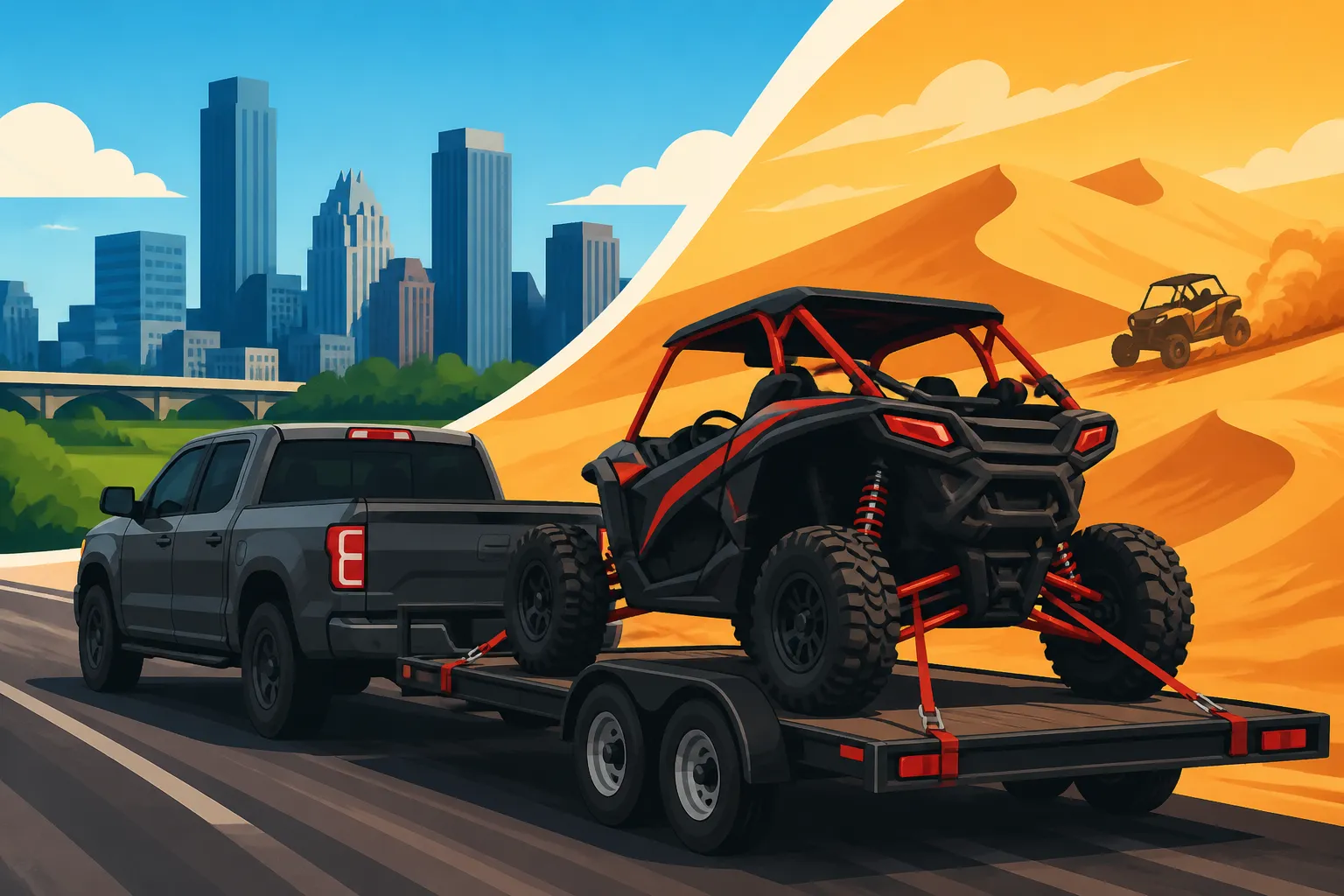
Park the machine in a stable position, set the trailer parking brake if available, and secure it using the trailer’s designated tie-down points. Use straps that are appropriate for the load and in good condition. Attach them to suitable points on the machine—not to a plastic panel, brake line, or other component that is not designed to take the force. Follow the manufacturer’s guidance for transport, especially if the machine has special suspension or steering instructions.
Compressing suspension slightly can help limit bouncing, but avoid overtightening straps or forcing components into a position they are not meant to hold. Secure loose items separately. A helmet, tool bag, or cooler that slides around can damage the machine or shift the trailer’s balance. Check that ramps are locked or stowed, the coupler is properly latched, safety chains are connected as instructed, and the breakaway system is ready if the trailer has one.
Before leaving Tulsa, test the trailer lights and inspect tire condition and pressure. Look for obvious damage, uneven wear, cracked straps, loose hardware, and anything that could rub against a tire. If your trailer has wheel bearings that need maintenance, do not wait until you are already on the road to investigate. Keep a basic roadside kit accessible in the tow vehicle rather than buried under cargo.
Drive and unload without rushing
Make a stop to recheck the load
Even a carefully secured load can settle during the first part of a drive. After you have traveled a short distance, pull over somewhere safe and check the straps, coupler, safety chains, tires, and lights. Repeat the check during the trip, particularly after a rough stretch of road, a sudden stop, or a change in weather. Do not wait until you hear a rattle or see a strap moving in the mirror.
Drive at a speed that feels controlled for the whole combination, leaving extra space for braking and turns. A loaded trailer takes longer to respond than an unladen truck. Avoid abrupt lane changes, and be cautious about crosswinds or gusts from passing vehicles. If the trailer begins to sway, do not make a sharp steering correction; ease off the accelerator and follow the tow vehicle or trailer manufacturer’s guidance for regaining control.
Plan fuel stops where the truck and trailer can enter, park, and exit without a tight maneuver. If you are traveling with another vehicle, agree on a meeting point before departing rather than trying to coordinate by phone while driving. Navigation tools such as onX Offroad are best set up before you start moving, so you are not trying to search for riding locations while managing a trailer.
Unload in a clear, stable area
Once you arrive, take a moment to assess the ground before lowering ramps. Choose a level, firm spot with enough room to unload and turn the tow vehicle around. Avoid placing ramps on loose or uneven ground where they could shift as the machine comes down. Keep people clear of the ramp path, and unload one machine at a time while maintaining control of the throttle and brakes.
Remove tie-downs only when the machine is stable and the ramps are secured. If the trailer has a ramp gate, confirm that its pins or latches are properly positioned. Do not stand directly behind a machine that could roll or lurch. A helper can make the process smoother, but agree on simple hand signals first and keep the helper out of the machine’s path.
Before riding, review Oklahoma Dune Riding Explained and the park’s posted rules. If your plan includes riding in sand, make sure you understand the machine’s handling and the area’s requirements before heading onto the dunes. For example, review Oklahoma’s 10-Foot Whip Rule and check that any required equipment is installed and visible. Do not assume that a machine prepared for a trail ride is automatically ready for dune riding.
Make the trip easier on the machine and the people riding
Pack for sand, heat, and a full day out
A dune trip asks different things of a machine than a short ride around a familiar property. Sand can affect tires, air filters, belts, and other parts, while warm weather can make water and shade more important than they seem during the drive. Review What Tires Work on Loose Sand and Clay before deciding whether your setup suits the terrain. Tire choice and pressure should follow the machine manufacturer’s guidance and the demands of the ride; avoid copying another rider’s setup without understanding the tradeoffs.
Bring enough drinking water for the group, plus food, eye protection, sunscreen, and clothing suited to changing conditions. The amount you need depends on the weather, the length of your ride, and how far you will be from your vehicle. How Much Water to Carry in August Heat is a useful planning topic if you expect hot conditions. Keep a first-aid kit and basic recovery equipment where they can be reached without unloading half the trailer.
If you use onX Offroad for orientation, check that the relevant map area is saved before leaving cell coverage. Make sure everyone in the group knows the meeting location and understands what to do if someone gets separated. A phone battery can drain quickly while navigating or taking photos, so carry a power bank and consider a paper backup for key locations.
Clean and inspect before towing home
Sand left on a machine can travel back in bearings, controls, electrical connections, or other places where it can contribute to wear. After riding, inspect the machine and remove loose sand before loading. If you wash it, avoid blasting water into seals, bearings, electrical connectors, or other sensitive areas. Follow the owner’s manual for cleaning and maintenance, and allow the machine to dry as appropriate before tying it down.
The guide Washing Dune Sand Out After a Weekend can help you think through the post-ride cleanup. Also check the trailer floor, ramps, tie-down points, and the underside of the machine for sand buildup or damage. If you notice a leak, unusual noise, damaged strap, or tire problem, deal with it before starting the return trip rather than hoping it will hold until Tulsa.
Before heading home, repeat the same basic checks you made on the way out: confirm the machines are secure, loose items are contained, lights work, and the coupler and safety connections are properly set. For future trips, make a simple loading checklist and keep it with your towing gear. A routine is especially helpful when the group is tired, the campsite is busy, or everyone is eager to get back on the road.
Disclaimer
This article is for general informational purposes only and does not constitute professional advice. Laws, prices and regulations vary by location and change over time. Consult a qualified professional for guidance on your specific situation.