Staging a Ten-Machine Group Before a Dune Day
A ten-machine dune ride can unravel before the first climb if trailers arrive at different times, riders cannot find one another, or nobody has checked the machines and safety gear. Staging at Little Sahara State Park near Waynoka takes more than unloading and heading for the sand. This guide lays out a practical plan for organizing your group, checking equipment, and starting the ride together.
Plan the group before you reach Little Sahara
Pick a meeting point and a clear arrival window
With ten machines, “we’ll meet at the park” is not a useful plan. Some people may be driving in from Oklahoma City, others from Tulsa or Enid, and a few may stop for fuel or supplies along the way. Choose a specific meeting location, share its name and address with everyone, and set an arrival window that leaves time to unload before the group rides.
Tell the group what to do if they are delayed. For example, ask late arrivals to message the ride lead before leaving the highway, rather than trying to catch up once the group is already scattered across the dunes. Avoid relying on a single person to relay every update. A second organizer can watch for arrivals, answer questions, and help keep the rest of the group moving through setup.
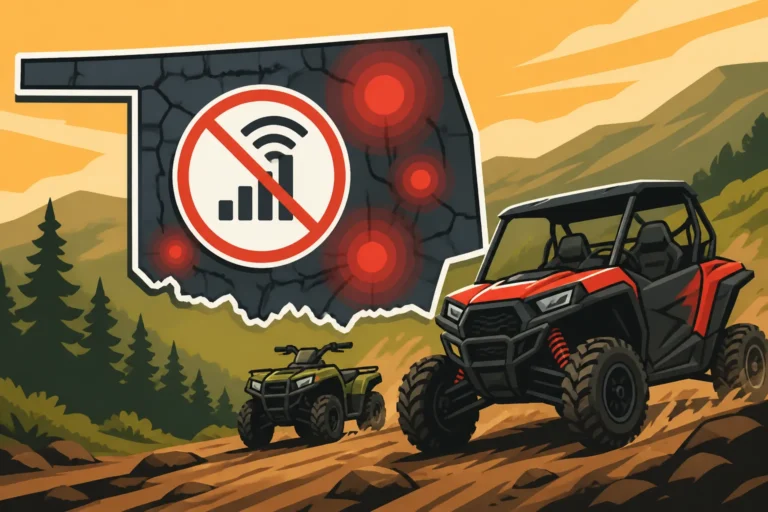
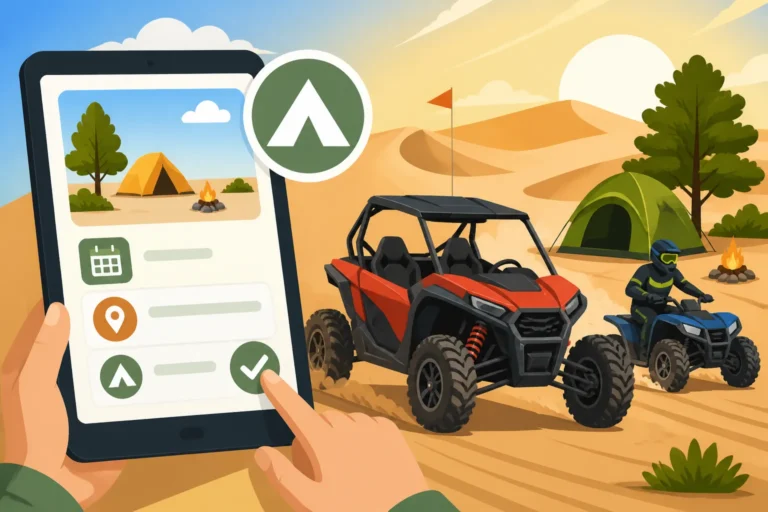
If riders are unfamiliar with the area, share the route and park information beforehand. A map app such as onX Offroad can help riders review the general area and plan how they’ll navigate, but the group should also agree on a real-world meeting point and a backup communication method. Cell coverage, battery life, and a rider’s familiarity with a mapping app can all vary.
Set expectations for the ride
A group of ten is large enough that different experience levels can affect the day. Ask about experience, machine type, and comfort with sand before everyone arrives. Someone who has only ridden packed trails may need a slower introduction than a rider who regularly tackles dunes. A side-by-side also handles differently from a small quad, and the group should avoid assuming that every rider wants the same pace.
Set expectations in plain language: who leads, who rides at the back, where the group pauses, and what happens if someone wants to turn around. It helps to choose a lead rider and a sweep rider who stays behind the last machine. The sweep should know that they are responsible for noticing a breakdown or a rider falling behind, not for trying to hurry everyone along.
Before the trip, share Oklahoma Dune Riding Explained with the group as a starting point for discussing the riding environment. Also review Oklahoma’s 10-Foot Whip Rule and Oklahoma’s Orange Flag Requirement so riders can check the relevant requirements and arrive prepared. Confirm park rules before riding; don’t treat a previous visit or a friend’s memory as a substitute for checking current instructions.
Choose a group size strategy that works on sand
Ten machines do not have to travel as one tight cluster at every moment. A single line can stretch out, especially if the lead rider moves faster than the rest. In a busy area, a long line can also make it harder for each person to keep track of the machines immediately ahead and behind.
Consider splitting into two smaller riding groups if experience, machine type, or pace differs significantly. Each group should have its own lead and sweep, and everyone should know where the groups will regroup. This does not mean separating without a plan: agree on a return time and a recognizable meeting spot before setting off. If the group chooses to stay together, use a pace that the least experienced rider can manage comfortably.
| Staging decision | A workable approach | Why it helps |
|---|---|---|
| Arrival | Set a shared arrival window and a designated organizer | Reduces confusion and last-minute calls |
| Group roles | Choose a lead and a sweep | Gives riders clear points of contact |
| Riding pace | Set the pace for the least experienced rider | Makes it easier to keep the group together |
| Breakdowns | Agree on a stop-and-check procedure | Prevents riders from searching for someone alone |
| Regrouping | Choose a meeting point and return time | Makes it easier to reconnect after splitting up |
Stage machines and safety gear before unloading
Create a consistent unloading area
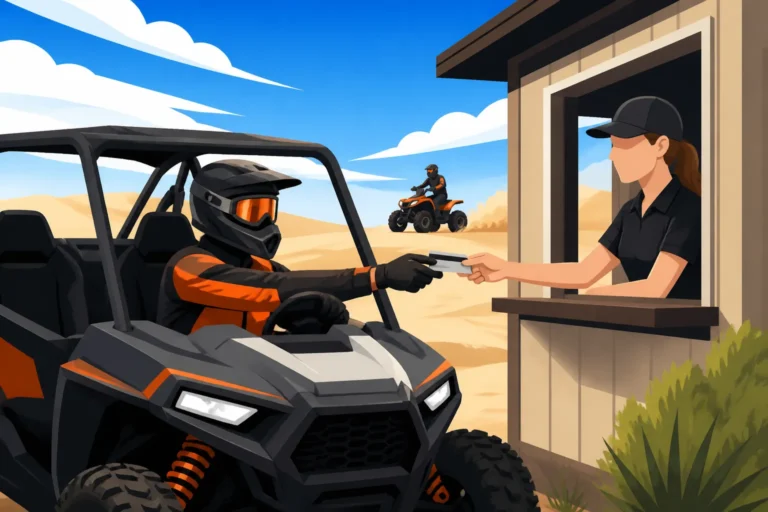
When several trucks and trailers arrive close together, unloading can become a tangle of ramps, people, and machines moving in different directions. Before anyone backs up or lowers a ramp, agree on where each vehicle will park and where machines will be staged. Keep walking space clear, especially around ramps and trailer connections. Ask bystanders to stay out of the unloading path.
Unload one vehicle at a time when space is tight. The driver should have a spotter if visibility is limited, and the spotter should stand where the driver can see them. Avoid having riders start machines while others are still walking between trailers. A few minutes of orderly unloading is much easier than sorting out a bent ramp, a close call, or a machine that was parked across another trailer’s path.
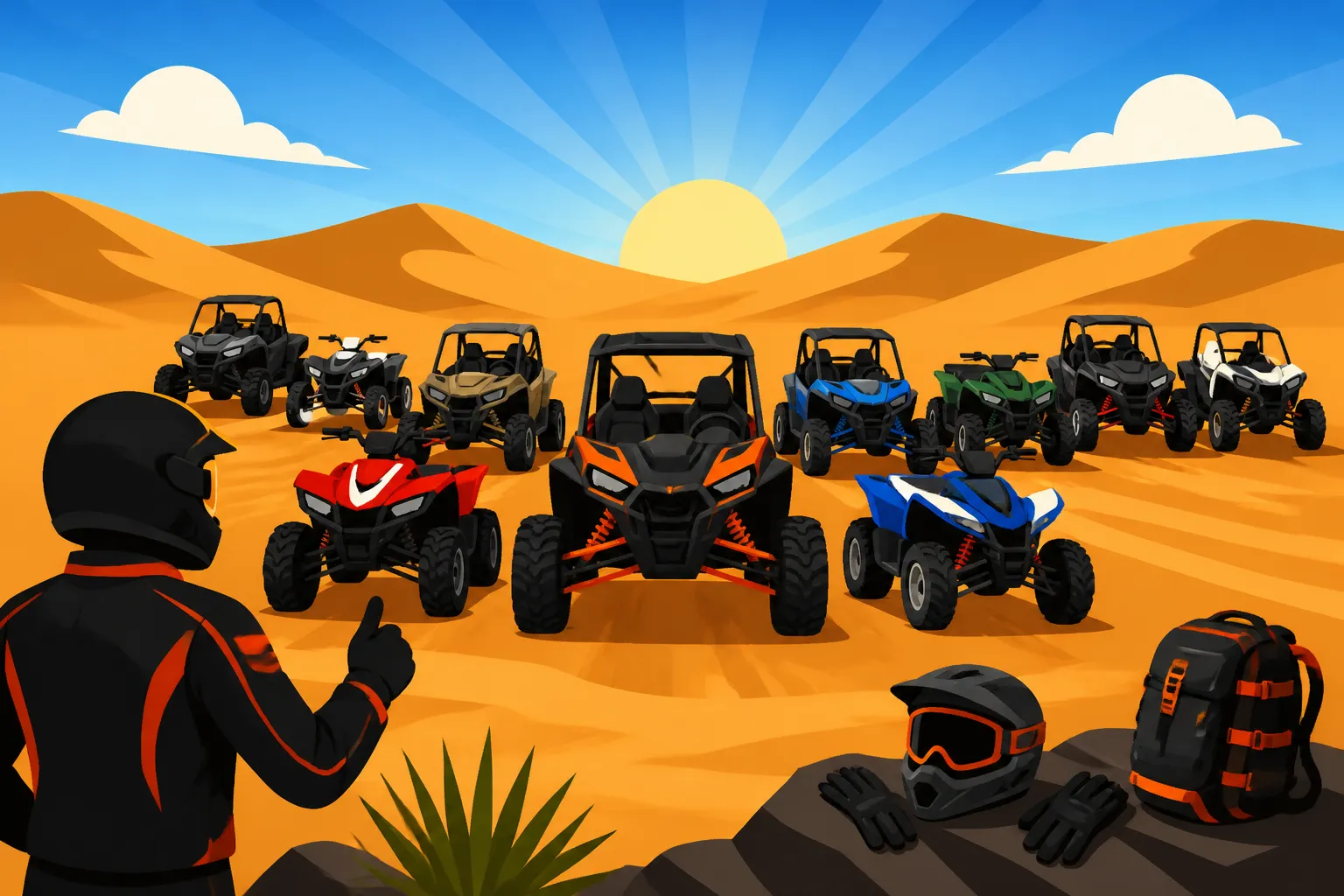
Once unloaded, park machines in a clear row or two, with enough room to inspect and gear up. Keep helmets, goggles, gloves, and personal items with their owners rather than in a shared pile. If two machines look alike, mark them with a simple identifier such as the owner’s name or a colored tie on a safe, non-moving part.
Do a machine check before the ride
A dune day puts demands on machines that may have been sitting in a garage or used mostly for easier terrain. Have every rider make a basic pre-ride check before joining the group: inspect tires, controls, visible leaks, lights, and the general condition of the machine. For side-by-sides, check that occupants have the required restraints for their machine and that doors or nets are secured as intended. Follow the manufacturer’s guidance for the particular model.
Do not treat a quick inspection as a guarantee that a machine is ready for the day. If a rider notices a warning light, an unusual noise, a loose component, or a control that does not feel right, pause and investigate before riding. A small problem found beside the trailer is usually easier to handle than the same problem after the group has dispersed.
Ask each rider to bring their own basic supplies, such as water and any personal medication they may need. Decide whether the group will carry shared items, such as a first-aid kit or tools, and name the person responsible for each one. If nobody knows who has the tow strap or tire gauge, the item may as well be back at home.
Check flags, lighting, and protective equipment
Make sure each machine is set up for the riding area and that riders know what safety equipment applies to them. Use the park’s posted requirements and applicable Oklahoma rules as your guide. For the dune area, riders should specifically verify whip and flag requirements before leaving the staging area; the placement and visibility of equipment matter. Check Mounting the Flag Near the Top of Your Whip and 6 by 12 Inches of Bright Orange Flag for details to review.
Bring helmets that fit properly, not just helmets that happen to be in the truck. Goggles or other suitable eye protection help with blowing sand, and gloves can make a long ride more comfortable. Riders should also dress for the weather and carry enough water for the conditions. A group that starts dehydrated or underdressed may be ready to quit long before the machines need fuel.
For a closer look at common setup choices, review What Tires Work on Loose Sand and Clay and Paddle Tires on Oklahoma Dunes. Tire selection depends on the machine and how it will be used, so avoid copying another rider’s setup without understanding the tradeoffs. The priority on ride day is that each machine is in suitable condition and each rider knows how to handle it.
Brief everyone and set a simple riding routine
Hold a short safety briefing before engines start
Once machines are unloaded and checked, gather everyone where they can hear one another. Keep the briefing focused rather than turning it into a lecture. Point out the lead and sweep riders, explain how the group will stop, and establish what someone should do if they lose sight of the group. Make sure every rider knows the chosen regrouping spot and understands that they should not try to locate missing riders by speeding off alone.
Agree on a clear signal for stopping and regrouping. Use a method everyone can see or hear, and demonstrate it before moving out. Riders should leave space between machines and avoid following so closely that dust or a sudden slowdown becomes a hazard. The lead should check that the group is ready before setting off, while the sweep confirms nobody is left behind.
If riders will use a navigation app, decide how it fits into the plan. onX Offroad may be useful for reviewing route information or locating a planned area, but one person’s phone should not become the group’s only source of direction. Encourage riders to review maps before the ride, keep phones charged, and know the agreed route and meeting plan without needing to stare at a screen while moving.
Make the first ride a pace check
The first stretch is a chance to see how the group is doing, not an opportunity to prove how fast everyone can go. Start at a moderate pace and choose an easy route while riders adjust to the sand and confirm that the group can stay together. If a rider is struggling, address it early. The lead can slow down, or the group can pause in a safe place while the rider gets comfortable.
Build in short stops to check that everyone is present, hydrated, and comfortable. A pause also gives riders a chance to mention a machine concern before it becomes a breakdown. Keep stops in suitable places where machines can be parked without obstructing others, and avoid stopping in a spot that leaves the group exposed to passing traffic or moving machines.
Make room for different comfort levels. A rider who wants a quieter outing should not feel pressured to follow a faster group into terrain they are not prepared for. If the group separates, use the planned regrouping arrangement instead of relying on guesswork. That simple choice can prevent a minor difference in pace from turning into a stressful search.
Prepare for a breakdown or separation
Before the ride, agree on what happens if a machine stops working. The rider should move to a safe location if possible, signal the group, and avoid standing where other machines may approach. The lead and sweep should know who stays with the rider and who can return for help. Do not leave one person alone with a disabled machine while the rest of the group disappears over the dunes.
Share essential contact information before the ride, including the phone number of the person organizing the outing. Make sure riders know where the group’s vehicles are parked and how to describe the location if they need assistance. A map app such as onX Offroad can support planning and orientation, but it is sensible to have a backup plan if a phone loses charge, signal, or access to the information needed.
For extra preparation, read Oklahoma Trail Conditions Before You Tow and Oklahoma Trail Etiquette Locals Expect. Conditions, congestion, and the experience of other riders can shape how the day goes. The group’s plan should leave room to adapt, rather than forcing everyone to stick to a schedule when the conditions call for a slower pace or a change of route.
Finish staging with a final headcount and practical checklist
Confirm the essentials before leaving the staging area
A final check can catch the easy-to-forget details: a rider without eye protection, a loose tie-down left on a trailer, a low phone battery, or a machine that was never actually checked. Ask each person to confirm they have their helmet, water, keys, and any medication or personal gear they need. Then count machines and riders together before moving out.
Use this checklist as a quick group check:
- Confirm the lead, sweep, regrouping point, and return plan.
- Check that each rider knows the expected pace and stopping routine.
- Inspect machines for obvious issues and confirm controls feel normal.
- Verify required safety equipment, flags, and protective gear.
- Make sure riders have water, charged phones, and essential personal items.
- Count riders and machines before leaving the staging area.
- Confirm that trailers and tow vehicles are secured and parked appropriately.
If something is missing or uncertain, fix it before the ride begins. “We’ll sort it out later” is tempting when everyone is eager to get on the sand, but small staging problems tend to become more complicated once the group is moving.
Keep the plan flexible
A good plan helps the group start smoothly, but it should not make the ride feel rigid. Weather, trail traffic, rider confidence, and machine condition can all change the day. Give the group permission to shorten the ride, split into different pace groups, or return to the staging area if that is the sensible option.
For an upcoming visit, use Oklahoma Trail Etiquette Locals Expect as a reminder to consider other riders and park users, and review Little Sahara’s Day Fees in Oklahoma for a separate look at planning the park visit. Check official park information for current rules and access details before leaving home. The aim is not to control every moment; it is to make sure ten people can make good decisions together.
When the group arrives with clear roles, inspected machines, and an agreed regrouping plan, the day starts with less confusion. That gives everyone more attention for the ride itself—and makes it much easier to handle the unexpected without leaving someone behind.
Disclaimer
This article is for general informational purposes only and does not constitute professional advice. Laws, prices and regulations vary by location and change over time. Consult a qualified professional for guidance on your specific situation.