What Tires Work on Loose Sand and Clay
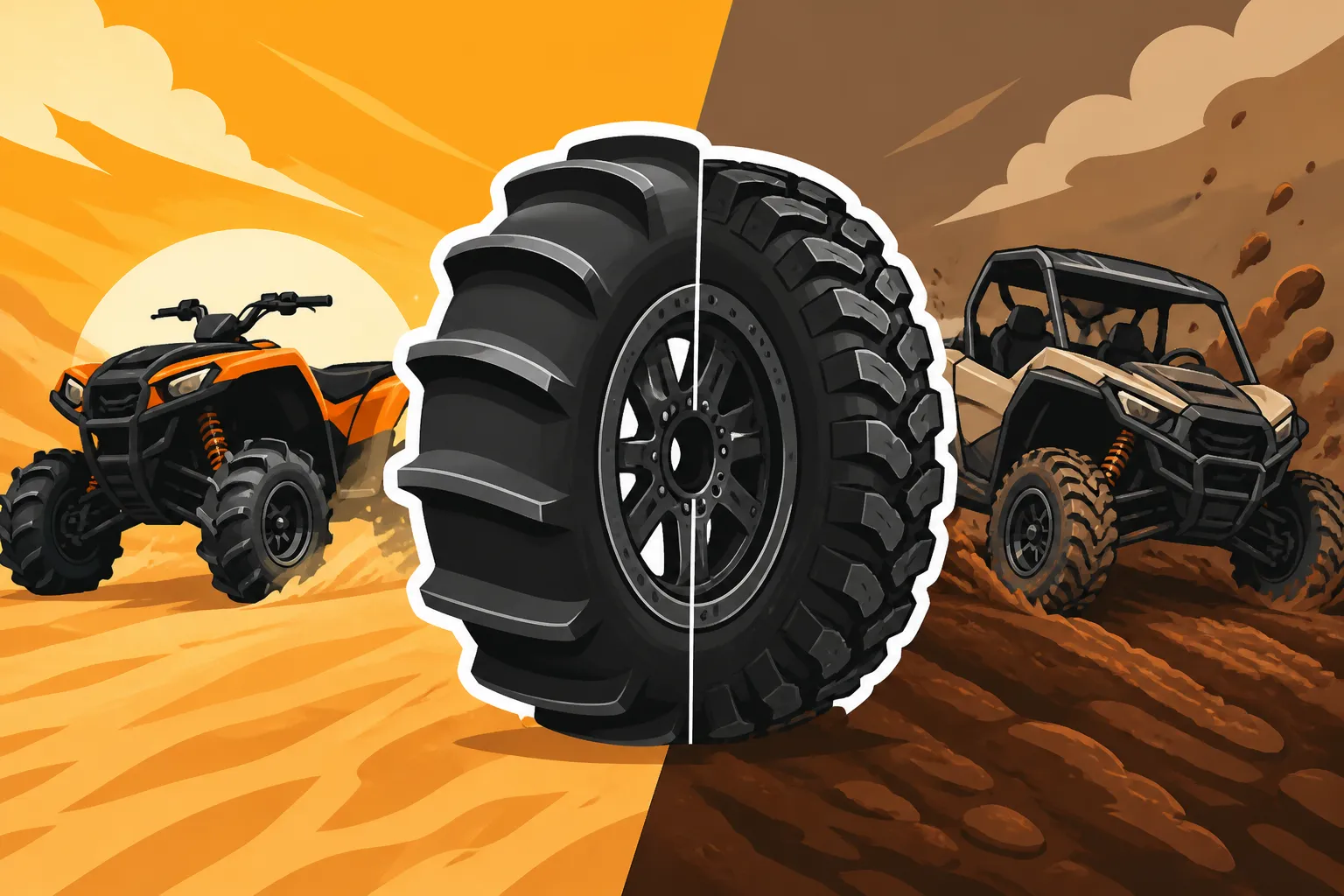
Loose sand and Oklahoma red clay ask very different things from an ATV or UTV tire. A paddle that floats well on dunes can feel clumsy on a mixed trail, while a deep mud tire may dig in and bog down when the clay gets slick. This guide explains how to choose a practical setup, adjust it safely, and avoid common tire mistakes.
Start with the surface you ride most
Loose sand needs flotation, not just more tread
In loose sand, tires need to keep the machine moving on top of the surface rather than digging down into it. A broad footprint and a tread pattern suited to sand can help with flotation and forward drive. That is why riders who mainly visit dune areas such as Little Sahara near Waynoka often consider purpose-built sand tires. For a closer look at how the terrain changes the riding experience, see Oklahoma Dune Riding Explained.
Paddle tires are designed to push through sand, especially on the rear of many machines. But they are specialized equipment, not an automatic upgrade for every ATV or UTV. Their performance depends on the machine, the tire design, and the terrain. Front tires matter too: a setup that drives well in a straight line may not steer predictably if the front tires are poorly matched to the rear paddles.
If your riding includes trails, hard-packed areas, or trips on a trailer that involve pavement, a dedicated sand setup may be inconvenient. Sand-focused tires can be less versatile on firm surfaces and may wear differently than an all-terrain set. Before buying, think about how many of your riding days are actually spent in deep sand, not just whether you visit dunes once or twice a season. Paddle Tires on Oklahoma Dunes offers more detail on that specialized option.
Clay needs traction without turning every ride into a digging contest
Oklahoma clay can change dramatically with the weather. A familiar track that feels firm when dry may become slick after rain, and a tire that grips well in one condition can struggle in another. The state’s red clay is especially frustrating when it coats the tread and stays packed between the lugs. For context on why the surface changes so much, read Why Oklahoma Red Clay Turns Slick After Rain.
On clay, look for a tread pattern that can clear packed dirt while still providing enough contact with the ground. Deep, widely spaced lugs can help in soft or muddy conditions, but “more aggressive” does not always mean “better.” A very open tread may dig quickly, leaving the machine buried or causing it to spin instead of moving forward. On firmer clay, that same tire can feel harsh and may reduce the smoothness of the ride.
The best choice depends on whether your usual route is mostly dry and hard, mixed with occasional muddy sections, or consistently soft and wet. If conditions vary, an all-terrain tire with a balanced tread may be more useful than an extreme mud tire. And if a route is too slick to ride safely, turning around is often wiser than trying to power through. Check Oklahoma Trail Conditions Before You Tow before committing to a trip.
Match the tire to your machine and riding style
ATV and UTV tires have different demands
An ATV is lighter than many side-by-sides, and its tire setup has a different job to do. The rider’s weight shifts directly with the machine, so steering feel and predictable handling matter. A UTV may carry passengers, cargo, or tools, and its greater weight can place more demand on the tires. A tire that works well on a small quad may not be suitable for a heavier four-seat machine.
Before choosing a tire, check the vehicle’s owner information for approved tire sizes and load guidance. Consider the machine’s drivetrain, too. Larger or heavier tires can change how the vehicle accelerates and responds, and they may add strain to components if they are not suited to the setup. On a belt-driven UTV, repeated hard acceleration in deep sand can also create heat. Tire choice is only one part of keeping the machine moving smoothly.
For a side-by-side, do not assume that a tire advertised for sand or mud is appropriate just because its diameter matches the stock tire. Check the recommended load range and fitment for your specific machine. If you ride with passengers or carry gear, account for that added weight when comparing options. This is especially useful for riders choosing routes from Oklahoma Trails That Allow Side-by-Sides, where the machine’s size and the trail’s surface both affect the experience.
Choose between a dedicated set and an all-around tire
A dedicated tire set makes sense when you regularly ride one kind of terrain and want the tire to suit it closely. For example, a rider who spends most weekends at the dunes may value sand-specific performance enough to keep a separate setup. Someone who rides a mix of firm trails, sand, and occasional wet clay may get more use from a versatile all-terrain tire.
| Riding pattern | Tire direction to consider | Main tradeoff |
|---|---|---|
| Mostly loose dunes | Sand-specific setup suited to the machine | Less versatile on mixed or firm surfaces |
| Mostly dry, established trails | All-terrain tread with balanced contact and grip | May be less effective in deep mud or soft sand |
| Frequent wet clay and muddy sections | More open tread that can clear packed material | Can dig aggressively and feel less comfortable on hard ground |
| Mixed terrain and occasional dune trips | Versatile tires, with a dedicated sand set if dune days are frequent | One tire may not excel in every condition |
A separate set also means more storage, extra maintenance, and the work of changing tires when the riding plan changes. If you choose one set for everything, accept that it will be a compromise. That is not necessarily a problem: a predictable tire that suits most of your normal rides can be more practical than a highly specialized tire that only performs well on one surface.
When comparing options, look beyond the tread photo. Check the machine’s fitment guidance, load suitability, construction, and the conditions the tire is intended for. If a product description is vague about use, ask a qualified tire or powersports shop whether it is appropriate for your vehicle and the terrain you ride.
Tune your setup for sand and clay
Adjust pressure carefully and make small changes
Tire pressure affects how much of the tire contacts the ground, but there is no one pressure that works for every machine, tire, rider, and surface. Riders sometimes air down for sand to increase the footprint. That can help with flotation, but going too low can increase the chance of tire damage, bead problems, or unstable handling. A passenger, cargo load, or heavier UTV can change what is safe.
Start with the vehicle and tire manufacturers’ guidance. If you adjust pressure for a specific surface, stay within their recommendations and make small changes rather than guessing at a large drop. Bring a reliable gauge and a way to reinflate before traveling between soft terrain and firmer ground. Airing Down on Oklahoma Sand explains the considerations behind this adjustment.
Pay attention to how the machine feels. If steering becomes vague, the tire appears to fold more than expected, or the machine feels unstable, stop and reassess. Do not use another rider’s pressure as a universal rule: a setup that suits their tire size and load may be unsuitable for yours. On a UTV, extra passengers and gear make that comparison even less reliable.
Use throttle and line choice to protect your tires
A good tire cannot make every line safe. In sand, steady, controlled momentum is generally more useful than abrupt throttle changes. Spinning the tires can dig the machine in, while sudden steering inputs can make it harder to hold a line. In clay, a smooth pace helps you feel whether the tire is gripping or sliding before the machine gets into trouble.
Look ahead for changing surfaces, ruts, standing water, and steep transitions. If a muddy section has deep ruts, choose a safe line that does not put the machine at risk of tipping or becoming stuck. Avoid cutting new paths around an obstacle; doing so can damage the riding area and create hazards for other riders. The same basic courtesy applies at popular spots such as Little Sahara and shared trails. See Oklahoma Trail Etiquette Locals Expect for more on riding considerately.
A map app such as onX Offroad can help you review route information before leaving home and keep track of where you are while riding. Use it as a planning aid, not a guarantee that a trail is open or suitable for your machine. Check the riding area’s own rules and closures, and pay attention to posted signs when you arrive. A route that appears straightforward on a screen may still have soft sand, slick clay, or an obstacle that calls for turning back.
Avoid common tire mistakes before the ride
Don’t assume an aggressive tire works everywhere
A very deep-lug mud tire may look reassuring, especially when you expect wet weather. But on firm ground it can feel rough, and in soft sand it may dig instead of helping the machine float. On slick clay, aggressive tread can still spin if the surface is coated and the rider applies too much throttle. The right tread is the one that suits the conditions you actually ride, not the one that looks most capable in a photograph.
Likewise, a sand tire is not an all-purpose answer for an Oklahoma riding season. If the trip includes long stretches of hard-packed trail or mixed terrain, the specialized tread may not offer the same predictable feel as a versatile tire. A second set can solve that mismatch, but only if the extra purchase, storage, and swapping are worth it for your riding habits.
Before a trip, inspect the tires for cuts, embedded debris, uneven wear, and visible damage. Check that each tire is properly seated and that pressure is appropriate for the machine and its load. A slow leak or damaged sidewall is much easier to deal with at home than at a remote trailhead.
Plan for the route, not just the destination
A dune destination may include more than dunes: the approach, staging area, camp, and any connecting routes can have different surfaces. A clay trail may also include firm gravel or rocky sections. Think through the entire ride, including how you will get the machine to the riding area and what conditions you might encounter after a rain.
A route-planning tool such as onX Offroad can be useful for checking available map details and organizing a trip, but confirm access and current conditions directly with the land manager or riding area. If your route includes rocky terrain, tires are only one part of protecting the machine; Skid Plates for Rocky San Bois Trails covers another useful consideration for rougher ground.
If you are unsure whether a tire setup will suit the planned ride, ask the riding area or a knowledgeable local shop what riders commonly encounter there. Be specific: explain your machine, tire size, passenger or cargo load, and whether you expect sand, clay, or mixed terrain. That gives them a much better chance of offering useful guidance than simply asking for the “best ATV tire.”
Disclaimer
This article is for general informational purposes only and does not constitute professional advice. Laws, prices and regulations vary by location and change over time. Consult a qualified professional for guidance on your specific situation.