Oklahoma ATV Trails: Where to Ride
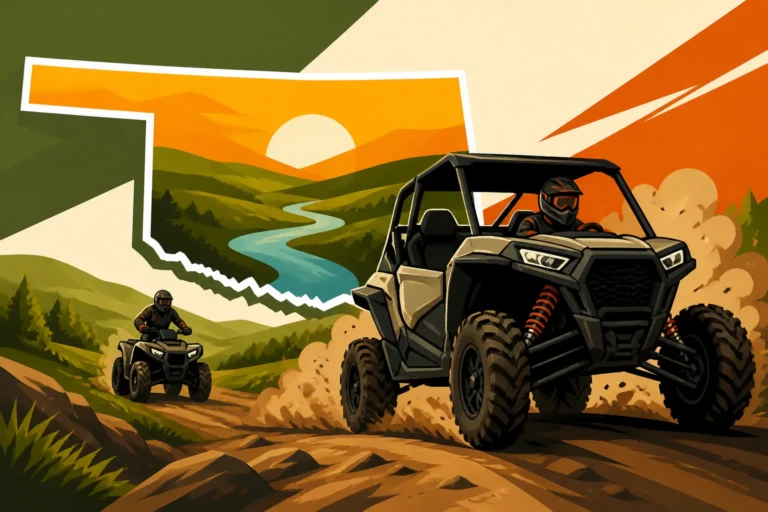
Oklahoma riders can choose from open sand dunes, wooded OHV areas, private ranch parks, and forest roads—but a place that looks rideable on a map may be closed, restricted to certain machines, or accessible only with a permit. This guide compares the main riding areas, explains what to check before towing, and helps you match a destination to your machine, experience, and kind of ride.
Start by Matching the Riding Area to Your Ride
Oklahoma’s riding options are not interchangeable. A family looking for a first easy trail day needs different terrain and facilities from a group hoping to ride dunes or tackle rocky, muddy tracks. Before choosing a destination, consider your machine, who is riding, and whether you want a managed park or a more remote outing.
Choose terrain that fits your machine and experience
Little Sahara State Park, near Waynoka, is known for open sand dunes. That setting can be exciting, but loose sand asks more of both rider and machine than a smooth dirt road does. A rider who is still getting comfortable with throttle control may find the open terrain intimidating, especially when other machines are moving nearby or visibility is reduced by dust. If you are new to dunes, begin conservatively, ride with someone experienced, and avoid treating the tallest or steepest-looking route as a first challenge.
Robbers Cave OHV Area, near Wilburton, offers a different kind of ride, with wooded and hilly terrain in the San Bois area. Trails in a wooded setting may feel more contained than open dunes, but that does not automatically make them easy. Slopes, uneven ground, rocks, roots, and wet sections can make a short route demanding. Cross Bar Ranch, near Davis, also gives riders a managed off-road setting with varied terrain. Its private-park rules and trail conditions are part of the experience, so check what is open and suitable for your machine before setting out.
If you ride a side-by-side, check whether the specific trail system allows its width and type of machine. A route that works for a narrow dirt bike or quad may not accommodate a wider UTV. The same applies to trailers and support vehicles: trailhead access and parking can be limiting even when the riding area itself has room. For a closer look at destinations suitable for wider machines, see [Oklahoma Trails That Allow Side-by-Sides].
Decide whether you want a managed park or a dispersed outing
Managed parks are often a good fit when you want a defined entrance, posted rules, and a clear place to start. Private parks such as Cross Bar Ranch may have their own waivers, age restrictions, speed rules, camping policies, and operating procedures. State-managed areas have their own access rules as well. These details affect the day: a group that arrives before an office opens, for example, should know how the park handles check-in and whether riders can enter without staff assistance.
Forest and timberland outings can feel more remote and require more self-reliance. You may need to confirm the permitted routes, seasonal access, permit requirements, and whether the roads are open to your type of machine. A wide line on a navigation map is not proof that it is legal or open to ATV use. Where land is divided among public agencies, private timber companies, and neighboring owners, access can change across a short distance.
Think about what your group needs between rides, too. Families with young riders may value restrooms, predictable access, a place to park the trailer, and a route back to camp. A more experienced group may be comfortable with fewer services, but still needs a plan for breakdowns, weather, and navigation. For camping options that pair with trail access, explore [Oklahoma OHV Camping With Trail Access].
Compare Oklahoma’s Main Riding Areas
A useful way to pick a destination is to compare the character of the ride rather than relying on a single label such as “easy” or “family friendly.” Conditions shift with weather, maintenance, closures, and the experience of the people in your group. Use this table as a starting point, then confirm the day’s rules and access with the managing agency or park.
| Riding area | General ride character | Best fit to consider | Check before you go |
|---|---|---|---|
| Little Sahara State Park near Waynoka | Open sand dunes | Riders prepared for sand and changing visibility | Machine rules, safety gear, access details, and current conditions |
| Robbers Cave OHV Area near Wilburton | Wooded and hilly OHV terrain | Riders seeking a more enclosed trail setting | Operating hours, permitted machines, trail status, and camping arrangements |
| Cross Bar Ranch near Davis | Managed private off-road park with varied terrain | Groups wanting a private riding destination | Waiver, age and passenger rules, open routes, and park procedures |
| Honobia Creek WMA | Timberland access with specific rules and seasons | Riders prepared to follow permit and land-access conditions | Current access window, permit, hunting-related rules, and allowed routes |
| Three Rivers WMA | Large timberland riding area with access requirements | Riders comfortable planning a remote outing | Seasonal access, permits, check-in instructions, and route restrictions |
| Ouachita National Forest | Forest roads and designated motor-vehicle routes | Riders willing to plan from official route information | Motor-vehicle map, vehicle type, closures, and road conditions |
Little Sahara State Park near Waynoka
Little Sahara is the most recognizable destination on many Oklahoma riders’ lists because its sand dunes create a ride unlike a conventional wooded trail. Open terrain can be freeing, but it also means riders need to watch where they are going, keep track of others in their party, and leave space between machines. Dust, changing light, and the shape of the dunes can make it harder to see what lies beyond a rise. A careful rider slows down when visibility or traffic makes the next move uncertain.
Sand affects machine handling and equipment choices. A quad or UTV can respond differently in soft sand than it does on hard-packed ground, and a machine that feels familiar on a farm road may demand more careful throttle and steering inputs here. Before your first dune trip, read [Oklahoma Dune Riding Explained] and plan around the park’s current safety requirements. Do not assume that a setup used by a friend is suitable for your machine or riding skill.
Little Sahara can also draw mixed groups, from experienced dune riders to families introducing a young rider to off-road travel. Agree on a meeting point and a regrouping plan before separating. Keep inexperienced riders away from situations that feel too fast or too crowded, and avoid following another machine into a route you have not assessed for yourself. For details about the area and its terrain, see [Little Sahara State Park in Oklahoma].
Robbers Cave, Cross Bar Ranch, and wooded terrain
Robbers Cave OHV Area offers a wooded setting near Wilburton and can suit riders who prefer trails to open dunes. The terrain in this part of Oklahoma can include hills and uneven surfaces, so “tree-covered” should not be mistaken for “easy.” A route that seems manageable on a dry day can become more difficult after rain, when soil and rock surfaces lose traction. Give yourself room to turn around rather than pressing deeper into a section that no longer feels safe.
Cross Bar Ranch near Davis is a private riding destination, which means its own operating rules matter just as much as the trail layout. Check whether the park requires riders to sign a waiver, what age and passenger restrictions apply, and which areas are open to your machine. If you are traveling with children, make sure each child’s machine and ability are appropriate for the terrain. For a closer look at that destination, visit [Cross Bar Ranch in Oklahoma].
These two options illustrate why a quick check before leaving home saves frustration. A group might tow for hours only to discover that a trail is closed, a route is unsuitable for its UTV, or its planned camping arrangement does not match the park’s rules. Ask direct questions about the conditions you care about: machine access, youth riding, campground access, and whether wet-weather closures are in place. A few minutes spent checking can prevent an expensive, disappointing turnaround.
Plan for Permits, Access, and Seasonal Rules
Some Oklahoma riding areas have specific land-access requirements. Timberland and wildlife-management areas may have rules that differ from those at a private park or state park. It is easy to confuse a land-access permit with a park entry charge or assume that one kind of registration covers every place. Instead, identify who manages the property and read the rules for that particular area.
Understand the rules for Honobia Creek and Three Rivers
Honobia Creek and Three Rivers are timberland riding destinations with access conditions that riders should confirm before traveling. Access may depend on the time of year, the purpose of the visit, permits, and rules tied to hunting or wildlife management. Do not assume that a road or trail is open simply because you rode it on a previous trip. Seasonal changes and land-management decisions can alter where and when riding is allowed.
For an outing on these lands, check the access window, permitted routes, permit requirements, check-in process, and any hunting-related conditions. Riders who are planning around a hunting season should take extra care to distinguish their intended use from the rules for hunters. A general land-access permission does not necessarily mean that every trail, road, or off-road route is available to every machine.
It is also wise to prepare for a more self-contained day. Cell coverage may be limited in remote sections, and a group can become separated if someone takes a wrong turn or stops with a mechanical problem. Set a return time, share the route plan with someone who is not riding, and carry a paper map or downloaded navigation information. These areas can reward thoughtful planning, but they are not the place to rely on a vague memory of an old route. Start with [Honobia Creek WMA Riding in Oklahoma] and [Three Rivers WMA Riding in Oklahoma] for area-specific background.
Check forest routes and public-land restrictions
The Ouachita National Forest includes roads and motor-vehicle routes, but that does not make every forest road open to every ATV or UTV. Use the official motor-vehicle use information for the area you plan to visit. Pay attention to route markings, vehicle restrictions, seasonal closures, and whether a line is a road, trail, or non-motorized route. A general-purpose map may show a track without explaining its legal status.
Map tools can help with trip preparation, especially when a group needs to understand the broad layout of roads and terrain. onX Offroad can be useful for planning and orientation, but it should not replace current official route information or local closure notices. Compare what you see in a navigation app with the land manager’s maps and rules. If two sources do not agree, pause and seek clarification instead of assuming the route is open.
Before heading into forest country, identify a legal route back to your trailer and a way to change plans if a road is blocked. Bring enough water, food, fuel, and basic repair supplies for a slower trip than expected. If rain is forecast, think carefully about whether the route remains suitable; a road that is passable in dry conditions may become slick or rutted. For help using the official route information, see [Oklahoma Ouachita National Forest Access] and [Reading the Ouachita Motor Vehicle Use Map].
Choose the Right Time and Check Trail Conditions
Weather is part of the route. Oklahoma heat can make a long day harder than it looked on the map, while rain can change traction and access. Dune conditions, forest roads, and wooded trails each respond differently to weather. Check conditions close to departure, and be willing to change destinations or shorten the ride if the ground or forecast does not suit your group.
Plan for heat, rain, and seasonal access
In hot weather, plan the ride around hydration, shade, and breaks rather than assuming everyone can keep the same pace all day. A young rider may tire before an adult notices a change in conditions. Have water accessible, not buried under gear, and agree that anyone can call for a break without needing to justify it. If a rider becomes overheated or unusually tired, stop riding and reassess rather than pushing on to the next planned landmark.
Rain can turn red clay and other exposed surfaces slick, and it can make low areas or crossings more difficult. Do not assume that a trail is safe simply because the rain has stopped. Check for closures and ask the park or land manager about conditions when a route is known to be affected by wet weather. When riding on soft ground, avoid creating unnecessary ruts or widening the trail to go around a muddy section.
Seasonal access deserves a separate check, especially for timberland and wildlife-management areas. Hunting seasons, landowner agreements, and management rules can affect when riding is permitted. A past trip is not a reliable guide to today’s access. Before loading the machines, verify the dates and restrictions for the exact property, and keep a backup destination in mind if the first choice is closed. For weather-specific planning, see [Oklahoma Riding in Summer Heat] and [Oklahoma Trail Closures After Rain].
Use maps without mistaking them for permission
A navigation app can be helpful for locating trailheads, keeping a group oriented, and sharing a planned route. onX Offroad can help riders prepare by showing mapped routes and nearby features, but the presence of a route on a screen does not itself grant access. Boundaries, closures, private property, and vehicle restrictions still need to be confirmed with the land manager or park.
Before the trip, download the information you need for offline use if the app offers that option, and consider bringing a paper map as a backup. Mark your parking location, planned route, expected turnaround point, and a reasonable alternate. If you are traveling with a group, make sure more than one person knows how to use the map. It is stressful to discover that the only person with a working phone has lost signal or run low on battery.
Use navigation as a decision aid, not as a reason to press on. If a route appears to lead across a gate, into a posted area, or onto a road that does not match official information, stop and verify. Keep the group together when possible and agree on what to do if riders become separated. For practical navigation preparation, read [Oklahoma ATV Trail Map Downloads] and [Carrying a Paper Map Where GPS Fails].
Prepare Your Machine, Gear, and Group
The right preparation depends on the destination, but every trip benefits from a few basics: a machine in sound condition, safety gear that fits, water, and a clear plan. Many frustrating trail days begin with a small oversight—a loose strap, a phone with no offline map, or a group that never agreed where to regroup.
Inspect the machine and pack for the terrain
Before loading, check the items most likely to interrupt a ride: tires, brakes, steering, fluids, lights, and any visible leaks or loose parts. Make sure the machine is appropriate for the destination and the routes you intend to use. A setup suited to a ranch road may not be right for dunes or rocky, wooded trails. If you have recently added accessories, test them before relying on them deep into a ride.
Pack the equipment that makes sense for the area. Sand can work its way into machines and gear, while wooded terrain may call for protection from branches and uneven surfaces. A basic toolkit, tire-repair supplies appropriate to your machine, and a way to contact help can make a manageable problem less stressful. For remote outings, carry enough water and first-aid supplies for delays, not just the expected ride time.
Do not overpack in a way that creates new hazards. Secure all loose items, keep heavy gear stable, and avoid blocking controls or access to safety equipment. If you are towing, check that the machine is secured and that the trailer is suitable for its weight and dimensions. A last-minute inspection in the driveway is easier than discovering a problem at a busy trailhead.
Set expectations for children and mixed-experience groups
A group ride works better when everyone knows the pace and the plan. Identify a lead rider and a sweep rider, choose a pace that suits the least experienced person, and agree on places to stop. If the group includes children, explain simple rules before starting: stay with the group, do not follow an unfamiliar rider, and stop if the machine behaves differently or the route feels unsafe.
Make sure each rider has suitable protective gear and that it fits. Helmets matter, particularly for young riders, and other gear should be chosen for the terrain and conditions. Check the rules that apply at the destination; state law, park rules, and land-manager requirements may not be identical. Review [Oklahoma Helmet Rules for Riders Under 18] before a trip with younger riders.
Passengers need their own planning. A quad may not be designed to carry a passenger, and UTV passenger arrangements depend on the machine and the park’s rules. Do not let a child ride as a passenger simply because it seems convenient. Confirm that the vehicle is built for that use and that riders can sit safely with appropriate restraints and protective equipment. If a family member is nervous, give them permission to skip a section or return to camp rather than treating it as a test of courage.
Make the Day Easier With a Practical Trip Plan
A good ride plan is not complicated. It gives the group a clear destination, a realistic route, a way to respond to changing conditions, and enough flexibility to call it early. A little organization can prevent the familiar trailhead frustrations: a missing permit, an unsuitable machine, an exhausted child, or a closed access road.
Use a simple before-you-go checklist
Start by confirming the destination, managing agency, and current access rules. Check whether your machine type is allowed, whether a permit or waiver is required, and whether the trail system is open. Confirm the address or trailhead location and the best place to park a trailer. If the destination has specific check-in procedures, make sure everyone in the group knows what to expect.
Next, prepare a route that fits the group rather than the most ambitious rider. Choose a starting loop or out-and-back route with a clear turnaround point. Estimate how long it may take with breaks, then give someone at home your destination and expected return time. If the riding area has a map or posted route information, review it before arriving so you are not trying to learn everything while other vehicles wait behind you.
Finally, set up the machines and gear the night before when possible. Charge phones and navigation devices, pack water and first-aid supplies, secure the trailer, and put any paperwork or permit details somewhere easy to access. This is also a good time to pick a backup option. If a closure or weather problem changes the plan, the group can make a calm decision instead of improvising in the parking area.
Be a considerate rider and leave room for change
Stay on permitted routes and follow posted signs even when another track looks more inviting. Riding around a closure can damage land, create conflict with landowners, or put your group somewhere that emergency services cannot easily reach. Keep speed appropriate to visibility, traffic, and surface conditions. On a crowded route, a slower, predictable rider is easier for others to share the trail with than someone who darts between machines.
Give other riders space and avoid creating unnecessary dust, noise, or congestion at trailheads and campsites. Pack out what you bring in, and do not assume a quiet area has no nearby residents, livestock, or other land users. If you ride near working ranch or timberland, treat gates, posted signs, and active operations with care. A trail day depends on access, and respectful behavior helps protect it.
Keep a flexible attitude when conditions change. A closed trail, a sudden storm, a machine problem, or a tired rider may mean shortening the day. That is not a failed trip; it is good judgment. Oklahoma has different kinds of terrain and access arrangements, so another destination or another day may offer a better fit. For more planning support, see [Oklahoma Trail Etiquette Locals Expect] and [Oklahoma Trail Conditions Before You Tow].
Disclaimer
This article is for general informational purposes only and does not constitute professional advice. Laws, prices and regulations vary by location and change over time. Consult a qualified professional for guidance on your specific situation.