Oklahoma Group Ride Planning
Planning an Oklahoma group ride is harder than picking a trailhead: machines may have different capabilities, access rules can vary by riding area, and one missed turn can split the group. This guide helps you choose a suitable destination, prepare riders and machines, coordinate navigation, and make a practical plan for changing weather, trail conditions, and unexpected delays.
Choose a riding area that fits your group
Match the destination to the riders and machines
Start with the people and vehicles you actually have, not the ride you hope to have. A group of first-time riders on youth quads needs a different day than a group of experienced riders bringing side-by-sides for rocky, technical terrain. Before settling on a destination, ask each participant what they ride, how comfortable they are on uneven ground, and whether they have any limits on distance or pace.
Oklahoma riding areas offer very different experiences. Little Sahara State Park near Waynoka is known for sand, while Robbers Cave near Wilburton has hilly terrain. Cross Bar Ranch near Davis offers another kind of off-road outing, and routes in the Ouachita National Forest call for careful attention to where motorized travel is permitted. Don’t assume a machine suitable for one place will be comfortable or allowed on every route.
Make your first group ride easier by choosing a destination with terrain that suits the least-experienced rider, not just the most confident one. A participant who feels pressured to keep up may take risks, miss a turn, or skip needed breaks. For a broader starting point, compare options in [Oklahoma ATV Trails: Where to Ride](Oklahoma ATV Trails: Where to Ride) and [Best Oklahoma ATV Trails for Beginners](Best Oklahoma ATV Trails for Beginners).
Check access, machine rules, and seasonal restrictions
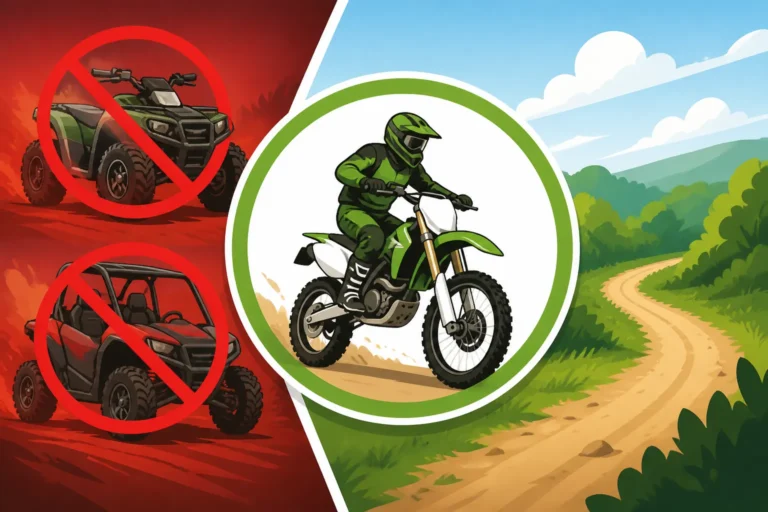
Before inviting everyone, confirm that your chosen area is open to the type of machine you plan to bring. Trails can differ in access for quads, dirt bikes, and side-by-sides. Public land, private parks, state parks, and timber company land may each have their own rules for permits, hours, check-in, equipment, and where you can ride.
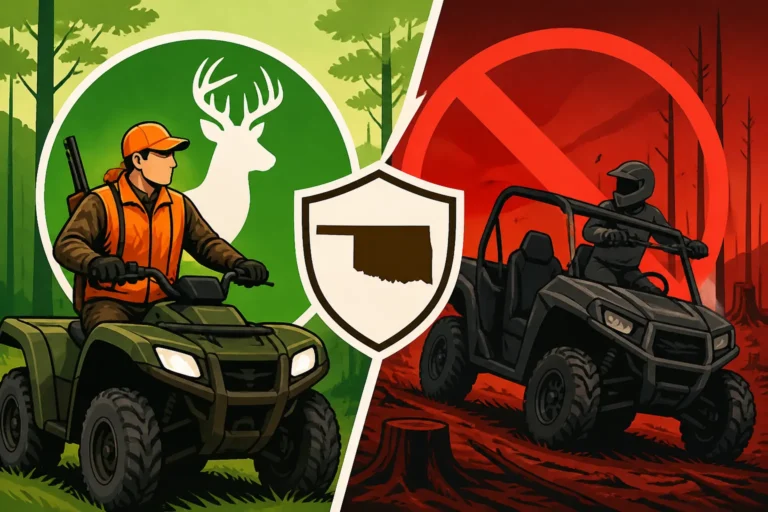
This matters especially when a group is considering timber company land or wildlife management areas. Access may be seasonal or tied to specific activities, permits, or designated roads. A route that appears on a map is not automatically open to motorized riding. Review [Oklahoma Land Access Permits Explained](Oklahoma Land Access Permits Explained) and [Oklahoma Timber Land Access Rules](Oklahoma Timber Land Access Rules), then confirm the details with the land manager or park before you leave.
Build this check into the planning conversation rather than leaving it to the morning of the ride. Ask the organizer to confirm the destination’s current access information, machine restrictions, operating hours, and any required permits. If the group is crossing private property, get permission in advance and make sure everyone understands where the permission applies. [Oklahoma Landowner Permission Rules](Oklahoma Landowner Permission Rules) is a useful reminder that a route’s apparent accessibility does not replace permission.
| Planning question | Why it matters | What to do |
|---|---|---|
| Are all machine types allowed? | A route may not suit or admit every ATV and UTV | Confirm machine rules with the area operator |
| Is riding allowed on the planned date? | Seasonal access, closures, or weather can change plans | Check shortly before departure |
| Does anyone need a permit or check-in? | Requirements can differ by land type and rider | Identify what each person needs before the trip |
| Is the route suitable for the least-experienced rider? | A mismatch can create pressure and safety problems | Choose terrain and distance for the whole group |
| Where can trailers and support vehicles go? | Parking may be limited or separated from riding areas | Agree on a staging point before arrival |
Set the group up before departure
Choose a ride leader, sweep, and simple regrouping rules
A group ride works better when the organizer does not have to do every job while riding. Name a lead rider who knows the plan and a sweep rider who stays behind the last participant. The lead sets a pace the group can maintain; the sweep checks that nobody has fallen behind, stopped, or taken a wrong turn.
Agree on a few easy rules before engines start. For example, riders can wait at each marked junction until the sweep arrives, and no one passes the lead unless the group stops and changes the plan. If somebody needs to pull over, they should signal the riders behind and move to a safe spot where possible. The group should also decide what to do if someone becomes separated: stop at the next agreed regroup point, avoid sending a lone rider searching, and use the communication plan established before departure.
Keep the rules short enough that people remember them. A long briefing can lose the room, especially when everyone is eager to unload. A quick conversation about who leads, who sweeps, where to regroup, and how to signal a problem can prevent confusion later. If the ride includes young participants, review age-related expectations and supervision needs before choosing the pace. See [Oklahoma Rules for Young Riders](Oklahoma Rules for Young Riders) for a starting point when planning around younger riders.
Share the route and prepare for weak cell service
Send the meeting location, planned start time, route outline, expected finish time, and a contact person to everyone in advance. Include a nearby landmark and a backup meeting point in case trailers arrive separately. Ask each rider to tell the organizer if their plans change; a group should not spend time searching the staging area for someone who is delayed and has not checked in.
Do not make the plan depend on continuous cell service. Coverage can be unreliable in rural and forested areas, so save relevant maps or route information before leaving home. A phone-based mapping tool such as onX Offroad can help riders review a route and keep track of their position, but it should be one part of the plan, not the entire plan. Agree on visible landmarks, carry a paper map when practical, and make sure riders know the intended direction before the group starts. [Cell Dead Zones in Southeast Oklahoma](Cell Dead Zones in Southeast Oklahoma) and [Carrying a Paper Map Where GPS Fails](Carrying a Paper Map Where GPS Fails) cover two common planning concerns.
Ask each participant to arrive with a charged phone and, if the group uses radios, a compatible radio with the agreed channel or settings. Test the communication method before separating onto the trail. Keep messages clear and brief: identify who is calling, where they are, and what help they need. onX Offroad may be useful for checking the planned route before the ride, while a paper backup and a clear regrouping process help if a device loses power or signal.
Prepare riders, machines, and the day’s schedule
Use a pre-ride checklist that people will actually follow
A checklist is most helpful when it catches small problems before they become trail delays. Ask riders to check fuel, tires, brakes, lights, belts or chains as applicable, and the machine’s general condition. Secure loose cargo, verify that any trailer is ready for the trip, and bring the owner’s manual or basic machine information when someone is riding an unfamiliar vehicle.
For a group, the shared supplies matter too. Decide who is carrying a first-aid kit, basic tools, tire-repair supplies, recovery equipment, drinking water, and a paper map. Avoid assuming that one person will bring everything unless that person has agreed. For longer or remote rides, consider what the group would do if a machine cannot be repaired on the trail. Know where the nearest access road or staging area is, and make sure the lead and sweep understand how to reach it.
The checklist should account for the destination. Sand, rocky terrain, mud, and forest trails create different demands on a machine and its equipment. Read the area’s posted requirements and prepare accordingly. For example, a dune trip may require specific visibility equipment, while a forest route may demand careful route selection and clearance awareness. The guide to [Oklahoma Trail Conditions Before You Tow](Oklahoma Trail Conditions Before You Tow) can help you think through conditions before the trailer is hooked up.
Plan the pace, breaks, and weather alternatives
Set a realistic start time and a route length that leaves room for breaks, photos, minor repairs, and slower riders. New groups often underestimate how long it takes to gather at the trailhead, unload, check permits, and get everyone ready. Build in extra time so that a delayed arrival does not turn into pressure to ride too fast.
Plan water and shade breaks, especially during hot weather. Oklahoma heat can make a day feel much harder than the mileage suggests, and riders may not notice how tired they are until concentration slips. Tell the group to speak up early if they need a pause. A quiet rider who is struggling is not helped by a schedule that treats every stop as a problem.
Have a weather decision point. Decide who will check conditions before departure and what would cause the group to postpone, shorten the route, or change destinations. Heavy rain can alter trail conditions, and some areas may close or become unsuitable. Do not assume that a trail will be safe simply because it was rideable the previous weekend. Review [Oklahoma Trail Closures After Rain](Oklahoma Trail Closures After Rain) and [Oklahoma Riding in Summer Heat](Oklahoma Riding in Summer Heat) when choosing a season and backup plan.
Keep the ride orderly and handle problems calmly
Use a simple plan for delays, breakdowns, or separation
If a machine breaks down, stop the group in a safe place and get everyone off the active route where possible. The lead and sweep should account for all riders before anyone leaves to find help. If the issue is minor, decide whether it can be handled safely with the group’s tools. If it cannot, use the route and contact plan to arrange assistance rather than sending an unprepared rider off alone.
If someone is separated, resist the instinct to have several riders scatter in different directions. Return to the last agreed regroup point or follow the plan established before the ride. Use the agreed communication method and give clear location information. If the group has planned with an offline map, a paper map, and known landmarks, it has more than one way to orient itself.
After a long stop or a change in conditions, reassess the day rather than automatically continuing the original route. Fatigue, a late start, a damaged machine, or worsening weather can all make a shorter ride the smarter choice. The organizer’s job is not to finish every mile on the plan; it is to help the group make a sound decision together.
Finish with a clear headcount and a better plan for next time
Before leaving the riding area, account for every rider and confirm that everyone has returned to the staging point. Check that machines, trailers, keys, and personal items are accounted for. If someone is leaving separately, tell the group so that no one waits unnecessarily or assumes they are missing.
A short debrief helps the next outing go more smoothly. Ask what worked, what caused delays, whether the pace suited the group, and whether the route matched the machines and experience levels. Note any access information that should be rechecked next time instead of treating it as permanent. Conditions, land access, and park procedures can change, so keep the next plan flexible.
For future trips, save a route outline and a practical checklist, not just a pin on a map. Include the meeting point, backup plan, rider roles, communication method, and any questions that need confirmation with the destination. If the group wants to explore new terrain, compare options in [Oklahoma Trails That Allow Side-by-Sides](Oklahoma Trails That Allow Side-by-Sides) and [Oklahoma Trail Difficulty Ratings](Oklahoma Trail Difficulty Ratings) before picking a route. A little preparation lets everyone focus less on logistics and more on enjoying the ride.
Disclaimer
This article is for general informational purposes only and does not constitute professional advice. Laws, prices and regulations vary by location and change over time. Consult a qualified professional for guidance on your specific situation.