6 by 12 Inches of Bright Orange Flag
A flag that looks “close enough” in the garage can become hard to spot once it is bouncing above a machine, blending into dust, or disappearing behind a dune. At Oklahoma’s sand-riding areas, the flag is part of being seen by other riders. This guide explains the 6-by-12-inch bright orange flag, how to set it up, and what to check before riding.
What the 6-by-12-inch orange flag means
The dimensions and color riders should check
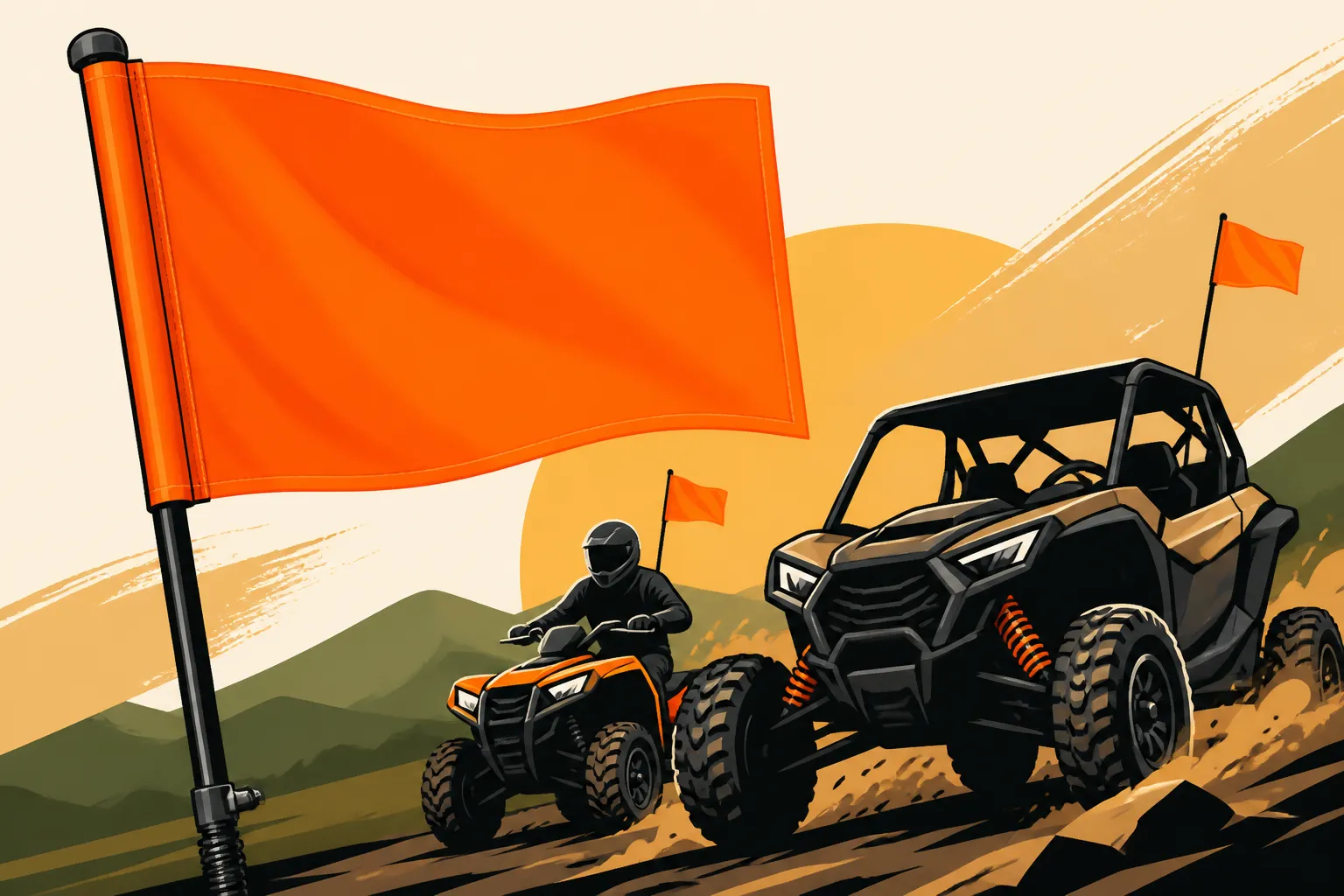
At Little Sahara State Park, the flag requirement is commonly described as a bright orange flag measuring at least 6 by 12 inches. That means the flag should be six inches across one dimension and twelve across the other, not a small triangular pennant or a narrow strip of fabric. A vivid orange color helps the flag stand out against pale sand and open sky.
The measurement is a practical detail worth checking before you leave home. A flag that appears large while folded in a shop may be smaller than required when opened, and a faded orange flag may be much less visible than a clean, bright one. If the park posts a more specific rule or a sign at the entrance, follow that posted guidance.
A flag is a visibility aid, not decoration. Riders cresting a dune may have only a brief view of someone approaching from the other side. A generous, high-contrast flag gives them a better chance of spotting your machine before the two routes meet.
Why the flag matters on dunes
Dunes create blind spots in a way that a flat trail usually does not. A rider can be moving along a ridge while another machine climbs toward the same crest from the opposite side. The sand hides both riders until they are close, and engine noise or wind can make it difficult to judge where the other machine is.
A bright flag raises a visible marker above the machine and helps riders notice traffic sooner. It cannot make a blind crest safe on its own, but it adds a useful warning cue. Riders still need to slow down near the top of a dune, look for other machines, and avoid charging over a ridge without knowing what is beyond it.
Think of the flag as one piece of a broader safety routine: suitable equipment, controlled speed, awareness of other riders, and respect for posted rules. For a wider look at how sand riding differs from trail riding, see [Oklahoma Dune Riding Explained] and [Little Sahara State Park in Oklahoma].
Setting up a whip and flag correctly
Choosing a suitable whip and mounting point
The flag needs a flexible support that holds it high enough to be visible while the machine is moving. Little Sahara riding guidance is associated with a 10-foot whip requirement, but riders should confirm how the park measures that height and whether its current posted rule specifies the whip, the flag height, or both. A pole’s advertised length and the height of its tip above the ground are not necessarily the same thing once it is mounted.
Choose a secure mounting point designed for the machine and whip. A loose clamp can rotate, vibrate free, or put the pole at an awkward angle. Before riding, tug the mount by hand and inspect the connection for play. Check that the whip does not interfere with a passenger, a cargo rack, a trailer, or any moving part.
For more detail on the height requirement and where the flag sits, see [Oklahoma's 10-Foot Whip Rule] and [Mounting the Flag Near the Top of Your Whip]. Treat those as reminders to check the applicable area rules rather than as a substitute for signs or instructions from park staff.
Keeping the flag visible and in good condition
A flag can be technically present but practically useless if it is folded around the pole, tangled in a strap, covered in mud, or faded almost to pink. Unfold it fully before riding and make sure it can move freely in the breeze. If the fabric is torn or the attachment is coming apart, replace or repair it before the ride rather than hoping it will last through the day.
Before loading the machine, check that the flag is still bright and that the pole is straight and secure. After a long haul on the trailer, straps and wind can loosen hardware. Give the setup another look when you arrive, especially if the whip has been folded down or removed for transport.
A simple pre-ride check saves a frustrating scramble at the entrance. Pack a spare fastener or the tool needed to tighten the mount, and keep a replacement flag available if yours is worn. The point is not to overcomplicate the setup; it is to avoid discovering a missing or damaged flag when the group is ready to ride.
| Item to check | What to look for | Why it matters |
|---|---|---|
| Flag size | At least 6 by 12 inches where that requirement applies | A small flag can be harder to see and may not meet the posted rule |
| Flag color | Bright orange and not badly faded | Strong contrast helps it stand out against sand and sky |
| Whip and mount | Secure, upright, and appropriate for the area’s height rule | A loose or low support can reduce visibility |
| Fabric and attachment | Fully open, untorn, and fastened firmly | A folded or damaged flag may be difficult to notice |
| Current site rules | Entrance signs and park instructions | Rules can differ by riding area and may be updated |
Where the flag rule applies in Oklahoma
Distinguishing dune requirements from statewide expectations
A flag requirement tied to a dune area should not automatically be treated as a single rule for every ATV or UTV ride in Oklahoma. Different places may be managed by a state park, a private riding area, a wildlife management area, or another land manager. Their equipment rules can differ, and some may have separate instructions for machines, trails, or riding conditions.
That distinction matters when you are planning a trip. A rider who assumes that one park’s equipment list applies everywhere might bring unnecessary gear to one place, or arrive without required equipment at another. Check the riding area’s own rules before loading up, and pay attention to signs or staff directions once you arrive.
For Little Sahara specifically, start with the park’s posted information and then confirm the details at the entrance if anything is unclear. The internal guide [Oklahoma's Orange Flag Requirement] focuses on the flag rule, while [Oklahoma Trails That Allow Side-by-Sides] can help with the separate question of whether a particular riding area allows your machine type. Machine access and safety-equipment rules are related planning questions, but one does not answer the other.
Checking maps, access, and site instructions before leaving
Planning where you can ride is just as important as preparing the machine. A route shown on a general map may not tell you whether a trail is open to the public, suitable for a side-by-side, or subject to seasonal restrictions. Start with the land manager’s information, then use a navigation tool as a planning aid rather than assuming every visible route is open.
Some riders use onX Offroad to review routes and organize trip plans. It can be useful to have your intended area and access points in mind before towing, but map information should be checked against current signs and the rules for the specific property. A digital line on a screen is not permission to ride on closed, private, or restricted ground.
This check is especially helpful if you are combining a park visit with nearby trails or camping. Look over [Oklahoma ATV Trails: Where to Ride] and [Oklahoma Trail Conditions Before You Tow] as part of the plan, then confirm the relevant details with the land manager. A few minutes of checking can prevent a long drive that ends with a closed gate, an unsuitable route, or an equipment issue.
Riding safely with a flag in place
Approach dune crests as blind intersections
The flag gives other riders another way to see you, but it does not reveal what is on the other side of a ridge. Ease off the throttle as you approach a crest, keep your line controlled, and avoid jumping or accelerating over a blind rise when other riders may be nearby. If you cannot see beyond the crest, act as if someone could be coming toward you.
When riding in a group, leave enough space that the rider behind you has time to react. A sudden stop at the top of a dune can create a pile-up, especially if the next rider is focused on the sand rather than the machine ahead. Make turns and stops predictable, and signal your group when you need to pull off.
A tall flag can move or flex as you ride, so do not rely on it to judge another machine’s speed or exact position. Use your eyes, listen for traffic, and leave room to change direction. The best safety setup is equipment paired with deliberate riding habits.
Keep visibility in mind after dark and in dusty conditions
Dust can swallow contrast and make a bright object less noticeable than it was in clear daylight. Give other riders more room when visibility drops, slow down, and avoid following closely in a cloud of sand. If conditions make it hard to see the route or the machines ahead, stop somewhere safe and wait for the dust to settle.
Night riding raises a different visibility problem. A flag can help identify a machine during daylight, but it is not a substitute for required lighting after dark. Check the area’s rules for lights and riding hours before planning a late ride. The guide [Oklahoma Night Lighting on Dunes] covers that separate issue.
Do not assume that a flag alone makes a machine visible from every angle. Other riders may approach from the side, and a flag may be hidden by terrain or dust. Be thoughtful about where you stop, keep clear of active riding lines, and use any required lighting and safety gear for the conditions.
A practical pre-ride checklist
Before you tow to the riding area
Check the rules for the exact place you plan to ride, not just the general rules you remember from another park. Confirm that your machine is allowed, review any whip and flag specifications, and look for restrictions related to hours, access, or riding conditions. If you are unsure whether the 6-by-12-inch flag standard applies to your destination, ask the park or land manager before the trip.
Inspect the whip, its mount, and the flag at home. Make sure the fabric is bright and open, the hardware is tight, and the setup does not interfere with passengers or cargo. Pack basic tools and a spare attachment if you have one. That small bit of preparation can keep a minor equipment issue from delaying everyone at the entrance.
If you use onX Offroad or another mapping app, review your planned access points and save the details you may need. Then compare that plan with official property information and posted signs. This is particularly worthwhile when your route crosses areas with different owners or rules.
At the entrance and during the ride
Pause to read the signs before unloading or entering the riding area. If posted instructions differ from what you expected, follow the posted rules and ask staff for clarification. A flag requirement may be only one part of the entry conditions, so do not treat having the flag as proof that every other requirement is covered.
Once you are riding, recheck the flag if you stop for a break or notice the whip leaning, flapping oddly, or dragging. Sand, vibration, and bumps can loosen hardware. If the flag comes off or the pole becomes unsafe, pull over in a safe place and fix it before continuing.
Finally, ride in a way that gives the flag a chance to do its job. Keep a controlled pace near dune crests, leave room between machines, and follow the local etiquette. [Oklahoma Trail Etiquette Locals Expect] is a useful companion topic when you are riding with people who know the area or sharing space with unfamiliar groups.
Disclaimer
This article is for general informational purposes only and does not constitute professional advice. Laws, prices and regulations vary by location and change over time. Consult a qualified professional for guidance on your specific situation.