Oklahoma Equipment Checks by Troopers
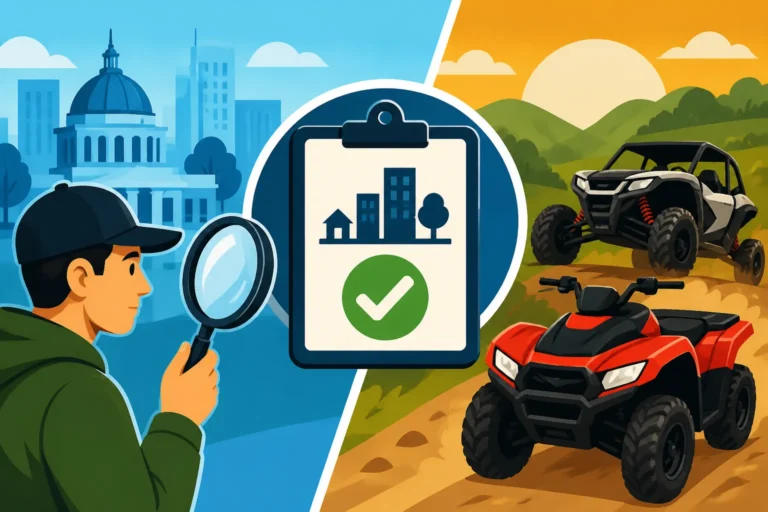
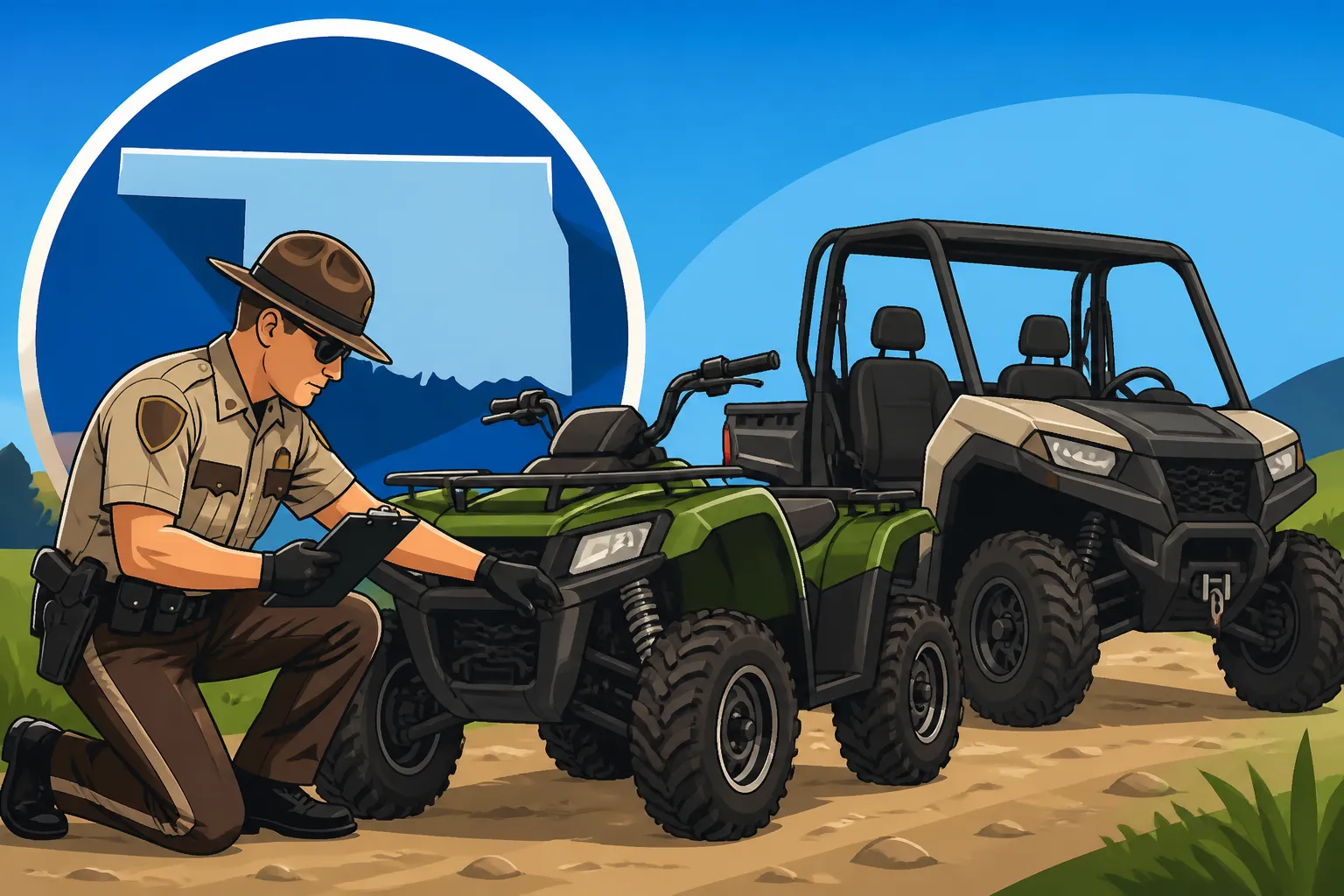
It’s a scenario many of us riders have probably pictured in our heads: you’re making a quick hop across a county road on your ATV or UTV, maybe heading to a different section of your property or trying to get to a new trail, and suddenly, those flashing lights appear in your rearview. Your heart might sink a little, because let’s be honest, the rules for off-road machines on public roads in Oklahoma can feel a little murky, and you're left wondering exactly what a state trooper is going to be looking for. This guide is here to clear up that confusion, diving deep into what kind of equipment checks you might encounter from Oklahoma law enforcement, whether you're on a strictly off-road machine or a fully street-legal side-by-side.
The Basics: When a Trooper Can Pull You Over
Let's start with the fundamental question: under what circumstances can a state trooper even initiate a stop when you're on an ATV or UTV? It's not like they're just pulling over every off-road machine they see in a field. There needs to be a reason, often referred to as "probable cause" or at least "reasonable suspicion" of a violation.
Probable Cause and Off-Road Machines
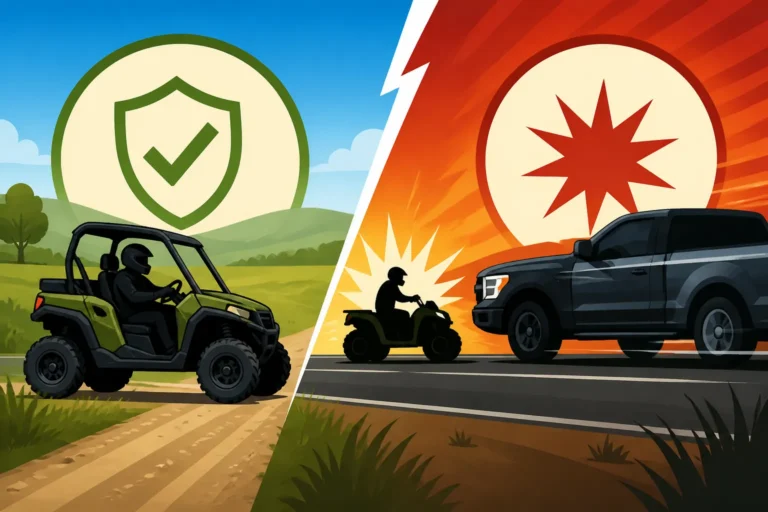
Generally, a trooper can stop you if they observe you committing a traffic violation or if your machine is being operated in a manner that suggests it's not street-legal in a place where it should be. For instance, if you're riding your quad down a busy state highway, that's a pretty clear indicator of a violation, as [Oklahoma ATV Road Rules Under 11-1116] strictly limit where and how off-road machines can interact with public roads. They might observe you speeding, driving erratically, or failing to yield, just like any other vehicle.
It’s also crucial to remember that merely being on a public road in an off-road vehicle often constitutes the probable cause itself, unless you're clearly engaged in one of the specific, limited exceptions, such as crossing a road safely. If your ATV is seen traveling a considerable distance down a county road, especially at night or in an area not designated for off-road access, that's generally enough for an officer to pull you over and investigate if you're in compliance with the law. This isn't about targeting off-road enthusiasts; it's about enforcing public safety regulations on shared roadways.
The Difference Between Off-Road and Street-Legal UTVs
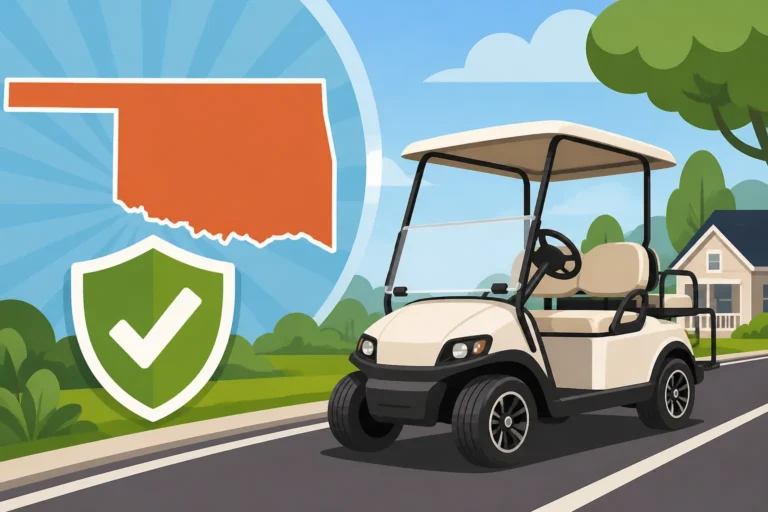
This is where a lot of the confusion really stems from. Oklahoma has specific provisions for truly street-legal UTVs, which are entirely different from your standard off-road ATV or UTV. If you've gone through the process to make your UTV street-legal, with all the proper modifications and a road plate, you're operating under a completely different set of expectations. [Oklahoma's Street-Legal UTV Class Explained] details this extensively.
An off-road ATV or UTV, even if registered for off-road use with the state's one-time $11 decal, is not street-legal. Its interaction with public roads is extremely limited, generally only for crossing at certain speeds and under specific conditions. A trooper approaching an off-road machine will be checking to ensure it's not exceeding these very narrow allowances. On the other hand, if you're riding a UTV that has been specifically converted and titled as street-legal, the trooper will be checking for adherence to vehicle code requirements much like they would for a car or truck, as you can learn more about in [Oklahoma Road Plates for a Street-Legal UTV]. Understanding this distinction is the first step to knowing what to expect.
What Troopers Look For on Off-Road Machines (When Allowed on Roads)
Even though most ATVs and UTVs aren't meant for road use, there are those limited circumstances where they are allowed to momentarily interact with public roads. In these situations, while there isn't a formal "inspection" process like for a street-legal vehicle, law enforcement will still be looking for basic safety and compliance.
Crossing Highways and Section Lines
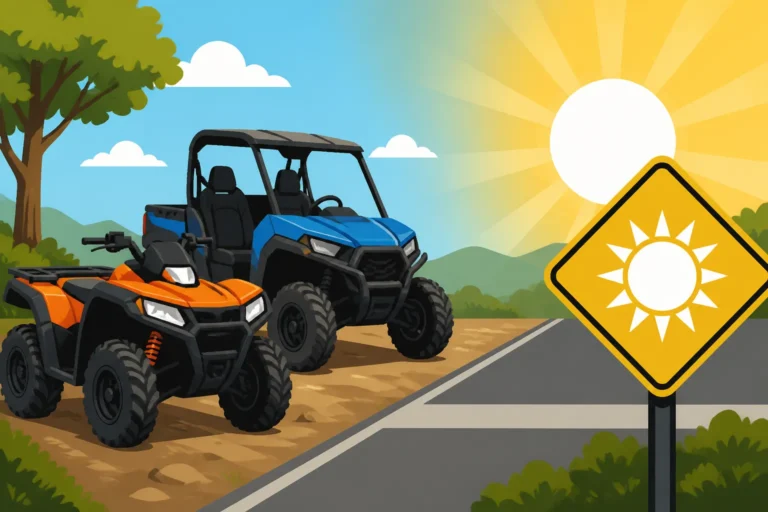
Oklahoma law does permit ATVs and UTVs to cross public highways and section lines, but only under very specific conditions. These aren't joyrides; these are meant to facilitate access for things like farming, ranching, or accessing different sections of private land. The key here is the "crossing" part – you're not meant to ride down the road. The law states you must cross at an angle of approximately 90 degrees to the roadway and only if the crossing can be made safely and without unduly interfering with other traffic. You also generally can't cross a highway posted over 35 mph, a rule expanded upon in [Oklahoma Crossing Rules at 35 mph].
When a trooper sees an off-road machine crossing, they're assessing the safety of that maneuver. Were you doing it in daylight? Did you stop and look both ways? Were you going at a reasonable speed for the crossing, or were you flying across the road, creating a hazard? While they won't be checking for turn signals on your quad during a brief crossing, they will absolutely be looking for blatant disregard for safety or the traffic laws that apply even to these brief road interactions. Similarly, if you're using your machine for agricultural purposes, there are some specific exemptions, as discussed in [Oklahoma Farm Use on County Roads], but even then, safety remains paramount.
Required Safety Gear for Riders Under 18
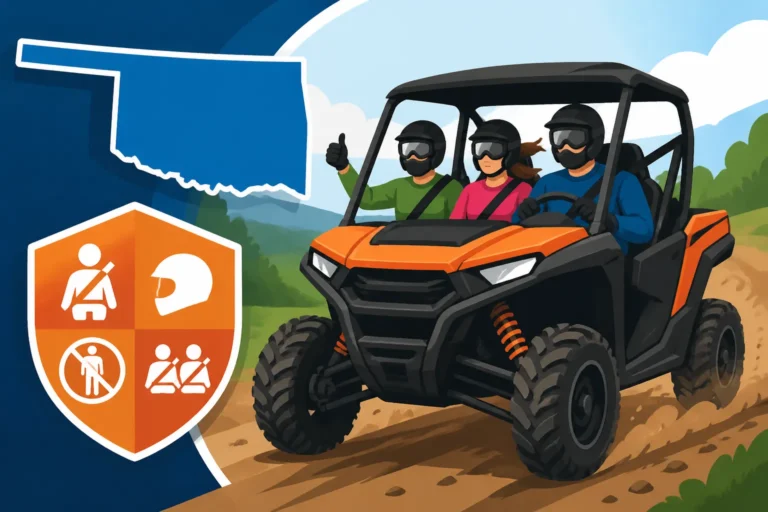
Now, this isn't strictly an equipment check on the machine, but it's something a trooper will absolutely notice and enforce if they stop an ATV or UTV with young riders. In Oklahoma, anyone under the age of 18 is required to wear a helmet when operating or riding as a passenger on an ATV or UTV. This isn't a suggestion; it's the law, and it's a critical safety measure. You can find more details on this requirement in [Oklahoma Helmet Law for Riders Under 18].
A trooper will check to ensure that any minors on your machine are properly helmeted. If they aren't, you could be facing a citation. Beyond helmets, there are also rules about carrying passengers on ATVs, which are generally designed for a single operator unless specifically built by the manufacturer to carry an additional passenger. [Oklahoma Passenger Rules on a Quad] outlines these limitations. So, even if your off-road machine is only briefly on a public road, ensuring all riders are safely equipped and adhering to passenger limits is a non-negotiable expectation for law enforcement.
Specific Equipment Checks for Street-Legal UTVs
This is where the equipment checks become much more comprehensive, mirroring what you'd expect for any other road-going vehicle. If you've gone through the effort to make your UTV street-legal, you've embraced a whole new set of responsibilities, and troopers will be ensuring you meet them.
Documentation First: Registration, License, and Insurance
When you're operating a street-legal UTV, you're essentially driving a compact, specialized vehicle on public roads. This means you need to have all your ducks in a row when it comes to documentation. The very first thing a trooper will ask for, just like with a car or truck, is your driver's license, proof of registration, and proof of insurance. For street-legal UTVs, the driver must be at least 16 years old, as outlined in [Oklahoma Street UTV Drivers Must Be 16 for a Street UTV]. You won't need a special motorcycle endorsement, but a valid driver's license is non-negotiable.
Your UTV also needs to be properly registered with a standard vehicle plate and must have current annual decals. Unlike the one-time $11 registration for off-road machines, these street-legal decals renew every single year, as explained in [Street UTV Decals Renew Every Single Year]. And yes, you absolutely need insurance. [Oklahoma Insurance at Street Registration] confirms that proof of liability insurance is a requirement when registering your street-legal UTV. If any of these documents are missing or invalid, that’s an immediate issue, regardless of your vehicle's physical equipment.
Mandatory Safety Equipment for Road Use
Once the documentation is in order, a trooper will then shift their focus to the physical equipment on your street-legal UTV. This is where the conversion really matters. For a UTV to be considered street-legal in Oklahoma, it must meet specific equipment standards to ensure it's safe for shared roadways. This isn't just about "looking the part" – it's about functionality.
Here's a breakdown of what they'll be checking:
- Headlights and Taillights: You need functional headlights that meet automotive standards, including a high and low beam, and red taillights visible from a certain distance.
- Brake Lights: When you hit the brakes, a red light must illuminate.
- Turn Signals: Both front and rear, indicating your intentions to turn. These are crucial for safe road navigation. Many riders find that quality aftermarket kits, like those offered by SuperATV, are essential for adding reliable turn signals to their UTVs.
- Mirrors: You must have at least one rearview mirror, typically on the driver's side, and preferably two (one on each side). [Oklahoma Turn Signals and Mirrors] elaborates on these requirements.
- Horn: A working horn is necessary to alert other drivers or pedestrians. [Oklahoma Horns on a Street UTV] confirms this.
- Windshield: A UTV converted for street use generally needs a windshield, often made of safety glass or a shatter-resistant material.
- Seatbelts: If your UTV has seats, it must have functional seatbelts for all occupants.
- Tires: Your tires must be DOT-approved, meaning they are designed for highway use, and have adequate tread depth.
- Brakes: A trooper will check that your brakes are in good working order, including a parking brake.
Essentially, [Oklahoma Equipment Required for Street UTVs] covers all these components. You’re expected to have them, and they’re expected to work. If you've pieced together your street-legal conversion, make sure every component is up to snuff.
Less Common Checks: Tires, Exhaust, and General Condition
While the primary focus will be on the mandatory safety equipment, a trooper might also glance at other aspects of your UTV's roadworthiness. This includes the condition of your tires (looking for excessive wear or damage), the general integrity of the vehicle, and sometimes, the exhaust system. While Oklahoma doesn't have super strict noise ordinances specifically for UTVs, an excessively loud exhaust that clearly violates general vehicle noise standards could draw attention.
They’ll also be looking for any obvious safety hazards, such as loose components, leaking fluids, or lights that are obscured. Think of it this way: if your UTV looks like it's falling apart, or if it's producing an excessive amount of smoke, it's going to raise questions. Even though street-legal UTVs are a great way to enjoy the open road, remember they still have limitations, such as being prohibited from interstates and most US highways, a point often emphasized in [Oklahoma Street UTVs Stay Off Interstates]. Maintaining your machine in good, roadworthy condition is just as important as having the right parts installed.
Here's a quick comparison of what a trooper generally looks for:
| Feature/Category | Off-Road ATV/UTV (Crossing Road) | Street-Legal UTV (On Road) |
|---|---|---|
| Reason for Stop | Observed road violation (e.g., prolonged road travel), unsafe crossing, suspicious activity. | Any traffic violation, routine stop for license/registration check. |
| Documentation | Off-road registration decal (usually front of machine), proof of ownership. | Valid Driver's License (16+), Street-Legal Plate/Decal, Proof of Insurance. |
| Helmets (Under 18) | Required for all riders under 18. | Required for all riders under 18. |
| Passengers | Only if factory-designed for multiple riders. | Only if factory-designed for multiple riders. |
| Headlights/Taillights | Functional (especially if crossing at dusk/dawn, or for visibility). | Required (Hi/Lo beams, red taillights). |
| Brake Lights | Functional (for safety). | Required. |
| Turn Signals | Not required. | Required (front & rear). Aftermarket options, like those from SuperATV, are popular. |
| Mirrors | Not required. | Required (at least one rearview). |
| Horn | Not required. | Required. |
| Windshield | Not required. | Generally required. |
| Seatbelts | If equipped, functional. | Required if equipped. |
| Tires | Functional. | DOT-approved, adequate tread. |
| Exhaust/Noise | No specific check, but excessive noise can draw attention. | General vehicle noise standards apply; no excessive noise. |
| Area of Operation | Limited to crossing specific roads, agricultural use. | Allowed on most public roads (excluding interstates, some highways). |
What to Do During an Equipment Check
Encountering a law enforcement officer can be a bit nerve-wracking, regardless of what you're driving. Knowing how to handle the situation can make a big difference in how smoothly it goes.
Staying Calm and Being Cooperative
The absolute best advice when pulled over is to stay calm and be cooperative. Pull over safely to the side of the road, turn off your engine, and keep your hands visible. When the trooper approaches, keep your hands on the steering wheel or handlebars, and avoid making any sudden movements. They'll likely ask for your driver's license, registration, and proof of insurance. Have these documents ready and easily accessible. For a street-legal UTV, keeping your paperwork in a waterproof pouch in a glove box or console is a smart move.
Answer questions clearly and honestly, but don't volunteer extra information or argue. If you're operating an off-road machine in a permissible crossing situation, calmly explain your purpose (e.g., "I'm just crossing the road to get to my pasture"). Remember, law enforcement officers are primarily concerned with public safety, and a calm, respectful interaction usually leads to a more positive outcome.
Common Misconceptions and Your Rights
It’s important to understand that while a trooper can certainly check your documents and the visible equipment, they generally can't conduct an extensive search of your UTV without probable cause beyond the initial stop, or your consent. They can observe anything in plain sight, but rummaging through your storage compartments usually requires more. If they ask to search your machine and you're unsure, you have the right to decline.
It's also worth remembering that if you do receive a citation, the fines for most ATV-related violations in Oklahoma are capped at $25, plus court costs. This is considerably less than many standard traffic violations for cars. [Oklahoma's Fine Cap for ATV Violations] provides more insight here. While getting a ticket is never fun, knowing the potential penalty can sometimes help put things into perspective. Always know your rights, but prioritize safety and cooperation during any interaction with law enforcement.
Disclaimer
This article is for general informational purposes only and does not constitute professional advice. Laws, prices and regulations vary by location and change over time. Consult a qualified professional for guidance on your specific situation.