Oklahoma Rules for Riding a Lake Road
There’s nothing quite like the feeling of heading to one of Oklahoma's beautiful lakes, whether you’re planning a fishing trip, a family camping weekend, or just a day of enjoying the scenery. For many of us, the idea of rolling up to the lake in our ATV or UTV just feels right, blending that outdoor adventure vibe perfectly with lakeside relaxation. However, the open road to paradise often comes with a tangled web of rules about exactly where our off-road machines are allowed. It can be incredibly frustrating trying to figure out if that scenic lake road is fair game or a one-way ticket to a conversation with a game warden. This guide aims to untangle that confusion, explaining Oklahoma's rules for riding an ATV or UTV on lake roads so you can plan your next lakeside adventure with confidence, not confusion.
The General Rule: Are ATVs and UTVs Allowed on Oklahoma Roads?
Let's start with the fundamental truth that often trips up many riders: in Oklahoma, ATVs and UTVs are, by their very nature, designed and intended for off-road use. This primary definition forms the bedrock of most state laws concerning where you can and cannot ride these machines. It’s not always intuitive, especially when you’re driving down a gravel road that feels exactly like a trail.
Understanding Oklahoma's Off-Road Vehicle Definition
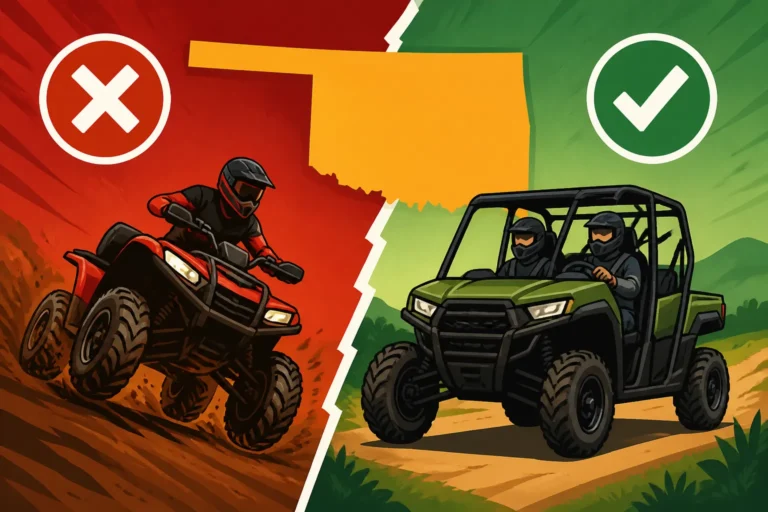
Oklahoma law generally classifies ATVs and UTVs as "off-road vehicles." This designation isn't just a label; it carries specific legal implications. Essentially, when you purchase a quad or a side-by-side, the state considers it a machine for trails, pastures, open fields, and designated riding parks – not paved or public roadways. This distinction is crucial because it sets the default expectation: if it's a public road, especially one maintained by a county or municipality, your off-road machine is likely not permitted unless explicitly stated otherwise. Many riders find this confusing, particularly when they see trucks with huge tires and lifted suspensions on the same roads. But the legal classification of your ATV or UTV is different. It means that while your pickup truck can drive on a lake road, your off-road machine typically cannot, without some form of legal exception.
The Default: Roads Are Generally Off-Limits
Because ATVs and UTVs are classified as off-road vehicles, the default rule is that they are not allowed on public streets, roads, or highways in Oklahoma. This blanket prohibition extends to many of the roads that lead to, or wind around, our beautiful lakes. It’s easy to assume that a quiet, low-traffic gravel road running along the shoreline would be fine, but legally, it's still a "road." This can be a huge bummer for folks who want to use their UTVs to cruise from their lake cabin down to the boat ramp or to visit a neighbor. The state's primary concern is safety on shared roadways, as off-road machines often lack certain safety features found on street-legal vehicles, like full lighting packages, turn signals, and often the same level of driver visibility. This also includes the speed differential and the unique handling characteristics of an ATV or UTV compared to a car or truck. So, before you even consider heading to the lake, internalize this: unless there's a specific exception, assume you can't ride your ATV or UTV on the public roads that get you there.
Exceptions and Special Circumstances for Lake Roads
Now, don't despair entirely! While the general rule is strict, Oklahoma does provide some narrow exceptions and avenues through which you might legally operate your ATV or UTV on certain lake roads. These aren't universal free passes, though; they require a bit of homework on your part.
Municipal Ordinances and County Commissioner Decisions
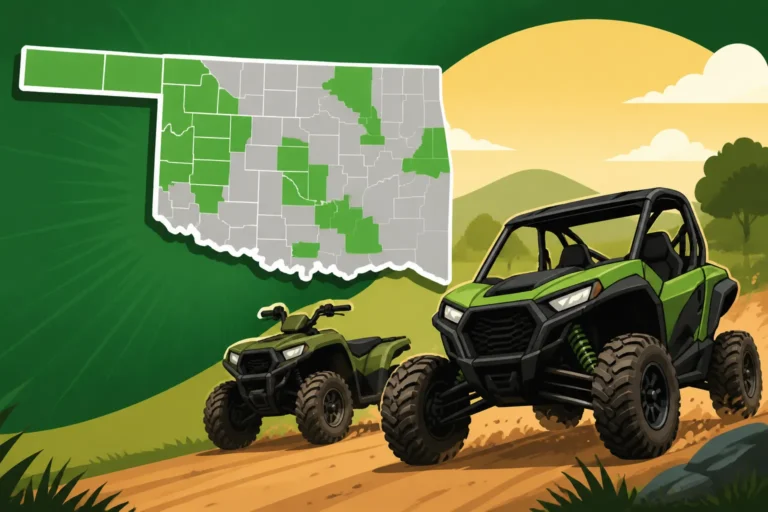
This is perhaps the most significant avenue for legal ATV/UTV use on lake roads. Local control plays a huge role here. In Oklahoma, [Oklahoma Municipal Ordinances That Open Streets] allow cities, towns, and even county commissioners to enact ordinances or resolutions that specifically permit the use of ATVs and UTVs on certain roads within their jurisdiction. This is particularly relevant for lake communities, as many small towns or rural counties with popular lakes understand the desire of residents and visitors to use their machines for local access.
Imagine you own a cabin near Grand Lake or Lake Tenkiller. The local town council or the county commissioners for that area might have passed an ordinance allowing ATVs and UTVs on specific low-speed roads, typically gravel or secondary routes, often for access to lake amenities or properties. These ordinances will usually specify speed limits, daylight-only operation, and sometimes even a requirement for a slow-moving vehicle emblem. The key here is local research. You can’t just assume; you must check with the county clerk's office, the city hall, or even local law enforcement in the specific lake area you plan to visit. A quick phone call can save you a ticket and a headache. It's not uncommon for a "lake road" to be under county jurisdiction in one section and then suddenly fall under a municipal ordinance as it approaches a town's limits.
The "Instrument of Husbandry" Exemption
The "instrument of husbandry" exemption is an interesting carve-out in Oklahoma law that often gets misunderstood when it comes to ATVs and UTVs. While it does allow farm or ranch equipment to traverse public roads for short distances between fields, it's generally tied to specific agricultural operations. This means that if you're using your ATV or UTV for legitimate farm work on land adjacent to a lake, such as checking fences, moving hay, or tending to livestock, and you need to cross or briefly drive on a road to get from one part of your property to another, you might fall under this exemption. You might be able to find more details on [Oklahoma Farm Use on County Roads].
However, this exemption is not a loophole for recreational riding. Simply driving your side-by-side to go fishing or to visit a friend's lake house generally won't qualify, even if you keep a couple of cattle in a nearby pasture. The intent of the travel must be directly related to agricultural purposes. Law enforcement typically looks for clear indicators of farm work. If you're hauling fishing gear or coolers, it's unlikely to be seen as an "instrument of husbandry."
Crossing Rules for Off-Road Machines
Even where general riding on roads is prohibited, Oklahoma law does allow for limited crossings of public roads by off-road vehicles under certain conditions. This is often relevant near lakes where properties might be divided by a road, or where a riding trail might necessitate crossing a public thoroughfare to continue. [Oklahoma Highway Crossings in Daylight] outlines these specific rules.
Generally, an ATV or UTV can cross a public road or highway at a right angle, after coming to a complete stop, yielding to all oncoming traffic, and only if the crossing is made safely and without interfering with traffic. Furthermore, these crossings are usually restricted to daylight hours and areas where the speed limit is 35 mph or less. You cannot ride down the road for any significant distance; it must be a direct perpendicular crossing. So, if your lake house is on one side of a road and your boat ramp is directly across it, a quick, safe crossing might be permissible. However, you can't drive a quarter-mile down the road to get to a different access point. This distinction is critical and often overlooked, leading to citations.
The Street-Legal UTV Option for Lake Access
For many riders, the most straightforward and reliable way to legally access Oklahoma's lake roads is by having a street-legal UTV. While it requires an initial investment and some paperwork, it opens up many more possibilities for enjoying your machine around the lake. You can explore this option further by reading [Can You Drive a UTV on the Road in Oklahoma?].
What Makes a UTV Street Legal in Oklahoma?
Oklahoma created a specific class for street-legal UTVs, allowing them to be titled and registered for road use, much like a car or motorcycle. This isn't a free pass for every UTV, though. To become street-legal, your UTV needs to meet several equipment requirements to ensure it's safe for shared roadways. This typically includes:
- Headlights: Must be functional and DOT-compliant.
- Taillights and Brake Lights: Clear visibility and proper operation are essential.
- Turn Signals: Both front and rear, indicating your intentions to other drivers.
- Mirrors: At least one rearview mirror, often two side mirrors are preferred for better visibility.
- Horn: A working horn to alert others.
- Windshield: A windshield is often required, usually made of safety glass or an equivalent material.
- Seatbelts: For all passengers the UTV is designed to carry.
- License Plate Light: To illuminate your license plate at night.
After ensuring your UTV meets these [Oklahoma Street-Legal UTV Requirements], you'll go through a specific registration process at a tag agency, where you'll get a regular vehicle license plate and [Oklahoma Annual Plates for Street UTVs]. This is a different process than the one-time, non-renewing ATV registration. [Oklahoma Street-Legal UTV Class Explained] delves deeper into this. Companies like SuperATV offer a wide range of accessories, from full windshields to turn signal kits, that can help transform your off-road UTV into a road-ready machine, often simplifying the conversion process for riders looking to meet these requirements.
Riding a Street-Legal UTV to the Lake
Once your UTV is properly equipped and registered as street-legal, you gain significant freedom for lake access. You can now drive it on most public roads in Oklahoma, including those leading to and winding around lakes. This means you can drive from your cabin to the marina, visit lakeside restaurants, or simply cruise the scenic routes.
However, there are still some important limitations. Street-legal UTVs are generally not permitted on interstates or on US highways. They are primarily intended for use on county roads, state highways, and municipal streets. So, while you can take it to many lakes, you might still need a truck and trailer to get it to the general lake area if your journey involves major highways. This is a common trade-off, but for local lake travel, it’s a game-changer.
Important Considerations for Street-Legal UTVs on Lake Roads
Even with a street-legal UTV, there are a few extra layers of consideration when riding around the lake:
- Insurance: Unlike regular off-road ATV registration, [Oklahoma Insurance at Street Registration] is typically required for street-legal UTVs, just like any other vehicle operating on public roads. Ensure you have adequate liability and potentially comprehensive coverage.
- Driver Age: [Oklahoma Drivers Must Be 16 for a Street UTV] and possess a valid driver's license. This is a critical difference from off-road riding, where younger riders are often allowed on private land or designated trails under supervision.
- Local Ordinances: While your UTV is street-legal at the state level, some municipalities or specific lake authorities might still have local rules or restrictions. Always double-check with the local governing body or park rangers for any area-specific quirks. For instance, a private lake community might have its own internal rules, even if the surrounding public roads are open. You might also want to ensure your machine is equipped with proper lighting for dusk or dawn travel, especially on narrow, winding lake roads. SuperATV offers high-quality LED lighting kits that can greatly enhance visibility, making your machine safer and more compliant for early morning fishing trips or late evening cruises.
Practical Advice for Riding Near Oklahoma Lakes
Beyond the legal specifics, a good dose of common sense and courtesy goes a long way when you’re riding your ATV or UTV near Oklahoma’s lakes. Being a responsible rider not only prevents trouble but also helps maintain positive relationships with other lake-goers and local residents.
Researching Local Rules Before You Go
This cannot be stressed enough: always research the specific rules for the lake area you plan to visit. Different counties, cities, and even state park authorities can have varying regulations. What’s allowed at Lake Murray might be different from Lake Eufaula or Grand Lake.
- County Clerk's Office: Contact the county clerk for the county where the lake is located. They can often provide information about local resolutions or ordinances concerning ATV/UTV use on county roads.
- City Hall/Town Clerk: If the lake is near a specific town or city, check with their municipal offices for any local ordinances.
- State Park Offices: If the lake is within a state park, contact the park rangers or the park office directly. State parks often have their own comprehensive rules regarding off-road vehicle use, even on access roads within park boundaries.
- Local Law Enforcement: A quick, polite call to the local Sheriff's office or police department can clarify current enforcement practices and specific road allowances.
Knowing before you go prevents unpleasant surprises and ensures your fun isn't cut short by a citation.
Respecting Private Property and Posted Land
Many lake roads wind through areas with a mix of public access and private land, including residential properties, vacation homes, and undeveloped parcels. It’s absolutely critical to respect private property boundaries. Riding on land that is not explicitly public or for which you do not have permission is trespassing, pure and simple.
Look for "No Trespassing" signs, fences, or other indicators of private ownership. If you're unsure, assume it's private and seek permission from the landowner before riding. This is especially important for venturing off the main lake roads onto dirt paths or trails that might look inviting but are actually on private property. A little courtesy goes a long way in preventing conflicts and keeping riding opportunities open for everyone. Remember, lake communities are often tight-knit, and reputation matters.
Safety and Courtesy on Shared Roads
Whether you’re on a street-legal UTV or briefly crossing a road under an exemption, practicing safety and courtesy is paramount. Lake roads often have pedestrians, cyclists, children, and other vehicles that may not expect to encounter an ATV or UTV.
- Yield to Others: Always give way to cars, trucks, pedestrians, and cyclists. They generally have the right-of-way.
- Maintain Low Speeds: Even if the posted limit is higher, keep your speed appropriate for conditions and visibility, especially on winding roads or in residential areas. Many local ordinances for ATV/UTV use will specify very low-speed limits.
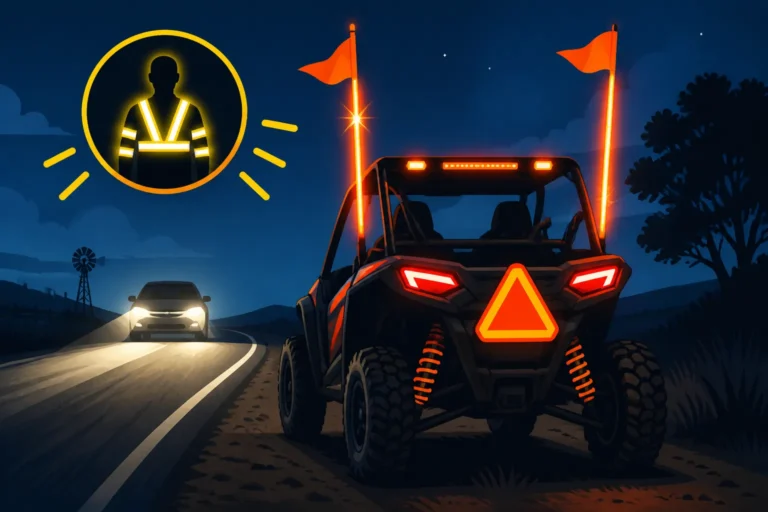
- Be Visible: If allowed to ride at dusk or dawn, ensure your lights are fully functional. Wearing bright clothing can also increase your visibility. Products from SuperATV, such as their robust mirrors and additional lighting options, can significantly improve your awareness of surroundings and your visibility to others on shared roads.
- Minimize Noise: Be mindful of engine noise, especially in quiet residential areas around the lake. Excessive noise can quickly lead to complaints and calls to law enforcement, potentially jeopardizing future riding privileges for everyone.
- Control Dust: On gravel lake roads, try to keep your speed down to minimize dust, which can be a nuisance and a safety hazard for other road users and nearby homes.
By following these guidelines, you contribute to a positive perception of ATV and UTV riders, making it more likely that local communities will continue to allow access where appropriate. Enjoy your time at the lake, and ride safe!
Disclaimer
This article is for general informational purposes only and does not constitute professional advice. Laws, prices and regulations vary by location and change over time. Consult a qualified professional for guidance on your specific situation.