Daylight Only at a Crossing
It's incredibly frustrating when you just want to get your ATV or UTV from point A to point B, maybe to another section of your land, a different trail, or across a county road, and you're constantly worried about whether you're breaking the law. Oklahoma has some very specific rules about crossing public roads, and one of the most critical, yet often misunderstood, is the "daylight only" restriction. This guide will walk you through exactly what that means, why it's in place, and how to safely and legally navigate road crossings in the Sooner State.
The Rationale Behind Daylight-Only Crossings in Oklahoma
Oklahoma's laws regarding ATV and UTV crossings aren't just arbitrary rules designed to make your life harder. They are deeply rooted in safety—for you, your passengers, and every other driver on the road. The "daylight only" provision is a prime example of this, aiming to mitigate significant risks that arise when off-road vehicles interact with public roadways.
Visibility as the Primary Concern
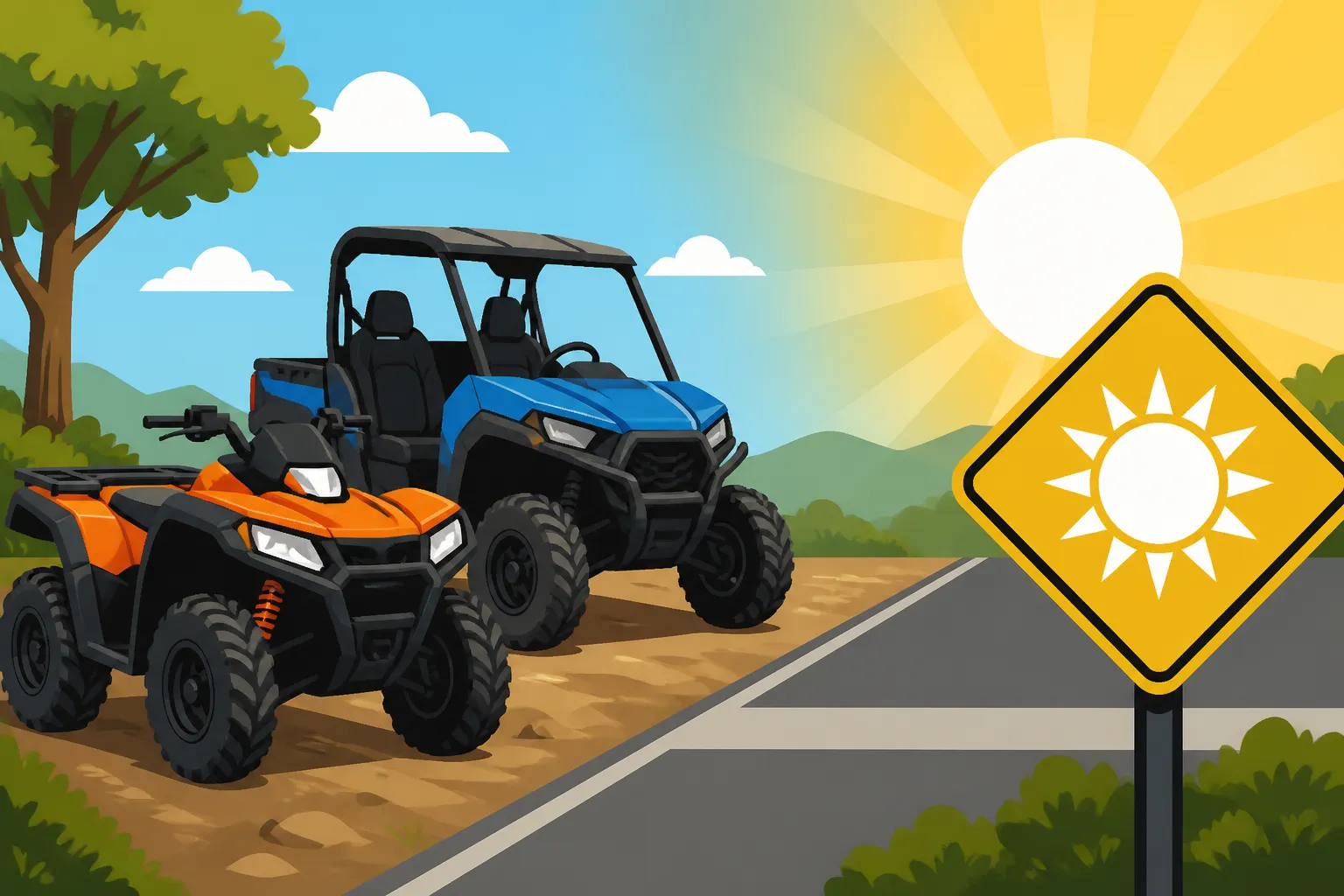
Think about it from a motorist's perspective. Most drivers are looking for cars, trucks, and motorcycles – vehicles they expect to see on the road. An ATV or UTV, especially a smaller quad, presents a much different profile. They're often lower to the ground, narrower, and can be harder to spot, particularly if you're pulling out from a tree line or a ditch. In daylight, there's at least ambient light to help. The sun itself provides a certain level of visibility that even the best headlights can't fully replicate for other drivers. This is why [Oklahoma Daylight Crossing Rules] are so strict. Lawmakers recognized that the best way to prevent accidents during these brief, high-risk maneuvers was to ensure the clearest possible visual conditions.
Furthermore, the very nature of off-road machines means they aren't always equipped with the same robust lighting and reflective materials found on street-legal vehicles. While many modern UTVs come with good lighting, not all ATVs do. Even if your lights are on, they might not cut through the gloom or be as noticeable to an oncoming car as a full-sized vehicle's setup. The "daylight only" rule simplifies things: if the sun isn't out and providing natural illumination, you generally shouldn't be attempting a public road crossing.
The Dangers of Low Light Conditions
Crossing a busy road is already a moment of heightened risk. Add in low light conditions—dusk, dawn, or nighttime—and those risks multiply dramatically. In these periods, shadows can be deceiving, glare from other vehicles can temporarily blind drivers, and the human eye's ability to perceive depth and speed is significantly reduced. An ATV or UTV attempting to cross might blend into the background, or its presence might be misjudged by an approaching driver. Imagine pulling out from a dimly lit section line onto a highway just as the sun is setting; it creates a perfect storm for a collision.
The rule isn't just about what you can see, but what others can see of you. Headlights on an ATV or UTV might be bright, but they can also be confusing to a driver who isn't expecting an off-road vehicle. They might mistake it for a distant motorcycle or even a single headlight on a car further down the road, making it difficult to accurately judge your speed or intent. This is precisely why [Oklahoma Highway Crossings in Daylight] are emphasized. The state wants to eliminate as many variables as possible that could lead to a tragic outcome, and ensuring sufficient natural light is one of the simplest ways to do that.
Protecting Both Riders and Other Motorists
Ultimately, the daylight-only crossing rule serves a dual purpose: it protects you, the rider, from potential harm, and it protects other motorists from unexpected hazards. No one wants to be involved in an accident, and the financial, emotional, and physical toll can be devastating for everyone involved. By restricting crossings to daylight, Oklahoma aims to reduce the likelihood of high-speed impacts that often result from insufficient warning or visibility.
This isn't just about avoiding a ticket; it's about making sure everyone gets home safely. When you adhere to this rule, you're not just complying with the law; you're actively contributing to road safety for the entire community. It reinforces the understanding that while ATVs and UTVs are fantastic for recreation and work, their presence on public roads must be handled with extreme caution and under optimal conditions.
Understanding Oklahoma's Specific Crossing Rules
Knowing why the rules exist is helpful, but understanding the specific parameters of how and when you can cross is crucial. Oklahoma's statutes are quite clear, differentiating between merely crossing a road and riding on it, and outlining specific conditions for highways and railway lines.
The 35 MPH Rule for Highway Crossings
When it comes to state highways, Oklahoma has a very specific stipulation: you can only cross a highway where the posted speed limit is 35 miles per hour or less. This is a critical detail that many riders overlook or misunderstand. It doesn't mean your speed can't exceed 35 mph; it refers to the speed limit of the highway you are crossing. You'll find this detail outlined in resources like [Oklahoma Crossing Rules at 35 mph]. This restriction immediately limits where you can make these crossings. Most major state highways and certainly interstates will have speed limits well above 35 mph, effectively prohibiting crossings on those roads.
This rule exists for the same reason as the daylight-only rule: safety through reduced speed differentials. When traffic is moving at 35 mph or less, drivers have more time to react, and the impact force in the event of a collision is significantly reduced compared to roads with higher speed limits. It gives both the ATV/UTV rider and the oncoming motorist a better chance to avoid an incident. Before attempting any highway crossing, always check the posted speed limit signs. If it's above 35 mph, you'll need to find an alternative route or a different crossing point.
Navigating Railway Crossings
Just like highways, railway crossings also fall under the daylight-only umbrella. The rules for [Oklahoma Railway Crossings in Daylight] are consistent with those for roads, reinforcing the idea that any interaction with public infrastructure requires maximum visibility. Crossing train tracks presents its own unique set of hazards, not least of which is the potential for a collision with a train. Even if no train is visible, the tracks themselves can be treacherous for ATV/UTV tires, and you want to ensure you have clear sightlines and optimal conditions to navigate them safely.
You should approach any railway crossing with extreme caution. Always stop, look both ways, and listen for approaching trains. Make sure your path across the tracks is clear and that there's no immediate danger. Trying to rush across tracks in low light, where visibility is compromised, is an unnecessary gamble. The "daylight only" rule here is an additional layer of protection, ensuring that you can clearly see the tracks, any warning signals, and any potential train activity before you commit to crossing.
Crossing vs. Riding: Clarify the Crucial Distinction
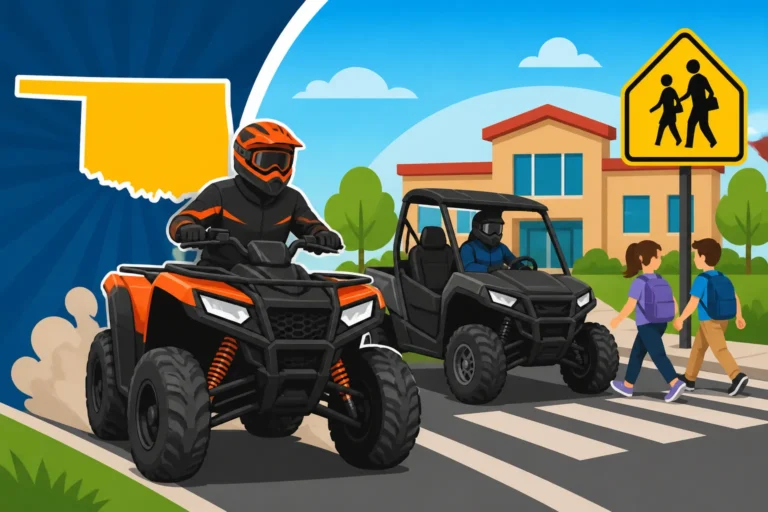
This is perhaps one of the most significant points of confusion for ATV and UTV owners in Oklahoma. There's a fundamental legal difference between crossing a public road and riding on a public road. Generally, Oklahoma law prohibits ATVs and UTVs from being operated on public roads, streets, or highways for travel. The exceptions are very specific, such as for agricultural purposes under an [Oklahoma Farm Use on County Roads] exemption or in municipalities that have passed specific ordinances opening their streets, as discussed in [Oklahoma Municipal Ordinances That Open Streets].
A "crossing" is a quick, perpendicular maneuver from one side of a public road to the other, typically to access private property, another trail, or another section of land. It's not meant for traveling down the road. For instance, if your property is bisected by a county road, you might be permitted to cross that road to get from one field to another during daylight hours, provided you meet other criteria. However, you generally cannot then turn and ride down that same county road for a mile to get to your neighbor's house unless a specific exception applies. Understanding this distinction is vital to avoid a citation. Simply because you can cross a road doesn't mean you can ride on it.
Practical Tips for Safe Daylight Crossings
Even when you're crossing during daylight hours and following all the rules, safety should still be your absolute top priority. Taking a few extra precautions can make all the difference in preventing an accident and ensuring a smooth, legal crossing.
Enhancing Your Machine's Visibility
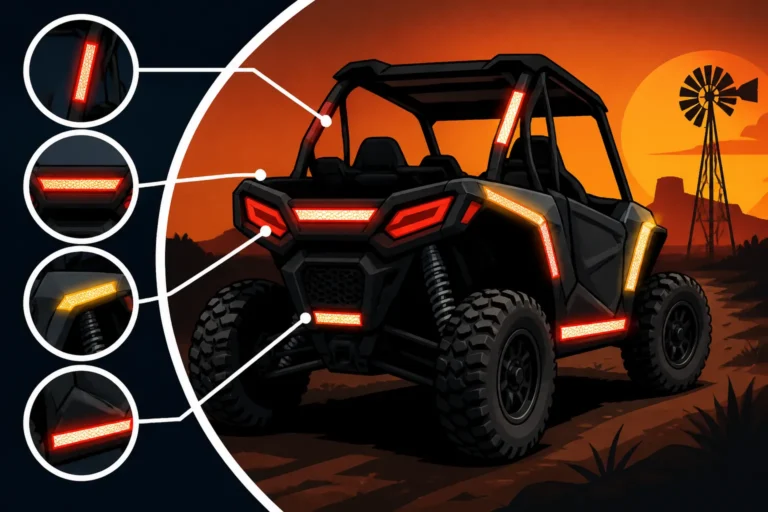
While daylight provides natural illumination, you can—and should—still do everything possible to make your ATV or UTV more visible to other motorists. Bright colors on your machine and riding gear are a great start. Think about adding reflective tape to strategic spots on your quad or side-by-side, especially on the front and sides. Even in broad daylight, a flash of reflective material can catch a driver's eye more effectively than a dull paint job.
Consider upgrading your lighting, even for daytime use. Modern LED light bars and auxiliary lights are incredibly bright and can significantly increase your presence on the road. Brands like SuperATV offer a wide range of aftermarket lighting solutions, from powerful LED light bars to bright, durable cube lights, which can be mounted to your roll cage or bumper to ensure you stand out. Installing additional turn signals, even if not strictly required for a mere crossing, can also clearly communicate your intentions to other drivers. Remember, the goal is to be seen, even if it feels like overkill. The more visible you are, the safer your crossing will be.
Pre-Crossing Assessment and Awareness
Never approach a road crossing casually. Treat every crossing point as a potential hazard. Before you even get close to the road, slow down and scan your surroundings. Look for any signage that might prohibit crossings, assess the traffic flow, and identify any potential blind spots for oncoming vehicles. When you reach the edge of the road, come to a complete stop. Look left, then right, then left again. Do this several times. [Oklahoma Highway Crossings in Daylight] rules exist because you need to be absolutely sure the coast is clear.
Pay attention to more than just cars. Listen for the sounds of approaching vehicles, especially if there are hills or curves that obstruct your view. If you're crossing a railway, listen for train horns. Consider the conditions: Is the road wet? Is there gravel at the edge that could make pulling out tricky? Think about how long it will take your machine to accelerate and clear the road. Never assume a driver sees you or will slow down for you. Make eye contact if possible, and wait until there is a clear, wide gap in traffic before you proceed.
Planning Your Route to Minimize Risk
A little foresight can save a lot of headaches (and potential citations). Before you head out, if you know your ride involves crossing public roads, take a moment to plan your route. Identify the safest possible crossing points. These are typically areas with good sightlines in both directions, minimal traffic, and ideally, where the posted speed limit of the road is 35 mph or less. Avoid blind curves, hills, or areas where parked vehicles might obscure your view or the view of oncoming traffic.
If you're using your ATV or UTV for work on a farm or ranch, try to create designated crossing areas that are well-marked and perhaps even have improved surfaces to make the crossing smoother. For recreational riders, consult maps and look for alternative paths that might allow you to avoid road crossings altogether. Sometimes, a slightly longer route through private land or designated trails is far safer and less stressful than risking a public road crossing. Knowing your exact path can also help you quickly clear the road.
Common Misconceptions and Penalties
Even with clear rules, misconceptions abound, and sometimes riders take chances. Understanding the realities of enforcement and the potential consequences is just as important as knowing the rules themselves.
The Myth of "No One Will Notice"
It's a common thought: "I'm just quickly crossing; no one will notice." This couldn't be further from the truth. Oklahoma's rural roads are often patrolled by local law enforcement, county sheriffs, and even game wardens, especially in areas near popular riding spots or hunting leases. These officers are often very familiar with ATV and UTV regulations, and they are trained to spot violations. A quick dash across a road, especially if it's outside of daylight hours or on a higher-speed highway, will absolutely be noticed.
The consequences of being "noticed" can range from a warning to a citation, and potentially even an impoundment of your machine, depending on the severity and frequency of the offense. It's simply not worth the risk. [Oklahoma Park Rangers as Enforcers] also have the authority to issue tickets within state parks and adjacent areas, so even if you're close to a trail system, you're not exempt from road rules. Assume you are always visible and that law enforcement is always nearby, because often, they are.
What a Trooper Can Ask to See
If you are stopped while crossing a public road on your ATV or UTV, a law enforcement officer has the right to ask for specific information and to inspect your machine. Typically, they will ask for your identification, and they may ask for proof of ownership for your ATV or UTV. While ATVs and UTVs have an [Oklahoma ATV Registration You Pay Once], proof of this registration and the title are important. For newer machines, this might mean a Manufacturer's Statement of Origin (MSO) or a title. For older machines, a bill of sale might be accepted. The officer may also check the Vehicle Identification Number (VIN) on your machine against your paperwork to ensure it hasn't been reported stolen.
Beyond documentation, a trooper can also visually inspect your machine for basic safety equipment, although the focus for a crossing violation will primarily be on the legality of the crossing itself. They will be looking to see if you were violating the "daylight only" rule, crossing a road with a speed limit over 35 mph, or attempting to ride on the road rather than merely crossing. Understanding [What a State Trooper Can Ask to See] will help you be prepared and cooperate if you are stopped, potentially mitigating the outcome.
Financial and Legal Consequences of Violations
Ignoring Oklahoma's ATV and UTV road crossing rules can lead to more than just a stern talking-to. The financial penalties, while often not as high as for car violations, can still add up. While [Oklahoma Penalties Capped at $25] is a notable detail for ATV violations, this typically refers to the base fine, and court costs and other fees can significantly increase the total amount you owe. A simple citation for an illegal crossing could easily cost you more than that once all the add-ons are included.
Beyond the immediate financial hit, there are other legal consequences. Repeated violations could lead to more serious charges. If you're involved in an accident while illegally crossing a road, your liability could be significantly increased, and your insurance might even deny coverage. This could leave you responsible for property damage, medical bills, and other costs that could be substantial. It's not just about the small fine; it's about avoiding a cascade of negative financial and legal repercussions that could arise from a single moment of disregard for the law. Staying informed and compliant is always the best path forward.
| Crossing Scenario | Allowed? | Conditions |
|---|---|---|
| State Highway Crossing | Yes | Daylight Hours ONLY. Posted speed limit of highway MUST be 35 MPH or less. Must be a direct, perpendicular crossing (not riding along the road). |
| Railway Crossing | Yes | Daylight Hours ONLY. Must be a direct, perpendicular crossing. Always stop, look, and listen for trains. |
| County Road Crossing | Yes | Daylight Hours ONLY. Generally allowed for direct crossings. Some county roads may be open to riding if commissioners have passed ordinances, but this is distinct from mere crossing. |
| City Street Crossing | Rarely | Daylight Hours ONLY. Generally prohibited unless a specific municipal ordinance allows it for certain streets or purposes. Most cities do not permit ATV/UTV operation or crossing on their streets. |
| Crossing at Night/Dusk/Dawn | No | Absolutely prohibited for public roads and railway crossings. |
| Crossing on Interstate | No | Prohibited due to high speed limits and federal regulations. |
| Crossing over 35 MPH Highway | No | Prohibited. Only allowed on highways where the posted speed limit is 35 MPH or less. |
Disclaimer
This article is for general informational purposes only and does not constitute professional advice. Laws, prices and regulations vary by location and change over time. Consult a qualified professional for guidance on your specific situation.