Why 35 mph Decides a Crossing
It's incredibly frustrating when you're just trying to get your ATV or UTV from one side of a road to the other, maybe to access more trails or get to your hunting lease, and you're left scratching your head about the rules. The laws around operating off-road machines on public roads in Oklahoma can feel like a confusing maze, especially when it comes to quick crossings. This guide is here to untangle the specifics of why Oklahoma law hinges on that seemingly arbitrary "35 mph" mark for highway crossings and what it means for you as a rider.
The Law Behind the 35 MPH Rule for Crossings
Oklahoma's approach to off-road vehicles on public roads is often misunderstood, and for good reason. It’s not about allowing you to cruise down the highway; it’s about very specific, limited circumstances. The 35 mph rule for crossings is a perfect example of a nuanced piece of legislation designed to balance access with public safety.
Understanding Oklahoma's Off-Road Vehicle Statutes
First off, it’s crucial to understand that in Oklahoma, your typical ATV or UTV is generally considered an off-road vehicle. This means it's primarily intended for use off public roads, trails, and private land. Unless you've gone through the rigorous process of making a UTV [Oklahoma Street-Legal UTV Requirements] and securing actual [Oklahoma Road Plates for a Street-Legal UTV], your machine is not meant for regular road travel. The state laws, particularly Title 47, Section 11-1116, lay out the framework for how these machines interact with public roadways. This section is key to understanding the limited circumstances under which you can even touch a public road. It's not about giving you free rein; it's about providing a narrow exception for access. This statute, alongside others, defines the boundaries, ensuring that while riders can traverse necessary obstacles, they don't pose undue risks to themselves or other motorists. The intent is clear: maintain the integrity of public road safety while acknowledging the practical needs of off-road enthusiasts and landowners.
The legislative intent behind these statutes wasn't to punish riders but to protect everyone on the road. Off-road vehicles lack many of the safety features found on street-legal cars, trucks, or even motorcycles. Their suspension, tires, and handling characteristics are optimized for dirt, mud, and rocks, not high-speed asphalt. This fundamental design difference is why the law treats them differently. Riders often find themselves frustrated, thinking they should have more freedom, but the law's restrictions are rooted in preventing serious accidents. It’s about recognizing the inherent limitations of these machines when they’re taken out of their intended environment, even for a brief moment. Therefore, any allowance for road use, like crossing, is heavily conditioned on factors that mitigate risk, such as the specific speed limit.
What Constitutes a "Crossing" in the Eyes of the Law?
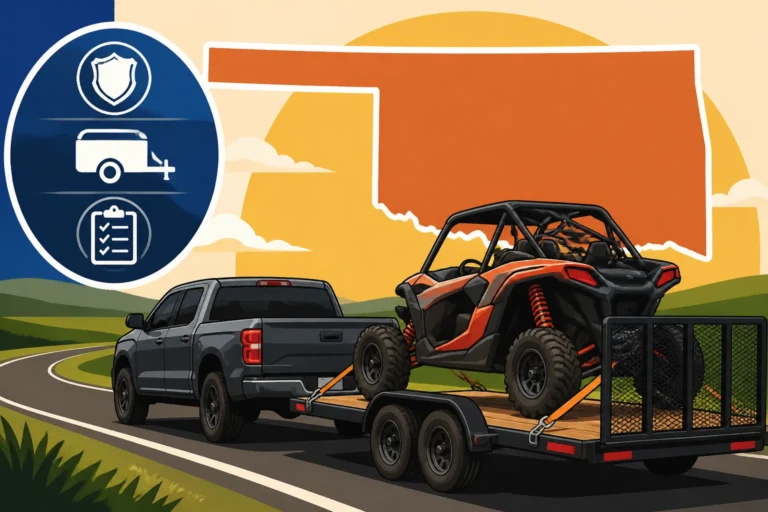
When the law talks about a "crossing," it’s not just a casual term; it has a very specific meaning. A crossing means moving your off-road vehicle directly across a public road, from one side to the other, by the most direct and shortest route possible. It absolutely does not mean riding your ATV or UTV along the road for any significant distance, even if you’re just going a few hundred feet to another trail entry. This distinction is paramount, and it's where many riders inadvertently get into trouble. The statute is explicit in defining this as a maneuver of necessity, not convenience. If you can avoid crossing a public road, you should. The entire spirit of the law is to minimize the time an off-road vehicle spends on pavement.
Imagine you're out near a rural area, perhaps hunting around the Ouachita National Forest, and your private land or trail system is split by a paved county road. The law acknowledges that you need a way to get from point A to point B. That’s what a crossing is for: a quick, perpendicular movement. It’s not permission to use the road as a shortcut to the gas station or to get to your friend’s house a mile down the road. If you were doing that, you would likely be in violation of [Oklahoma ATV Road Rules Under 11-1116] and facing potential penalties. The concept of "shortest distance possible" is strictly interpreted by law enforcement. Any deviation from this direct path or any sustained travel on the roadway transforms a legal crossing into an illegal operation, opening you up to citations and potential fines.
Practical Implications of the 35 MPH Threshold
The 35 mph speed limit for crossings isn't just an arbitrary number pulled from thin air; it's a carefully considered safety measure designed to protect both the ATV/UTV rider and other motorists. It's about reducing the risk associated with these machines momentarily sharing the road with faster-moving traffic.
Safety Considerations at Higher Speeds
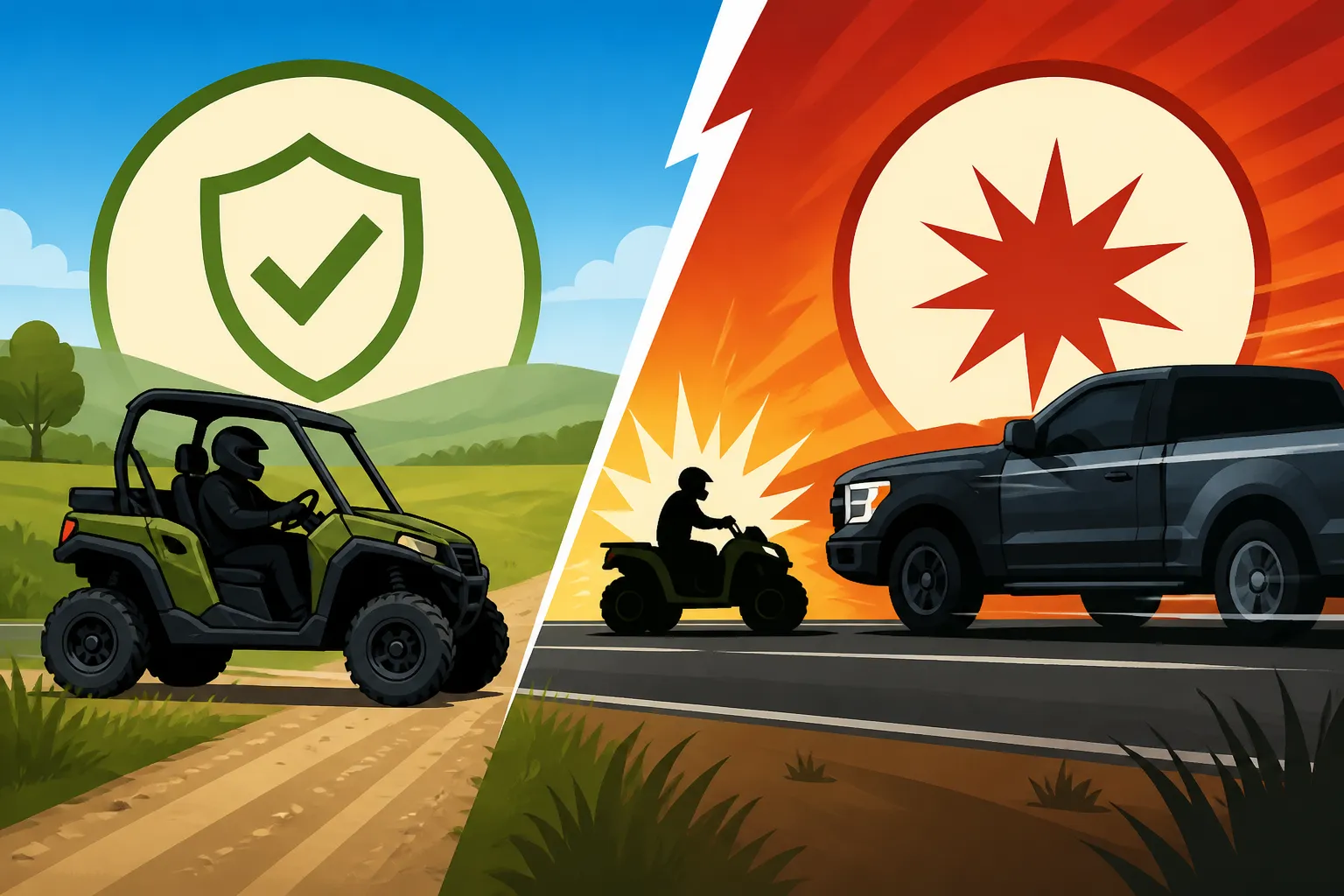
ATVs and UTVs are simply not built for highway speeds, even for a brief moment. Their suspension systems are designed to absorb rough terrain, not provide stable handling on hard pavement at high velocities. The tires, often aggressive knobby designs, have limited contact patches and traction on asphalt compared to street tires, making them prone to slipping, especially during sudden braking or turning. At speeds above 35 mph, a rider's reaction time to unexpected road hazards – a pothole, a quickly approaching vehicle, or debris – becomes severely diminished. Even a slight swerve to avoid something can lead to loss of control, a rollover, or a collision. These machines lack the crumple zones, airbags, and robust chassis of passenger cars, meaning a collision at speed can have catastrophic consequences for the rider and any passengers. This is why the 35 mph limit acts as a crucial buffer.
Consider a scenario where you're crossing a two-lane highway with a 55 mph speed limit. If you're trying to cross at 45 mph, you're not only violating the law but also dramatically increasing your closing speed with oncoming traffic. A vehicle traveling 55 mph would cover a significant distance in the time it takes you to react and clear the lane. Lowering your speed to 35 mph provides both you and other drivers with more precious seconds to perceive and react to each other, minimizing the severity of any potential impact. It also gives your machine's braking system a better chance to perform adequately on a surface it's not optimized for. While nobody wants to slow down, this limit is a stark reminder that safety must always take precedence when venturing onto public roads, even for the shortest legal crossing.
Consequences of Disregarding the Speed Limit
Ignoring the 35 mph rule for crossings can lead to a cascade of negative consequences, starting with a traffic citation. Law enforcement officers, whether it's the Oklahoma Highway Patrol, a county sheriff's deputy, or even a local police officer, are well aware of these specific off-road vehicle regulations. If caught violating [Oklahoma Crossing Rules at 35 mph], you could be issued a ticket, which comes with fines and court costs. While [Oklahoma Penalties Capped at $25] specifically applies to certain ORV violations on public lands, traffic citations on public roads can carry different, often higher, penalties and may even go on your driving record, impacting your insurance rates.
Beyond the immediate financial hit, there's the much more serious risk of an accident. As discussed, ATVs and UTVs are inherently less stable on pavement at speed. A collision with a passenger vehicle at higher speeds can result in severe injuries or fatalities for anyone involved. In such a scenario, if you were found to be violating the 35 mph speed limit, your liability could be significantly increased, potentially leading to costly legal battles and massive financial burdens, even if your machine is insured. Insurance companies may deny coverage or pay out less if you were operating your vehicle illegally at the time of an incident. It's a risk that simply isn't worth taking for the sake of a few extra miles per hour. The financial and personal costs can far outweigh any perceived time savings.
Equipping Your Machine for Safe Road Crossings
Even for brief, legal road crossings, it's incredibly important to think about how your machine is equipped and how visible you are to others. Many factory-stock ATVs and UTVs have basic lighting, but for any interaction with public roads, even fleeting, you'll want to ensure you're as safe as possible.
Essential Gear Beyond the Basics
While your off-road machine might be great for the trails, it might not have everything necessary for even a quick road crossing. For basic legality, some lights might be sufficient. However, for maximum safety, especially on rural roads where other vehicles might be traveling at high speeds, you should consider augmenting your machine. This means ensuring your headlights and taillights are fully functional and bright. If your machine doesn't have them already, adding turn signals is a smart move for communicating your intentions to other drivers, even if you’re just going straight across. While not strictly mandated for non-street-legal machines, a good set of [Oklahoma Turn Signals and Mirrors] dramatically increases your visibility and ability to signal. You might find excellent aftermarket options from companies like SuperATV that offer robust turn signal kits and wide-view mirrors specifically designed for the rigors of off-road use, but which will serve you well during those brief road moments.
Beyond lighting, consider a horn. While not always standard on every ATV, a horn is an invaluable safety device for alerting other drivers to your presence, especially if they aren't paying attention. Again, SuperATV and similar brands offer universal horn kits that can be easily installed on most UTVs and ATVs. The idea isn't to make your machine street-legal in the full sense, but to add key safety components that enhance your ability to interact safely with road traffic. Remember, even a simple crossing exposes you to risks, and the more you can do to be seen and communicate, the better. Investing in these relatively inexpensive upgrades can make a world of difference in preventing an accident during a crossing.
Visibility and Awareness: Your Best Allies
Even with all the right lights and signals, your most important safety tools are your own visibility and hyper-awareness. When preparing for a crossing, always wear bright, highly visible clothing. Fluorescent colors like orange, yellow, or lime green stand out, especially in varying light conditions. If you're riding a UTV, make sure any passengers are also dressed appropriately. Consider adding reflective tape to your machine, especially on the back, sides, and front, to catch headlights from other vehicles. This becomes even more critical if you're crossing during dawn or dusk, when natural light is low, but you still legally qualify for [Oklahoma Highway Crossings in Daylight].
Before you even approach the road, stop. Look both ways – not just once, but twice, and listen for approaching vehicles. Don't assume that because you can see them, they can see you. Many drivers aren't expecting an ATV or UTV to suddenly appear on the road, especially in rural areas. Teach yourself and any new riders in your group to practice extreme caution. When you finally commit to crossing, do so decisively and directly, maintaining your speed at or below 35 mph. Avoid any sudden maneuvers that could confuse other drivers or lead to a loss of control on the pavement. Your goal is to be seen, be predictable, and get off the road as quickly and safely as possible. Remember, your vigilance is the best defense against unforeseen hazards.
Other Important Road Rules for Oklahoma ATV/UTV Riders
While the 35 mph rule for crossings is critical, it's just one piece of the puzzle when it comes to safely and legally operating your ATV or UTV near public roads in Oklahoma. There are other regulations that riders often overlook, which can lead to significant problems.
Daylight Only at a Crossing
This is a non-negotiable rule that often surprises new riders or those visiting from other states. In Oklahoma, any legal crossing of a public road by an ATV or UTV must be done during daylight hours only. This means no crossings from dusk until dawn. The reason for this rule is simple and directly tied to visibility and safety: most ATVs and UTVs simply aren't equipped with the robust lighting systems required for safe night operation on public roads. While your headlights might be bright enough for a trail, they often lack the beam pattern and intensity to adequately illuminate the road and make you visible to other motorists after dark. For more specific details, you can look into [Oklahoma Highway Crossings in Daylight].
Trying to cross a road in the dark, even a quiet county road, is incredibly dangerous. Other drivers might not see you until it's too late, and you might not adequately see oncoming traffic or road hazards. Even if your machine has aftermarket lighting, the law is clear: daylight only. This restriction is a crucial safety measure to prevent accidents that are much harder to avoid in low-light conditions. It’s important to plan your rides accordingly, ensuring you have enough time to complete your route without needing to make a late-night road crossing.
Crossing Railway Tracks Safely
Sometimes, a road crossing might involve traversing railway tracks. The same principles of extreme caution apply, with an added layer of danger due to trains. Just like with highway crossings, any railway crossing must be done during daylight hours, and with the utmost attention to safety. Always stop, look both ways (even if you think there isn't a train coming), and listen. Never try to beat a train. Trains are much faster and quieter than they appear, and their stopping distance is immense. Ensure your ATV or UTV can clear the tracks quickly and without getting stuck.
It’s also crucial to remember that railway tracks themselves can be uneven, bumpy, and potentially challenging for an off-road machine to navigate smoothly, especially if you have deep ruts from other vehicles. Take your time, approach at a safe, slow speed (but always under 35 mph if it's part of a road crossing), and proceed only when you are absolutely certain no train is approaching from either direction. Getting stuck on tracks is an incredibly dangerous situation that can have tragic consequences. For further guidance on this specific type of crossing, you can refer to [Oklahoma Railway Crossings in Daylight].
County and City Ordinances
While state law provides the overarching framework for ATV and UTV use, it's incredibly important to remember that local jurisdictions — counties and cities — can enact their own ordinances that might further restrict or, in some cases, open up certain roads for off-road vehicle use. Many riders are familiar with the state's general rules but fail to check local laws, leading to unexpected citations. For example, [Oklahoma County Commissioners and ATV Roads] have the authority to designate certain county roads or sections of roads where ATVs and UTVs might be permitted under specific conditions, often for agricultural purposes or for accessing specific areas.
However, just because a county has opened some roads doesn't mean all roads are open, or that cities within that county have followed suit. It's not uncommon for cities to have outright bans on off-road vehicle operation on their streets, even for crossings, or to have very strict curfews and restrictions. Before you head out, especially if you're riding in an unfamiliar area, make it a habit to check with the local county sheriff's office or city hall for any specific ordinances that might affect your ride. What's perfectly legal in one rural county might be a ticketable offense in an adjacent municipality. Ignorance of local laws is rarely an acceptable defense.
Here's a quick overview of some key differences in road usage for off-road machines in Oklahoma:
| Usage Type | Road Type | Max Speed | Time of Day | Legal Status (General) |
|---|---|---|---|---|
| Crossing (ORV) | Any public road with < 55 mph speed limit | 35 mph | Daylight Only | Allowed (State Law) |
| Riding (ORV) | County/City Roads | Varies | Varies | Generally Prohibited* |
| Street-Legal UTV | Any public road with < 55 mph speed limit | Posted Speed Limit | Day & Night | Allowed (Special Plate) |
| Farm Use | County Roads | Varies | Varies | Exempt (Instrument of Husbandry) |
*Note: Generally Prohibited means specific local ordinances or special permits may apply. Riders must confirm local rules.
Disclaimer
This article is for general informational purposes only and does not constitute professional advice. Laws, prices and regulations vary by location and change over time. Consult a qualified professional for guidance on your specific situation.