Oklahoma Lighting Rules on a Machine
Riding your ATV or UTV in Oklahoma offers incredible freedom, but the moment you think about taking it from the trail to a public road, a whole new set of rules about lighting suddenly comes into play. It can feel like a minefield trying to figure out what's actually required, leading to confusion and the worry of getting pulled over. This guide will walk you through the essential lighting requirements for your off-road machine in Oklahoma, ensuring you're not just street-legal, but also safe and visible to everyone else sharing the road.
Navigating the Nuances of Oklahoma's Off-Road Lighting Laws
It's easy to assume that if your ATV or UTV has lights, you're good to go. But Oklahoma differentiates significantly between riding purely off-road and venturing onto public streets. This distinction is crucial, and understanding it can save you a headache, or even a fine.
Understanding Basic ATV/UTV Lighting Requirements for Off-Road Use
When you're out on private land, at a dedicated off-road park like [Little Sahara State Park in Oklahoma], or tearing up the trails in a WMA, the lighting rules are generally pretty relaxed. Most riders prioritize their own visibility for safety, especially when the sun starts to dip below the horizon or you're navigating dense woods. While there isn't a state-mandated lighting checklist specifically for off-road-only use, common sense and trail etiquette usually dictate having working headlights and taillights. Many choose powerful LED light bars or auxiliary lights to illuminate obstacles, making nighttime riding much safer and more enjoyable. These are often performance upgrades, not legal mandates. Think about it: if you're navigating a rocky creek bed or a tight tree line after dusk, you want to see everything, and you want your buddies to see you. For more information on where to ride, check out [Oklahoma ATV Trails: Where to Ride].
The Shift: When Your Machine Touches Public Roads
The game changes entirely once your tires leave the dirt and hit asphalt or gravel roads that are open to public vehicular traffic. At this point, your ATV or UTV is no longer just an off-road toy; it's a vehicle sharing the road with cars, trucks, and motorcycles. The State of Oklahoma has specific statutes that govern what equipment, including lighting, is required for these machines to be legally operated on designated public roads. This isn't just about being seen; it's about communicating your intentions to other drivers and ensuring you don't create a hazard. Simply having a headlight and taillight isn't enough anymore; you'll need to meet standards similar to other motorized vehicles on the road.
Essential Lighting Equipment for Street-Legal UTVs in Oklahoma
Making your UTV street-legal in Oklahoma means equipping it with a specific array of lights and reflective devices. This isn't just about adding lights; it's about having the right lights in the right places, functioning correctly.
Headlights and Taillights: The Foundation of Road Visibility
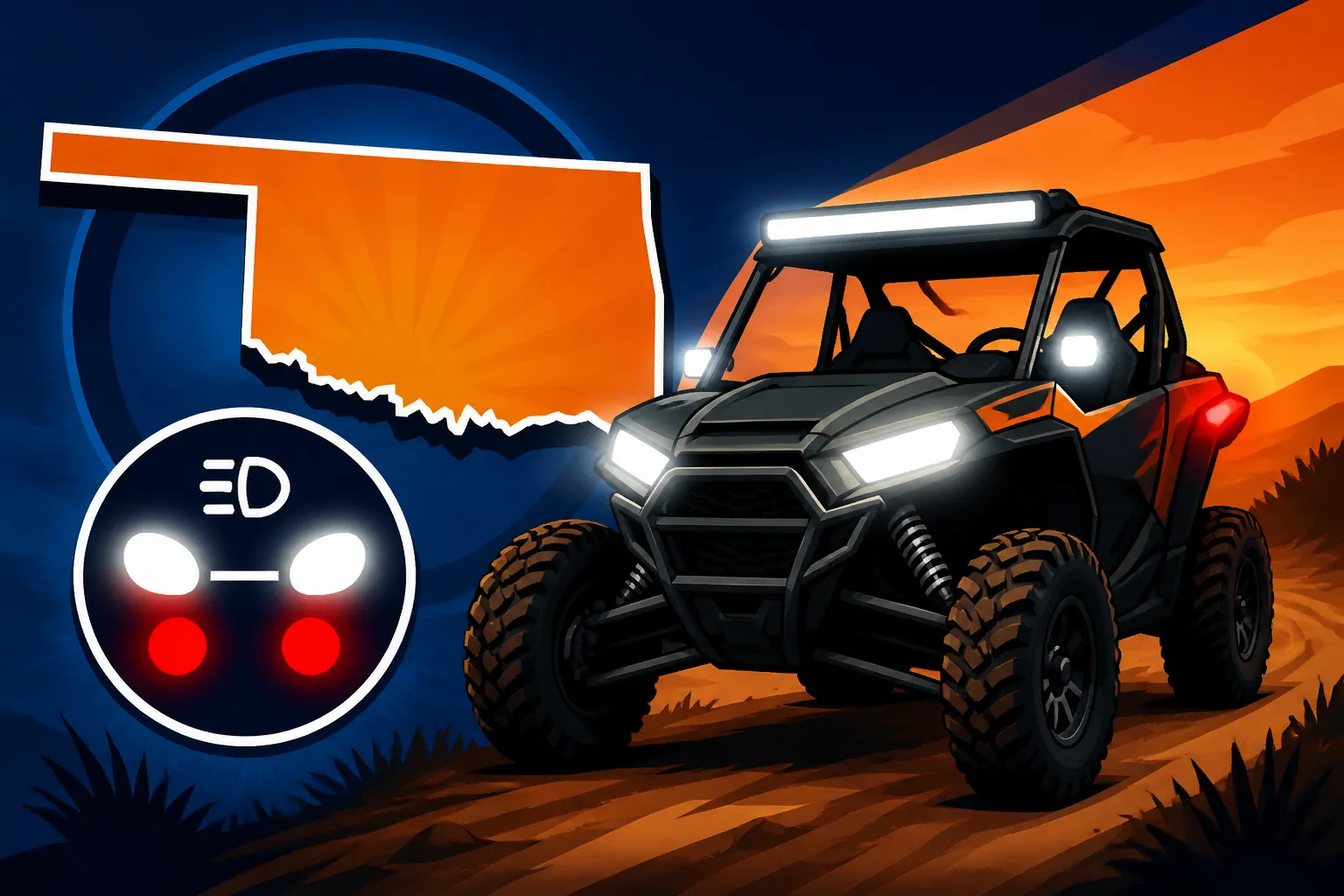
For your UTV to be considered street-legal, you absolutely must have working headlights and taillights that meet specific criteria. Headlights need to emit a white light and be mounted at a certain height from the ground, typically between 24 and 54 inches. They must be capable of illuminating persons and vehicles for a minimum of 200 feet ahead under normal atmospheric conditions. This isn't just a suggestion; it's a legal requirement to ensure you can see what's coming and react safely. Taillights, on the other hand, must emit a red light visible from at least 500 feet to the rear. This dual-light system is the most basic component of road safety, ensuring that you're visible from both the front and the back, particularly in low-light conditions or at night. Proper aiming of these lights is critical; you don't want to blind oncoming traffic, which can be just as dangerous as not having lights at all. These are part of the [Oklahoma Equipment Required for Street UTVs].
Turn Signals and Brake Lights: Communicating Your Intent
This is where many standard off-road machines fall short of street-legal requirements. When you're on a public road, you need to clearly signal your intentions to other drivers, just like a car. This means having properly functioning turn signals that emit an amber light to the front and rear. These signals must be visible from a certain distance and flash at a consistent rate. Similarly, you need brake lights that illuminate brightly red when you apply the brakes, signaling to following vehicles that you are slowing down or stopping. These brake lights typically integrate with your taillights but illuminate with greater intensity when the brake pedal is pressed. Many riders find that installing a universal turn signal kit, often from trusted brands like SuperATV, is the easiest way to add these crucial safety features. These kits are designed to integrate seamlessly into most UTV models, providing a factory-like appearance and essential functionality. Remember, a hand signal might work in some places, but on an Oklahoma road, dedicated turn signals are non-negotiable for a street-legal UTV. You'll definitely want to ensure your [Oklahoma Turn Signals and Mirrors] are in good working order.
Rear-Facing Red Reflectors and License Plate Illumination
Beyond active lighting, passive visibility is also key. Oklahoma law typically requires street-legal UTVs to have at least two red reflectors mounted on the rear of the machine. These reflectors are designed to bounce light back to other drivers, making your UTV more visible even if your taillights fail or are not as bright. They provide an extra layer of safety, especially when parked or in an emergency situation.
Additionally, if your UTV is equipped with a license plate (which it will be if it's street-legal), that plate must be illuminated by a white light during times when lights are required. This ensures that your license plate number is clearly legible from 50 feet to the rear at night. This small detail is often overlooked but is a crucial part of being fully compliant with road regulations. It helps law enforcement identify your vehicle and ensures accountability on public roads.
Additional Lighting Considerations and Safety Measures
While the core lighting requirements are laid out, there are other aspects of lighting and visibility that riders often consider. Some are performance-enhancing for off-road use, while others are smart safety additions for the road.
Auxiliary Lights and Light Bars: When and Where They're Allowed
Many off-road enthusiasts love their auxiliary lights and LED light bars. They provide incredible illumination for navigating challenging terrain in the dark, turning night into day on the trails. However, when it comes to public roads, these powerful lights fall under different rules. Most state laws, including Oklahoma's, stipulate that auxiliary driving lights and light bars are generally not permitted for use on public highways when other vehicles are present or if they create a blinding glare.
Some regulations even require these lights to be covered when operating on public roads. The intent behind these rules is simple: to prevent blinding oncoming drivers, which can lead to serious accidents. While a high-quality light bar from a brand like SuperATV is fantastic for deep woods or wide-open dunes, it's essential to understand that its use is restricted to off-road environments. If you have them installed, make sure you know how to switch them off and consider adding covers for street use.
Reflective Tape and Marking: Enhancing Nighttime Visibility
Even with all the required lights, anything you can do to boost your UTV's visibility on the road is a good idea. Adding reflective tape to various parts of your machine is a simple, inexpensive way to achieve this. Applying reflective tape to the sides, rear, and even certain front components can significantly increase your UTV's passive visibility, especially at night or in adverse weather conditions. When headlights from another vehicle hit this tape, it glows, making your machine stand out. While not a specific legal requirement for street-legal UTVs, it's a smart safety enhancement, particularly for machines that might be used on rural roads with limited street lighting. Consider adding some reflective strips to the roll cage or body panels, especially if you're frequently riding on public roads after dark. Every bit of visibility helps when you're [Making Yourself Visible on a Rural Road at Night].
The Importance of Maintenance and Proper Aiming
Having the right lights is only half the battle; ensuring they are always in perfect working order and correctly aimed is equally vital. Regular maintenance of your UTV's lighting system should be a standard part of your pre-ride checklist, especially before hitting public roads. Check all bulbs or LED arrays to ensure they are functional. Confirm that all turn signals flash correctly and that your brake lights illuminate promptly.
Proper aiming of your headlights is also critical. Headlights that are aimed too high can blind oncoming drivers, while those aimed too low might not provide adequate visibility for you. Consult your UTV's owner's manual or a qualified mechanic for guidance on proper headlight aiming. Dirty lenses can significantly reduce light output, so keep them clean. Just like you'd check your tires and fluid levels, a quick check of your lighting system before each road-bound journey is a simple step that goes a long way in ensuring safety and compliance.
Here's a quick comparison of typical lighting scenarios:
| Lighting Feature | Off-Road Use (Recommended) | Street-Legal UTV (Required) |
|---|---|---|
| Headlights | White light, good illumination for rider visibility | White light, 24-54" height, visible 200 ft ahead |
| Taillights | Red light, visible for rider identification | Red light, visible 500 ft to rear |
| Brake Lights | Often integrated with taillights, may not be distinct | Distinct red illumination when brakes applied |
| Turn Signals | Hand signals or not typically required | Amber, front & rear, clearly visible to signal intent |
| Reflectors (Rear) | Optional for added visibility | At least two red, rear-facing reflectors |
| License Plate Light | Not applicable | White light, illuminates plate for 50 ft visibility at night |
| Auxiliary/Light Bars | Highly recommended for enhanced off-road visibility | Must be covered or off on public roads when traffic is present |
Consequences of Non-Compliance and Staying Informed
Ignoring Oklahoma's lighting rules for street-legal UTVs isn't just a minor oversight; it can lead to immediate consequences and even endanger your safety and that of others.
Penalties for Inadequate Lighting on Oklahoma Roads
Operating a street-legal UTV on public roads in Oklahoma without the proper, functioning lighting equipment can result in citations from law enforcement. A state trooper, county deputy, or even a local police officer who pulls you over will certainly be checking for these essentials. The specific penalties can vary, but generally, tickets for equipment violations can include fines and court costs. It's not just about the money, though; repeated violations or particularly egregious safety issues could lead to more serious consequences, including your UTV being deemed unsafe for road use.
Beyond legal penalties, inadequate lighting dramatically increases your risk of an accident. If other drivers can't see your UTV, or can't tell you're turning or braking, the potential for a collision skyrockets. Law enforcement personnel are well aware of the specific requirements for street-legal UTVs, and they will conduct [Oklahoma Equipment Checks by Troopers] to ensure compliance. Avoid the hassle and danger by making sure your machine is properly outfitted.
Resources for Staying Up-to-Date on Oklahoma Regulations
Laws and regulations, especially concerning emerging vehicle classes like street-legal UTVs, can sometimes change. What was true last year might have a slight amendment this year. Therefore, it's always a good practice to stay informed about the latest statutes. The official source for Oklahoma vehicle laws is Service Oklahoma (formerly the Oklahoma Department of Motor Vehicles). Their website and local tag agencies are excellent resources for obtaining the most current information. Don't hesitate to visit your local tag agency with any questions; they are there to help clarify complex regulations and ensure you have all the correct paperwork and information. Asking [Questions Worth Asking a Tag Agency] can save you a lot of guesswork.
While aftermarket product manufacturers like SuperATV provide excellent solutions for meeting these requirements, their products are designed to fit the law, not necessarily define it. Always verify the current legal requirements directly from state resources. Staying proactive about understanding and adhering to Oklahoma's lighting rules is the best way to enjoy your street-legal UTV safely and without unnecessary worries.
Disclaimer
This article is for general informational purposes only and does not constitute professional advice. Laws, prices and regulations vary by location and change over time. Consult a qualified professional for guidance on your specific situation.