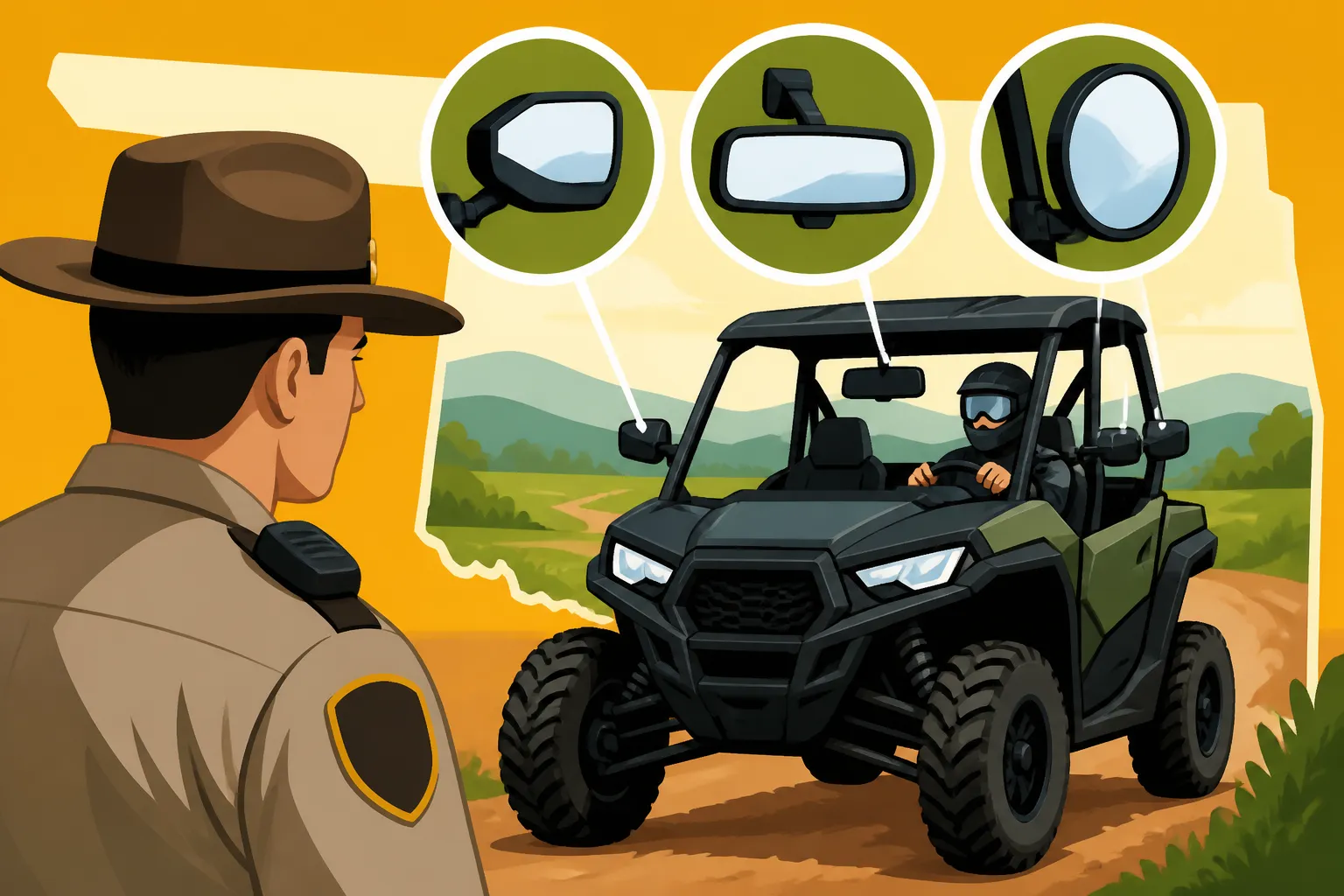
Mirrors a Trooper Will Look For
So, you've taken the plunge and made your UTV street-legal here in Oklahoma, or perhaps you're thinking about it. You've got the turn signals, the horn, the windshield – but what about mirrors? It's a small detail that can loom large when a state trooper pulls you over, and knowing exactly what they're looking for can save you a headache (and a ticket!). This guide is all about demystifying those mirror requirements, helping you understand not just the letter of the law, but also the practicalities of what makes your mirrors truly roadworthy in the eyes of Oklahoma law enforcement.
The Legal Lowdown on Mirrors for Street-Legal UTVs in Oklahoma
Navigating the rules for street-legal UTVs in Oklahoma can feel like sifting through a stack of legal documents written in a foreign language. But when it comes to something as fundamental as mirrors, the state has clear expectations for machines that share the pavement with cars and trucks. It's not just about having something reflective; it's about having the right something, in the right place, and in the right condition. Forget to dot your i's and cross your t's here, and you might find yourself explaining things to a law enforcement officer who's simply doing their job to keep our roads safe.
Why Mirrors Are More Than Just an Accessory
For many off-road enthusiasts, mirrors might seem like a bit of an afterthought, easily scuffed or broken on the trail. But on public roads, they transform from a convenience into a critical safety device and a non-negotiable legal requirement. Think about merging into traffic on a busy county road or checking for a passing vehicle before making a turn – without proper mirrors, you're essentially driving blind to what's happening behind and beside you. This isn't just about protecting yourself; it's about protecting every other driver, cyclist, and pedestrian on the road. Oklahoma's legal framework for street-legal UTVs, as outlined in statutes like the one detailing [Oklahoma's Street-Legal UTV Statute], isn't just arbitrary; it's built on a foundation of promoting road safety for everyone.
Beyond the obvious safety implications, mirrors are a foundational element of proving your UTV's roadworthiness. When a state trooper conducts an equipment check, they're not just glancing; they're ensuring your machine meets the minimum safety standards set by the state. A UTV without the proper mirrors isn't just missing an accessory; it's missing a core component required for legal operation on public thoroughfares. It's a clear signal to law enforcement that your machine might not be fully prepared for the demands of road use, potentially leading to further inspection or even a citation. The state takes these requirements seriously because the consequences of insufficient visibility can be severe.
What the Law Specifically Requires and What It Doesn't
Oklahoma law is quite specific regarding mirrors for street-legal UTVs. While you might see different setups on various machines, the core requirement is that your street-legal UTV must be equipped with at least one rearview mirror so located as to reflect to the driver a view of the highway for a distance of at least 200 feet to the rear of the vehicle. This means a functional mirror that provides a clear, unobstructed view of what's coming up behind you. Many riders find that having two side mirrors, in addition to or in place of a central rearview mirror, offers superior visibility and is generally preferred by law enforcement. While the law mandates "at least one," going above and beyond here significantly enhances safety and reduces blind spots.
Crucially, the law specifies a rearview mirror. This differentiates it from vanity mirrors or small, decorative mirrors that don't offer the necessary field of vision. The size and placement need to be practical, allowing the driver to quickly and easily scan traffic behind them without excessive head movement. For a street-legal UTV, this typically translates to either a large, centrally mounted rearview mirror, or a pair of robust side-view mirrors on the roll cage or doors that extend far enough to give a wide view. Keep in mind that while a single rearview mirror technically meets the minimum requirement, most seasoned street-legal UTV riders and manufacturers recommend, and often include, two side mirrors for optimal safety and compliance. When considering [Oklahoma Equipment Required for Street UTVs], mirrors are right there at the top of the list.
Understanding Trooper Expectations: Beyond the Letter of the Law
While understanding the written law is paramount, there's also the practical side of what a state trooper will actually assess during a roadside stop. They're not just checking a box; they're making a judgment call on whether your mirrors are truly functional for safe road use. This goes beyond mere presence and delves into placement, condition, and overall effectiveness. An officer's primary concern is always safety, and if your mirrors don't effectively contribute to that, you could face scrutiny.
Placement and Visibility: Making Sure Your Mirrors Work
When a trooper pulls you over, they're going to look at more than just the fact that you have mirrors. They'll be checking their placement and, more importantly, the visibility they offer. Are they securely mounted to the roll cage or body of your UTV, or are they flimsy and prone to shaking at speed? Mirrors that vibrate excessively or can easily be bumped out of adjustment render them largely useless, even if they're physically present. The trooper wants to see that you have a clear and unobstructed view of the road behind you, extending at least 200 feet, as the law states. This means no cargo blocking your view, no faded or cracked mirror surfaces, and no placement that requires you to contort yourself to see.
For side mirrors, ensure they are positioned wide enough to effectively minimize blind spots. Many UTVs have a wider stance than a car, and stock mirrors, or poorly placed aftermarket ones, might not give you the peripheral vision you need. A trooper might even ask you to demonstrate your visibility, so practice quickly checking your mirrors and confirming you can see clearly. You want to make it obvious that your mirrors are not just there for show, but are integral to your safe operation of the vehicle. This is part of ensuring your street-legal UTV meets [Oklahoma Turn Signals and Mirrors] requirements.
Durability and Condition: Roadworthiness Matters
The condition of your mirrors is another critical factor. A cracked mirror, one with a missing chunk, or one so scratched it distorts the reflection, is not going to pass muster. The reflective surface needs to be clear and intact, providing an accurate image of what's behind you. Remember, a trooper is assessing roadworthiness, and a mirror that looks like it's been through too many trail battles might suggest a lack of maintenance for road use. Beyond the glass itself, the housing and mounting hardware must be sturdy. A mirror dangling by a thread, or one that constantly flops inward, is a hazard and a clear sign of non-compliance.
Aftermarket options like those from SuperATV often focus on durability, with features like breakaway designs or robust metal housings that are built to withstand the elements and the occasional bump, which is a definite plus for a street-legal UTV that still sees trail time. While the law doesn't specify material, it implicitly demands functionality and reliability. If your mirrors are constantly needing adjustment, or if their housing is held together with zip ties, it's a good bet a trooper will take issue. They're looking for equipment that will reliably perform its function under typical driving conditions, ensuring that your view of the road is consistently clear and unobstructed.
Choosing and Installing the Right Mirrors for Your Street-Legal Machine
Getting your street-legal UTV ready for the road involves more than just bolting on some lights. When it comes to mirrors, it’s about making smart choices that blend compliance with durability and practicality. You want mirrors that will not only satisfy the letter of Oklahoma law but also stand up to the unique challenges of UTV life, whether you're cruising down a main street in Durant or hitting a backroad near Broken Bow. There are plenty of options out there, but knowing what to look for can make all the difference.
Types of Aftermarket Mirrors and What to Look For
When you're outfitting your UTV for street-legal status, you'll quickly realize the aftermarket is flush with options. The most common choices fall into a few categories:
- Side-View Mirrors: These are typically clamp-on mirrors designed to attach to your UTV's roll cage. They come in various sizes and styles, from basic rectangular designs to more aerodynamic, car-like profiles. When choosing side mirrors, look for robust mounting clamps that won't vibrate loose. Many riders appreciate features like breakaway designs, which allow the mirror to fold inward if it hits a tree branch or another obstacle, preventing damage. Brands like SuperATV offer a range of side mirrors with these features, often specifically designed for various UTV models, ensuring a good fit and solid mounting.
- Rearview Mirrors: While side mirrors are often preferred for their wide field of vision, a good central rearview mirror can complement them or serve as your primary mirror if you prefer. These typically mount to the top of your windshield frame or roll cage. Wide-angle rearview mirrors are particularly effective for UTVs, as they can help eliminate blind spots that side mirrors might miss, especially directly behind the machine. Some even incorporate convex glass for an even broader view.
- Combination Kits: Many manufacturers now offer kits that include both side mirrors and a rearview mirror, giving you a complete solution for enhanced visibility and legal compliance. This can be a convenient way to ensure all your mirror needs are met with matching, high-quality components.
When evaluating options, consider the following:
- Visibility: Does the mirror provide a clear, undistorted view? Is the glass high-quality?
- Durability: Is the housing robust? Will it withstand off-road vibrations and minor impacts?
- Adjustability: Can you easily adjust the mirror angle for optimal viewing, and will it stay in place once set?
- Mounting: Is the mounting system secure and stable? Does it fit your specific UTV model?
Remember, the goal is to easily see what's happening behind you for at least 200 feet, so choose mirrors that maximize your field of vision and are built to last. Many riders find [Oklahoma Street UTV Equipment Required] to be a great checklist for their builds.
DIY Installation Tips and Common Pitfalls
Installing mirrors on your UTV might seem straightforward, but a few tips can ensure a secure fit and optimal performance.
- Read the Instructions: It sounds simple, but every mirror kit is a little different. Take the time to read the manufacturer's installation guide thoroughly, especially for brands like SuperATV, which often provide detailed, model-specific instructions.
- Test Fit Before Tightening: Before you crank down any bolts, loosely fit the mirrors into place. Sit in the driver's seat and adjust them to your preferred viewing angles. This helps ensure they're positioned correctly to give you the widest possible field of vision. Pay close attention to how they interact with your doors or windshield, making sure they don't impede opening or closing.
- Secure Mounting is Key: Loose mirrors are useless mirrors. Use the provided hardware and torque specifications (if available) to ensure everything is tightened down properly. Apply threadlocker to screws or bolts if recommended by the manufacturer, especially in high-vibration areas. A common pitfall is overtightening clamps, which can damage your roll cage, or undertightening, which leads to mirrors constantly shifting.
- Consider Your Riding Style: If you frequently hit tight trails, breakaway mirrors are a wise investment. They prevent costly damage to both the mirror and your UTV if you clip a tree. If your UTV is primarily for road use, a more rigid, perhaps larger, mirror might be preferred for maximum visibility.
- Placement for Blind Spots: While the law requires a rearview mirror, having two side mirrors is often more effective at eliminating blind spots. Position them so you can see down the sides of your UTV and into the lanes next to you. A combination of a central rearview mirror and two well-placed side mirrors often provides the best all-around visibility. When you consider [Oklahoma Turn Signals and Mirrors], think about how all these components work together for ultimate safety.
By taking a little extra time during installation, you can ensure your mirrors are not only compliant with Oklahoma law but also provide the best possible visibility and durability for your street-legal UTV adventures.
Staying Compliant and Riding Safely on Oklahoma Roads
Making your UTV street-legal is a fantastic way to extend its utility and enjoyment, allowing you to seamlessly transition from trail to town. But the responsibility doesn't end after you've bolted on the last mirror. Staying compliant and, more importantly, riding safely on Oklahoma's roads requires ongoing vigilance. A well-equipped machine is only as safe as its operator, and regular checks of your mirrors are a fundamental part of that equation.
Pre-Ride Checks and Ongoing Maintenance
Just like you'd check your tire pressure or fuel level before a ride, a quick mirror inspection should become second nature for any street-legal UTV owner. Before you even pull out of the driveway, take a moment to:
- Check for Damage: Look for cracks, chips, or distortions in the mirror glass. Even a small crack can become a major distraction or obscure a critical piece of information when you're on the road. A broken mirror is not only unsafe but also an easy reason for a trooper to pull you over.
- Verify Security: Give your mirrors a gentle tug. Are they firmly mounted, or do they wobble? Loose mirrors will vibrate at speed, making it impossible to get a clear view, and they could even fall off. Tighten any loose bolts or clamps immediately.
- Confirm Adjustment: Sit in your driving position and ensure your mirrors are adjusted correctly for optimal rearward visibility. You should be able to see clearly behind you for at least 200 feet with minimal head movement. What might be perfect for one driver might be off for another, so if multiple people drive the UTV, each should adjust the mirrors to their preference.
- Clean the Surfaces: Dust, mud, and water spots are the enemy of clear vision. Quickly wipe down your mirrors with a clean cloth, especially after off-road excursions. A dirty mirror is effectively no mirror at all.
Regular maintenance extends beyond these quick checks. If you notice persistent issues, like a mirror that won't stay adjusted or a housing that's cracking, address it promptly. Proactive replacement of failing components is much safer and less costly than dealing with a citation or, worse, an accident due to impaired vision. Understanding [Oklahoma Rules for Riding a County Road] includes knowing your equipment is always up to par.
What to Do If You're Pulled Over for a Mirror Issue
Even with the best intentions and diligent maintenance, you might find yourself pulled over by a state trooper who has questions about your mirrors or other equipment. How you handle this interaction can make a big difference.
- Remain Calm and Cooperative: When you see flashing lights, safely pull over to the side of the road. Turn off your engine, if safe, and keep your hands visible on the steering wheel or dashboard.
- Be Respectful: Greet the officer respectfully. They are performing their duty, and a polite, cooperative attitude is always best.
- Listen Carefully: Pay close attention to what the officer says. Are they pointing out a specific issue with your mirrors (e.g., "Your right side mirror is missing") or a general concern about visibility?
- Explain, Don't Argue: If you believe your mirrors are compliant, calmly and clearly explain your understanding of the law and your efforts to meet it. For instance, "Officer, I have two side mirrors that provide me with a clear view of the road behind me, meeting the state's rearview mirror requirement." However, avoid arguing. The officer has the final say at that moment.
- Address the Issue if Possible: If the issue is minor and easily fixed (e.g., a dirty mirror that can be wiped clean, or a loose mirror that can be quickly tightened), ask the officer if you can remedy it on the spot. This shows good faith and a commitment to safety.
- Accept the Outcome: Whether you receive a warning or a citation, accept it gracefully. You can always address the issue and, if you believe the citation was unwarranted, explore options for contesting it later. Knowing the [Oklahoma Fine Cap for ATV Violations] can give you an idea of potential costs.
The best defense against a mirror-related stop is to ensure your UTV's mirrors are always in perfect working order, properly adjusted, and fully compliant with Oklahoma law. Regular checks and a proactive approach to maintenance will keep you riding safely and legally, making your street-legal UTV a joy to operate on any paved surface in the Sooner State.
| Mirror Type | Oklahoma Legal Requirement | Benefits | Drawbacks | Common Use Case |
|---|---|---|---|---|
| Central Rearview | Minimum (1 required) | Wide, unobstructed view directly behind | Can be blocked by cargo or passengers | Basic compliance, complements side mirrors |
| Side-View (Pair) | Often preferred, not minimum | Excellent peripheral vision, reduces blind spots | Can be damaged on tight trails, may vibrate | Optimal visibility for street-legal UTVs |
| Wide-Angle/Convex | Enhances above mirrors | Broader field of view | Can distort distances slightly | Improving visibility, reducing specific blind spots |
| Breakaway Side | No specific requirement | Protects mirror/UTV from damage | Often a higher cost | Riders who frequently transition between road/trail |
Disclaimer
This article is for general informational purposes only and does not constitute professional advice. Laws, prices and regulations vary by location and change over time. Consult a qualified professional for guidance on your specific situation.