When a Loud Exhaust Draws a Noise Complaint
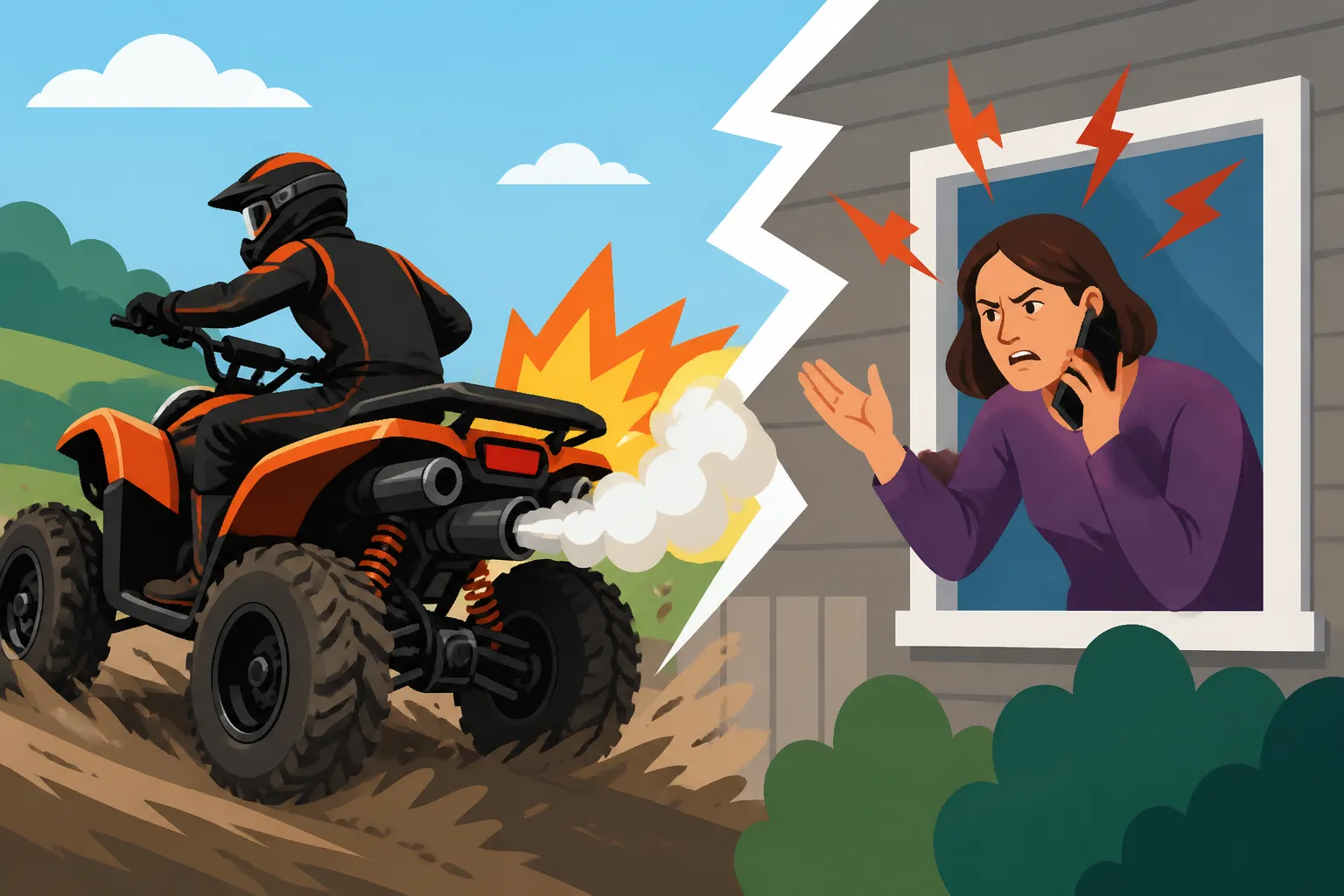
It’s a scenario many of us have faced or worried about: you're out enjoying your ATV or UTV, the engine purring (or roaring, depending on your setup), and suddenly, there's a knock at the door, or worse, an official notice. A neighbor has lodged a noise complaint. It’s a real buzzkill, especially when you feel like you’re just minding your own business. This guide dives deep into understanding noise complaints, what they mean for Oklahoma ATV and UTV riders, and how you can navigate these often-tricky situations to keep the peace and enjoy your ride.
Understanding Noise Complaints and ATVs in Oklahoma
Riding an ATV or UTV is a fantastic way to enjoy Oklahoma's diverse landscapes, whether you're working on the farm, hitting the trails, or just cruising around your property. But let's be honest, these machines aren't always whisper-quiet. The rumble of an engine, especially with an aftermarket exhaust, can travel further than you think, and what's music to your ears might be a grating disturbance to someone else. This is where noise complaints come into play, and they're less about specific state laws for off-road vehicles and more about community harmony and local ordinances.
The Source of the Friction: Why Machines Are "Loud"
For many riders, a loud exhaust is part of the experience. It can be a performance upgrade, a personal preference, or simply the stock sound of a powerful engine at work. Aftermarket exhausts, in particular, are often designed to enhance sound as much as performance, leading to a much more aggressive tone. While this might be exhilarating when you're tearing up the dunes at Little Sahara, it can quickly become problematic when you're idling down a rural road or starting your machine early in the morning near a residential area. The design of these machines, with exposed engines and often minimal sound dampening compared to cars, inherently makes them more prone to generating noise that carries.
It's not just the exhaust, either. Engine noise, tire whine on pavement, and even the sounds of your riding style can contribute to the overall noise footprint. Imagine a powerful side-by-side, maybe a model you've customized with some awesome SuperATV accessories, pulling out of your garage at 6 AM on a Saturday. That deep growl might be exciting for you, but it could easily wake up every neighbor on the block. Understanding what exactly makes your machine loud and how that sound propagates is the first step toward being a more considerate rider and avoiding those dreaded complaints.
Who Hears the Complaint and What Happens Next
When a neighbor files a noise complaint, it typically goes to local law enforcement—either the city police department if you're within city limits, or the county sheriff's office if you're in an unincorporated area. Sometimes, especially in more rural settings, it might even be a game warden if you're on public lands where they have jurisdiction, though this is less common for general noise outside of specific regulations. Code enforcement offices in some municipalities might also handle these, particularly if it's an ongoing nuisance.
What happens next often depends on the specifics of the complaint and local regulations. In many cases, the first response from law enforcement is a warning. An officer might show up, explain that a complaint was filed, and ask you to keep the noise down or suggest you ride at different times. If the issue persists, however, or if the noise is particularly egregious, it can escalate to a citation or a fine. The officer might assess the situation based on a "reasonable person" standard—would an average person find the noise unreasonably disturbing? They might also check if you’re riding on land where you don't have permission, which compounds the issue. [What Happens in a Town With No ATV Ordinance] can shed more light on the ambiguity when specific rules are absent.
What Constitutes "Too Loud" and the Law
Determining what counts as "too loud" for an ATV or UTV in Oklahoma isn't always as simple as checking a state-mandated decibel limit. For most off-road machines, Oklahoma does not have specific statewide decibel limits for off-road use. This means the rules often fall to local ordinances or general public nuisance laws, which can vary wildly from one municipality or county to the next.
Deciphering Local Noise Ordinances
Many cities and towns in Oklahoma have general noise ordinances that prohibit excessive or unreasonable noise, especially during certain hours. These ordinances rarely single out ATVs or UTVs specifically but apply to any noise source that disrupts the peace. For example, an ordinance might state that "loud and unnecessary noise" is prohibited between 10 PM and 7 AM. If your machine, with its stock or aftermarket exhaust, creates noise that violates this general rule, you could be in violation.
It’s crucial to research the specific ordinances in your area, particularly if you live near city limits or plan to ride frequently around your property. Some rural counties might have fewer strict regulations, but growing communities, even outside city centers, are increasingly adopting noise control measures. This is especially true for [Oklahoma Municipal Ordinances That Open Streets] to ATVs, where they often come with explicit noise stipulations to mitigate community impact. You might also find that while you can ride your machine on a [Oklahoma Farm Use on County Roads], continuous loud noise could still attract a complaint.
Here’s a general idea of how noise levels compare:
| Sound Source | Typical Decibel Level (dBA) | Potential for Complaint |
|---|---|---|
| Whisper | 30 | Very Low |
| Normal Conversation | 60 | Low |
| Lawn Mower (at 100 ft) | 70 | Medium |
| Heavy Truck (at 50 ft) | 80 | High (especially at night) |
| Standard ATV/UTV (Stock) | 85-95 | Medium to High |
| ATV/UTV (Aftermarket Exhaust) | 95-110+ | Very High |
| Jackhammer (at 50 ft) | 100 | Extreme |
Note: These are approximations and actual decibel levels can vary widely based on specific machine, exhaust, RPMs, and distance.
The Difference for Street-Legal UTVs
If you've gone through the process of making your UTV street-legal in Oklahoma, the rules change significantly. [Oklahoma Street-Legal UTV Requirements] include specific equipment standards, and while noise isn't always explicitly regulated by decibel limits for street-legal UTVs, they are generally expected to comply with the same motor vehicle noise laws as cars and trucks. This usually means a functional muffler and exhaust system that isn't excessively loud or modified to amplify noise.
A street-legal UTV with an overly loud aftermarket exhaust might still draw attention from law enforcement, not just for a noise complaint, but for a violation of equipment standards. While [Oklahoma Decals on a Motorcycle Fork] or a front decal for off-road machines are straightforward, a street-legal UTV will get an annual plate, and with that comes the expectation of road-worthiness, which often includes reasonable noise levels. Troopers conducting [Oklahoma Equipment Checks by Troopers] might flag an exhaust system deemed too loud or clearly tampered with.
Preventing Noise Complaints and Being a Good Neighbor
Nobody wants to be that neighbor, the one whose off-road machine is constantly stirring up trouble. Being proactive about managing your ATV or UTV's noise output and practicing good neighbor etiquette can go a long way in preventing complaints and maintaining peace in your community.
Choosing Quieter Exhaust Options and Maintenance
One of the most impactful changes you can make to reduce noise is to evaluate your exhaust system. While many aftermarket exhausts promise performance gains and a more aggressive sound, there are also options designed specifically for noise reduction. Companies like SuperATV offer a range of exhaust accessories and full systems. You might consider an aftermarket exhaust designed to be "trail friendly" or "quiet," which can significantly reduce decibel output without sacrificing too much performance.
If you already have an aftermarket exhaust, check its condition. Muffler packing can degrade over time, leading to increased noise. Replacing worn-out packing can help restore quieter operation. Even with a stock exhaust, ensuring all components are tight and free from leaks can prevent rattles and unwanted noise. Regular maintenance, like checking for exhaust manifold leaks or loose connections, can also prevent your machine from becoming unnecessarily loud. It's a bit like caring for a pet—a well-maintained machine is generally a happier, and quieter, machine.
Smart Riding Habits and Communication
Beyond modifying your machine, your riding habits play a huge role in noise control. Think about the time of day you ride, especially near residential areas. Early mornings or late evenings are often the most sensitive times for neighbors, as people are sleeping or trying to relax. Sticking to daylight hours, particularly mid-day, can reduce the impact of your machine's noise.
Consider where you ride. If you have a large property, try to do your louder activities further away from your neighbors' homes. If you must ride closer to others, keep your speed down and avoid aggressive throttle use that revs the engine excessively. For instance, when you're crossing a [Oklahoma Highway Crossings in Daylight], you might need a burst of power, but while cruising a section line, maintaining a steady, lower RPM will be less disruptive.
The best defense against a noise complaint is often a good offense: communicate with your neighbors. If you know you'll be doing some riding, especially a longer session or at a potentially sensitive time, a quick chat or text message can make a huge difference. "Hey, just wanted to let you know I'll be out on the quad for a couple of hours this afternoon, doing some work around the property," can turn a potential complaint into understanding. Most people are reasonable when they feel informed and respected.
What Happens if You Get a Noise Complaint or Citation
Even with the best intentions and quietest exhaust, a noise complaint can happen. Understanding the potential consequences and how to address them is crucial. Nobody wants to deal with legal troubles when all they wanted was a relaxing ride on their SuperATV equipped machine.
Warnings, Fines, and Escalation
As mentioned, the first encounter with law enforcement regarding a noise complaint often results in a warning. This is a chance for you to correct the behavior or address the issue with your machine. Take these warnings seriously. Ignoring them is a surefire way to escalate the situation.
If a second complaint comes in, or if the initial noise was particularly egregious, you might receive a citation. This typically carries a fine, the amount of which will depend on local ordinances. [Oklahoma Ticket Costs for Road Riding] can give you an idea of what similar violations might entail, even if your citation is specifically for a noise ordinance off-road. These fines can add up, and repeat offenses can lead to higher penalties. In very extreme cases, or if the noise is combined with other violations (like trespassing or reckless operation), your machine could even be impounded, though this is rare for a standalone noise complaint.
Resolving the Issue and Being Accountable
If you receive a complaint or a citation, the best approach is accountability and a willingness to resolve the issue. First, understand the specifics of the complaint: When did it happen? Where? What was the nature of the noise? This information will help you identify the root cause.
Next, take steps to mitigate the noise. This might involve:
- Adjusting your riding schedule: Limiting riding to less sensitive times of the day.
- Changing your riding location: Riding further from homes or in designated riding areas.
- Modifying your machine: Installing a quieter exhaust, ensuring your existing muffler is in good repair, or even exploring exhaust silencers.
- Speaking with your neighbors: Offer a sincere apology if you've caused a disturbance and explain the steps you're taking. A face-to-face conversation, even if awkward at first, can often mend fences and prevent future issues. Sometimes, people just want to feel heard.
Remember, the goal is to enjoy your machine responsibly while coexisting peacefully with your community. While state laws like [Oklahoma Rules for Riding a County Road] or [Oklahoma Rules for Riding a City Street] might focus on location, local ordinances often zero in on the impact of your activity, including noise. Being a responsible rider means being aware of both.
Disclaimer
This article is for general informational purposes only and does not constitute professional advice. Laws, prices and regulations vary by location and change over time. Consult a qualified professional for guidance on your specific situation.