Does a Street-Legal UTV Need a Horn?
The dream of taking your UTV from the dusty trails directly onto Main Street can feel incredibly appealing, but the transition often comes with a tangled web of rules and required modifications. Many Oklahoma riders find themselves scratching their heads over exactly what equipment their side-by-side needs to be truly street-legal. This guide will cut through the confusion, clearly answering whether a street-legal UTV needs a horn in Oklahoma, and walk you through all the other critical components to confidently navigate public roads.
The Absolute Necessity of a Horn for Street-Legal UTVs in Oklahoma
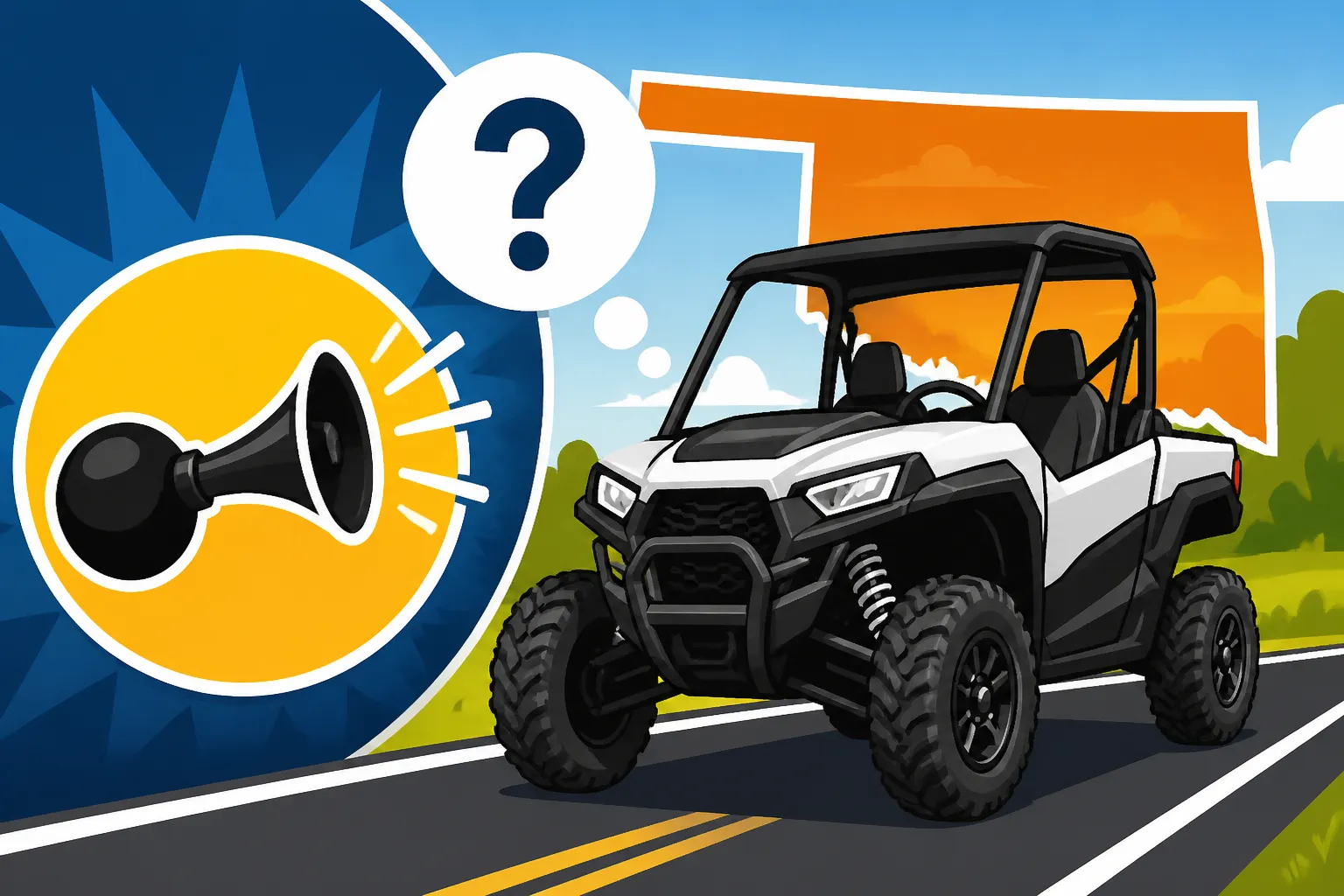
It's a question that comes up frequently: "Do I really need a horn for my UTV if I want to drive it on the street?" The short answer, for Oklahoma at least, is a resounding yes. This isn't just a minor detail; it's a fundamental safety requirement that the state takes seriously. Without a proper horn, your UTV isn't just incomplete; it's legally unqualified for public road use.
Why a Horn Isn't Just a Suggestion, It's the Law
When Oklahoma passed legislation to create a specific class for street-legal UTVs, they didn't just open up the roads; they also set clear safety standards. A horn is right at the top of that list because, fundamentally, it's about communication and hazard avoidance. Imagine you're driving your side-by-side down a busy street in Norman, and a car unexpectedly starts drifting into your lane. Or perhaps a pedestrian steps out from behind a parked vehicle without looking. In these split-second scenarios, your horn is your primary tool to alert others and prevent an accident. It's not a luxury; it’s a necessary safety device, mandated by law for any vehicle operating on Oklahoma's public roadways. The legislation creating the [Oklahoma Street-Legal UTV Class Explained] explicitly includes this requirement to ensure these machines can integrate safely with other traffic.
Beyond just the official statutes, consider the practical implications. Roadways are dynamic environments, full of distractions and unexpected movements. A quick, sharp blast of a horn can be the difference between a close call and a serious collision. It allows you to signal your presence, warn distracted drivers, or alert someone who might not see your smaller vehicle in their blind spot. This legal mandate isn't about bureaucracy; it's about giving you and other road users a basic, universally understood way to communicate urgent information, making every trip a little safer.
What Kind of Horn Does Oklahoma Require?
When the law says "horn," it means a specific type of device, not just any noise maker you can rig up. The horn on your street-legal UTV must be capable of emitting a sound that is audible from a certain distance, typically around 200 feet, and it must be clear and distinct, not just a weak buzz or a novelty sound. While the law doesn't necessarily specify an "air horn" or an "electric horn," it does imply a device robust enough for real-world use. You wouldn't want a horn that sounds like a toy car when you're trying to get the attention of a large truck.
Many UTVs don't come from the factory with a horn that meets road-legal standards. If yours doesn't, you'll need to install an aftermarket solution. Options abound, from compact electric horns that are easy to wire in, to louder air horns for those who want to ensure they're heard over engine noise or heavy traffic. Reputable accessory providers like SuperATV offer a range of universal horn kits designed specifically for UTVs, making the upgrade straightforward. Just ensure whatever you choose produces a consistent, loud, and unmistakable sound. Your tag agency will be checking for this critical piece of equipment when you go to get your [Oklahoma Road Plates for a Street-Legal UTV].
Beyond the Beep: Other Essential Equipment for Oklahoma Street Legality
While the horn is non-negotiable, it's just one piece of the puzzle. Converting an off-road UTV to a street-legal machine in Oklahoma requires a comprehensive suite of modifications to meet the state's safety and visibility standards. Simply put, your UTV needs to be equipped in a way that allows it to operate safely alongside cars, trucks, and motorcycles, giving it the necessary functions to signal, see, and be seen.
Lighting Up the Road: Headlights, Taillights, and Turn Signals
Visibility is paramount on public roads, and your UTV's lighting system is critical. You'll need properly functioning headlights that emit a white light, visible from at least 500 feet, and they must include both a high and low beam setting. This ensures you can illuminate the road ahead in varying conditions, from bright daylight to pitch-black country roads.
Equally important are your taillights, which must project a red light visible from at least 500 feet to the rear. These need to be integrated with fully functional brake lights that illuminate brightly when you apply the brakes, clearly signaling to drivers behind you that you're slowing down or stopping. Many UTVs come with basic taillights, but often, the brake light functionality needs to be confirmed or upgraded. Furthermore, front and rear turn signals, emitting amber light, are a must. These allow you to clearly indicate your intentions to other drivers, whether you're changing lanes or making a turn. Many off-road UTVs lack these entirely, meaning you'll likely need to install an aftermarket turn signal kit. Manufacturers like SuperATV provide complete plug-and-play kits that make adding these essential signals much easier, simplifying the process of [Adding Turn Signals to a Street-Legal Side-by-Side]. Lastly, red reflectors must be present on the rear, and amber reflectors on the sides, to enhance passive visibility, especially at night. These collective lighting and reflection requirements are all part of the broader [Oklahoma Equipment Required for Street UTVs].
Seeing and Being Seen: Mirrors and Windshields
Just as vital as your lighting system are your mirrors and windshield. For safety on the road, you absolutely need adequate mirrors to monitor traffic around you. This means at least one rearview mirror, typically mounted centrally, providing a clear view of the road behind, and at least one exterior side mirror, often on the driver's side, to cover blind spots. Many riders opt for a second side mirror on the passenger side for maximum visibility, especially when navigating city streets or preparing for a lane change. When a trooper performs an [Oklahoma Equipment Checks by Troopers], they will definitely be looking for these. Companies like SuperATV offer a variety of mirror solutions, from robust break-away mirrors for trail use that double for street legality, to wide-view panoramic rearview mirrors.
A windshield is also a mandatory piece of equipment for street-legal UTVs in Oklahoma. This isn't just for comfort; it protects you and your passengers from road debris, insects, and other hazards that can be dangerous at road speeds. The windshield must be made of safety glass or a similar approved material that won't shatter dangerously upon impact. If your UTV has a windshield, it also generally needs to be equipped with a functional windshield wiper system to maintain visibility during rain or when encountering mud and dust from other vehicles. These provisions ensure that you have clear sightlines and are protected from elements that could compromise your ability to drive safely. These are foundational elements of [Oklahoma Turn Signals and Mirrors] requirements.
Safety First: Seatbelts and Tires
Beyond the visibility and signaling components, fundamental safety features like seatbelts and appropriate tires are also required. Every occupant in your street-legal UTV must have access to and utilize a properly functioning seatbelt. Most modern UTVs come equipped with seatbelts from the factory, but it's crucial to ensure they are in good condition, securely mounted, and not frayed or damaged. These aren't just for off-road thrills; they are lifesavers in a road collision, just as they are in a car.
Furthermore, your tires need to be appropriate for road use. While those aggressive off-road knobby tires are fantastic for mud and rocks, they might not be DOT (Department of Transportation) approved for paved surfaces. Road-legal tires offer better traction on asphalt, are designed to handle higher speeds without overheating, and contribute to more stable handling. When you're driving on public roads, having tires that are designed for that environment is essential for safety, handling, and braking performance. These small details contribute to your UTV meeting all facets of the [Oklahoma Equipment Required for Street UTVs].
Driver Requirements and Road Restrictions for Street-Legal UTVs
So, you've got your UTV outfitted with all the necessary gear, including that all-important horn. Now, who can actually drive it on the road, and where exactly can you take it? Oklahoma has specific guidelines for both the operator and the areas where these specially permitted machines can travel. Understanding these rules is crucial to enjoying your street-legal UTV without running afoul of the law.
Who Can Drive a Street-Legal UTV in Oklahoma?
Operating a street-legal UTV on public roads isn't a free-for-all; there are specific age and licensing requirements to ensure drivers have the necessary experience and knowledge. First and foremost, the driver must be at least 16 years old. This aligns with the minimum age for obtaining a standard driver's license in Oklahoma, underscoring that driving a UTV on the street carries the same responsibilities as operating any other motor vehicle. The law is quite clear: [Street UTV Drivers Must Be at Least Sixteen].
In terms of licensing, a valid Oklahoma driver's license is absolutely required. You can't simply have a learner's permit or an off-road certification; it must be a full, unrestricted driver's license. However, here's a common point of confusion that Oklahoma has clarified: you do not need a motorcycle endorsement (often referred to as an "M" endorsement) on your driver's license to operate a street-legal UTV. This is a significant distinction from what some might assume, as UTVs share some characteristics with motorcycles. The state explicitly states that [Oklahoma Skips the Motorcycle Endorsement] for this vehicle class. Finally, before you even think about hitting the pavement, your street-legal UTV must be covered by liability insurance. This is mandatory, just like for any car on the road, to protect against damages or injuries you might cause in an accident. You will be asked for proof of [Oklahoma Insurance at Street Registration] when you apply for your road plates.
Where Can You (and Can't You) Ride Your Street-Legal UTV?
Even with a street-legal designation, UTVs have limitations on where they can be driven. They are generally permitted on most county roads and city streets. However, this comes with a very important caveat: local municipalities and counties retain the right to pass ordinances that may restrict or even prohibit UTV use on their specific roads. This means that while the state allows it, your local city council or county commissioners might have different rules. It's always best practice to check with the specific city or county where you plan to ride to ensure you're in compliance. This research can save you a headache (and a ticket) down the road by [Finding Out If Your City Passed an ATV Ordinance].
What's crystal clear, though, are the places where street-legal UTVs are absolutely forbidden. They are explicitly prohibited from operating on interstate highways. So, don't plan on taking your side-by-side on I-35 or I-40. Similarly, they are also banned from U.S. highways. This means routes like US-69 or US-75 are off-limits, even if they pass through rural areas. These restrictions are in place primarily due to the speed differentials and the design of UTVs, which aren't built for sustained high-speed travel alongside faster-moving traffic. The state has been very clear that [Oklahoma Street UTVs Stay Off Interstates] and [Oklahoma Street UTVs Stay Off US Highways] to ensure safety for all road users. Always observe posted speed limits, just as you would in any other vehicle, and remember that your street-legal UTV is still an off-road machine at heart, even if it has gained some road privileges.
Annual Renewals and What to Expect
Getting your UTV street-legal for the first time is a significant step, but the process doesn't end there. Unlike the unique, one-time off-road ATV registration in Oklahoma, street-legal UTVs are treated much more like conventional vehicles when it comes to ongoing compliance. This means you'll have annual obligations to keep your machine legal on the asphalt.
Plates, Decals, and Yearly Hassles (or Lack Thereof)
Once your UTV meets all the equipment requirements and you've navigated the initial titling process, you'll be issued specific road plates and decals. These are not the same as the standard off-road ATV decal that you pay for once and never renew. Instead, street-legal UTV plates and decals are issued annually, just like those for a car or truck. This means that every single year, you'll need to renew your registration at an Oklahoma tag agency to keep your UTV legally on the road. The process involves paying the necessary fees, ensuring your insurance is current, and verifying that your vehicle still meets all the required safety standards. It's a key distinction that [Street UTV Decals Renew Every Single Year], so mark your calendar!
The costs associated with this annual renewal will include the registration fees set by the state. While not exorbitant, they are a recurring expense that needs to be factored into your UTV ownership budget. You'll also need to budget for the ongoing cost of your mandatory liability insurance. When you visit the tag agency, be prepared to present your driver's license, proof of insurance, and possibly your title or previous registration documents. The staff at your local [Oklahoma Tag Agencies Started in July 2021] will be able to guide you through the precise steps and current fee structures. Keeping track of these annual renewals is crucial to avoid late penalties and ensure your continuous legal access to public roads. Remember to factor in these recurring expenses like [Oklahoma Street UTV Plate Costs] and the overall [Oklahoma Street UTV Annual Renewal] into your financial planning.
Staying Compliant: Regular Checks and Maintenance
Maintaining street legality goes beyond just paying your annual fees. It also requires you to consistently ensure that all the mandated equipment on your UTV remains in good working order. That horn we discussed? It needs to work every time you press the button. Your headlights, taillights, turn signals, brake lights, mirrors, and windshield wipers must all be functional and clear. A burned-out bulb or a broken mirror isn't just an inconvenience; it can render your UTV non-compliant and could lead to a citation if you're stopped by law enforcement.
It's a good habit to perform a quick pre-ride check before heading out onto the pavement. Test your lights, honk the horn, and check your mirrors. Think of it like a pre-flight checklist for your UTV. Law enforcement, including county sheriffs, city police, and Oklahoma Highway Patrol troopers, are authorized to enforce these regulations. If they pull you over, they will conduct an [Oklahoma Equipment Checks by Troopers] to ensure everything is up to code. Non-compliance can result in fines and, in some cases, even more serious penalties. Regular maintenance isn't just about avoiding tickets; it's about ensuring your safety and the safety of everyone else on the road. Staying on top of routine repairs and replacements means you can ride confidently, knowing your machine meets all the requirements outlined in [Oklahoma's Street-Legal UTV Statute].
| Requirement | Description | Example Accessory |
|---|---|---|
| Horn | Audible from 200 ft. | SuperATV UTV Horn Kit |
| Headlights | White light, high/low beam, visible 500 ft. front. | Stock or Aftermarket LED Headlights |
| Taillights/Brakes | Red light, visible 500 ft. rear, working brake lights. | Stock or Aftermarket LED Taillights |
| Turn Signals | Amber light, front/rear, functional. | SuperATV Universal Turn Signal Kit |
| Mirrors | At least 1 rearview & 1 exterior side mirror. | SuperATV Side Mirrors, Rearview Mirror |
| Windshield | Safety glass or approved material. | Polycarbonate or Glass Windshield |
| Wipers | Required if windshield is present. | Manual or Electric Wiper System |
| Seatbelts | For all occupants, securely mounted, functional. | Stock or Aftermarket 4/5-Point Harnesses |
| Tires | DOT-approved for road use. | Radial ATV/UTV Tires (Street-rated) |
| Reflectors | Red on rear, amber on sides. | Stick-on or Integrated Reflectors |
| License Plate Light | Illuminates rear license plate. | Small LED Plate Light |
Disclaimer
This article is for general informational purposes only and does not constitute professional advice. Laws, prices and regulations vary by location and change over time. Consult a qualified professional for guidance on your specific situation.