Which Federal Safety Standard a Helmet Must Meet
One of the most common anxieties for ATV and UTV riders in Oklahoma is making sure they’re following the rules, especially when it comes to something as vital as helmet safety. It's frustrating to know there's a law about helmets but feel utterly confused about what kind of helmet you actually need to buy. This guide is here to clear up that confusion, explaining exactly which federal safety standard your off-road helmet must meet in the Sooner State.
Understanding Oklahoma's Helmet Law for ATV and UTV Riders
Navigating the rules and regulations for off-road vehicles in Oklahoma can feel like trying to find your way through a thicket without a map. When it comes to helmets, there's a specific requirement that often gets overlooked or misunderstood, leading to potential citations or, more importantly, inadequate protection. The state isn't just saying "wear a helmet"; it's specifying what kind of helmet.
Who Needs to Wear a Helmet in Oklahoma?
Let's cut right to the chase: Oklahoma law is clear on who needs to wear a helmet when operating or riding as a passenger on an all-terrain vehicle (ATV) or utility terrain vehicle (UTV). The rule applies to anyone under the age of eighteen. This isn't just a suggestion; it's a legal requirement designed to protect our younger riders from serious injury. Whether you're tearing up the dunes at Little Sahara, cruising through timberland, or simply crossing a county road, if you're under 18, that helmet needs to be on and securely fastened.
This applies across all scenarios where you might be riding. Public lands like state parks or wildlife management areas will certainly enforce this. Even on private property, while landowners might set their own rules, the state law still applies to the rider if they're under 18. It’s a blanket rule for youth safety, acknowledging the inherent risks involved with off-road recreation. Families often ride together, and ensuring every child, teenager, or young adult under 18 is properly geared up is the first step in responsible riding. You'll find more details on this specific age requirement in resources like [Oklahoma ATV Age Requirements].
What the Law Says About Helmet Standards
Now, for the crux of the matter: what "kind" of helmet are we talking about? Oklahoma's law doesn't leave it vague. It explicitly states that a helmet must conform to "minimum federal safety standards." This is where many riders get lost. They might grab any old helmet, assuming it's good enough, but the law requires something very specific. This "minimum federal safety standard" refers directly to the Department of Transportation (DOT) certification.
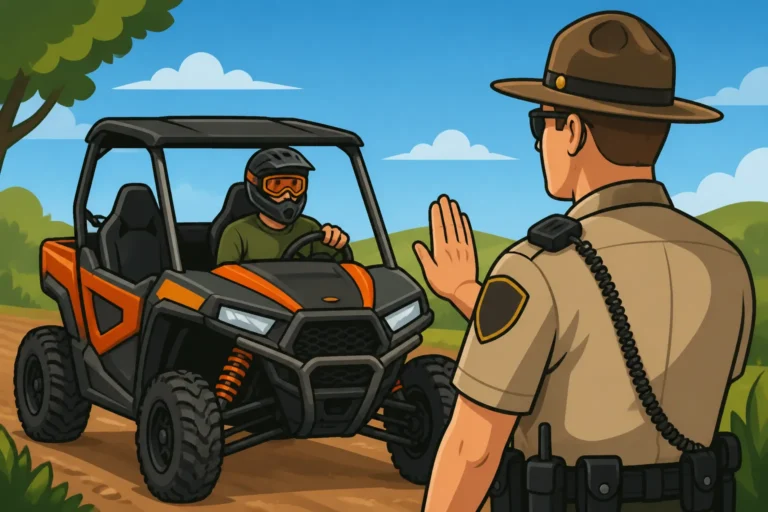
This means that a helmet must bear the DOT certification sticker or label, indicating that it has been manufactured and tested to meet the rigorous standards set by the federal government for head protection. It’s not about style, brand, or even price; it’s about meeting a baseline of safety performance. Without this specific certification, even a seemingly robust helmet might not be legally compliant if a law enforcement officer checks. Understanding this distinction is crucial, not just for avoiding a ticket, but for ensuring you or your young rider truly have adequate protection in case of an accident. A park ranger at a state OHV area, or a game warden on WMA land, will be looking for this certification during [Oklahoma Equipment Checks by Troopers].
Decoding the DOT Certification
The term "DOT certified" gets thrown around a lot in the riding community, but what does it really mean for your helmet and your safety? It's more than just a sticker; it represents a commitment to a certain level of protection that has been scientifically evaluated. Knowing what goes into this certification can help you make a more informed decision when purchasing a helmet for your off-road adventures.
What "DOT" Actually Means on Your Helmet
When you see "DOT" on a helmet, it signifies that the manufacturer attests that the helmet meets Federal Motor Vehicle Safety Standard (FMVSS) 218. This standard is specifically designed to minimize head injuries in crashes. It's a self-certification process, meaning the manufacturers are responsible for ensuring their products meet the standard. However, the DOT does conduct random testing to verify compliance, and penalties for non-compliance are significant. This system places a high degree of trust on the manufacturer to uphold safety.
The FMVSS 218 standard outlines specific performance requirements for helmets, primarily focusing on three key areas:
- Impact Attenuation: This tests how well the helmet can absorb the energy of an impact, protecting your head from the shock. Helmets are dropped onto various surfaces, and sensors inside measure the force transmitted to the "head."
- Penetration Resistance: This assesses the helmet's ability to resist sharp objects from piercing the shell and reaching the rider's head. A sharp, pointed striker is dropped onto the helmet.
- Retention System Strength: This evaluates the chin strap and buckle system to ensure the helmet stays on your head during a crash. The strap is subjected to significant force to ensure it doesn't break or stretch excessively.
To find the DOT certification, look for a sticker on the back of the helmet or a label sewn into the liner. This label should explicitly state "DOT" and the FMVSS 218 standard. If you don't see it, or if it looks suspicious, be wary. A genuine DOT-certified helmet is a fundamental piece of safety gear, protecting riders in the unforgiving environment of the trail or the dunes.
Why Other Certifications Matter (or Don't) for Compliance
Beyond DOT, you might encounter other certifications like Snell or ECE. These are also excellent safety standards, often considered more stringent than DOT, but their legal standing in Oklahoma is different for ATV/UTV use under 18.
- Snell: The Snell Memorial Foundation is a private, non-profit organization that develops its own voluntary helmet safety standards. Snell certification often involves more rigorous testing, including multiple impacts to the same spot and a wider range of impact energies, making it a favorite among many serious riders. If a helmet is Snell certified, it almost invariably exceeds DOT standards. However, Oklahoma law for ATV/UTV helmets specifically cites federal standards (DOT), not Snell. So, while a Snell-certified helmet offers superior protection, its Snell sticker alone doesn't fulfill the legal requirement; it must also carry the DOT certification.
- ECE (Economic Commission for Europe): ECE 22.05 (or the newer ECE 22.06) is an international standard recognized in over 50 countries, primarily in Europe. It's also known for its comprehensive testing protocols, including environmental conditioning (extreme temperatures, humidity) and more stringent penetration tests. Like Snell, ECE-certified helmets typically meet or exceed DOT standards. For legal compliance in Oklahoma, an ECE-certified helmet must also display the DOT certification. Many manufacturers produce helmets that are dual-certified (DOT and ECE, or DOT and Snell), offering riders the best of both worlds: legal compliance and enhanced protection. When you’re looking at buying gear, whether it’s a new helmet or accessories from a brand like SuperATV, always double-check these critical safety labels.
Choosing the Right Helmet Beyond the Law
While meeting the federal safety standard is the legal requirement, choosing the right helmet for your specific needs goes much further. It’s about comfort, visibility, and optimal protection for the type of riding you do in Oklahoma. Think of the legal standard as the floor, and your personal safety and riding experience as the ceiling you're aiming for.
Features to Look For in a Compliant ATV/UTV Helmet
Beyond the DOT sticker, a truly great off-road helmet will have features that enhance your riding experience and keep you safer.
- Fit and Comfort: This is paramount. A helmet that doesn't fit correctly won't protect you properly. It should be snug, but not painfully tight, with no pressure points. Your cheeks should feel a gentle, even pressure, and the helmet shouldn't shift when you move your head. Trying on multiple helmets from different brands is essential, as head shapes vary. A comfortable helmet is one you'll actually wear for the entire ride, even on long treks across a ranch or at a state park.
- Ventilation: Oklahoma summers are no joke. Good ventilation systems with multiple intake and exhaust vents are critical for keeping you cool and preventing fogging, especially if you're working hard on the trails or out in the open sun at Little Sahara. Look for helmets with adjustable vents so you can control airflow depending on the weather.
- Weight: A lighter helmet can reduce neck fatigue on long rides, making your experience more enjoyable. However, don't sacrifice safety for extreme lightness. Modern materials like composites and carbon fiber offer excellent strength-to-weight ratios.
- Field of Vision: This is particularly important for off-road riding, where you need to constantly scan for obstacles, other riders, and changes in terrain. Look for helmets with wide eye ports that accommodate your goggles comfortably, providing an unobstructed view. Some helmets are designed specifically for use with goggles, which is a common setup for ATV and UTV riders.
- Helmet Type:
- Full-Face Helmets: Offer the most comprehensive protection, covering the entire head, including the chin and jaw. Many dirt bike style helmets fall into this category, designed to be worn with goggles.
- Modular (Flip-Up) Helmets: Offer the versatility of an open-face helmet with the protection of a full-face, though they tend to be heavier. Some riders find them convenient for communication or quick breaks, but ensure the chin bar latches securely.
- Open-Face (3/4) Helmets: Cover the top, back, and sides of the head but leave the face exposed. While comfortable in hot weather, they offer less protection against facial impacts. They are generally not recommended for aggressive off-road riding.
When you're outfitting your machine with upgrades from SuperATV, remember that your personal protective gear is just as important as your vehicle's performance. Investing in a high-quality helmet that goes above and beyond the minimum legal requirements is always a smart choice for your safety and comfort on the trails.
Maintaining Your Helmet for Continued Safety
Even the best helmet won't protect you if it's not properly maintained. A helmet has a finite lifespan, and its protective capabilities can degrade over time or after an impact.
- Lifespan: Most helmet manufacturers and safety experts recommend replacing your helmet every 5-7 years, even if it hasn't been in a crash. The materials, glues, and resins that make up the helmet can degrade due to exposure to UV light, sweat, oils, and general wear and tear. Always check the manufacturer's recommendations for replacement.
- Replacement After Impact: This is non-negotiable. If your helmet has been involved in any kind of impact, even if it doesn't look damaged, replace it immediately. The inner foam liner, which is critical for absorbing energy, is designed to crush and dissipate force on impact. This crushing is often not visible from the outside, but once compromised, it cannot offer the same level of protection again. Think of it like a crumple zone in a car – it does its job once.
- Cleaning and Care:
- Shell: Clean the exterior with mild soap and water, avoiding harsh chemicals or solvents that can degrade the helmet's materials or finishes.
- Liner: Many modern helmets have removable, washable liners. Follow the manufacturer's instructions for cleaning these, usually a gentle hand wash and air dry. This keeps your helmet fresh and free of odors and bacteria.
- Visor/Goggles: Use specific lens cleaners or mild soap and water with a microfiber cloth to avoid scratches. Scratched visors or goggles can impair vision, which is a safety hazard.
- Storage: Store your helmet in a cool, dry place, away from direct sunlight and extreme temperatures. Avoid hanging it by the chin strap or placing heavy objects on it, which can deform the protective liner. Many riders use a helmet bag to protect it from dust and minor bumps when not in use. Proper care extends the life of your helmet and ensures it’s ready to provide maximum protection every time you hit the trails. For riders who customize their UTVs with gear from SuperATV, remember that the same dedication to quality and longevity should apply to your personal safety equipment.
Common Misconceptions and Actionable Advice
Let's clear up some lingering questions and provide straightforward guidance to ensure you're not just compliant, but genuinely safe. The nuances of Oklahoma's laws can be tricky, and it's easy to fall into common traps if you're not careful.
The Difference Between Motorcycle and ATV Helmet Laws
It's natural to think that helmet laws for motorcycles and ATVs are identical, but there are subtle yet important distinctions in Oklahoma, particularly regarding who is required to wear one.
For motorcycles, Oklahoma's helmet law generally requires all riders, regardless of age, to wear a helmet when operating on public roads. This is a broad requirement for all licensed motorcyclists.
For ATVs and UTVs, the law is more specific and targeted: it mandates helmets only for riders and passengers under the age of eighteen. This means if you're an adult (18 or older), you are legally not required to wear a helmet on an ATV or UTV in Oklahoma. However, this is where personal responsibility and good judgment come into play. Just because it's not legally mandated for adults doesn't mean it's safe to ride without one. The risks of head injury are significant for all ages.
Both types of vehicles, when a helmet is required, demand that the helmet meets the "minimum federal safety standards," which, as we've discussed, points to DOT certification. So, while the "who" differs, the "what" (the standard) remains the same. Understanding [Oklahoma Helmet Law for Riders Under 18] is paramount for families, and it's always a good idea for adult riders to set a strong example by wearing a helmet themselves, even when not legally required.
What to Do If You're Unsure About Your Helmet's Compliance
Feeling uncertain about your helmet's compliance can be unsettling. Here’s a clear action plan to ensure you’re both safe and legal:
- Check for the DOT Label: The first and easiest step is to physically inspect your helmet for the DOT certification sticker or a sewn-in label. It should clearly state "DOT FMVSS No. 218" or simply "DOT." If it's missing or unreadable, assume it's not compliant and consider replacing it.
- Purchase from Reputable Retailers: Always buy helmets from established dealerships or reputable online retailers. These sellers are far more likely to stock helmets that meet genuine safety standards. Be wary of deeply discounted helmets from unknown sources, as counterfeit helmets lacking proper certification are unfortunately common. Many retailers that carry quality ATV and UTV accessories, like those offering products from SuperATV, will also guide you toward compliant and safe helmet options.
- Prioritize Safety Over Bare Minimum: Even if you're an adult and not legally required to wear a helmet, or if you're buying for a child, think beyond just meeting the legal minimum. Opt for a helmet that offers excellent protection, fits well, and is comfortable for your specific riding conditions. A helmet that is DOT certified and also meets Snell or ECE standards offers an even higher level of protection.
- When in Doubt, Replace It: If you have any doubts about your helmet's history (e.g., if it's been dropped, is very old, or bought used without a clear history), or its certification, err on the side of caution and invest in a new, certified helmet. Your brain is worth far more than the cost of a new helmet.
Remember, the goal isn't just to avoid a fine; it's to protect yourself or your loved ones from severe injury. A well-chosen, properly fitting, and certified helmet is your most crucial piece of safety equipment in the world of ATV and UTV riding.
| Certification Standard | Primary Focus | Legal Requirement in Oklahoma (ATV/UTV under 18) | Key Characteristics |
|---|---|---|---|
| DOT (FMVSS 218) | Minimum head protection | REQUIRED | Federal standard for highway use; self-certified by manufacturer; ensures basic impact, penetration, and retention system performance. Look for "DOT FMVSS No. 218" label. |
| Snell | Enhanced head protection | Not required alone (must also have DOT) | Voluntary, private standard; often more rigorous testing including multiple impacts to same spot, higher impact energies; generally exceeds DOT. |
| ECE (ECE 22.05/06) | International standard | Not required alone (must also have DOT) | European standard, recognized internationally; includes environmental conditioning tests; often more stringent than DOT in certain areas. |
Disclaimer
This article is for general informational purposes only and does not constitute professional advice. Laws, prices and regulations vary by location and change over time. Consult a qualified professional for guidance on your specific situation.