Oklahoma Rules for Riding in Oklahoma City
Riding your ATV or UTV through the bustling streets of Oklahoma City might seem like a dream, or perhaps a practical shortcut, but for many riders, it quickly turns into a confusing and frustrating experience. It’s easy to assume that if you have a machine, you can take it wherever you need to go, but city ordinances are a completely different beast than county roads or private land. This guide will clarify exactly what the rules are for operating your off-road vehicle within Oklahoma City limits, helping you avoid tickets, fines, and impoundment.
Understanding Oklahoma City's Stance on Off-Road Vehicles
When you think about cruising down Western Avenue or taking a quick hop across town on your side-by-side, it’s natural to wonder if it's even allowed. The truth is, most major municipalities, including Oklahoma City, have very clear rules about what vehicles can and cannot operate on public roads. These rules are put in place for safety, traffic flow, and to minimize noise and environmental impact.
The Default Rule: No ATVs or UTVs on OKC Streets
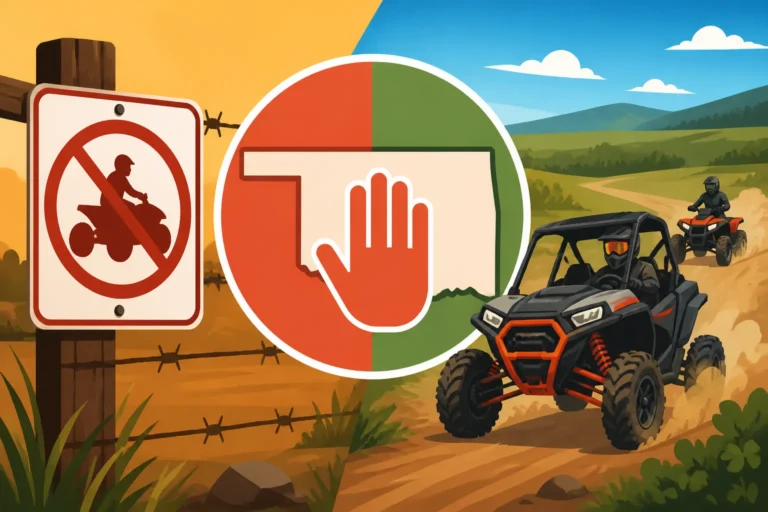
Let's cut right to the chase: as a general rule, ATVs (All-Terrain Vehicles) and UTVs (Utility Terrain Vehicles, often called side-by-sides) are not permitted on the streets, sidewalks, or other public rights-of-way within Oklahoma City. This isn't just a suggestion; it's typically codified in the city's municipal ordinances. These machines are designed for off-road use, and their characteristics—like speed, handling, lack of traditional safety features found in cars, and tire types—make them incompatible with regular street traffic.
This rule applies whether your machine is registered as an off-road vehicle with the state or not. Even if you've paid your [Oklahoma ATV Registration Cost] and have your decal, that registration is for off-road use and does not automatically grant you permission to ride on city streets. The city's concern is primarily with public safety and maintaining orderly traffic, which off-road vehicles often disrupt. It's a common misunderstanding that state registration equates to street legality, but municipal laws can (and often do) override or add further restrictions for roads within their jurisdiction.
Why Local Ordinances Often Prohibit Off-Road Use
Cities like Oklahoma City have specific reasons for keeping off-road vehicles off their streets. It's not just about being difficult; it's rooted in practical concerns. For one, ATVs and UTVs often lack the standardized safety equipment required for on-road vehicles, such as proper turn signals, DOT-approved tires, windshields, and seatbelts in the same way cars do. While some manufacturers or aftermarket companies like SuperATV offer kits to add these features, the base design isn't for street driving.
Secondly, these machines can be slower than typical traffic in many urban areas, leading to congestion and dangerous passing situations. Their tires, often knobby and designed for grip on dirt, mud, or sand, can also wear out quickly and perform poorly on paved surfaces, especially in wet conditions. Noise is another significant factor; many off-road exhausts are much louder than what's permissible for street-legal vehicles, leading to noise complaints from residents. Finally, there's the issue of enforcement and accountability. It's harder for law enforcement to track and manage vehicles not designed for street use, especially if they're being driven erratically or illegally.
State-Level Rules for Street-Legal UTVs and How They Apply (or Don't) in OKC
While Oklahoma City has its own set of rules, Oklahoma as a state does have provisions for making certain UTVs "street-legal." This can cause a lot of confusion, so it's vital to understand the distinction between state law and local ordinances.
The Oklahoma Street-Legal UTV Classification
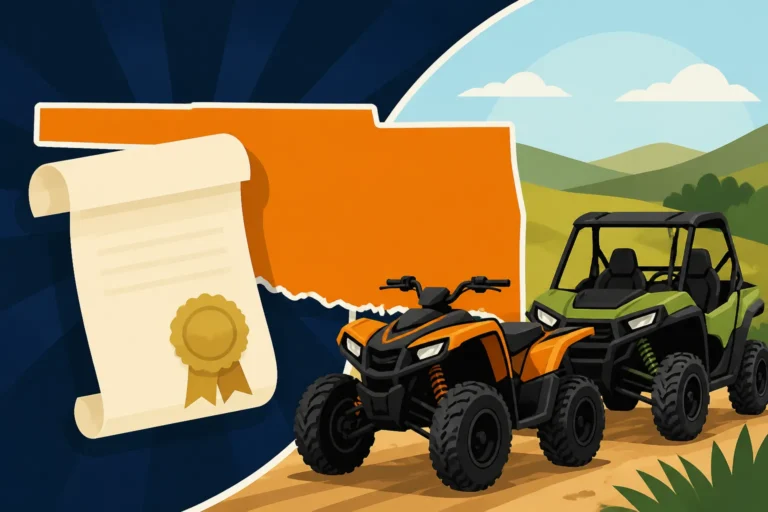
In 2021, Oklahoma passed legislation that created a specific category for street-legal UTVs, allowing them to be registered for on-road use under certain conditions. This was a game-changer for many riders who wanted to use their side-by-sides for more than just off-road adventures. The key here is "UTV." The law generally does not extend these provisions to traditional ATVs (quads), focusing instead on the larger, multi-passenger side-by-sides. If you're looking to understand the requirements, you'll want to read up on [Oklahoma Street-Legal UTV Class Explained]. This class allows for a [Oklahoma Road Plates for a Street-Legal UTV] to be issued, signaling that the machine meets state standards for road use.
This state classification is a big step, but it's not a blanket approval for every road everywhere. Just because your UTV qualifies for a road plate at the state level doesn't mean every city or county automatically welcomes it onto their streets. Local jurisdictions still retain the power to create more restrictive ordinances, and many choose to do so.
Equipment Requirements for a Road-Plated UTV
To even qualify for that coveted road plate, your UTV needs to meet a specific set of equipment requirements as outlined by Oklahoma state law. These are designed to bring the UTV closer to the safety and visibility standards of traditional on-road vehicles. Expect to need things like:
- Headlights and Taillights: Standard, functional lights visible from appropriate distances.
- Brake Lights: Clear and functional when the brakes are applied.
- Turn Signals: Both front and rear, indicating direction changes. Many riders turn to aftermarket kits from companies like SuperATV to install reliable turn signal kits that integrate seamlessly with their machine.
- Mirrors: Typically, at least one rearview mirror, and often side mirrors, to provide adequate visibility of traffic behind and to the sides.
- Horn: A functional horn to alert other drivers or pedestrians.
- Windshield: A non-shattering windshield.
- Seatbelts: For all occupants, designed and installed to factory standards.
- DOT-Approved Tires: Tires rated for highway use, not just off-road performance.
- License Plate Light: To illuminate your new road plate.
These are just some of the common requirements, and the full list can be found in the state statutes. You'll also need to consider [Oklahoma Equipment Required for Street UTVs] if you're serious about getting a road plate. Remember, just installing these components isn't enough; they must be fully functional and meet specific legal standards.
Where State-Approved UTVs Can and Cannot Go
Even with a road plate, there are still limitations on where your street-legal UTV can travel. State law generally permits these vehicles on roads where the posted speed limit is 35 mph or less. They are explicitly prohibited from interstates and U.S. highways. While this opens up many county and rural roads, it's crucial to understand that cities retain the right to impose stricter rules.
And here's where Oklahoma City's ordinances come back into play: even if your UTV meets all state requirements for a road plate, Oklahoma City's municipal code generally prohibits them on city streets. This means that while state law allows for street-legal UTVs, local ordinances can still restrict their use within city limits. You might be able to ride your street-legal UTV on a county road just outside OKC, but once you cross into the city boundary, those rules change. This is a crucial distinction that often catches riders off guard. You might be perfectly legal in rural Kingfisher County, but once you hit the Oklahoma City line, you're looking at a ticket.
When and Where You Might See an ATV or UTV in Oklahoma City
Given the strict general prohibition, you might wonder why you sometimes see ATVs or UTVs within Oklahoma City limits. There are specific, limited exceptions to the general ban.
Permitted Uses: Farm Work, Construction, and Emergencies
Not all use of off-road vehicles in the city is illegal. There are legitimate, specific contexts where these machines are permitted:
- Agricultural Purposes: If you own land within Oklahoma City that is actively used for farming or ranching, and your ATV or UTV is genuinely being used as an "implement of husbandry" for agricultural operations, there might be exceptions. This typically means using the machine for tasks like hauling feed, checking fences, or spraying crops on your own property or moving between tracts of land. However, driving it down a city street for personal errands would likely not qualify. [Oklahoma Farm Use on County Roads] covers these exemptions more broadly, but within city limits, this is usually very narrowly defined.
- Construction and Utility Work: Companies performing construction, maintenance, or utility work (like power line repair or surveying) often use ATVs and UTVs on job sites. These vehicles are permitted within the scope of their work, often on private property or within designated construction zones, and sometimes crossing public roads under strict safety protocols and flagger guidance.
- Emergency Services: Police, fire departments, and emergency medical services sometimes utilize ATVs or UTVs for specific situations, such as navigating difficult terrain in parks, responding to incidents off-road, or managing large crowds at events. These are official uses and are clearly exempt from general prohibitions.
- Private Property: Crucially, if you own private land within Oklahoma City, you are generally permitted to operate your ATV or UTV on your own private property. This includes backyards, large lots, or privately owned fields. The restriction applies to public streets and rights-of-way. Just be mindful of noise ordinances and potential nuisance complaints from neighbors.
Special Events and Parades
On rare occasions, cities may issue special permits for ATVs or UTVs to participate in parades, festivals, or other organized public events. This is not a regular occurrence and requires specific authorization from the city. These are usually highly controlled situations, often at very slow speeds, and with specific routes and safety measures in place. It's never safe to assume you can join in without explicit permission and proper planning with city officials. If you're organizing an event and want to include off-road vehicles, you'll need to work directly with the city's special events department to understand what permits and requirements apply.
Here’s a quick overview of where you generally can and cannot ride your ATV/UTV in Oklahoma City:
| Location Type | General Rule in Oklahoma City | Notes |
|---|---|---|
| City Streets | Prohibited | Even with state road plates for UTVs. |
| Public Sidewalks | Prohibited | |
| Private Property (your own) | Permitted | Subject to noise ordinances; not for street access. |
| Construction Sites | Permitted (Work Use Only) | Within authorized project boundaries. |
| Farms within City Limits | Permitted (Ag Use Only) | As an "implement of husbandry." |
| City Parks & Greenways | Prohibited | Unless specifically designated or by official permit. |
| Designated OHV Areas | N/A (Outside City) | See Oklahoma ATV Trails: Where to Ride for options outside OKC. |
| Special Events/Parades | Permitted (By Permit Only) | Requires explicit city authorization and specific conditions. |
Consequences of Violating Oklahoma City's ATV/UTV Rules
Ignoring the city's ordinances regarding off-road vehicles can lead to significant headaches and financial penalties. It's not just a slap on the wrist; law enforcement takes these violations seriously.
Fines, Impoundment, and Other Penalties
If you're caught riding your ATV or UTV illegally on Oklahoma City streets, you can expect a few immediate consequences. First, you'll likely receive a citation. The specific fine amount will depend on the municipal code, but it can quickly add up. Beyond the fine, one of the most common and costly penalties is the impoundment of your machine. When a vehicle is impounded, you're not only on the hook for the towing fees, but also daily storage fees that can escalate rapidly. Retrieving an impounded ATV or UTV can cost hundreds of dollars, sometimes more, on top of the initial ticket.
In some cases, especially if you're found operating the vehicle recklessly, under the influence, or if you're an underage driver, there could be additional charges or more severe legal ramifications. Remember that [Oklahoma's Fine Cap for ATV Violations] generally applies to state-level infractions, but local municipal fines can vary and be quite substantial. Law enforcement officers, including city police and county deputies, have the authority to enforce these rules. If you're pulled over, be prepared for [What a State Trooper Can Ask to See], even if you're on a city street.
Staying Informed About Local Regulations
The best defense against unintended violations is always knowledge. City ordinances can change, and interpretations can sometimes vary. While this guide provides a general overview, it's always a good idea to directly check Oklahoma City's municipal code or contact the city clerk's office or local law enforcement for the most current and precise information. You might also want to search for [Oklahoma Municipal Ordinances That Open Streets] to see how other cities handle similar situations and understand the legislative differences.
Before planning any ride on what you think might be an open road or area within city limits, verify the rules. Don't rely on assumptions or what you've seen others do, as they might be operating under an exception or simply getting away with it temporarily. Being proactive will save you time, money, and frustration in the long run, ensuring your riding experiences remain enjoyable and legal, perhaps just a short drive outside of the city limits to a designated riding area.
Disclaimer
This article is for general informational purposes only and does not constitute professional advice. Laws, prices and regulations vary by location and change over time. Consult a qualified professional for guidance on your specific situation.