What to Expect When a Deputy Pulls You Over
It's an experience no off-road rider looks forward to: seeing those flashing lights in your rearview mirror, especially when you're just trying to enjoy a ride on your ATV or UTV. The confusion, the immediate concern about whether you've done something wrong, and the uncertainty of what comes next can be genuinely unsettling. This guide is here to walk you through exactly what to expect if a deputy pulls you over in Oklahoma while you're on your machine, helping you understand your rights, responsibilities, and how to navigate the situation calmly and effectively.
Understanding Why You Might Be Pulled Over on an ATV or UTV in Oklahoma
Let's be real, most of us just want to hit the trails or get some work done on the farm without trouble. But the rules around ATVs and UTVs, especially on or near public roads, can feel like a minefield. Law enforcement isn't out to spoil your fun, but they are there to enforce laws designed for safety and order. Knowing the common reasons you might catch a deputy's attention can help you avoid a stop in the first place.
Riding in Restricted Areas or on Closed Roads
One of the biggest reasons riders get pulled over is simply being in a place where their machine isn't legally allowed. In Oklahoma, ATVs and UTVs generally aren't street-legal on state highways or interstates. Trying to take a shortcut on a busy road, even for a short distance, can quickly lead to an interaction with law enforcement. Many riders forget that what's okay on their own property isn't always okay on public land or roads. It's easy to make an honest mistake if you're not intimately familiar with every local rule.
However, the rules aren't completely black and white. While state law has restrictions, [Oklahoma County Commissioners and ATV Roads] have the authority to open certain county roads, and some cities pass [Oklahoma Cities With ATV Ordinances] allowing use on specific municipal streets. This creates a patchwork of rules that can be incredibly confusing. What's legal in one county or town might get you a ticket just down the road. If you're on a county road or city street, and you haven't confirmed it's open for ATV/UTV use, you're rolling the dice. Ignorance of the law isn't a valid defense, unfortunately.
Beyond designated roads, there are also rules about crossing highways. You can often cross a highway if it's posted for 35 mph or less, but there are specific conditions like crossing directly and only in daylight. [Oklahoma Crossing Rules at 35 mph] are precise, and deviations can easily result in a stop. Even using a section line or ditch can sometimes be seen as riding on public right-of-way, which might not be permitted. A deputy might pull you over to clarify your intentions or to inform you that you're in an area where your machine is not allowed.
Equipment Violations and Safety Concerns
Another common reason for a stop relates to the condition of your machine or the safety gear (or lack thereof) being used. If you've converted your UTV to be street-legal, it needs to meet specific requirements, including things like headlights, taillights, brake lights, turn signals, and mirrors. [Oklahoma Equipment Required for Street UTVs] are quite clear on this. If your machine is missing essential items, or if they're not functioning properly, a deputy will likely pull you over. For example, if your taillights are out or your turn signals aren't visible, you become a hazard on the road, drawing unwanted attention.
Even if you're not attempting to be street-legal, there are general safety expectations. For instance, if you're riding with a child under 18, they are required to wear a helmet. [Oklahoma Helmet Law for Riders Under 18] is a critical rule that deputies are keen to enforce, as it's directly tied to rider safety. Operating a machine that's visibly unsafe, like one with extremely worn tires, a dangerously loud exhaust, or no lights after dark (even if just crossing a field near a road), can also be a red flag. Deputies often prioritize safety, and if they perceive a risk, they will investigate.
Sometimes, it's not about what's missing, but what's modified. While aftermarket parts from companies like SuperATV can enhance your machine's performance and utility, some modifications might unintentionally draw attention or even violate regulations if not properly installed or understood. For instance, some exhaust systems can exceed local noise ordinances, leading to complaints and, consequently, a deputy stopping you to address the issue. Always ensure your modifications still comply with relevant local and state laws, especially if you anticipate being near public roads.
Operator Conduct and Impaired Operation
The way you operate your ATV or UTV is a major factor in whether you'll attract law enforcement attention. Reckless driving, excessive speed, or performing stunts on or near public roads are surefire ways to get pulled over. Deputies are trained to look for behaviors that indicate a lack of control or disregard for public safety. This isn't just about common sense; it's about adhering to traffic laws even when you're technically off-road but visible to the public or near populated areas. Swerving, creating excessive dust, or riding in a way that startles or endangers others can escalate quickly.
The most serious conduct violation that will certainly lead to a stop and severe consequences is operating your machine while impaired. Just like with cars and trucks, [Oklahoma DUI Law and Off-Road Machines] applies to ATVs and UTVs. A deputy observing erratic driving, slurred speech, or the smell of alcohol will not hesitate to pull you over and investigate. An ATV or UTV is considered a vehicle, and operating it under the influence carries the same serious penalties as driving a car while impaired, including potential jail time, hefty fines, and loss of driving privileges. It's a huge risk that simply isn't worth taking.
Beyond impairment, carrying too many passengers or allowing someone underage to operate a machine without proper supervision can also lead to a stop. Many ATVs are designed for a single rider, and putting an extra person on the rack, for example, is inherently unsafe and often illegal. Similarly, age restrictions apply to operating these machines, and deputies may stop a young rider if they appear to be operating alone or without proper oversight. Understanding and respecting these operational guidelines keeps you safe and helps you avoid unwanted attention from law enforcement.
What Happens During an ATV/UTV Traffic Stop
Being pulled over is rarely a pleasant experience, but knowing what to expect can help you remain calm and handle the situation appropriately. Remember, deputies are primarily focused on safety and compliance. Your cooperation and respectful demeanor can significantly influence the outcome.
Safely Pulling Over and Interacting with the Deputy
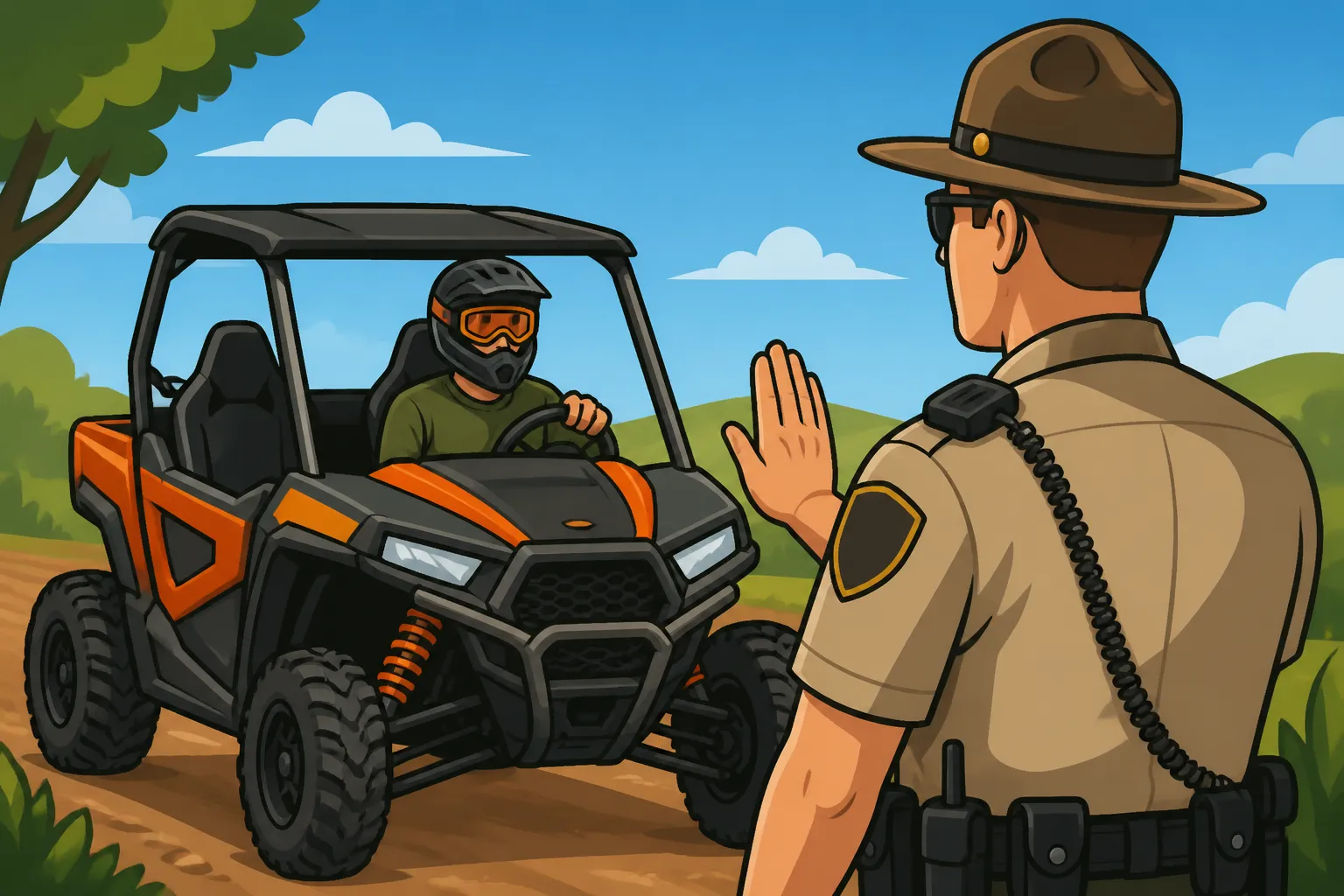
The moment you see those flashing lights, your first priority is to pull over safely. Find a safe spot off to the side of the road, or if you're on a trail, find an open area where you won't obstruct others. Signal your intent clearly, if your machine has signals. Turn off your engine immediately to show cooperation and to allow for clear communication. Keep your hands visible, preferably on the handlebars or steering wheel, to ensure the deputy feels safe approaching your machine. Reaching into pockets or under seats can be misinterpreted, so avoid sudden movements.
When the deputy approaches, remain in your seat unless instructed otherwise. Greet them politely and allow them to explain why they stopped you. Avoid arguing or becoming defensive, even if you believe you haven't done anything wrong. A simple "Officer, how can I help you?" or "Yes, sir/ma'am" is usually sufficient. Keep your voice calm and respectful. This initial interaction sets the tone for the entire stop. Remember, a deputy is assessing the situation and your compliance.
Answer their questions honestly and concisely. If you're asked if you know why you were stopped, it's okay to say, "I'm not sure, Officer, but I'm happy to listen." Being cooperative doesn't mean admitting guilt, but it does mean being respectful of their authority and process. This calm approach can often de-escalate any tension and lead to a more favorable outcome, such as a warning instead of a citation.
Providing Documentation and Answering Questions
During the stop, the deputy will almost certainly ask for your identification, and possibly documentation for your ATV or UTV. For your identification, have your driver's license or state-issued ID readily available. For your machine, be prepared to show proof of ownership, which could be your title or, if it's a newer machine, a Manufacturer's Statement of Origin (MSO). You'll also need to provide your registration decal, which in Oklahoma is a one-time fee of $11 and usually placed on the front of your machine. [What Oklahoma's $11 Registration Fee Actually Covers] can give you more insight into this process.
If you don't have your physical documents on hand, explain that to the deputy. Sometimes, they can verify information through their system, especially if you have an Oklahoma ID and the machine is registered in your name. However, it's always best practice to carry copies of your [Oklahoma ATV Registration Cost] receipt or title information, perhaps laminated and stored in a waterproof bag on your machine. For [Oklahoma Title Questions Service Oklahoma Hears], it's important to remember that these machines are titled, so ownership can be verified.
The deputy may also ask you questions about your destination, where you came from, and the purpose of your ride. Be truthful and straightforward. If you're riding for farm use, for instance, you might be exempt from certain road restrictions under Oklahoma's "instrument of husbandry" rules, though these exemptions have limitations. If you're riding for recreation, state that. Trying to invent a story or being evasive can only make the situation worse. Remember, your goal is to demonstrate that you are a responsible rider, even if you've inadvertently made a mistake.
Potential Consequences: Warnings, Citations, or Impoundment
Depending on the nature of the violation and the deputy's discretion, the outcome of your stop can vary. Often, for minor infractions or first offenses, you might receive a verbal warning. This is a common outcome if the deputy perceives you as cooperative and the violation is not severe, such as a slight deviation from a designated path or a minor equipment issue that can be easily remedied. It's a chance to learn the rules and correct your behavior without financial penalty.
For more serious violations, or if you've been stopped for the same issue before, you will likely receive a citation, also known as a ticket. This will detail the specific law you allegedly violated and will include information on fines and how to address the citation (e.g., pay the fine or appear in court). [Oklahoma Fines and Costs Capped at $25] for many ATV violations, which is a state statute. However, municipal or county ordinances might have different penalty structures, so always check the specific code cited on your ticket. You'll typically have the option to pay the fine or contest it in court.
In the most severe cases, or if you're operating an unregistered machine, an illegally modified machine, or are impaired, your ATV or UTV could be impounded. This is a significant consequence, as it involves towing fees, storage fees, and potentially other costs to retrieve your machine, in addition to any fines or legal penalties from the citation itself. Impoundment is usually reserved for situations where the machine poses an immediate public safety risk, is being operated illegally in a dangerous manner, or if the operator is unable to legally drive it away (e.g., due to a DUI). Understanding these potential outcomes reinforces the importance of knowing and following the rules.
| Violation Type | Common Scenario | Potential Outcome |
|---|---|---|
| Illegal Road Use | Riding on a state highway or closed county road | Warning, Citation, (Rare) Impoundment |
| Equipment Failure | No taillights, missing required street-legal items | Warning, Citation |
| No Registration/Title | Unable to produce current documentation for machine | Citation, (Possible) Impoundment |
| Minor Safety Violation | Child under 18 without helmet (first offense) | Warning, Citation |
| Reckless Operation | Excessive speed, dangerous maneuvers, creating hazard | Citation, (Possible) Impoundment |
| Impaired Operation (DUI) | Operating under influence of alcohol/drugs | Citation, Impoundment, Arrest |
| Trespassing | Riding on private land without permission | Citation, (Possible) Impoundment, Arrest |
Preventing Future Stops and Riding Responsibly
Nobody wants to deal with the hassle of a deputy stop. The best way to avoid it is to be a responsible, informed rider. It’s all about preparation, knowing your local landscape of rules, and ensuring your machine is always ready for whatever kind of riding you plan to do.
Knowing Local Laws and Ordinances
This really is the golden rule. Before you ever head out, especially if you're exploring new areas, take the time to research the local laws and ordinances that apply to ATVs and UTVs. What's perfectly fine in rural Comanche County might get you a ticket in a more populated area like Tulsa. We live in a world where information is at our fingertips, so a quick search for "ATV ordinances [Your City/County Name]" can save you a lot of grief. Remember, [Oklahoma County Commissioners and ATV Roads] make decisions about road access, so check their official websites or contact the county clerk's office.
It's also crucial to understand the nuances of state law, such as [Oklahoma ATV Road Rules Under 11-1116], which outlines where and how off-road vehicles can be operated. If you have a UTV, you might be thinking about making it street-legal. If so, thoroughly review [How Oklahoma Created a Street-Legal UTV Class] in 2021, and the subsequent requirements. Knowing these specific rules, including for crossing highways, will keep you on the right side of the law. Don't rely on assumptions or what "everyone else does."
Furthermore, if you're operating your machine primarily for agricultural purposes, there's often an "instrument of husbandry" exemption, but this isn't a blanket pass to drive anywhere. This exemption typically applies only when you're actively engaged in farming or ranching activities on specified roads and routes, usually for short distances between fields or properties. It’s not an excuse for joyriding on county roads. Familiarize yourself with the precise limitations of this exemption to avoid unexpected encounters with law enforcement.
Equipping Your Machine for Legal and Safe Operation
Equipping your machine correctly is paramount, both for safety and legal compliance. If you intend to operate your UTV on roads that have been opened by local ordinance or as a street-legal vehicle, you absolutely must ensure it meets all the specified equipment requirements. This means having proper headlights, taillights, brake lights, turn signals, mirrors, a horn, and a windshield. For these types of upgrades, a lot of riders turn to reputable brands like SuperATV, which offer a wide range of components designed to bring your machine up to spec, from full glass windshields to signal kits.
Even for off-road use, basic safety equipment is essential. A working horn can alert others to your presence, and proper lighting is critical if there's any chance you'll be riding near dusk or dawn. Regularly check your tires, brakes, and steering for proper function. A well-maintained machine is not only safer but also less likely to draw attention for mechanical issues. And always, always wear appropriate safety gear, especially a helmet if you're under 18, as mandated by [Oklahoma Helmet Law for Riders Under 18].
Think proactively: if you're riding in an area that might have street-legal UTV access, have you considered how visible you are? Adding reflective tape, ensuring your lights are clean and bright, and installing a whip flag (especially for dune riding at places like Little Sahara) are all small steps that can significantly increase your safety and visibility, reducing the chances of a deputy stopping you out of concern for your well-being or public safety.
Understanding Your Rights and When to Seek Legal Advice
During any traffic stop, you have rights. You have the right to remain silent, and you're not obligated to answer questions that could incriminate you, beyond providing your identification and vehicle documentation. While it's always best to be cooperative and respectful, you can politely state, "Officer, I prefer not to answer any questions without my attorney present." This doesn't mean you should resist or obstruct, but rather assert your constitutional rights in a calm manner.
If you receive a citation, carefully read it. Understand what specific law you're accused of violating. If you believe the citation was issued in error, or if you have questions about the legal process, it's wise to consult with an attorney who specializes in traffic or misdemeanor law. They can advise you on whether to pay the fine or contest it in court, and what your chances of success might be. Sometimes, a quick chat with a legal professional can clarify things and help you make an informed decision.
Finally, while the $11 registration fee is a one-time cost, and [Oklahoma Registration Never Renews], it's vital to have proof of that registration. And remember, registering an ATV in Oklahoma does not automatically make it street legal. [Oklahoma Issues a Front Decal, Not a Plate] for off-road machines, while street-legal UTVs get an annual plate. Keeping these distinctions clear will help you avoid misrepresenting your vehicle's status to law enforcement and ensure you're always riding within the boundaries of the law.
Disclaimer
This article is for general informational purposes only and does not constitute professional advice. Laws, prices and regulations vary by location and change over time. Consult a qualified professional for guidance on your specific situation.