Where Reflective Tape Helps Most on a UTV
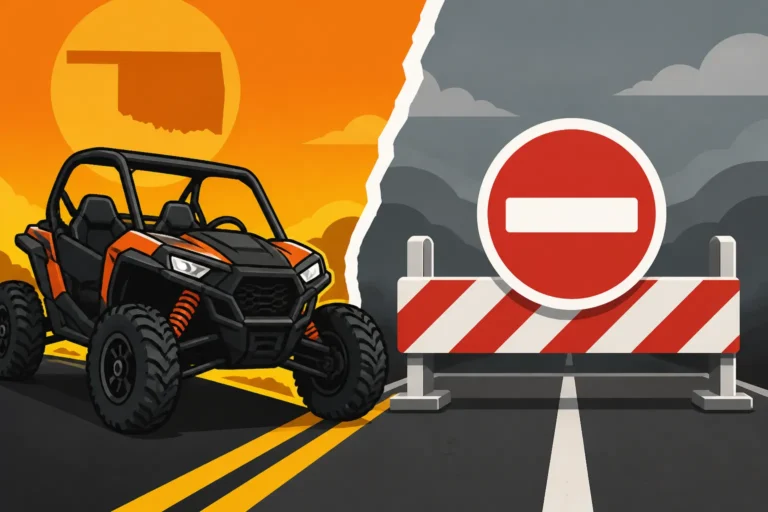
Driving your UTV on Oklahoma's roads, whether it's just for a quick crossing or you've gone through the process of making it street-legal, can feel like a game of hide-and-seek you really don't want to play. Between the low light of dawn or dusk, the dust that can kick up on rural roads, and the vast difference in speed compared to other vehicles, being easily seen is absolutely paramount. This guide is dedicated to showing you precisely where reflective tape can make your UTV stand out, significantly boosting your visibility and helping to keep you, your passengers, and your machine safer on those less-traveled Oklahoma roads.
Why UTV Visibility is Non-Negotiable on Oklahoma Roads
Riding your UTV, whether it's a utility workhorse or a sport-focused side-by-side, often means encountering diverse environments. In Oklahoma, that frequently involves county roads, section lines, and even some city streets if you've got a street-legal setup. The challenges of visibility are amplified in these settings, and it's not just about avoiding a ticket; it's about preventing serious accidents.
The Dangers of Low Visibility After Dark
Imagine you're wrapping up a long day of hunting or ranch work, and the sun has dipped below the horizon, painting the sky with those beautiful Oklahoma colors. You still have a few miles of county road to traverse to get back to camp or the farm. This is exactly where low visibility becomes a massive safety concern. Other drivers, often accustomed to seeing cars or trucks with full lighting systems, might not register your UTV until it's too late. Your UTV, even with its factory lights, can blend into the background, especially against dark foliage or in areas without streetlights. A vehicle approaching from behind or turning onto the road you're on might not see you until they're right on top of you, leading to panic braking, swerving, or worse. The faster speed of other vehicles only compounds this issue, giving everyone less time to react. This is why adding extra layers of passive visibility, like reflective tape, isn't just a good idea—it's essential.
Meeting Oklahoma's Expectations for Road-Legal UTVs
Oklahoma has a specific class for street-legal UTVs, allowing them to be driven on certain public roads. If you've gone through the effort to equip your side-by-side with [Oklahoma Equipment Required for Street UTVs] like turn signals, mirrors, and a horn, you're already thinking about safety. However, beyond the active lighting requirements, enhancing your machine's passive visibility is a smart move. While the state statute doesn't explicitly mandate reflective tape for all UTVs on public roads, it's a huge factor in preventing misunderstandings with law enforcement and other drivers. A well-marked UTV sends a clear signal that you are taking road safety seriously, and it drastically improves the chances that someone will see you even if your headlights are momentarily obscured or if they're coming from an unexpected angle. Think of it as an extra layer of peace of mind, demonstrating that you're a responsible operator committed to sharing the road safely. You can learn more about this by checking out [Oklahoma Street-Legal UTV Class Explained] and [Oklahoma Road Plates for a Street-Legal UTV].
Strategic Placement: The Hot Spots for Reflective Tape
When it comes to reflective tape, simply sticking it anywhere won't give you the maximum benefit. Strategic placement is key to ensuring your UTV is seen from all angles and in various lighting conditions. You want to create a clear outline of your machine, making it instantly recognizable to other drivers.
Outlining Your Machine's Perimeter for 360-Degree Awareness
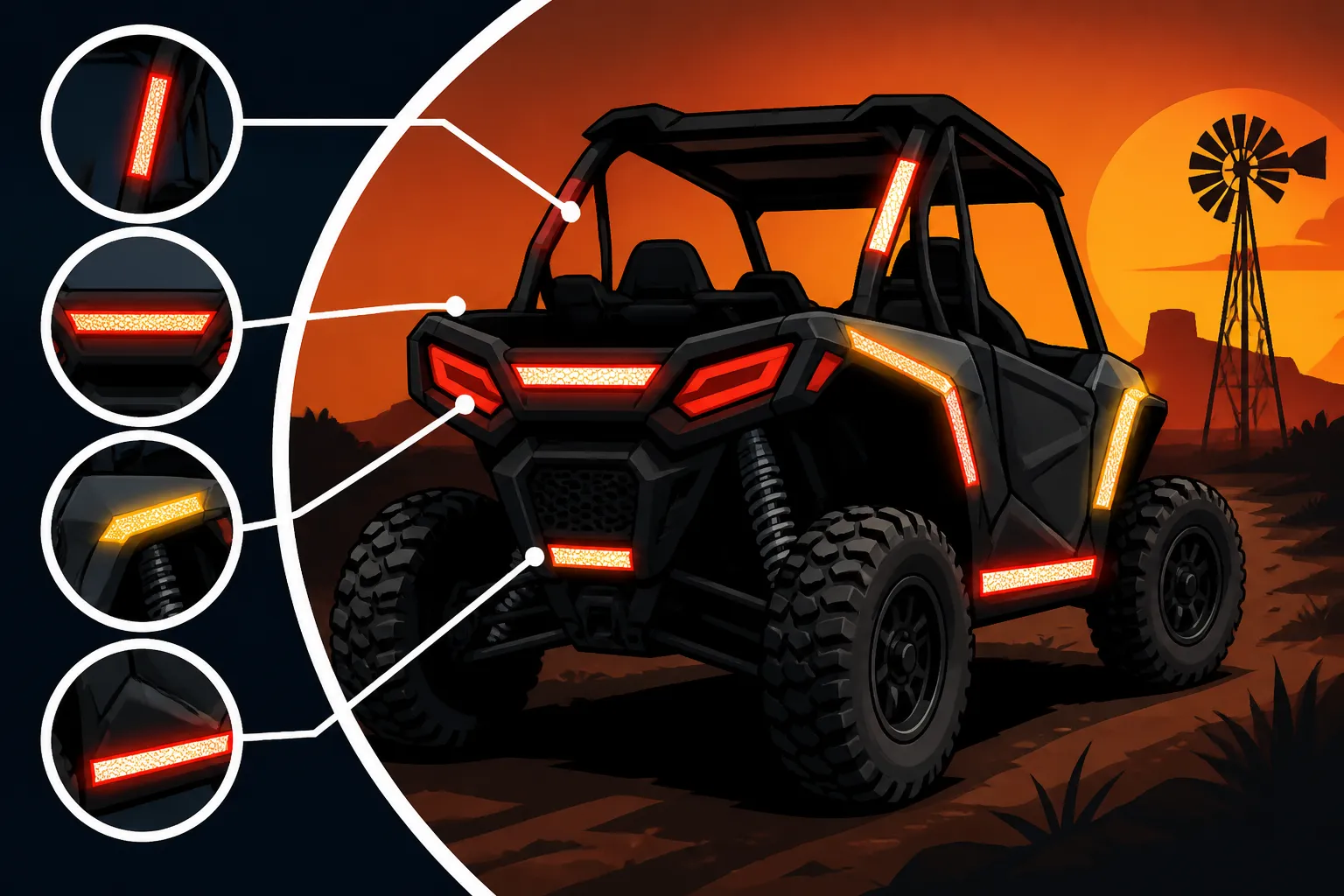
To effectively use reflective tape, your goal should be to visually "enlarge" and define the edges of your UTV. Think of it like a brightly lit Christmas tree outline in the dark. The most critical areas are the outermost points of your machine. This includes the front bumper, especially the corners, where it can reflect headlights from oncoming traffic. Along the sides, apply tape to the fender flares, rock sliders, or the lowest frame rails. This helps drivers approaching from side roads or even passing you recognize the full length of your machine. The rear is undeniably crucial, especially for vehicles approaching from behind. Apply tape to the rear bumper, tailgate, or anywhere across the back that is visible and won't be easily obscured by mud or cargo.
Consider applying tape in strips or patterns that define the machine's width and height. For instance, a horizontal strip across the front bumper and vertical strips on the outer edges of your roll cage or roofline can create a box-like silhouette that's hard to miss. Many riders find that a checkerboard pattern on flat surfaces, or even just alternating vertical and horizontal strips, can catch and reflect light more effectively than a single solid line. Some even go a step further, using products from brands like SuperATV that offer pre-cut reflective kits designed to fit specific UTV models, ensuring optimal coverage and a professional look. Remember, the more of your machine's perimeter you can highlight, the better your chances of being seen from any direction. This is especially important for [Making Yourself Visible on a Rural Road at Night].
Enhancing Visibility on Wheels and Attachments
Don't overlook the dynamic components and accessories on your UTV when planning your reflective tape strategy. Your wheels, while not static, offer a fantastic opportunity for visibility. Applying small strips of reflective tape to the spokes of your wheels or along the rim can create a dazzling, rotating light effect when hit by headlights, drawing immediate attention. Even a small triangle or rectangle on each wheel can significantly improve side visibility.
Beyond the wheels, think about any attachments or modifications you have. If you run a winch, a snowplow, or a sprayer on the front, these add to the overall length or width of your machine. Reflective tape on the outermost edges of these accessories can prevent another driver from misjudging your UTV's actual dimensions. Similarly, if you have a bed extender, cargo rack, or even a full-sized spare tire mounted to the rear, ensure these items also carry reflective markings. These often extend beyond the main body of the UTV and are the first things a trailing vehicle might encounter. By adding tape to these areas, you ensure that the entire footprint of your UTV is visible, not just its main body, providing a more accurate and safer representation of your machine's size on the road.
Choosing the Right Reflective Tape for Your UTV
Not all reflective tapes are created equal. Just like you wouldn't use duct tape to fix a critical engine component, you shouldn't use just any reflective tape on your UTV if you're serious about safety and durability. The environment your UTV operates in—mud, dust, water, sun, extreme temperatures—demands a specific kind of toughness.
Durability and Adhesion in Off-Road Conditions
The ideal reflective tape for your UTV needs to withstand a beating. We're talking about constant exposure to sun, rain, mud, dust, and even the occasional branch scrape. This means you need tape that is explicitly designed for outdoor, heavy-duty applications. Look for terms like "automotive grade," "marine grade," or "high-intensity reflective." These tapes typically feature a more aggressive adhesive that can bond securely to various surfaces common on UTVs, like plastic fenders, painted metal frames, or even powder-coated roll cages. A strong adhesive is crucial to prevent peeling, especially around edges or after repeated washing.
Many riders find that tapes from reputable brands specializing in vehicle accessories tend to perform best. Some reflective tapes are engineered with a durable top layer that resists abrasion and fading from UV exposure, ensuring that the reflective properties remain effective for years, not just months. When applying the tape, always ensure the surface is meticulously clean and dry. Any dirt, grease, or moisture will compromise the adhesive, leading to premature peeling and wasted effort. Take the time to prep the surface properly; it's a small investment that pays off in the long run with tape that stays put and keeps shining.
Color and Conspicuity: Making the Smart Choice
While any reflective tape is better than none, certain colors offer superior conspicuity, especially when contrasting with your UTV's existing color or the typical road environment. Bright, fluorescent colors like lime green or orange, coupled with reflectivity, tend to be the most noticeable during both daylight and low-light conditions. These colors are often referred to as "conspicuity" tapes because they are specifically designed to stand out. White or silver reflective tape is highly effective at reflecting light after dark, but it may not stand out as much during the day unless your UTV is a dark color. Red reflective tape is a good choice for the rear of your machine, mimicking brake lights and tail lights, and is universally recognized as a warning color.
Consider using a combination of colors if it aligns with your UTV's aesthetic and visibility goals. For example, red on the rear, white or yellow on the sides and front. The key is contrast. If your UTV is black, white or yellow reflective tape will pop. If your UTV is bright orange, a white or red tape might offer better contrast than another shade of orange. Some riders prefer a more subtle look, opting for black reflective tape that appears black in daylight but shines brightly white when hit by light. While this looks sleek, remember that the primary goal is maximum visibility. So, while aesthetics matter, prioritize colors that offer the best chance of being seen by others, especially when you're riding on [Oklahoma Rules for Riding a County Road] or [Oklahoma Rules for Riding After Dark].
| UTV Area | Recommended Reflective Tape Color | Why It Helps |
|---|---|---|
| Front Bumper/Fenders | White, Yellow, Fluorescent Green | Catches oncoming headlights, outlines width, makes vehicle recognizable. |
| Rear Bumper/Tailgate | Red, Orange | Mimics tail/brake lights, universally understood as rear of vehicle, crucial for trailing traffic. |
| Sides (Fenders, Roll Cage) | White, Yellow, Fluorescent Green, Orange | Increases side visibility, especially at intersections or when being passed. Defines length and height. |
| Wheels/Rims | White, Yellow | Creates dynamic, flashing effect when spinning, draws attention. |
| Attachments (Winch, Rack) | White, Yellow, Orange | Highlights extended dimensions, prevents misjudgment of overall UTV size. |
| Roof/Canopy Edges | White, Yellow | Adds height definition, useful for large vehicles or when cresting hills. |
Beyond the Shine: Complementary Visibility Upgrades
While reflective tape is a fantastic and often overlooked tool for UTV visibility, it shouldn't be your only line of defense. Think of it as part of a comprehensive safety strategy, working in conjunction with other enhancements to ensure you're as visible as possible on Oklahoma's roads and trails.
Active Lighting and Signaling Enhancements
Your UTV's factory lights are a start, but they often aren't enough, especially if you're venturing onto public roads. Upgrading to brighter LED headlights and taillights can make a significant difference. Many aftermarket suppliers, including SuperATV, offer powerful LED light bars and pods that can dramatically increase your forward and rearward illumination. Consider adding auxiliary brake lights or even a chase light to the rear of your machine. A chase light, often mounted high on the roll cage, is designed to be visible from a distance, particularly in dusty conditions, and often incorporates flashing patterns to grab attention.
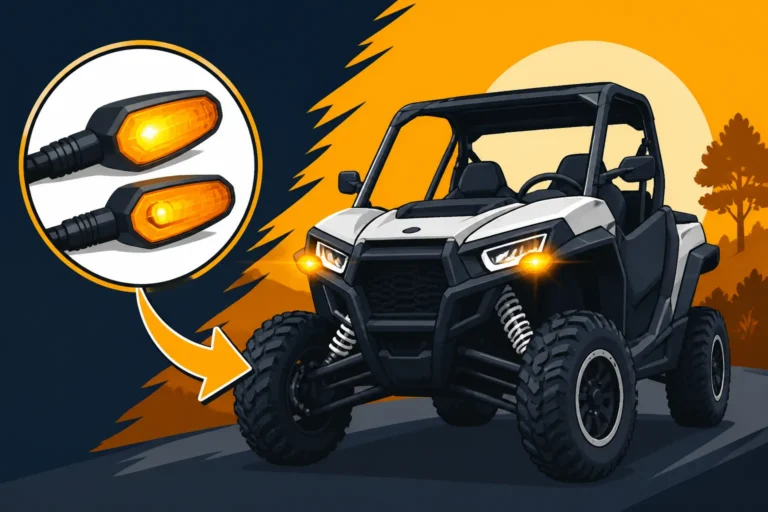
Turn signals are a must for any street-legal UTV and a smart addition even for machines primarily used off-road but that frequently cross roads. These active signals communicate your intentions to other drivers, which is just as important as being seen. Don't forget about [Oklahoma Lighting Rules on a Machine]; ensuring your lights are functioning correctly and are up to par is a primary safety check. Even small, strategically placed amber marker lights on the sides of your UTV can greatly enhance your visibility profile, especially at intersections. The combination of strong active lighting and passive reflective tape creates a robust visibility system that minimizes risk.
High-Visibility Gear and Safety Flags
Your UTV isn't the only thing that needs to be seen—you, the rider, do too. Wearing high-visibility gear is an easy and effective way to enhance safety, especially when you dismount your UTV on the side of a road or are riding in a group. Brightly colored helmets, jackets, and vests, especially those with their own reflective elements, make a huge difference. Fluorescent orange, lime green, and yellow are excellent choices for outerwear, particularly during hunting season when camouflage is common but dangerous on the road.
Safety flags, while often associated with dune riding like at [Little Sahara State Park in Oklahoma] where they're mandated, are also a fantastic idea for increasing visibility on open terrain or even when crossing roads. A brightly colored flag (often orange) on a tall whip antenna mounted to your UTV's roll cage can make your machine visible over hills, through tall crops, or above other vehicles, giving drivers a heads-up that you're there before they even see the machine itself. These flags, often with reflective strips themselves, ensure that your UTV's presence is announced from a greater distance, providing crucial extra seconds for other road users to react. When combined with smart tape placement, these elements create a safety ensemble that makes your UTV, and you, incredibly hard to miss.
Disclaimer
This article is for general informational purposes only and does not constitute professional advice. Laws, prices and regulations vary by location and change over time. Consult a qualified professional for guidance on your specific situation.