When an Officer Can Impound Your Machine
Riding your ATV or UTV in Oklahoma can be an absolute blast, offering freedom and adventure across diverse landscapes, from sandy dunes to rocky trails. But let's be real, sometimes the rules can feel like a maze, and a misstep can lead to more than just a warning. One of the most stressful situations a rider can face is having their beloved machine impounded by law enforcement. It's a gut-wrenching experience that leaves you stranded, frustrated, and wondering what went wrong and how to get your ride back. This guide is here to walk you through the various scenarios where an officer in Oklahoma might impound your ATV or UTV, what to expect if it happens, and most importantly, how to avoid it altogether, keeping you on the trails and out of trouble.
Understanding the Basics: Why Impoundment Happens
Nobody wakes up planning to get their machine impounded, but it's a very real possibility if you're not fully aware of the laws and regulations in Oklahoma. Impoundment isn't just about getting a ticket; it's the physical seizure of your off-road vehicle by law enforcement. It often goes hand-in-hand with more serious violations or circumstances where the machine itself is deemed a danger or evidence.
Common Reasons for Seizure
When an officer decides to impound your ATV or UTV, it's usually not a snap decision made lightly. There are typically clear legal grounds that allow them to take this action. Often, it stems from something more significant than a minor infraction. For instance, operating a machine on a prohibited road, especially if it's done recklessly or repeatedly, can elevate the situation from a simple warning or citation to an impoundment. The officer isn't just trying to be difficult; they're acting to prevent further illegal activity, ensure public safety, or secure evidence related to a crime.
Another common trigger is a serious safety violation that poses an immediate risk to the rider or others. While a missing headlight might get you a warning, something like operating a heavily modified, unsafe machine on public land without proper safety features, or with known mechanical issues that make it dangerous, could prompt an officer to impound it until it's made safe. They have a duty to remove immediate threats from public spaces. This is where investing in quality parts, perhaps from a reputable brand like SuperATV, that meet safety standards can pay off, ensuring your machine is always trail-ready and compliant.
The Officer's Discretion
It's important to understand that officers often have a degree of discretion when it comes to enforcement. Not every minor violation will result in your machine being towed away. For example, if you're pulled over on a county road that might be technically off-limits but you're just moving from one private property to another, an officer might give you a warning and advise you on proper routes, or simply issue a citation. However, if that same situation involves you speeding, driving erratically, or being uncooperative, that discretion can quickly shift towards impoundment.
This discretion is influenced by a variety of factors: the severity of the offense, your demeanor, the immediate danger posed, and even the availability of alternative solutions, such as you calling a friend to pick up your machine. If an officer feels there's no other way to stop an ongoing violation or ensure safety, impoundment becomes a much more likely outcome. Being respectful, understanding, and compliant can sometimes make a significant difference in how a situation is handled. It's not a guarantee against impoundment, but it certainly doesn't hurt your case.
Distinction Between Citation and Impoundment
Many riders get confused between receiving a citation and having their machine impounded. A citation, commonly known as a ticket, is a notice of a violation that typically requires you to pay a fine or appear in court. You get to keep your machine and continue on your way (after correcting the violation, if possible). For instance, if you're riding in an area that requires a [Oklahoma Land Access Permit Cost] and you don't have one, you might receive a citation for that specific offense. You'd likely be told to leave the area and pay a fine, but your machine wouldn't be taken.
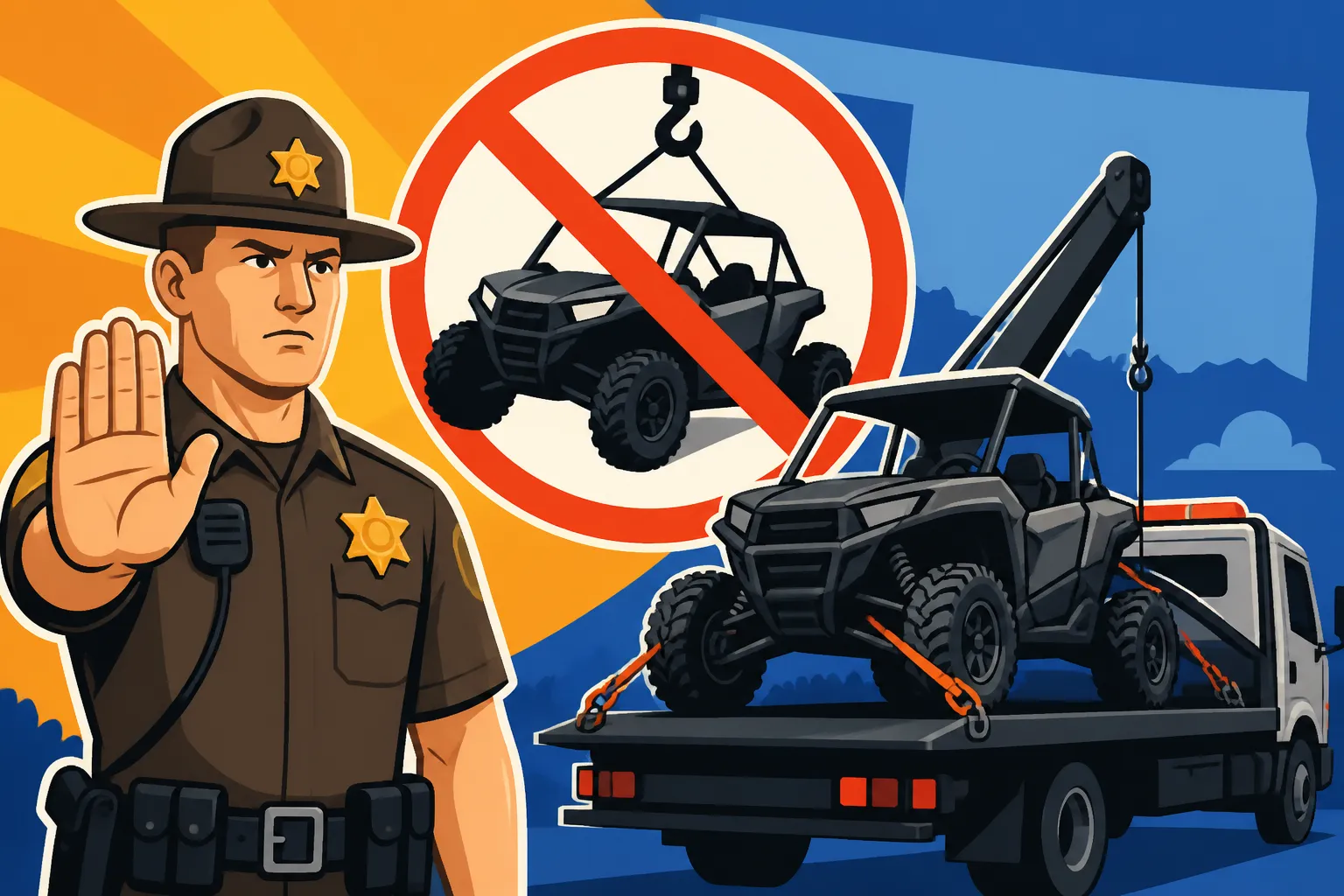
Impoundment, on the other hand, means the officer physically takes possession of your ATV or UTV. It's a much more serious consequence, often reserved for violations that involve a significant risk to public safety, criminal activity, or situations where the machine itself is being used unlawfully and needs to be removed from the scene. While an impoundment almost always comes with one or more citations, a citation does not always lead to impoundment. Understanding this difference is crucial for appreciating the gravity of certain offenses.
Specific Scenarios: When Oklahoma Law Allows Impoundment
Oklahoma has specific laws governing the use of ATVs and UTVs, and stepping outside those boundaries can lead to your machine being impounded. These scenarios are usually well-defined and are designed to protect both riders and the public. Ignorance of the law is rarely an excuse, so knowing these specific triggers is your first line of defense.
Illegal Road Use
This is perhaps one of the most common reasons for impoundment. Oklahoma law generally restricts the operation of ATVs and UTVs on public roads and highways. While there are exceptions, such as [Oklahoma Municipal Ordinances That Open Streets] or specific instances where [Oklahoma Highway Crossings in Daylight] are allowed, driving your off-road vehicle on prohibited roads is a direct violation. If an officer observes you cruising down a state highway or a city street where ATVs are expressly forbidden, especially if you're causing a disturbance or endangering traffic, they have the authority to impound your machine.
The key here is understanding the local ordinances. Some counties might allow ATVs on certain county roads, while others strictly prohibit it. Cities often have their own rules too. If you're caught far from any legal riding area on a busy road, and particularly if you're also committing other moving violations, the officer is likely to deem the machine an immediate hazard and impound it. It's not just about the fine; it's about removing a non-compliant vehicle from a road it shouldn't be on. Knowing [Oklahoma Rules for Riding a County Road] and [Oklahoma Rules for Riding a City Street] is paramount before you ever hit the pavement.
Operating Under the Influence
Driving any vehicle, including an ATV or UTV, while under the influence of alcohol or drugs is a serious offense in Oklahoma, just as it is with a car or truck. The penalties for [Oklahoma DUI Law and Off-Road Machines] are severe, and impoundment of your machine is almost a certainty. If an officer suspects you're impaired while operating your ATV, they will conduct field sobriety tests, and if you fail, you'll be arrested. Your machine, being evidence and a dangerous instrument in your impaired state, will be impounded.
This isn't just about public roads; it applies to trails, private parks, and even private land if you're accessible to law enforcement. The focus is on your ability to safely operate the machine. There's zero tolerance for impaired driving, and for good reason—it puts you, your passengers, and anyone else around you at extreme risk. If you've had anything to drink, do not get on your ATV or UTV. Period.
Lack of Proper Registration and Titling
Oklahoma law requires most ATVs and UTVs to be registered and titled. While there are some older machines that fall under cutoff dates, such as [Oklahoma ATV Cutoff of July 2005] or [Oklahoma UTV Cutoff of July 2008], and certain agricultural exemptions, the general rule is that your machine needs proper paperwork. If you're pulled over or observed riding on public lands without valid registration, or if the machine has a title issue, an officer can take action.
For instance, if your machine is supposed to have a registration decal (which [Oklahoma Issues a Front Decal, Not a Plate]) and you don't have one, or if you're unable to provide proof of ownership and proper titling, the officer might impound it. This is especially true if there's any suspicion that the machine might be stolen or illegally obtained. They need to ensure the machine belongs to you and is properly documented. It's worth remembering that [Oklahoma ATV Registration You Pay Once], but you still need that initial registration. Always carry proof of your registration and title when you ride, or at least have it readily accessible.
Felony Activity or Stolen Machines
This is one of the most definite paths to impoundment. If your ATV or UTV is involved in the commission of a felony, or if the machine itself is reported stolen, it will be seized immediately. An officer treating your ATV as a piece of evidence in a crime will impound it for forensic investigation. This could include using it to flee a crime scene, transporting illegal substances, or any other serious criminal offense where the machine played a direct role.
Similarly, if an officer runs the VIN (Vehicle Identification Number) and it comes back as stolen, they will impound it. Even if you bought it innocently, if the machine is confirmed stolen, it will be taken from you and returned to its rightful owner (or their insurance company). You, as the possessor, would then have to prove your legal right to it, which can be a long and difficult process. This highlights the critical importance of [Checking Whether a Used ATV Was Reported Stolen] before you buy, and always ensuring you have clear and proper [Oklahoma Bills of Sale for Older Machines] or a [Oklahoma Manufacturer's Statement of Origin for a New Machine].
Safety Violations Leading to Danger
While minor safety infractions might just lead to a ticket, severe or multiple safety violations that create an immediate and apparent danger to life or property can result in impoundment. Imagine a machine with no working brakes, bald tires, or significant structural damage being operated on a public trail or near other people. An officer might determine that allowing the machine to continue operating would be reckless and dangerous.
This could also extend to lack of mandatory equipment in certain areas. For example, [Oklahoma's 10-Foot Whip Rule] and [Oklahoma's Orange Flag Requirement] at Little Sahara State Park are not just suggestions; they are critical safety measures in a high-speed dune environment. If you're found operating there without these, especially if you're also riding recklessly, an officer could impound your machine until it complies, or as part of a broader dangerous operation charge. Ensuring your machine is always well-maintained and equipped with the necessary safety features, perhaps with robust upgrades from SuperATV, can help you avoid these severe outcomes.
The Aftermath: What Happens After Your Machine is Impounded
So, your ATV or UTV has been impounded. Now what? The immediate aftermath can be confusing and stressful, but understanding the process and the costs involved can help you navigate the situation more effectively. It's not as simple as just showing up and taking your machine home.
Retrieving Your Machine
Getting your machine back from impoundment is usually a multi-step process that can feel like jumping through hoops. First, you'll need to confirm which impound lot or police evidence facility your machine was taken to. This information should be provided by the officer who impounded it, or you might need to contact the relevant law enforcement agency (e.g., local police, sheriff's office, or state patrol).
Once you've located it, you'll typically need to satisfy any legal requirements stemming from the impoundment. This almost always means resolving the underlying citations or charges. You might need to pay fines, appear in court, or even demonstrate that the vehicle is now in compliance (e.g., if it was impounded for major safety issues, you might need to show proof of repairs). You'll also need to prove ownership of the machine, so bring your title and registration. If someone else is picking it up, they'll need a notarized letter of authorization from you, along with their own identification. Be prepared to show all your paperwork, including [Oklahoma Registration Application Explained].
Costs Associated with Impoundment
One of the biggest frustrations associated with impoundment is the financial burden. These costs can add up quickly and become quite substantial. You will almost certainly be responsible for:
- Towing Fees: The initial cost to transport your ATV or UTV from the impoundment location to the storage facility. These fees are usually non-negotiable and can be hundreds of dollars, especially if it was a complicated tow.
- Storage Fees: Impound lots charge a daily storage fee for keeping your machine. These fees accumulate every single day your machine sits there. The longer it takes you to retrieve it, the more expensive it becomes. These can range from $25 to $50 or more per day.
- Administrative Fees: Law enforcement agencies or the impound lot itself may charge administrative fees for processing the impoundment and release paperwork.
- Fines and Court Costs: Any citations issued during the impoundment will come with their own fines and potential court costs. These are separate from the towing and storage fees. For example, if you were riding on a prohibited road, you'll pay the fine for that specific violation.
The table below illustrates how impoundment costs can quickly escalate:
| Item | Example Cost (Initial) | Example Cost (Daily/Ongoing) | Notes |
|---|---|---|---|
| Towing Fee | $150 – $350 | N/A | One-time charge for transport to lot |
| Storage Fee | N/A | $25 – $50+ per day | Accumulates daily until machine is picked up |
| Administrative Fee | $50 – $150 | N/A | For paperwork and processing |
| Citation Fines | $50 – $500+ | N/A | Varies greatly by violation (e.g., illegal road use, no registration) |
| Total (First Day) | $250 – $1000+ | Without addressing fines | |
| Total (After 7 Days) | $425 – $1350+ | Assuming average daily storage |
As you can see, waiting to retrieve your machine can significantly increase the financial hit. It's always best to address the situation as quickly as possible.
Potential for Forfeiture
In very serious cases, especially those involving felony activity, your ATV or UTV might not just be impounded; it could be subject to forfeiture. This means the state can legally take permanent ownership of your machine. Forfeiture is typically reserved for instances where the vehicle was used directly in the commission of a crime, like drug trafficking, or if it was purchased with illicit funds.
If your machine is seized for forfeiture, it becomes much more complicated than a simple impoundment. You would need to engage in a legal battle to prove your innocence or to show that the machine was not involved in the alleged criminal activity. This is a rare, but very real, consequence for extreme violations. This is why it's so important to never use your machine for anything illegal, and always be aware of who might be borrowing or using your ATV if you lend it out.
Preventative Measures: Avoiding Impoundment in Oklahoma
The best way to deal with impoundment is to avoid it entirely. While some situations are out of your control (like buying a stolen machine unknowingly), many common causes of impoundment are preventable with a little knowledge, preparation, and responsible riding habits.
Know the Rules of the Road and Trail
Ignorance of the law is not a valid defense, and in the world of ATVs and UTVs, the rules can vary significantly from one jurisdiction to another. Before you ever hit a new trail or consider taking your machine on a road, do your homework. Check the regulations for the specific area you plan to ride. This includes:
- Public Roads: Understand [Can You Drive a UTV on the Road in Oklahoma?] and when and where it is permissible. Know the difference between a county road, a state highway, and city streets. Many municipalities have specific ordinances.
- Public Lands: If you're heading to a state park like Little Sahara, be aware of their specific rules, such as [Oklahoma's 10-Foot Whip Rule] or [Oklahoma Night Lighting on Dunes]. For Wildlife Management Areas (WMAs) like Honobia Creek or Three Rivers, rules can be very different, often tied to hunting seasons and designated routes, as covered in [Oklahoma WMA Riding Only in Deer Season].
- Private Parks/Lands: Even private riding parks have their own rules regarding age limits, helmets, and speed. If you're riding on private land, ensure you have [Getting Written Permission Before Riding Private Land] to avoid trespassing charges, which could also lead to impoundment if your presence is deemed an ongoing violation.
Making a quick phone call to a county sheriff's office or a state park ranger station can save you a lot of grief. They are usually happy to clarify the rules.
Ensure Your Machine is Properly Registered and Titled
This is fundamental. If your ATV or UTV requires registration and titling in Oklahoma, make sure it's done correctly and that you always have proof.
- New Purchases: When you buy a new machine, understand [Oklahoma Dealer Paperwork at Delivery] and the process for getting it titled and registered within [Oklahoma's 30-Day Registration Deadline].
- Used Purchases: For used machines, especially older ones, ensure you get a proper bill of sale and understand [Oklahoma Titles After a Private Sale]. If you're buying a machine that predates the cutoff years, like a quad bought before July 2005, you'll want to be familiar with [Registering a Quad Bought Before July 2005].
- Carry Your Proof: Always carry your registration card and proof of ownership when you ride. A clear, readable copy of your title is also a good idea. Make sure your registration decal is properly displayed on the front of your machine, as outlined in [Oklahoma Decals on the Front of a Machine].
- Renewals: While [Oklahoma Registration Never Renews] for the standard ATV/UTV registration (you pay once), if you have a street-legal UTV, you will have [Oklahoma Street UTV Annual Renewal]. Make sure you know which category your machine falls into.
Maintain Your Machine and Gear
Beyond legal compliance, maintaining your ATV or UTV is crucial for safety and preventing situations that could lead to impoundment. An officer observing a clearly unsafe machine has reason to intervene.
- Regular Maintenance: Keep your brakes, lights, and steering in excellent working order. Check your tires regularly. A well-maintained machine is safer for everyone.
- Safety Equipment: Ensure all required safety equipment is in place and functioning. This might include headlights, taillights, brake lights, and a working horn if you have a street-legal UTV. Consider adding aftermarket accessories from reputable brands like SuperATV that enhance safety, such as upgraded lights or a robust windshield.
- Helmets: For riders under 18, [Oklahoma Helmet Law for Riders Under 18] is mandatory. Ensure all young riders in your group have properly fitting, DOT-approved helmets.
Always Ride Sober
This cannot be stressed enough. Never, ever operate an ATV or UTV while under the influence of alcohol or drugs. Not only is it illegal and carries severe penalties including impoundment and arrest, but it is incredibly dangerous. Your reaction time, judgment, and coordination are all compromised, putting yourself and others at grave risk. Designate a sober driver if you plan to consume alcohol, or simply wait until you are completely sober before getting on your machine. There is no acceptable level of impairment when operating any vehicle.
By understanding the rules, keeping your paperwork in order, maintaining your machine, and always riding sober, you can significantly reduce your chances of experiencing the frustration and financial burden of an impounded ATV or UTV in Oklahoma. Ride smart, stay safe, and enjoy the incredible off-road opportunities the Sooner State has to offer.
Disclaimer
This article is for general informational purposes only and does not constitute professional advice. Laws, prices and regulations vary by location and change over time. Consult a qualified professional for guidance on your specific situation.