What a First Aid Kit Needs on Timber Land
A scraped forearm, a deep cut, or a twisted ankle can turn a timber-land ride into a long, uncomfortable wait—especially when your group is far from a road or cell service. A useful ATV first aid kit needs more than a few adhesive bandages: it should match the injuries you can realistically handle, the people riding, and the time it may take to reach help.
Why Timber-Land Riding Calls for a More Thoughtful Kit
Distance and terrain change what “prepared” means
On a short ride close to a parking area, a minor scrape may be easy to manage. On a remote ride through wooded terrain, the same injury can become harder to deal with. You may need to stop, clean and cover a wound, keep someone warm, and work out how to get the injured rider back to a vehicle.
Timber roads and trails can also be rough, uneven, and difficult to navigate quickly. A rider who twists an ankle may not be able to walk comfortably to the nearest road. If a group splits up or someone gets separated, the person carrying the kit may not be with the injured rider. These are practical reasons to carry a kit on the machine and to make sure everyone knows where it is.
Think about your planned route before you leave. Are you riding with children, traveling in a large group, or heading into an area where your phone may lose service? Will the ride last a few hours or most of the day? Your answers help determine how much wound-care material, medication, and emergency equipment to bring.
The riding setting affects your preparation
Oklahoma timber-land riding has its own access rules, seasons, and permit considerations. Learn what applies to your destination before you set out; Oklahoma Timber Land Rules for Riders and Oklahoma Land Access Permits Explained are useful starting points. A first aid kit does not make an area accessible or replace permission to ride, but preparation for the route and preparation for an injury belong in the same plan.
In southeast Oklahoma, wooded terrain may also make it harder to describe your location to someone who is trying to reach you. Before leaving, look over Cell Dead Zones in Southeast Oklahoma and plan how your group will handle a lost signal. Downloading or carrying route information ahead of time can be helpful. Some riders use onX Offroad to review routes and save map information for use when reception is poor; make sure you know how the app’s offline features work before depending on them.
Don’t assume a familiar-looking road will be open or passable. Check the access rules, conditions, and any restrictions for the area you intend to ride. Oklahoma Trail Conditions Before You Tow can help you think through the kind of pre-trip check that prevents arriving with a trailer only to find that your route or riding area is unavailable.
Build a plan for getting help, not just treating a scrape
A first aid kit is one part of an emergency plan. It can help you provide basic care, but it cannot replace professional medical attention. Before the ride, agree on who will stay with an injured person, who will go for help if necessary, and how the group will communicate if riders become separated.
Save the local emergency number in your phone and know the name or general location of the riding area. If you need to call for help, share the most useful location details you have: an access point, road name, trail marker, nearby landmark, or coordinates from a map app. onX Offroad can be useful for checking your position against saved map information, but your group should still understand how to describe its location without relying on a single phone.
What to Pack in an ATV First Aid Kit
Start with wound care and bleeding control
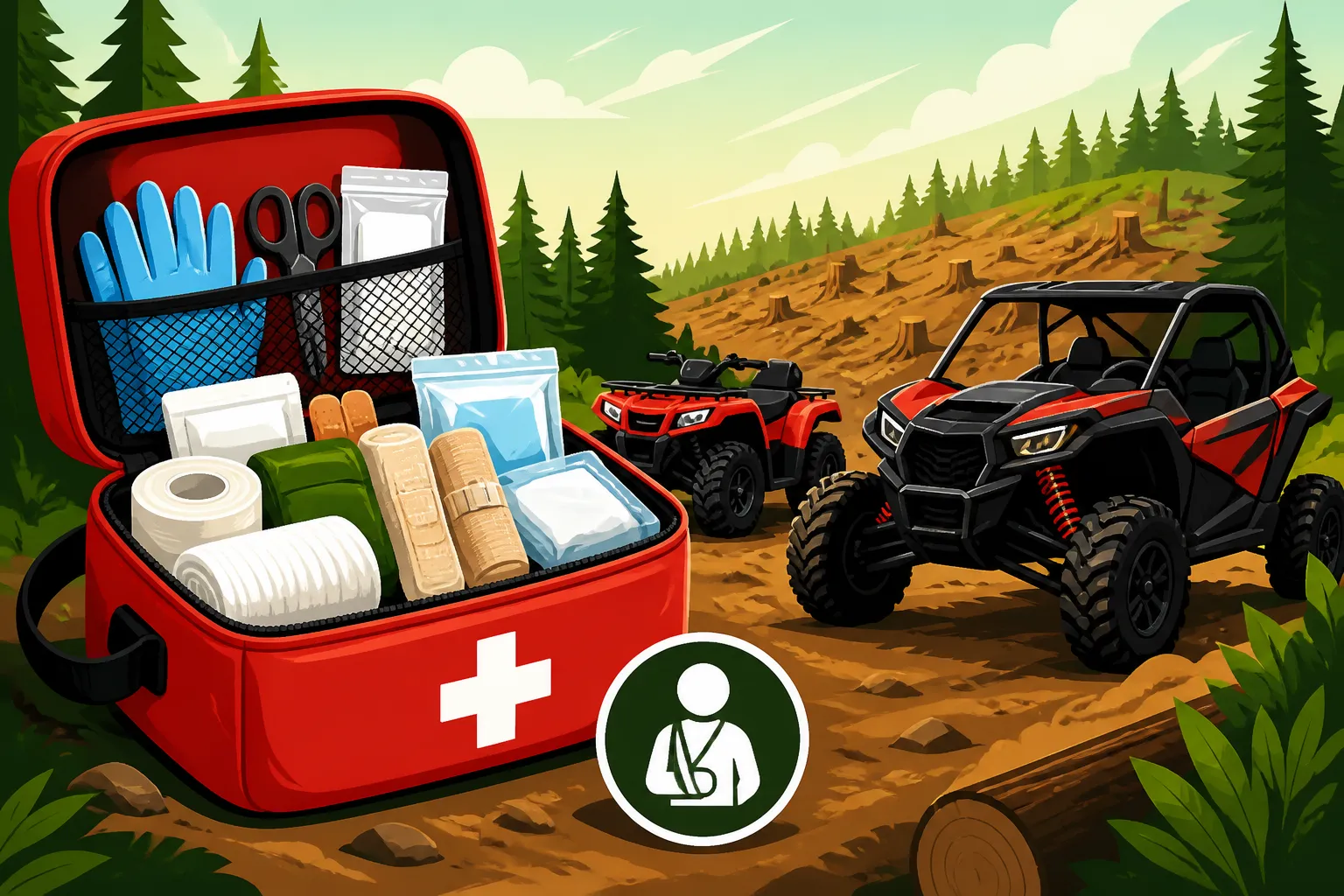
A practical kit should let you clean, cover, and protect common cuts and scrapes. Pack several sizes of adhesive bandages, sterile gauze pads, medical tape, and a wound-cleaning option such as sterile saline or antiseptic wipes. Add a few larger dressings for injuries that need more coverage than a standard bandage provides.
Include disposable gloves so the person helping can reduce direct contact with blood or other body fluids. A small pair of blunt-tipped scissors can make it easier to cut tape, gauze, or clothing away from an injury. Tweezers may help with a small splinter, but don’t use them to dig into a deep wound or remove an object that is firmly embedded.
For bleeding that seems heavy, persistent, or difficult to control, treat it as an emergency rather than a minor trail problem. Apply firm pressure with clean gauze or a dressing and seek emergency help. Do not let a limited first aid kit create the impression that a serious injury can safely be managed in the field.
Include supplies for sprains, bumps, and comfort
A stretch bandage can help support a minor sprain, while a triangular bandage can serve as a sling or help secure a dressing. A few instant cold packs may be useful for temporary comfort after a bump or strain, though they are not a substitute for medical assessment when pain or swelling is severe.
Pack a compact emergency blanket. It takes up little space and may help keep a person warm while the group waits or arranges transportation. A small flashlight or headlamp is also valuable if an incident delays the ride into dusk. Keep spare batteries or a charged backup power source if your equipment requires one.
Tweezers and a tick-removal tool can be useful after riding in brush or wooded areas. Check riders for ticks after the trip, including less obvious places such as behind the knees, along the hairline, and around clothing edges. If you find a tick, follow reliable public-health guidance for removing it and monitor the bite area afterward.
Add personal items for the people in your group
The best group kit is not identical for every ride. Someone with a known allergy, a prescription medication, or a medical condition may need to carry personal supplies and tell a trusted riding companion where they are kept. Do not assume that a shared kit contains a rider’s prescribed medication, or that another person knows how to use it.
If you include over-the-counter medication, consider each rider’s age, allergies, health conditions, and medication interactions. Keep medicines in their labeled packaging and follow the label directions. Avoid sharing medication when you do not know whether it is suitable for the other person.
For children, review the kit with a parent or responsible adult before departure. Keep medications and sharp tools secured, and make sure a child knows which adult to tell if they are hurt. A kit may be present on the machine but still be useless if nobody can find it quickly.
| Kit item | What it can help with | Practical note |
|---|---|---|
| Adhesive bandages and sterile gauze | Covering minor cuts and scrapes | Carry several sizes and keep them dry |
| Medical tape and stretch bandage | Securing dressings or supporting a minor strain | Do not wrap so tightly that circulation is affected |
| Disposable gloves | Reducing direct contact during basic care | Pack multiple pairs in a sealed bag |
| Saline or antiseptic wipes | Cleaning minor wounds | Follow product directions and avoid harsh treatment of serious wounds |
| Tweezers and tick tool | Removing small splinters or ticks | Do not dig into deep or embedded objects |
| Emergency blanket | Helping keep someone warm | Useful during a delay, even in mild weather |
| Flashlight or headlamp | Providing light during a late return or incident | Check batteries before riding |
| Personal medication | Addressing an individual rider’s needs | Keep it labeled and accessible to that rider |
| Whistle and charged phone | Signaling or contacting help | Reception may be limited in wooded areas |
How to Pack, Carry, and Use the Kit
Keep it reachable and protected
A first aid kit should be easy to reach without unloading the entire machine. Place it in a secure, clearly identified pouch or case that can handle dust, vibration, and occasional moisture. A waterproof bag inside a hard storage compartment adds another layer of protection for gauze, wipes, and medication packaging.
Tell your riding companions where the kit is before the ride begins. If only the person operating one ATV knows where supplies are, the kit may be unavailable when that rider is the one who needs help. In a group, consider carrying a small kit on more than one machine so that a single breakdown or separation does not leave everyone without supplies.
Keep the kit separate from fuel, tools with sharp edges, and other items that could puncture or contaminate it. After a rough ride, check that bottles have not leaked and that packaging has not been damaged. Replace anything used, opened, expired, or exposed to dirt or moisture.
Match the kit to your group and route
A solo rider has different needs from a family group or a ride with several machines. A group can distribute supplies, but only if riders know which machine carries them and can reunite after a stop. For a longer or more remote route, bring extra dressings, water, and basic signaling equipment rather than assuming the smallest kit will be enough.
Review the route before leaving and save the information you may need while offline. onX Offroad can help riders prepare by viewing and saving route details in advance, but practice opening those details before you are out of service. It is also sensible to carry a paper map or written location notes; Carrying a Paper Map Where GPS Fails covers why a backup can matter when a phone is damaged, uncharged, or unable to connect.
On timber land, pay attention to the conditions and the access rules for the specific area. Ride within your group’s ability, keep enough distance to avoid dust and debris, and agree on a meeting point if riders become separated. Oklahoma Trail Etiquette Locals Expect is a helpful companion read for planning a ride that works for both your group and other trail users.
Use basic supplies carefully and recognize when to stop
For a minor scrape, wash your hands or put on gloves, rinse away visible dirt with clean water or saline, and cover the area with a clean dressing. For a small cut, apply gentle, steady pressure if it is bleeding, then protect it with gauze or a suitable bandage. If the wound is deep, gaping, contaminated, or continues to bleed, arrange professional medical care.
For a minor strain, stop riding and assess how the person feels. A rider who cannot bear weight, has severe pain, shows deformity, or has numbness should not be encouraged to “walk it off.” Avoid moving someone when you suspect a serious neck, back, or head injury unless staying in place presents an immediate danger. Call emergency services when the injury appears serious or the person’s condition is worsening.
Do not use a kit to diagnose an injury or delay help. If someone has trouble breathing, loses consciousness, has severe bleeding, or seems confused after a crash, treat the situation as urgent. Keep the person as comfortable and warm as you can while another group member contacts help or goes to a location with service.
A Simple Pre-Ride First Aid Check
The day before the ride
Open the kit and check the contents rather than assuming everything is still there. Replace used or damaged supplies, confirm that personal medications are available, and make sure the case closes securely. If you ride with children or guests, ask about relevant allergies or medical needs before departure, while respecting their privacy.
Review the planned route, access requirements, and likely communication gaps. Save offline map information and identify a place where the group could meet or seek help. If you use onX Offroad, open the saved map before leaving home or camp so you know how to find it without a connection.
At the meeting point
Show the group where the first aid supplies are and confirm that everyone has a phone or another agreed way to communicate. Name a lead rider and a sweep rider if the group is large enough for that arrangement. Agree not to leave an injured person alone unless doing so is necessary to get urgent help.
A short check-in can prevent confusion later: confirm the planned route, who has the first aid kit, and what the group will do if a rider is delayed or separated. This is especially useful when riders are unfamiliar with one another or when several machines have different storage setups.
After the ride
Check whether anything was used, opened, or damaged. Refill the kit before the next trip, not when you are already loading the trailer. Look over riders for cuts, scrapes, ticks, or pain that may have been easy to ignore during the ride.
If an injury occurred, note what happened and what supplies were used. That simple record can help you decide whether the kit needs changes and give a medical professional useful details if symptoms continue. A well-prepared kit is not about expecting a crash; it is about making a difficult moment less chaotic and helping your group respond thoughtfully.
Disclaimer
This article is for general informational purposes only and does not constitute professional advice. Laws, prices and regulations vary by location and change over time. Consult a qualified professional for guidance on your specific situation.