Oklahoma’s Resident Land Access Permit
A permit question can derail an Oklahoma riding trip before the trailer is even loaded: does your resident permit cover the land, the machine, or both? This guide explains what the resident land access permit is for, where it may apply, who may be exempt, and what to check before you ride so you do not mistake access permission for registration or open-ended trail access.
What Oklahoma’s Resident Land Access Permit Is For
It gives access to certain lands, not every trail in Oklahoma
Oklahoma’s resident land access permit is tied to access rules for particular public and privately managed lands. It is not a statewide pass that opens every trail, wildlife management area, timber road, or private riding park. The land’s owner or managing agency sets the rules for where and when a machine may be used, and those rules can include seasonal limits, designated routes, check-in requirements, or restrictions on which vehicles are allowed.
That distinction matters because the word “permit” can sound broader than it is. A permit that applies to a particular land access program does not automatically give you permission to cross a neighboring ranch, use a closed road, ride outside an allowed season, or enter a private OHV park. Treat the permit as one part of your access paperwork—not as a blanket invitation to ride anywhere.
Before you leave home, identify the exact property or riding area you intend to visit. Check the managing agency’s rules for that site, including whether recreational ATV or UTV use is allowed at all. Oklahoma Land Access Permits Explained is a useful starting point for separating land-access requirements from other riding rules.
It is different from ATV registration
A land access permit and ATV registration answer different questions. Registration concerns the machine and its required documentation. A land access permit concerns whether a rider may access certain lands under a particular program. Holding one does not necessarily satisfy the other.
For example, imagine a resident who has a properly registered quad and plans to ride on a timber property with seasonal access conditions. Registration does not replace any access permit the property requires. Conversely, having a land access permit does not make an unregistered machine compliant where registration is required. The two requirements can apply at the same time.
Keep the paperwork separate in your planning. If you are unsure whether your machine needs registration, start with Do You Need to Register an ATV in Oklahoma?. If your ride involves public land or a wildlife management area, check the access rules as well. Confirm each requirement independently rather than assuming one document covers everything.
It is not a general riding license
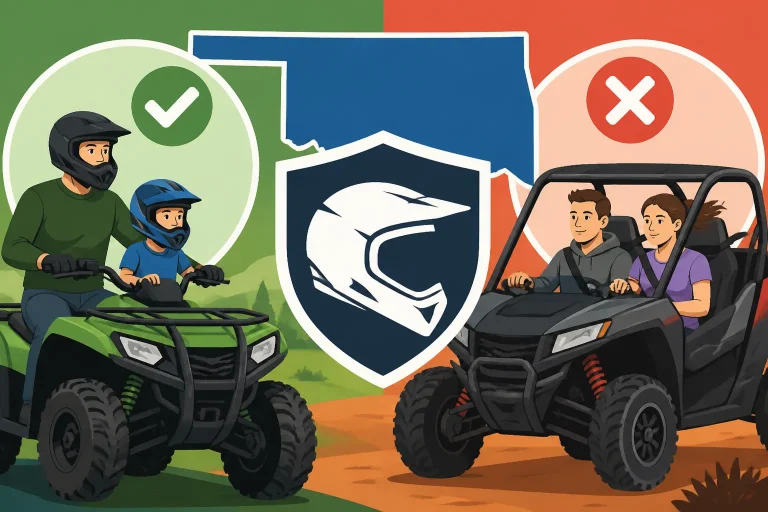
The resident land access permit does not, by itself, establish that you are old enough to ride, satisfy helmet requirements, authorize road use, or waive a private park’s safety rules. Those questions are governed by other laws or by the rules of the property you visit.
This can be especially confusing for families. A parent may hold a permit while a teen or younger child is the person operating the machine. The parent should not assume that the permit automatically covers every rider in the group or overrides age-based requirements. Check whether the permit is individual, whether additional riders need separate authorization, and what youth rules apply to the specific location.
Likewise, do not assume a land access permit makes public roads legal riding routes. Road access depends on road type, local rules, and applicable vehicle laws. For a broader overview of rider access and permit categories, see Oklahoma Land Access Permit Cost and the relevant property rules before planning a route.
Who May Need a Resident Permit
Residents should check the land, not just their address
Being an Oklahoma resident is important when determining which permit category applies, but residency alone does not tell you whether a permit is required for a particular ride. The first question is where you plan to go. The next is what activity you plan to do there. A person heading to a private riding park, for example, may be subject to the park’s own admission and waiver terms rather than a state land-access permit program.
Some land-access programs are associated with specific wildlife management areas or timber company properties. Those places may have special rules that differ from ordinary state park access or private OHV facilities. If the property’s information mentions a land access permit, read the details closely: the permit may be only one condition among several.
When a ride includes more than one property, treat each stop separately. A permit that applies at one site might not apply at the next. Make a short itinerary and note the entry requirements for each location, especially if you are traveling through southeast Oklahoma, where several land types and access arrangements may be part of the same weekend.
Nonresidents should not assume a resident permit is the right category
A person who lives outside Oklahoma should not buy or rely on a resident permit simply because they own property in the state, keep a machine at a lake cabin, or ride with Oklahoma relatives. Permit categories are based on the program’s eligibility definitions, not on where the ATV is stored or where the owner plans to ride.
Visitors should review the nonresident rules before traveling. The applicable permit, if one is required, may differ from a resident permit, and some age-based or activity-based exemptions may be limited to residents. That can change the paperwork a visiting family needs to bring, even if the Oklahoma resident hosting the trip already has a permit.
If you are inviting friends from Texas, Kansas, Arkansas, or Missouri, do not assume that one resident permit covers the group. Ask each visitor to check the requirements for their own status and the specific land they intend to access. Oklahoma Resident vs Nonresident Permits explains why the distinction matters when planning a ride with out-of-state guests.
Riders under 18 and older residents may have different rules
Age can affect whether a person needs a land access permit, but an exemption from one permit is not an exemption from every riding rule. Oklahoma’s permit guidance includes age-related exemptions for some residents. Before relying on an exemption, confirm the applicable age threshold, residency requirement, and the land or activity it covers.
For a household with multiple riders, it is worth checking each person’s status separately. A parent may need a permit while a child is exempt, or an older resident may qualify for an exemption that does not extend to another adult in the group. Do not assume the permit is automatically shared by everyone riding in the same vehicle or traveling in the same truck.
Age exemptions also do not erase rules about helmets, supervision, passenger capacity, or machine suitability. A child’s permit status and a child’s riding requirements are different issues. For additional context, see Do Oklahoma Kids Need a Permit? and confirm the site’s own youth rules before the trip.
Where the Permit May Apply and What It Does Not Cover
Start with the named property
The safest way to determine whether a resident land access permit applies is to identify the property by its official name and then check the managing agency’s access information. Do not rely on an old social media post, a map pin, or a friend’s memory of a previous visit. Land arrangements, seasonal access windows, and entry procedures can change.
Some Oklahoma land-access rules relate to particular wildlife management areas and timber company lands. Those properties can have restrictions that would be surprising to riders accustomed to a dedicated OHV park. A site may permit riding only during a specified season, on designated roads, or under conditions connected with hunting access. A valid permit does not necessarily mean that every road or off-road area is open.
If you are considering Honobia Creek or Three Rivers, check the current requirements for the exact property and activity before setting out. Oklahoma Permits for Honobia Creek and Oklahoma Permits for Three Rivers are relevant topics to review alongside the land manager’s rules. Confirm whether the permit is required, how access is handled, and whether an ATV or UTV may be used for your planned purpose.
A permit does not create access rights on private land
A state or program permit is not a substitute for permission from a private landowner. If a route crosses a privately owned ranch, farm, timber tract, or oil lease, you need to know that access is allowed. A gate, cattle guard, or visible tire track is not proof that the public may ride through.
This is a common source of frustration: a map may show a road, but the road may cross land where public access is limited or conditional. A permit cannot authorize trespass or override posted restrictions. When a property owner or manager requires written permission, get it before the ride and carry the confirmation in a form you can access without cell service.
If the route includes private land, ask specifically about motorized access, allowed vehicles, open dates, speed limits, and whether guests may ride. Do not rely on permission given to another person unless it clearly extends to you and your group. The same caution applies to private parks: their admission terms and waivers are separate from a public-land access permit.
It does not replace a riding-area admission fee or site-specific permit
A land access permit should not be confused with park admission, camping charges, a private property waiver, a hunting license, or any other site-specific requirement. A place may require several separate steps before you can ride. The land access permit may satisfy only one of them.
For instance, a rider could need to check in at a property, display an access permit, follow a seasonal schedule, and stay on designated roads. A private OHV park might instead require a day admission purchase, a signed waiver, and compliance with its own age and equipment rules. These arrangements are not interchangeable just because each involves payment or paperwork.
Make a checklist for every destination. Include the permit category, entry process, permitted riding area, hours or season, camping rules, machine restrictions, and any additional fee or waiver. Oklahoma Permit Questions Parks Hear can help frame the questions to ask, but the property’s own instructions should guide your final plan.
| Question | What to verify | Why it matters |
|---|---|---|
| Is this the right permit category? | Resident or nonresident status and eligibility | The wrong category may not authorize access |
| Does the permit apply at this property? | Official property name and managing agency | A permit may be limited to specific lands |
| Is ATV or UTV use allowed? | Vehicle type, purpose, routes, and season | Access permission may not include recreational riding |
| Does each rider need separate authorization? | Permit holder, guests, and age exemptions | One person’s permit may not cover the whole group |
| Are there extra requirements? | Check-in, waiver, admission, hunting license, or camping rules | A permit may not satisfy every entry condition |
| Can you show proof without service? | Paper copy, saved confirmation, or accessible record | Rural coverage can be unreliable |
How to Check Eligibility and Get the Right Permit
Confirm the current rules before paying
Start with the official permit information for the land access program and the specific property you plan to visit. Check the permit category, who qualifies as a resident, whether age exemptions apply, the permitted uses, the relevant season, and how the permit must be presented. If an important point is unclear, contact the agency or property manager rather than guessing.
A fee can change, so confirm the current amount and payment process before submitting an application. Some permits are described as annual, while others may be offered for shorter periods or particular uses. Do not rely on an old receipt or a previous season’s fee to determine what you owe now.
The most useful questions are concrete: “Does this resident permit cover this property?” “May I use an ATV for recreation here?” “Does each rider need a permit?” “Is the permit valid for the planned dates?” “Do I have to check in at a kiosk or office?” Clear answers prevent the frustrating situation of reaching a remote entrance only to discover that the group has the wrong paperwork.
Apply through the authorized channel
Use the official channel designated for the permit. Depending on the program, that may be an agency website, an authorized vendor, or another specified point of sale. Confirm the channel before sharing personal information or making a payment, especially if you find a third-party page through a general search.
When completing the application, enter your information carefully and save the confirmation. Check that the name and residency details match the permit holder’s documents. If the permit is attached to a particular account or identity, avoid assuming that a screenshot or receipt belonging to one person can be used by another.
If you are helping an older family member or arranging a group ride, make sure the person who needs the permit is the actual permit holder when required. Keep the confirmation somewhere accessible, and note any instructions about displaying or carrying proof. Where to Buy a Land Access Permit offers a useful topic to review when you are sorting out authorized purchase options.
Keep proof available in the field
Rural riding areas can have weak or nonexistent cell coverage. If the permit is electronic, do not assume you will be able to log in at the gate. Save the confirmation for offline access, and consider carrying a printed copy if the program accepts one. Keep any required identification with the person whose name appears on the permit.
A simple document routine can prevent a lot of scrambling. Before loading the trailer, check that the permit confirmation is saved, the machine paperwork is in order, and every rider has the documents they need. A waterproof phone pouch or document sleeve can be useful in a dusty, wet, or muddy environment; Amazon is one possible place riders look for basic storage accessories, but the item itself does not replace official proof.
If you use a phone for the permit, charge it before leaving and consider a backup power source. A small power bank found through a retailer such as Amazon may be practical on a long trip, particularly when you are also using navigation. Still, keep the important details available offline rather than depending on a live connection at a remote entrance.
Understanding Fees, Permit Duration, and Exemptions
Check whether the permit is annual or short term
Permit duration is one of the first details to confirm. A resident annual permit and a short-term permit are not necessarily equivalent in duration, eligibility, or permitted use. Make sure the option you select covers the actual dates of your trip and the kind of access you need.
If you ride only once or twice a year, a shorter option may be more appropriate if the program offers one and it applies to your destination. If you visit a covered property repeatedly, an annual option may be more convenient. Compare the terms rather than choosing only by the length of the label or the price shown at checkout.
Also check when validity begins and ends. Do not assume that “annual” always means a calendar year, a full twelve months from purchase, or a particular hunting season. The permit instructions should explain its validity period. Keep the receipt or confirmation in case you need to resolve a question about the purchase date or expiration.
Understand the difference between exemption and permission
An exemption means a person may not need a particular permit under specified conditions. It does not automatically grant access to every property or allow every activity. A rider who is exempt from a land access permit may still need permission to enter a private site, comply with check-in rules, or follow a property’s vehicle restrictions.
The distinction matters for families and mixed-age groups. If one rider qualifies for an exemption, that does not necessarily exempt an adult companion. Nor does it guarantee that the exempt rider can use a machine on every property. Check the exact wording and scope of the exemption before applying it to a trip.
Keep a simple record of the basis for an exemption if you expect questions, such as the relevant age or residency status. Avoid assuming that an exemption shown on one program page carries over to another. For age-related details, see Oklahoma Permit Exemptions by Age and verify that the rule applies to the land and activity you have in mind.
Budget for related trip costs separately
The permit may be only one small part of the cost of a riding day. Depending on where you go, you may also need to account for site admission, camping, fuel, a required land-use authorization, equipment, or a separate permit. These charges can come from different agencies or property managers, so do not assume they are bundled together.
A practical budget starts with the destination, not a single permit price. List each place you plan to visit and identify the costs tied to access, camping, and riding. If your group includes visitors, check whether their permit category differs from yours. If the property has a seasonal check-in process, verify whether that involves an additional step or cost.
Before paying, review the receipt or checkout page carefully. Confirm what the charge is for, who it covers, and how long it remains valid. If you see multiple charges, do not assume they are duplicates; they may correspond to different permissions. When in doubt, ask the seller or managing agency to explain the line items.
Rules That Can Still Apply After You Have a Permit
Seasonal access and designated roads
A permit does not necessarily mean a property is open year-round. Some land access arrangements are seasonal, and the allowed window may be connected to wildlife management, hunting activity, or landowner agreements. Riding outside the approved period can create problems even if your permit itself has not expired.
The route matters too. A property may restrict motorized travel to designated roads, with no cross-country riding. That means a wide open-looking field or an old two-track is not automatically fair game. Follow posted signs and maps, and do not cut across land to save time or avoid a muddy stretch.
Before the trip, note the property’s season dates and route restrictions in your plan. If you are riding in a group, tell everyone where the allowed routes begin and end. Oklahoma Timber Land Access Rules can help you understand why access conditions on timber property may differ from those at a dedicated riding park.
Speed, hunting, and retrieval rules
Some land access areas have rules shaped by hunting and wildlife management. That can affect speed, the roads you may use, the times you may ride, and whether you can use a machine for hunting-related tasks. Do not assume that riding rules are the same during every season or for every purpose.
For example, an area may allow access on designated roads but prohibit general trail riding. A hunting-related privilege might also be limited to a specific activity, such as retrieving game under defined conditions. These are not interchangeable permissions. If you are visiting during a hunting season, check whether riders must check in, carry particular documents, or stay off certain routes.
Keep your riding pace conservative, especially around blind turns, gates, pedestrians, hunters, and work vehicles. A permit is not permission to create hazards or ignore a posted speed limit. If the property sets a limit, follow it even when the road appears empty.
Machines, passengers, and equipment
A land access permit does not certify that your ATV or UTV is suitable for every property. A site may restrict vehicle types, passenger use, width, or equipment. A narrow forest route may not accommodate a wide side-by-side, while a road built for utility traffic may have different conditions than a marked OHV trail.
Before towing a machine to the property, confirm that the planned vehicle is allowed. Check passenger capacity against the manufacturer’s design, not just the available seats. A permit does not make an extra passenger safe or legal if the machine was not built to carry them.
Bring the equipment required by the site and the conditions. That may include approved helmets for young riders, lighting, safety gear, recovery equipment, or items specified by the land manager. Do not use an access permit as a substitute for checking local riding rules. The rules for a UTV, youth quad, or passenger may differ from those for an adult operating a single-seat ATV.
Common Mistakes and a Practical Pre-Ride Checklist
Mistaking a permit for a statewide pass
The most common mistake is treating the resident land access permit as a universal Oklahoma riding pass. It is not. A permit may apply to a specific program or property, while another riding location may require admission, a waiver, a different permit, or landowner permission.
Another version of the same mistake is assuming that a permit authorizes riding anywhere on the property. It may authorize access while still limiting the route, season, vehicle, or activity. Read the conditions, not just the permit name.
The fix is simple: check the permit and property together. If the permit page does not clearly name your destination or describe your intended use, ask before you travel. Oklahoma Permit Questions Riders Ask is a helpful companion topic when you are sorting through common questions about coverage and eligibility.
Assuming one person’s permit covers the group
Groups often make plans around the person who handles the booking or paperwork. That can leave other riders unsure whether they also need authorization. Do not assume that one permit covers a family, passengers, guests, or multiple machines unless the program expressly says so.
Before departure, make a list of the people who will ride and the machines they will use. Check whether the permit is associated with an individual, vehicle, or group. If someone is exempt, verify the exemption separately. If a guest is a nonresident, confirm whether that changes the permit category.
This small check is especially valuable when people join at the last minute. A friend who meets you at the trailhead may have different eligibility than the resident who planned the trip. Ask everyone to review the requirements before meeting at the gate, not after the group has already driven several hours.
Leaving paperwork and access details until the last minute
A permit problem is harder to fix when you are already at a rural entrance with a trailer behind you and no cell signal. Waiting until the morning of the ride can also mean you overlook a seasonal closure, a check-in requirement, or a rule against the vehicle you planned to bring.
Use a pre-ride checklist at least a few days ahead. Confirm the destination, permit category, validity dates, vehicle rules, route restrictions, entry instructions, and any additional charges or waivers. Save the official details offline and share the key rules with your riding group.
A clear checklist can be short:
- Name the exact property and identify its manager.
- Confirm that ATV or UTV use is allowed for your planned activity.
- Check whether a resident land access permit applies.
- Verify eligibility, duration, fees, and exemptions.
- Confirm whether every rider needs separate authorization.
- Review seasonal dates, designated roads, and check-in steps.
- Save proof offline and bring any required identification.
- Tell the group about age, passenger, helmet, and equipment rules.
- Recheck the property’s instructions before leaving, especially after weather or seasonal changes.
Planning a Smooth Ride With the Right Permit
Use the permit as one item in a complete access plan
A good ride plan connects the paperwork to the place. Write down the destination, the route to the entrance, where to check in, what proof to show, and which roads are allowed. If your ride includes camping or multiple properties, list each location separately. This makes it easier to spot a missing requirement before the truck is packed.
Keep your documents organized. The permit confirmation, machine registration, identification, and any landowner permission should be easy to find, but they are not the same document. A labeled folder or a saved offline file can reduce the last-minute search through glove boxes and phone messages.
For digital storage, use a method that suits the conditions. A protective sleeve or phone pouch is useful when documents and devices may get dusty or wet. Amazon may offer basic organizers and protective cases, but focus on durability and easy access rather than assuming any accessory is required by the permit program. The requirement is to carry and show the appropriate proof in the format accepted by the property.
Ask the right questions before the trip
If the rules are not clear, ask the agency or property manager specific questions. “Can I ride here?” may produce a vague answer; “Can a resident use an ATV for recreational riding on these designated roads during these dates with this permit?” is much harder to misunderstand.
Ask whether the permit is required for each rider, whether a youth or older resident exemption applies, and whether guests need separate authorization. Ask how to check in, whether proof can be shown electronically, and what to do if the kiosk or office is closed. If you plan to camp, ask whether camping is allowed and whether it needs separate registration.
Write down the answer and the date you received it. If you speak with someone by phone, note the office or department and any instructions. That record will not override posted rules, but it can help you remember the details and follow up if the trip plan changes.
Recheck before each visit
A permit you used on a previous trip is not proof that the next trip has identical conditions. Seasons change, land arrangements can shift, and a road may close after weather damage or land-management work. Recheck before each visit, particularly when you return after a long gap or ride during hunting season.
The same is true when you bring a different machine. A route that works for a compact ATV may be unsuitable for a wider UTV. A group with more passengers or younger riders may have additional safety considerations. Review both access conditions and the vehicle rules instead of relying on last year’s plan.
A few minutes of checking can save a long drive and an uncomfortable conversation at a gate. When you know what the resident land access permit covers—and what it does not—you can arrive with the right expectations, the right paperwork, and a safer plan for everyone riding.
Disclaimer
This article is for general informational purposes only and does not constitute professional advice. Laws, prices and regulations vary by location and change over time. Consult a qualified professional for guidance on your specific situation.