Oklahoma Riding Compared to Texas
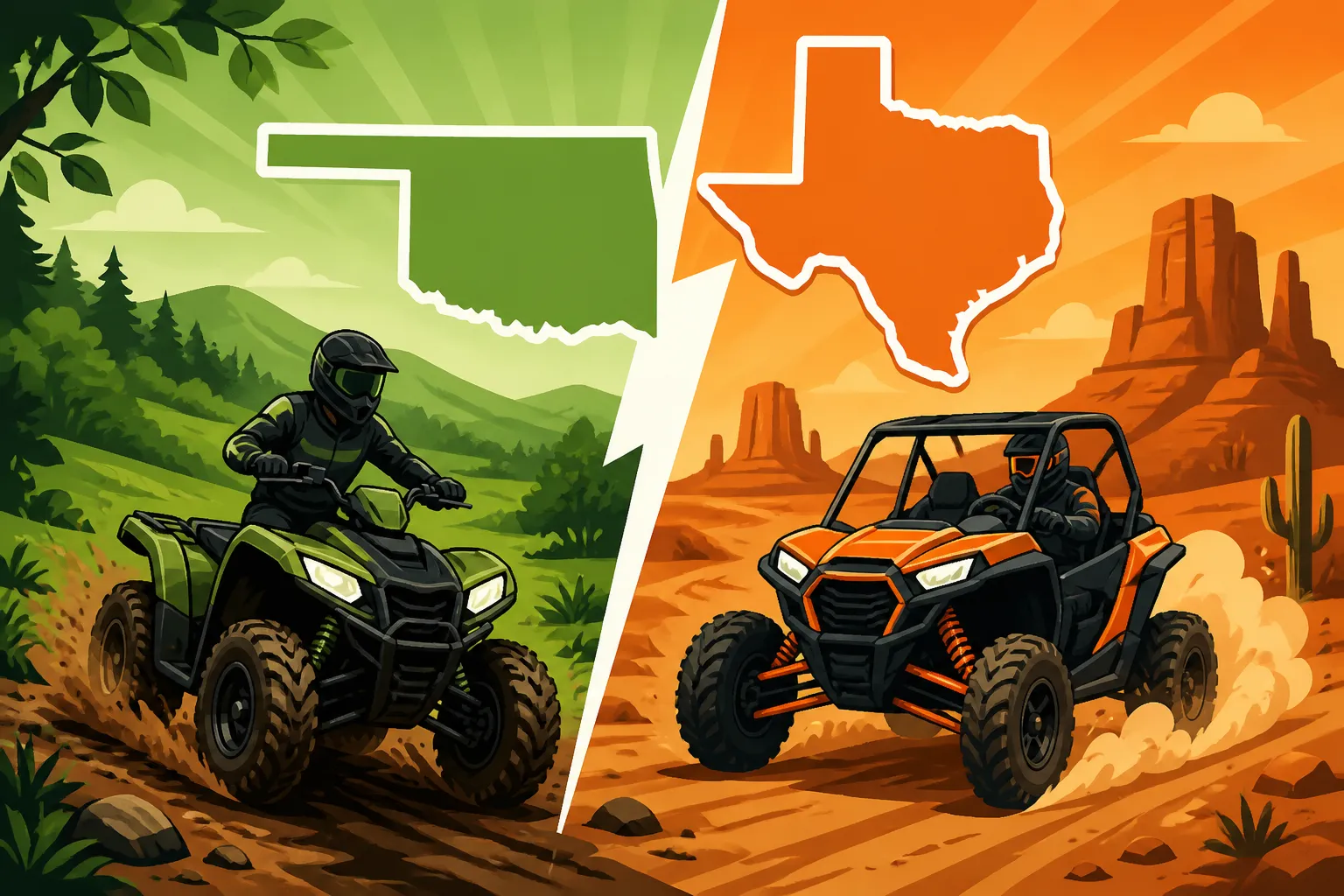
Choosing between an Oklahoma trail weekend and a Texas riding trip often comes down to more than mileage. Riders need to know what kind of terrain they’ll find, whether the riding area is public or privately operated, and what permits or local rules apply. This guide compares the two states so you can plan around the ride you actually want.
How Oklahoma and Texas riding areas differ
Neither state offers one single riding experience. In both places, the character of a trip depends on the specific park or land you choose, the machine you bring, and the rules in effect there. Still, Oklahoma and Texas have different patterns of terrain and access that can help you narrow down your options.
Oklahoma offers a mix of dunes, woods, and rocky trails
Oklahoma is a strong choice if you want variety without crossing a huge stretch of the state between very different riding environments. Little Sahara State Park near Waynoka is known for open sand dunes, while areas such as Robbers Cave near Wilburton offer a more wooded, hilly setting. Cross Bar Ranch near Davis adds another private riding option, with terrain that contrasts with the open dunes.
That variety matters when you’re planning a group ride. One family might want a sandy area where younger riders can practice, while a group with experienced drivers may be looking for hills, turns, or more technical ground. Before choosing, compare the terrain and vehicle rules at the individual location rather than assuming that every Oklahoma riding area will suit every quad or side-by-side. For an overview of locations and ride styles, see [Oklahoma ATV Trails: Where to Ride].
Oklahoma also has riding opportunities connected to timber company land and public access arrangements. These can be appealing, but access may be limited by season, landowner rules, designated routes, or permit requirements. A trail that appears on a map is not automatically open for riding. Check current access information before towing your machine, especially if your plan involves [Oklahoma Timber Land Access Rules].
Texas offers broad regional variety and many private riding destinations
Texas is large enough that a weekend in one region can feel very different from a trip elsewhere in the state. Riders may find wooded trails, rocky ground, open areas, or sandy conditions depending on where they go. That regional spread gives Texas riders plenty of choice, but it can also mean a longer drive to reach the terrain they want.
Many Texas riding trips are built around a specific private park or managed property. That can make planning straightforward when the park clearly lists its machine restrictions, operating rules, and amenities. It also means you’ll want to check details directly with the destination: a park’s permitted vehicle types, trail difficulty, camping options, and operating schedule may not match another park’s.
Oklahoma also has private riding destinations, so the distinction is not simply “public Oklahoma versus private Texas.” The more useful question is how the particular site manages access. Compare the cost structure, rules, and land type for each destination, then decide whether you prefer a developed park, a state park, or a more limited-access land arrangement.
| Planning question | Oklahoma | Texas |
|---|---|---|
| Terrain variety | Dunes, wooded areas, hills, and other trail settings across the state | Broad regional variety, with terrain depending heavily on the destination |
| Common planning challenge | Checking site-specific access, seasonal rules, and permits | Choosing a destination across a large state and confirming each park’s rules |
| Good fit for | Riders seeking a mix of dunes, wooded riding, and regional options | Riders willing to travel for a particular park or terrain type |
| Before leaving home | Confirm machine eligibility, access status, and required permits | Confirm operating rules, vehicle eligibility, and park access arrangements |
Compare access rules before you load the trailer
A riding area can look perfect in photos and still be the wrong choice if your machine is not allowed, the access window is closed, or the route is not open to recreational riding. This is one of the most frustrating parts of planning: the trip may seem settled until you discover a rule that changes the whole itinerary.
Oklahoma access can depend on the land and season
Oklahoma riding rules are not identical at every location. State parks, private ranches, and timber company properties can each set different conditions. For example, certain timberland riding opportunities are associated with a defined seasonal window and may involve additional requirements. That means it is especially important to verify the exact site’s rules instead of relying on an old trip report or a map pin.
If your plans include Honobia Creek or Three Rivers, make access and permit research part of the trip checklist. Rules for these areas can differ from those at a private off-road park, and access may be connected to land-management or hunting-season requirements. The guide to [Oklahoma Land Access Permits Explained] can help you identify the questions to resolve before departure.
Also check whether the area allows your specific vehicle. A trail suitable for a dirt bike may not accommodate a wide side-by-side, while a route shown as an OHV trail may have limitations not obvious from the map. Contact the land manager or park before you travel if the vehicle rules are unclear.
Texas access is often destination-specific
Texas has no single set of visitor rules that applies to every private riding property. A park may have its own waiver, age requirements, permitted vehicle categories, speed limits, camping rules, or noise restrictions. Even two nearby destinations may handle access differently.
That makes direct confirmation worthwhile, particularly if you’re bringing a youth quad, a four-seat UTV, or a machine with unusual dimensions. Ask whether your vehicle type is allowed on the trails you want to ride, whether a waiver is required, and whether camping or day access needs to be arranged in advance. A quick check can prevent a long drive ending at a gate where the machine or group does not meet the site’s rules.
The same habit helps in Oklahoma. Look up the destination’s rules close to your departure date, and keep a note of who confirmed them. If weather, seasonal access, or land management affects the route, a general state-level overview may not tell you whether the trail is open that day.
Choose terrain that matches your machine and riding group
The best state for your trip is often the one with the right ground for the people and machines coming along. A dune day, a wooded trail ride, and a rocky route ask different things of riders. Consider skill levels, vehicle width, heat tolerance, and recovery needs before settling on a destination.
Match the ride to the machine
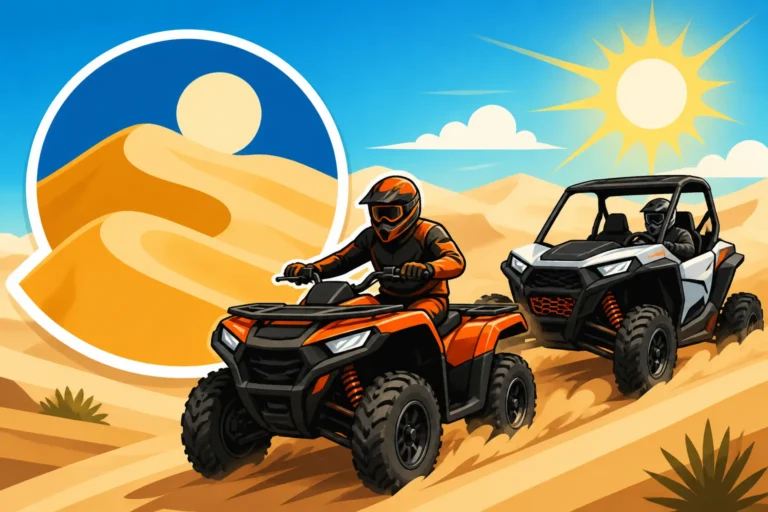
Sand riding can be demanding in a different way from wooded or rocky trails. A machine that feels easy to handle on a firm trail may behave differently on loose sand, where traction, tire choice, and rider technique matter. Oklahoma’s Little Sahara is a recognizable option for riders seeking dunes, but review park rules and equipment guidance before going. [Oklahoma Dune Riding Explained] covers some of the practical differences involved in this kind of trip.
On wooded or rocky ground, clearance and underbody protection may matter more than flotation. Tight trails can also be a problem for a wide UTV, even when the machine is mechanically capable. Check trail width and vehicle restrictions rather than assuming that a side-by-side can follow any route open to ATVs.
If your group has mixed experience, plan a ride that gives newer riders room to build confidence without forcing the whole group onto terrain that feels intimidating. Ask about beginner-friendly sections and whether riders can return to camp or the staging area without completing a difficult loop.
Plan for weather, distance, and trail conditions
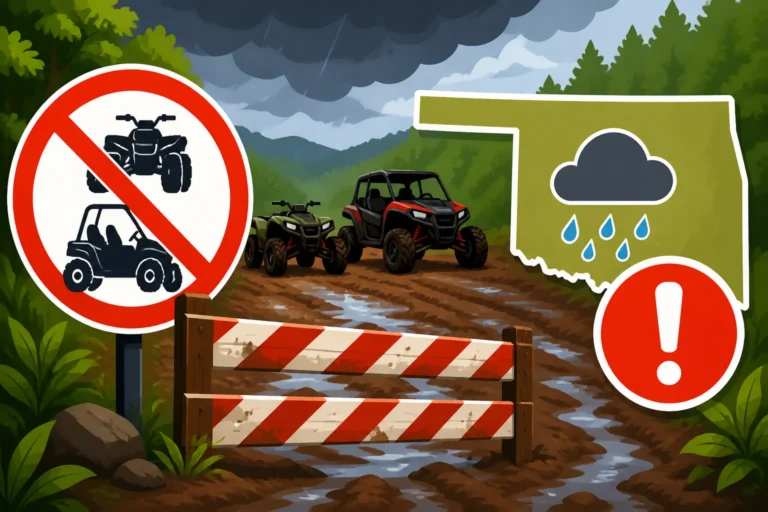
Weather can change the character of a ride quickly. Rain may make some clay or wooded trails slippery, while dry conditions can mean dust and reduced visibility. Heat can be a serious factor on open terrain, particularly when there is little shade or when riders are working hard in loose sand. Pack water, allow for breaks, and avoid building a schedule that leaves no room to slow down.
Before towing, check recent trail information from the park or land manager. A route that was passable last month may have closures or restrictions after heavy rain. For a useful planning checklist, see [Oklahoma Trail Conditions Before You Tow].
Maps can help you understand the layout, but they don’t replace local confirmation. onX Offroad can be useful for reviewing mapped routes and keeping track of where you are, particularly when a riding area has multiple trail options. Check that the map information fits the location’s current access rules, and don’t treat a mapped line as permission to ride private or closed land.
Make a practical plan for an Oklahoma or Texas ride
Once you’ve picked a destination, a little preparation can prevent the familiar problems: a missing permit, a machine that doesn’t fit the trails, or a group that arrives without enough food, water, or recovery gear. Use the same planning routine for either state, then add the requirements specific to the location.
Use a simple pre-trip comparison
Write down two or three possible destinations and compare them against your group’s needs. Include drive time, terrain, vehicle restrictions, access type, camping, and the rules you need to follow. If one location looks appealing but has uncertain access, keep a backup option rather than making the entire weekend depend on a single trail system.
For Oklahoma, include seasonal access and land-access permits in your research when relevant. For Texas, confirm the requirements of the particular park or property rather than assuming another destination’s rules apply. In either state, check whether the park requires a waiver or has rules for minors, passengers, helmets, pets, or alcohol.
A route-planning app such as onX Offroad may help you organize mapped routes and points of interest. It can be especially useful when a group is dividing responsibilities, such as one person checking trails while another confirms camping or access. Use it as a planning aid, not as a substitute for instructions from the land manager.
Prepare the machine and the people riding it
Before the trip, inspect tires, brakes, lights, fluid levels, and any equipment you rely on for recovery. Carry basic tools and a first-aid kit suited to the group. If you’re riding far from services, make sure someone knows the planned destination and expected return time.
Bring the gear that fits the terrain. Dune riding, wooded trails, and wet or rocky routes can call for different tire choices and protective equipment. If you’re uncertain whether a modification or accessory is appropriate, ask the park or a qualified mechanic rather than guessing based on a different type of riding.
For a first visit, leave room in the schedule to learn the area. Start with an easier route, check how the terrain feels, and regroup before the ride becomes more challenging. That approach is particularly helpful when children, newer riders, or machines with different handling characteristics are part of the group.
Decide based on the trip you want
Oklahoma may be the better fit when you want a choice of dunes, wooded trails, and other riding environments within the state, provided the destination’s access rules suit your plans. Texas may be a better fit when a particular region or private park offers the kind of terrain and facilities your group is looking for. Neither state is automatically the better riding destination; the right choice depends on your route, machine, experience, and appetite for planning.
Before booking a weekend, compare the actual destinations rather than comparing state reputations. Check the rules, confirm the trail is open to your machine, and make sure the ride matches your group’s comfort level. If you’re deciding between parks, [Oklahoma Trails That Allow Side-by-Sides] and [Oklahoma Trails for Kids] can help you think through vehicle fit and family suitability. Riders crossing the state line can also review [Oklahoma Rules for a Visiting Texas Rider] before setting out.
Disclaimer
This article is for general informational purposes only and does not constitute professional advice. Laws, prices and regulations vary by location and change over time. Consult a qualified professional for guidance on your specific situation.