Oklahoma Farm Use on County Roads
It's a common dilemma for folks living on the land in Oklahoma: you've got livestock to check, fields to tend, or equipment to move, and your trusty ATV or UTV is the perfect tool for the job. But then you hit a county road, even just for a short hop, and a wave of uncertainty washes over you. Can you legally be here? What if a trooper sees you? It's genuinely frustrating to feel like you're doing your necessary farm work but might be breaking the law. This guide will clear up the confusion surrounding Oklahoma's "instrument of husbandry" exception and how local county ordinances play into using your off-road machine on public roads for vital agricultural purposes.
The Instrument of Husbandry Exception: What It Means for Farmers
Oklahoma law provides specific carve-outs for vehicles and equipment used primarily for farming or ranching. This "instrument of husbandry" exception is crucial for anyone who relies on their ATV or UTV as a tool for their agricultural operations. It's not a free pass to drive anywhere, anytime, but it does offer significant relief for legitimate farm use. Understanding this exception is the first step to confidently using your machine on county roads when duty calls.
Defining "Instrument of Husbandry" in Oklahoma
So, what exactly is an instrument of husbandry? In Oklahoma, it generally refers to any vehicle or implement, including an ATV or UTV, that is exclusively or primarily used for agricultural purposes. This means its main job isn't recreation or commuting; it's directly tied to farming, ranching, or other related agricultural activities. Think about hauling feed, checking fence lines, inspecting crops, moving tools, or tending to livestock. These are all quintessential examples of the kind of work that would qualify your machine under this exception.
However, the key word here is "primarily." If you're using your side-by-side every weekend for trail riding at Little Sahara and only occasionally for farm chores, it might be a tougher sell to claim the full benefit of this exception. The intent and consistent use of the machine matter. It's about how your machine serves the daily demands of your agricultural livelihood, not just an occasional sideline activity. This distinction is vital because it shapes whether your machine needs a standard ATV registration or if it can operate under this more specialized rule.
Road Use Limits for Farm Machines
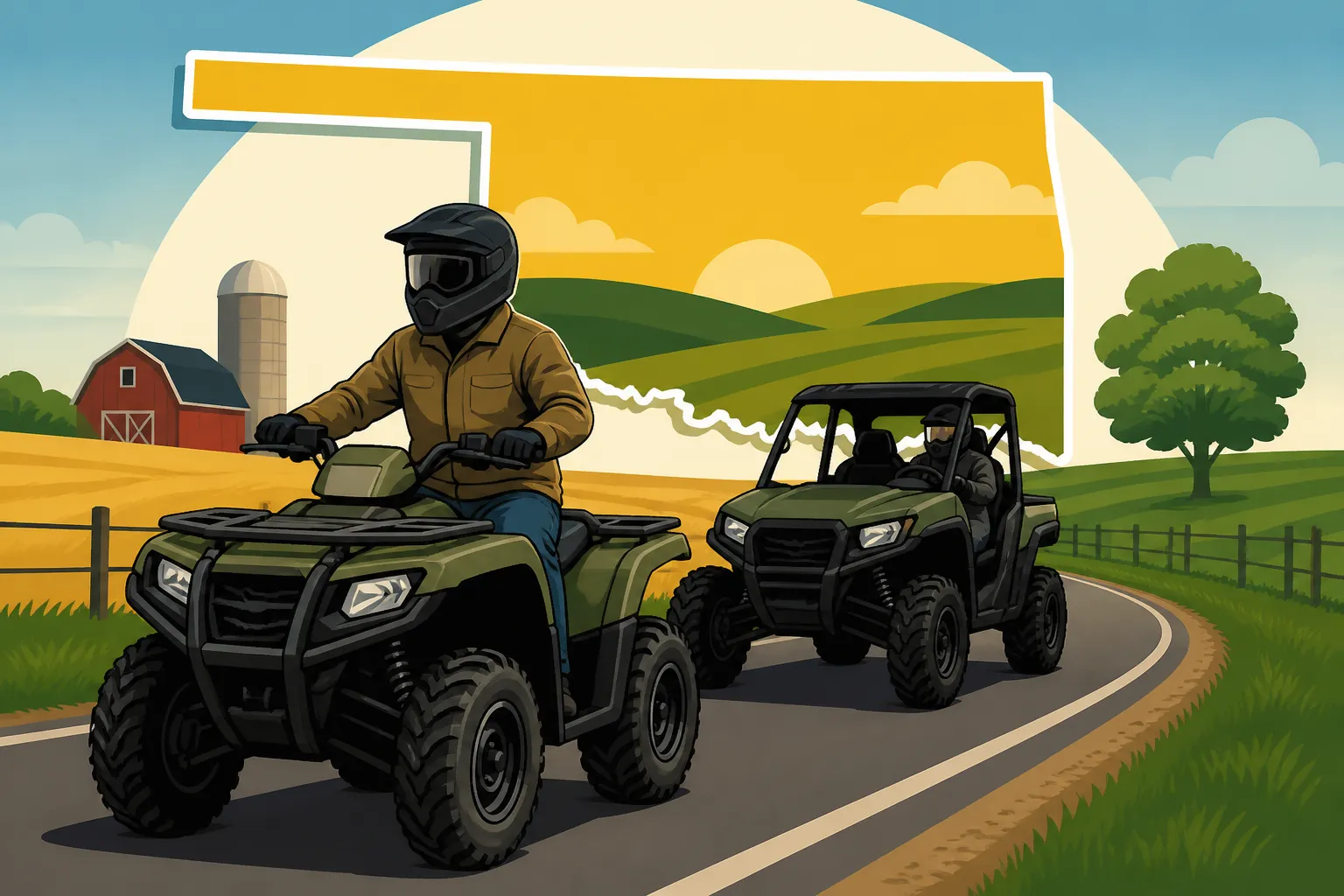
Even with the "instrument of husbandry" exception, there are important limitations on how and where these machines can be operated on public roads. This isn't about making your ATV a street-legal vehicle like a car or truck; it's about allowing specific, limited use to facilitate farm work. Generally, these machines are permitted to operate on public roads, including county roads, only for the purpose of moving from one portion of a farm to another, or from one farm to another, as long as it's within a reasonable distance for agricultural purposes.
You can't just take your farm UTV into town for groceries, even if it's on a county road for a bit. The travel must be directly related to your farm work. For example, moving a machine from your pasture on one side of a county road to your hay field on the other side is a perfect fit. Crossing a highway posted at thirty-five or less is often allowed under specific conditions, primarily daylight operation and directly crossing. This exception is designed to address the practical needs of rural life, acknowledging that farm operations often span land divided by public roadways.
Understanding "Farm Use": More Than Just a Tractor
When we talk about "farm use" for ATVs and UTVs on county roads, it's easy to picture a tractor plowing a field. But modern agriculture, especially in a state like Oklahoma, involves so much more, and ATVs and UTVs have become indispensable tools. The legal definition of "farm use" extends beyond just heavy machinery, encompassing a wide array of activities that keep a farm or ranch running efficiently.
Typical Agricultural Activities That Qualify
What kind of jobs make your ATV or UTV count as an "instrument of husbandry" for road use? The list is extensive and reflects the real-world demands of farming and ranching. Consider tasks like transporting feed to livestock in different paddocks, hauling tools or supplies to a remote corner of your property, or moving irrigation equipment between fields. Checking fences, monitoring cattle, spraying weeds in difficult-to-reach areas, or even just surveying your land are all legitimate agricultural activities.
These machines are fantastic for quickly getting across rough terrain, through muddy fields, or down overgrown trails that a larger vehicle simply couldn't manage. Many farmers customize their machines with accessories, perhaps from a brand like SuperATV, to enhance their utility for these very tasks – adding cargo racks, sprayers, or specialized tires. As long as the primary purpose of the trip on the county road is to facilitate one of these direct farming or ranching operations, you're likely on solid legal ground under the instrument of husbandry rule. It's about efficiency and necessity for your livelihood.
What Doesn't Count as Farm Use
Now, it's equally important to understand what typically doesn't fall under the "farm use" umbrella for road operation, even if you own a farm. This is where riders sometimes get into trouble. Driving your ATV to a friend's house a few miles down the county road, even if your friend is also a farmer, usually won't qualify. Using your side-by-side to pick up lumber from the local hardware store, or heading to the fishing hole on a weekend, generally falls outside the scope of agricultural use, even if you pass by your own fields.
The intent of the trip on the public road must be directly and exclusively related to your farm or ranch operations. If your ATV is primarily a recreational vehicle and only occasionally pressed into service for farm chores, you may not be able to rely on the instrument of husbandry exception for road travel. For those who frequently need to use their UTVs on public roads beyond the strict confines of farm-to-farm movement, considering [Oklahoma's Street-Legal UTV Class Explained] might be a more appropriate path, as it allows broader road access with specific registration and equipment requirements. It's crucial to be honest about the primary purpose of your journey when considering this exception.
County Road Rules: What Local Ordinances Add to the Mix
While state law provides the broad framework for the "instrument of husbandry" exception, local jurisdictions in Oklahoma, specifically county commissioners, have a significant say in how and where ATVs and UTVs can operate on the roads. This means that what's permissible in one county might not be in the next, leading to a patchwork of rules that can be confusing for rural riders. It's a key detail often overlooked by those who assume statewide consistency.
How County Commissioners Influence ATV/UTV Access
Oklahoma law grants county commissioners the authority to adopt ordinances that either allow or restrict the operation of ATVs and UTVs on county roads within their jurisdiction. This local control is a big deal. It means that while state law might permit an "instrument of husbandry" to cross a road or move between fields, the local county commissioners can further define or limit that access, particularly for general recreational use beyond specific farm tasks. They might open certain roads, restrict others, or set specific times for operation.
This local decision-making process is rooted in balancing the needs of rural residents, public safety concerns, and the unique characteristics of each county's road system. A county with a high volume of recreational riders might impose different rules than one dominated by agricultural land. It's always a good idea to check with your specific county clerk's office or sheriff's department to understand any local ordinances that might affect your use of a farm machine on their roads. Failing to do so could lead to an unexpected citation, even if you believe you're following state law.
Finding Out If Your County Has Opened Roads
So, how do you figure out if your local county has opened any roads for ATV or UTV use, especially if you're not strictly operating under the instrument of husbandry exemption but still doing farm-related movement? The best course of action is to directly contact your county commissioner's office or the county clerk. Many counties will have their ordinances posted online or can provide you with a copy upon request. Some might even have signage posted at county line entrances, but relying solely on that is risky.
For example, some counties might pass an ordinance opening up specific unpaved roads for recreational ATV use, which could also apply to farm machines, while others might stick to the state's more restrictive guidelines. Remember, even if a county opens roads, it doesn't automatically mean you can operate your farm ATV on state highways or city streets within that county. The authority typically applies only to county-maintained roads. Understanding [Oklahoma County Commissioners and ATV Roads] is crucial for any rider, but especially for those whose daily work takes them onto these local arteries.
Navigating Public Roads Beyond Farm Exemptions
Sometimes, even if your primary use is agricultural, you might find yourself needing to operate your ATV or UTV on public roads in ways that push beyond the strict "instrument of husbandry" exception. Perhaps your farm work requires travel slightly further than what's deemed "reasonable" between fields, or you occasionally need to access a different type of public road. This is where it gets a bit trickier, and understanding other road-use provisions or the implications of not meeting them becomes vital.
When Your Farm Machine Needs Standard ATV Registration
While the "instrument of husbandry" exemption allows specific road use for farm work, it doesn't exempt your machine from needing a standard ATV registration if it falls outside the parameters of that exemption. Remember, Oklahoma requires almost all ATVs and UTVs to be registered, even those used exclusively off-road. The [Oklahoma ATV Registration You Pay Once] covers your machine for life, even if you are primarily using it on the farm. The instrument of husbandry exception deals with road use privileges, not the registration requirement itself.
If your machine was purchased after the July 2005 cutoff for ATVs or the July 2008 cutoff for UTVs, and you plan to use it for any purpose that might touch a public road, even briefly, it needs to be titled and registered. This includes moving it from one part of your property to another if that movement involves a public road, even a county road, and you can't strictly claim the instrument of husbandry exception for that specific trip. It's a small $11 fee to title and register, but it's important to be compliant. Many riders are unaware that this basic registration applies even to their farm machines.
Crossings and Limited Road Travel
Even without a street-legal UTV conversion or broad county-opened roads, Oklahoma law generally permits ATVs and UTVs to cross public highways and roads. However, these crossings come with strict conditions. For instance, [Oklahoma Highway Crossings in Daylight] are usually limited to sections of highway where the posted speed limit is 35 mph or less, and the crossing must be made perpendicular to the roadway. These are quick, direct movements, not cruising down the shoulder.
It's also generally required that such crossings occur during daylight hours. This isn't about convenience; it's about safety. An ATV or UTV, especially one not equipped with extensive road-worthy lighting, can be difficult to see by other motorists, particularly at dawn, dusk, or night. These rules are designed to minimize risk on shared roadways. If your farm spans both sides of a state highway, understanding these crossing rules is critical. It's a far cry from street-legal use, but it does provide a necessary allowance for divided farm properties.
Essential Safety and Legal Considerations for Farm Riders
Operating any vehicle on a public road, even an off-road machine under an exemption, comes with significant responsibilities. For farmers relying on their ATVs and UTVs for work on county roads, safety and legal compliance aren't just good ideas; they're non-negotiable. Being prepared and informed can prevent accidents, fines, and legal headaches, ensuring your valuable farm machine remains a tool, not a liability.
Visibility and Safety Gear on County Roads
When you're out on a county road, even if it's just for a short distance between fields, visibility is paramount. Unlike cars, ATVs and UTVs are smaller, often slower, and can be harder for other drivers to spot, especially around curves or over hills common on rural roads. Consider adding reflective tape to your machine, particularly if it's not already brightly colored. Aftermarket lights from companies like SuperATV can significantly improve your visibility, especially as daylight fades or in adverse weather conditions.
Wearing a helmet, even if not strictly required for an adult on private land or under certain instrument of husbandry uses, is always a wise choice when interacting with public roads. For any rider under eighteen, [Oklahoma Helmet Law for Riders Under 18] is a strict requirement, regardless of where they're riding. Encouraging all riders on your farm to wear appropriate safety gear, including eye protection and sturdy footwear, should be standard practice. Remember, just because you have a legal right to be on the road doesn't mean other drivers will always see you or react appropriately.
What to Carry and What to Expect from Law Enforcement
When operating your ATV or UTV on a county road for farm use, it's a good practice to carry certain documents. While you might not need a driver's license for an off-road machine if you're over 16, having your vehicle's [Oklahoma ATV Registration Application Explained] or proof of ownership handy is always smart. A bill of sale for older machines or the Manufacturer's Statement of Origin for newer ones can prove the machine belongs to you.
Law enforcement officers, whether state troopers or county deputies, are there to ensure public safety and enforce the law. If you're stopped, be polite, cooperative, and explain your purpose. Clearly state that you are operating an instrument of husbandry for legitimate farm use. Officers are generally familiar with these exemptions, especially in rural areas, but they also need to verify that you're not abusing the privilege. They might ask about your destination, the nature of your farm work, and check the machine's VIN. Being prepared with your paperwork and a clear explanation can make the interaction smooth and efficient.
Agricultural Permits and Excise Tax Exemptions
Beyond the general "instrument of husbandry" provision for road use, Oklahoma also has specific agricultural permits that relate to ATVs and UTVs, primarily affecting excise tax. While these permits don't typically grant blanket road-riding privileges, they are a significant financial benefit for farmers and ranch owners and underscore the state's recognition of these machines as critical farm equipment.
The Role of an Agricultural Permit in Oklahoma
Historically, agricultural permits played a role in exempting certain machines from registration or allowing broader road use. However, the laws have evolved. Today, the primary benefit of holding an Oklahoma Agricultural Permit for your ATV or UTV is the exemption from excise tax at the time of purchase or transfer. This can be a substantial saving, considering Oklahoma's 4.5 percent excise tax on vehicles. [Oklahoma Ag Permit Holders Pay No Excise] is a major perk for legitimate agricultural operations.
To qualify for this exemption, you typically need to be engaged in a genuine agricultural pursuit, and the machine must be used primarily for that purpose. It's not just about owning a few acres; it's about active farming or ranching. The permit itself usually comes with an application process through the Oklahoma Tax Commission and requires certain documentation to prove your agricultural status. This exemption helps reduce the initial cost of acquiring these essential workhorses for your farm.
Excise Tax Cutoff Dates and Exemptions
The agricultural excise tax exemption works hand-in-hand with certain cutoff dates for registration and titling. For example, [Oklahoma UTV Cutoff of July 2008] and [Oklahoma ATV Cutoff of July 2005] impact whether your machine needs to be titled at all, and thus whether excise tax would even apply in the first place for older models. If your machine was manufactured and purchased before these dates, it might not require titling or the associated excise tax, regardless of agricultural use.
However, for machines purchased after these cutoffs, the excise tax applies unless you qualify for the agricultural permit exemption. This means that if you buy a new side-by-side today for your ranch, obtaining an agricultural permit is your ticket to avoiding that 4.5% tax. It's important to understand that this exemption is for the tax itself, not necessarily for road-use rules. The rules for driving on county roads as an "instrument of husbandry" are a separate, though often related, set of provisions. Always ensure your paperwork is in order to take advantage of these savings and stay compliant.
Table: Comparing Farm Use on County Roads vs. Street-Legal UTVs
To help clarify the distinctions, here's a quick comparison of the "instrument of husbandry" exemption for farm use on county roads versus the requirements for a fully street-legal UTV in Oklahoma. This should help highlight why understanding the nuances is so important.
| Feature | Instrument of Husbandry (Farm Use) | Street-Legal UTV (Road Plate) |
|---|---|---|
| Primary Purpose | Agricultural work (e.g., hauling feed, fence checks) | General transportation, recreation on public roads |
| Roads Allowed | County roads, short distance between fields, highway crossings (under 35 mph, daylight, direct) | County roads, most city streets, some state highways (not interstates/US highways) |
| Registration Required | Yes, standard ATV registration if post-cutoff | Yes, standard ATV registration PLUS yearly street-legal UTV plate |
| Excise Tax Exemption | Yes, with valid agricultural permit | No, standard excise tax applies |
| Required Equipment | Basic safety, farm-specific additions | Headlights, taillights, brake lights, turn signals, horn, mirrors, DOT tires |
| Driver's License Needed | Yes, standard driver's license (if over 16) | Yes, standard driver's license (if over 16) |
| Helmet Requirement (Adult) | Not explicitly, but recommended | Not explicitly, but recommended |
| Insurance Required | Not explicitly, but highly recommended | Yes, liability insurance required |
| Annual Renewal | No (standard ATV registration is one-time) | Yes, annual renewal for the road plate |
Disclaimer
This article is for general informational purposes only and does not constitute professional advice. Laws, prices and regulations vary by location and change over time. Consult a qualified professional for guidance on your specific situation.