Oklahoma Trail Riding After Heavy Rain
Heavy rain can turn an Oklahoma trail from enjoyable to genuinely hazardous, especially where red clay, steep slopes, creek crossings, and soft shoulders meet. It can also damage trails that are already wet or put you on land that has closed access. This guide explains how to judge conditions, decide whether to ride, and reduce risk if you go.
Check Conditions Before You Tow
Confirm the riding area is open
Rain does not affect every Oklahoma riding area in the same way, and there is no single statewide rule that tells you when trails reopen. A private park may close routes to prevent damage, while a public area may have seasonal access rules or restrictions that apply regardless of the weather. Check directly with the park or land manager before loading your machine. A trail appearing on a map does not mean it is open today.
This is especially important for places with different kinds of access. At [Cross Bar Ranch in Oklahoma], trail conditions and park rules can determine which routes are suitable for a given day. In the Ouachita National Forest, consult the applicable motor vehicle use information rather than assuming that a road or track shown in a navigation app is legal for your machine. [Reading the Ouachita Motor Vehicle Use Map] can help you understand why a route’s legal status and its physical condition are separate questions.
If you are considering timber company land, do not treat a rainy weekend as a reason to improvise a route. Access may depend on the land’s rules, the season, permits, and other requirements. Review [Oklahoma Timber Land Access Rules] before planning to ride there. For a broader look at places to start your search, see [Oklahoma ATV Trails: Where to Ride].
Get a useful local conditions report
A forecast tells you about expected weather, not necessarily what the trail looks like after it passes. A storm can leave one section muddy while another, exposed to wind and sun, dries quickly. Ask the riding area about recent rainfall, standing water, trail closures, creek levels, and whether heavier machines are being allowed. If the person answering cannot give a clear update, treat that uncertainty as a reason to postpone or choose a different activity.
When you call or message, ask specific questions instead of simply asking whether the trails are “good.” For example: Are the main routes open? Are low-water crossings passable? Are steep or wooded sections closed? Are there areas where recovery vehicles have been needed? Has the park asked riders to stay off certain trails? These questions can reveal the practical conditions that a broad “open” status may not explain.
Before leaving home, review [Oklahoma Trail Conditions Before You Tow] and [Oklahoma Trail Closures After Rain]. A map app such as onX Offroad can help you plan around known routes, but it should not replace confirmation from the land manager. Check your intended route in advance, save the information you will need, and remember that a map cannot tell you whether a muddy section is safe today.
Understand How Oklahoma Trails Change After Rain
Red clay can be slick even when it does not look deep
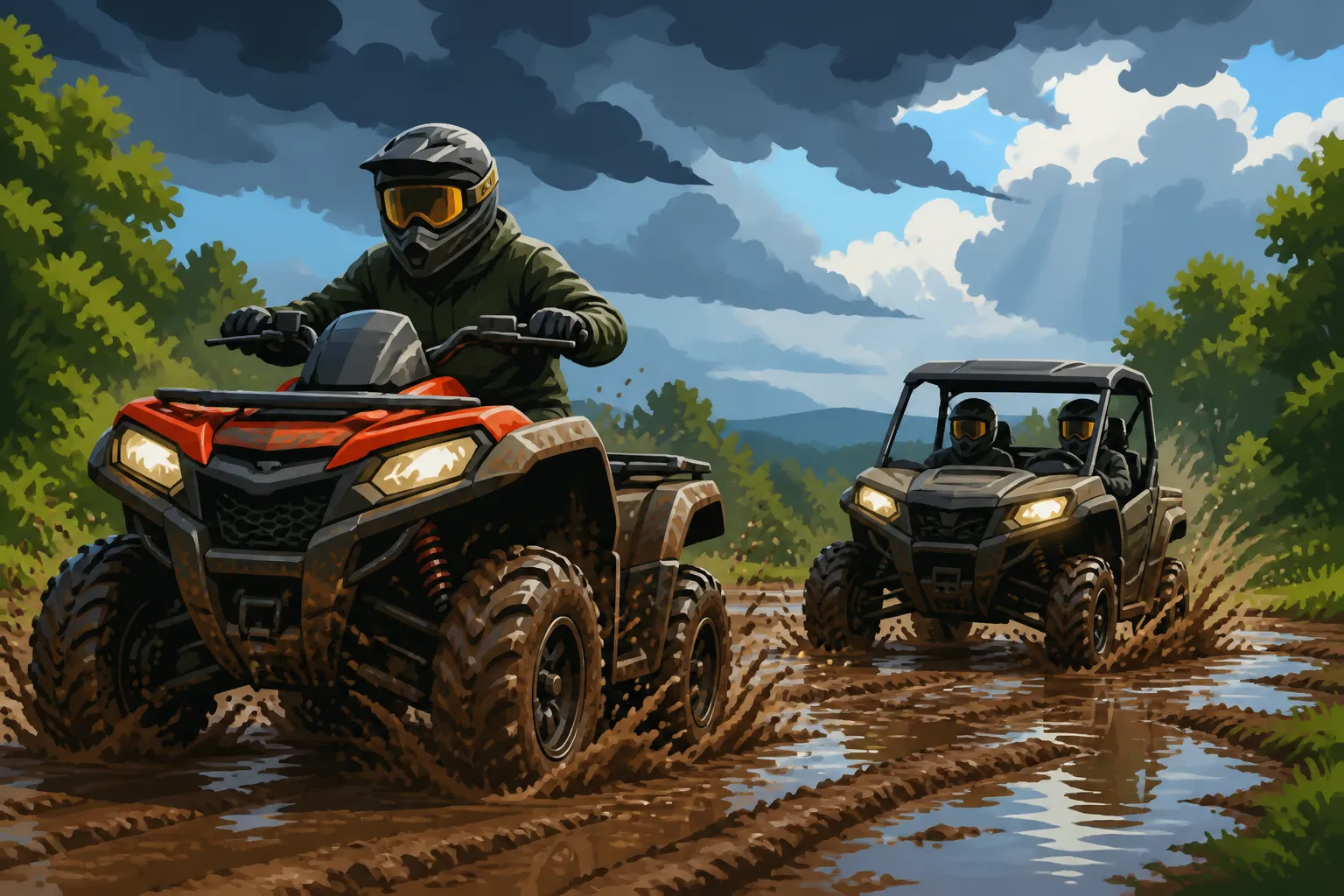
Oklahoma red clay can become slippery after rain, particularly on slopes, in shaded woods, and where tires have churned the surface. The trouble is that a trail may look merely damp from the seat while offering very little grip. A machine can slide sideways on a modest incline, lose steering response, or spin its tires and dig down quickly. [Why Oklahoma Red Clay Turns Slick After Rain] explains why a familiar route can feel very different after a storm.
Clay also clings to tires and undercarriages. As it builds up, tires may lose their tread pattern, and mud can pack around moving parts. A short muddy patch can become a recovery problem if you stop in a low spot or try to power through without a clear exit. A useful rule is to judge the route by the surface under your tires, not by how shallow the puddle looks.
The most tempting response is often to add throttle. That can make the situation worse: spinning tires may deepen ruts, throw mud onto others, and leave the machine resting on its frame. If your vehicle begins to slide or dig in, ease off, avoid abrupt steering, and reassess before moving. If there is no safe way to continue without damaging the trail or risking a rollover, turn around while you still can.
Low spots, creek crossings, and slopes deserve extra caution
Heavy rain can raise water levels and hide changes in the trail surface. A crossing that was easy last weekend may now have a stronger current, a soft edge, submerged debris, or a deeper approach. Do not enter water simply because another rider has crossed it. Look for the route’s depth, the firmness of both banks, and a clear way out. If you cannot judge those conditions safely, find another route or call it a day.
Slopes are another place where wet ground changes the risk. On a slick hill, momentum can carry a machine farther than expected, while stopping midway may leave you with poor traction and limited room to turn. Avoid riding close together on steep sections: leave space so one rider’s slide or stall does not involve the next machine. If a hill looks beyond your ability or the machine’s traction, do not treat it as a challenge to prove yourself.
Low-lying trails can also hide soft shoulders and eroded edges. Stay on established routes and avoid riding around a puddle by widening the trail. That shortcut can destroy vegetation, create new ruts, or put a tire over an unstable edge. If a route is blocked by water or mud, turn back rather than making a new path through the woods.
| Trail condition | What can go wrong | Safer response |
|---|---|---|
| Slick clay on a slope | Sliding, loss of steering, or a rollover | Avoid the slope if traction is uncertain; turn around before committing |
| Deep or standing water | Hidden holes, debris, or a soft exit | Do not enter unless you can assess the crossing and both approaches |
| Mud building on tires | Reduced traction and packed components | Stop safely, clear buildup if appropriate, and reassess the route |
| Ruts or washed edges | A wheel can drop or become trapped | Stay on the established trail and avoid unstable shoulders |
| A newly formed puddle on an unfamiliar route | Unknown depth and bottom conditions | Choose another route rather than testing it with the machine |
Decide Whether to Ride or Wait
Use a simple go-or-no-go check
Before you unload, consider four things: whether the area is open, whether the route is appropriate for your machine, whether you can get current local information, and whether you have a safe way to turn around. If any answer is unclear, waiting is often the better call. Losing a riding day is frustrating; getting stuck far from help or damaging a trail can turn a weekend into a much bigger problem.
The machine matters, too. A heavy side-by-side may sink or rut a soft trail differently from a lighter quad. Tires, ground clearance, load, and experience all affect what you can safely handle. Riding with passengers or towing a trailer adds weight and can make recovery more complicated. Choose routes that match the least experienced rider and the least capable machine in your group—not just the strongest rider’s confidence.
If you are heading to [Little Sahara State Park in Oklahoma], remember that sand riding is not the same as riding wet clay or forest trails. Conditions and area rules still matter after rain, so check the park’s current guidance rather than assuming that a different surface means there are no concerns. Whatever the terrain, do not ride around barriers or ignore a closure because the trail looks passable.
Let the group agree on limits before setting out
Groups often get into trouble when one person wants to keep going and another is already uncomfortable. Agree before the ride that anyone can call for a pause or turn back without being mocked or pressured. Set a turnaround point, identify a conservative route, and decide how you will regroup if someone stops. That conversation is easier at the trailhead than halfway up a slick hill.
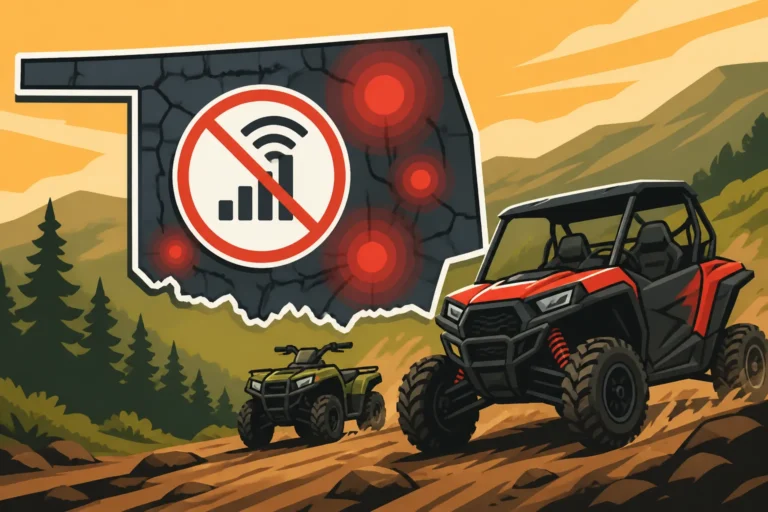
Use a navigation tool to keep track of your planned route, but build in a backup. Riders sometimes lose signal in wooded or hilly areas, and a wet-weather detour can make it easy to lose the route you expected to follow. You can use onX Offroad to review your planned track and save relevant map information before leaving, then carry a paper map or written directions as another reference. [Carrying a Paper Map Where GPS Fails] offers a useful reminder that an electronic screen should not be your only navigation plan.
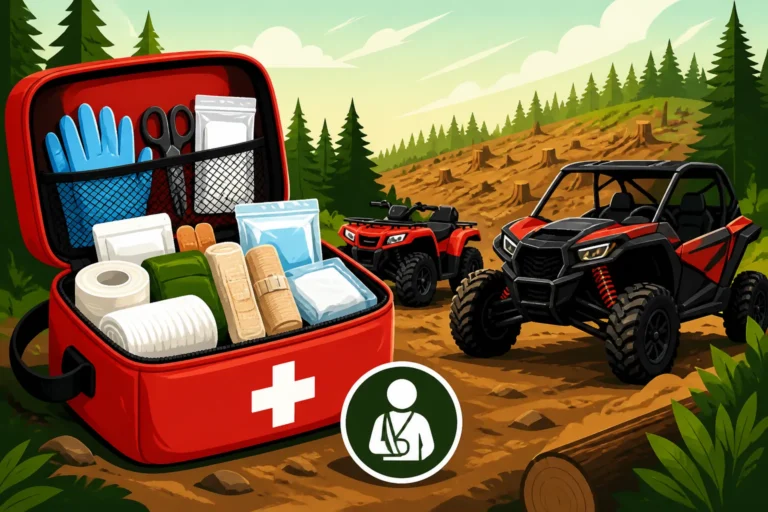
Tell someone who is not riding where you are going and when you expect to check in. Keep your phone protected from water, bring enough drinking water, and make sure your group knows what to do if a machine becomes stuck. These steps do not make a bad trail safe, but they can make a manageable delay less stressful.
Ride With Less Impact and Handle Trouble Carefully
Protect the trail and your machine
When an area is open and conditions are suitable, ride at a pace that leaves room to react. Keep to marked routes, avoid unnecessary wheelspin, and leave space between machines so dust, mud, or a sudden stop does not create a pileup. After rain, passing may be especially risky because the shoulder may be softer than it appears. [Oklahoma Trail Etiquette Locals Expect] is worth reviewing if you ride with a group or share routes with other visitors.
If you encounter a muddy section, do not assume that speed is the safest way through. Assess the line, the depth, and the exit first. If it is within your ability and the area’s rules, move steadily rather than spinning the tires. If it is not, turn around. Repeated attempts can dig a deeper hole, damage the route, and leave your machine harder to recover.
After the ride, remove mud and inspect the machine before storing it. Check around the tires, undercarriage, brakes, and other areas where mud can collect. Wash carefully, especially if the ride involved fine grit, and follow the owner’s manual for maintenance. A post-ride inspection can also reveal damage from a hidden rut or impact before it becomes a problem on your next trip.
If you get stuck, stop before the problem grows
When a machine loses traction, resist the urge to keep pressing the throttle. Stop in a safe position, check that the group is together, and look for a recovery route that does not put anyone in the machine’s path. Keep bystanders clear of tow straps and cables, and use recovery equipment only as intended. If you do not have the right equipment or cannot identify a safe recovery point, call for help instead of improvising.
Do not try to recover a machine from an unstable slope or rising water unless you have the training and equipment to do so safely. A second vehicle can also become stuck if it enters the same soft area. Before attempting a tow, consider the ground, the anchor points, the direction of pull, and whether the people involved can stay clear of tensioned equipment.
Sometimes the safest recovery is to leave the machine in place and contact the riding area or land manager. If the route is closed, avoid moving barriers or making a new trail to reach it. A responsible decision to stop protects you, your riding partners, and the trail—and it makes it more likely that the route will remain usable when conditions improve.
Disclaimer
This article is for general informational purposes only and does not constitute professional advice. Laws, prices and regulations vary by location and change over time. Consult a qualified professional for guidance on your specific situation.