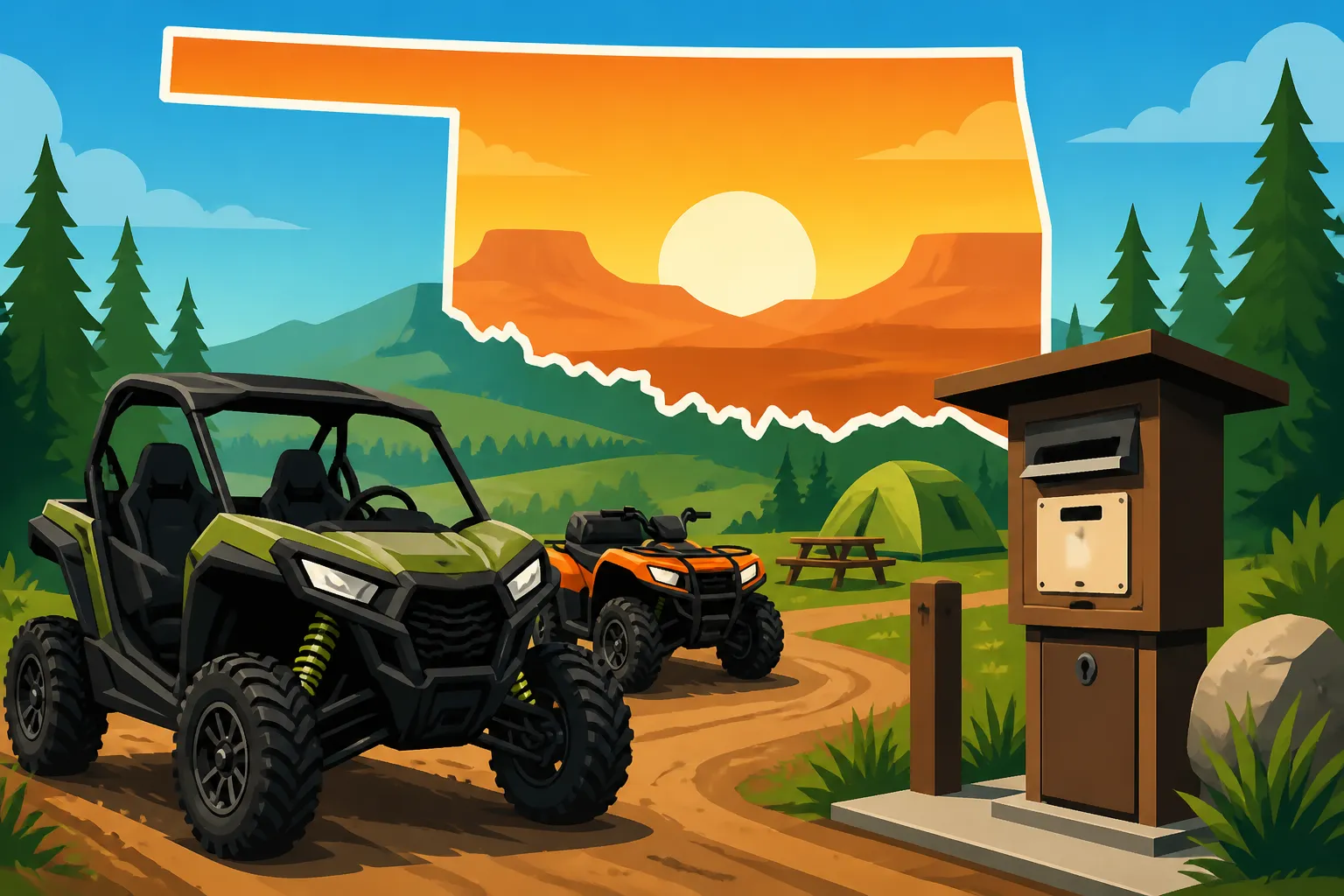
Oklahoma Campgrounds With Fee Kiosks
Arriving at an Oklahoma riding area after a long tow only to find an unclear payment station can turn a fun weekend into a stressful one. This guide explains how campground fee kiosks fit into an ATV or UTV trip, what to check before paying, and how to plan around riding areas near Waynoka, Wilburton, and Davis.
How campground fee kiosks work on an ATV trip
Know which fee you are paying
A campground kiosk may collect payment for a campsite or campground stay, while the riding area may have a separate entrance, riding, or land-access fee. Those charges can be handled in different places, even when the campground sits close to the trails. Before putting money in a kiosk or completing a self-pay form, read the posted instructions and identify exactly what the payment covers.
This distinction matters at the end of a long drive. A rider might arrive at camp, pay for a site, and assume that covers everyone’s riding access. It may not. The reverse can happen too: a day-use or riding payment does not necessarily reserve a place to sleep. Treat camping and riding as separate line items until the park or land manager confirms otherwise.
Also check whether a campground charge is per site, per vehicle, per person, or tied to a particular type of campsite. Do not assume a payment envelope or kiosk receipt is valid for every person in a group. When the instructions are unclear, photograph the posted sign and ask the campground or riding-area office before setting up camp.
Follow the posted payment instructions carefully
A self-pay kiosk may ask you to choose a site, write down arrival information, place payment in an envelope, or display a receipt somewhere visible. Use the exact method described on the sign. If the instructions say to keep a receipt, keep it somewhere dry and easy to find rather than leaving it loose on a dashboard or in a gear bag.
Plan for practical snags. A phone may have weak reception, a card reader may not be available, or the office may be closed when you arrive. Bring a backup way to pay when the campground’s rules allow it, and do not count on being able to solve every problem through a mobile connection. If there is a contact number on the kiosk, save it before you unload the machines.
Payment does not automatically mean a site is reserved for you. At a first-come, first-served campground, a paid site may still depend on availability and the local process for claiming it. At a reservable campground, follow the reservation instructions rather than treating the kiosk as a substitute. For more planning context, see Oklahoma Camping Beside an OHV Area and [Booking a Campsite Before a Busy Riding Weekend].
Little Sahara campground kiosks near Waynoka
Competition Campground payment
Little Sahara State Park is a familiar destination for riders towing to the sand dunes near Waynoka in northwestern Oklahoma. Its Competition Campground is one of the named campground locations where riders may encounter a fee kiosk. Before you leave home, confirm what the kiosk payment covers, how the campground assigns or identifies sites, and whether riding access requires a separate payment.
At the campground, take a moment to read the kiosk instructions before unloading. A family arriving with two vehicles and several riders may need to understand whether the listed charge applies to the site, the vehicle, or another unit. If the sign asks for a campsite number, make sure you have selected or confirmed the correct site before completing the payment.
It is especially easy to mix up campground and dune access when a trip involves several machines and passengers. Keep a simple record of each payment and its purpose. A photograph of the receipt and the posted fee instructions can help if a question comes up later. For the kiosk-specific details, see [Paying at Little Sahara's Competition Campground Kiosk].
Buttercup Campground payment
Buttercup Campground is another Little Sahara location where riders may need to use a fee kiosk. The practical approach is similar: read the current instructions at the site, note what the payment is for, and keep proof of payment as directed. Don’t assume the payment setup is identical to Competition Campground simply because both are part of the same riding destination.
If your group is arriving after dark, decide in advance who will handle the payment and who will supervise the trailer and machines. A few minutes of coordination can prevent someone from parking in the wrong place while another person is trying to interpret the kiosk. Use a flashlight, keep children away from the road and machinery, and avoid leaving valuables unattended while the group sorts out the check-in process.
A printed or saved copy of your reservation details can also help distinguish between a reserved campsite and a self-pay arrangement. If there is a discrepancy between your booking and the posted instructions, contact the park rather than guessing. The location-specific guide is [Where to Pay at the Buttercup Campground Kiosk]. For broader park planning, read Little Sahara State Park in Oklahoma and [Little Sahara's Office Hours and Phone Number].
Build a Little Sahara budget with separate categories
A useful trip budget separates campsite costs from riding access, fuel, food, and equipment. That way, a kiosk payment is not mistakenly treated as the complete cost of the weekend. Check the park’s current official information before traveling, since fees, payment methods, and operating procedures can change.
| Trip item | What to confirm before you go | Why it matters |
|---|---|---|
| Campsite | Reservation or first-come process, site rules, and payment method | A camping payment may not guarantee a particular site |
| Riding access | Where access is paid for and what the payment covers | Campground and riding charges may be separate |
| Group details | Number of people, machines, and vehicles covered | A group may need to account for more than one vehicle |
| Arrival time | Kiosk availability and after-hours instructions | Late arrivals need a clear check-in plan |
| Payment backup | Accepted payment methods and alternatives | Connectivity or equipment problems can disrupt self-pay |
Before packing, make sure your camping plan fits your riding plan. A site that works for a tent may not suit a large trailer, and a convenient place to park may not be the best place to unload. Review Oklahoma Trail Conditions Before You Tow as part of the same checklist so weather or access issues do not catch you by surprise.
Comparing Oklahoma riding-area camping options
Little Sahara for a dune-focused weekend
Little Sahara is the clearest fit when the main goal is riding sand dunes and staying near the riding area. Campground kiosks can make arrival more self-directed, but they also mean riders should arrive knowing how payment and site selection work. Check the park’s official guidance for current campsite details, access procedures, and any posted safety requirements.
Sand trips call for a different kind of camp preparation than a wooded trail weekend. Fine sand can work its way into gear, food containers, vehicle interiors, and machine components. Keep clean clothes and food protected, and plan for dust and sand when choosing where to unload. Give yourself room to park and turn the trailer without blocking other campers or access lanes.
Navigation planning is useful even when a destination is well known. A map app such as onX Offroad may help you organize route information before departure, but do not rely on a phone alone for directions or park rules. Save the information you need ahead of time, carry a backup navigation option, and follow signs and staff instructions on site.
Robbers Cave for a wooded, hilly ride
Robbers Cave State Park, near Wilburton in southeastern Oklahoma, offers a different setting from the open dunes. The area is known for wooded terrain and hills, so riders should check the riding-area rules and operating hours before planning their arrival. Camping arrangements and riding access should be confirmed separately; don’t assume a campsite payment includes permission to ride.
A wooded campground can feel more sheltered, but it also requires careful attention to the layout. Trailers need space to turn, machines should be parked where they do not block campground roads, and riders should keep noise and dust considerate of other guests. Before unloading, identify the route from camp to the permitted riding area and confirm whether machines may travel along campground roads.
For a trip centered on this park, review Robbers Cave's Daylight Hours in Oklahoma along with the campground’s current instructions. The park’s riding schedule can shape when you need to arrive, how long you can ride, and whether a late check-in still makes sense. Do not plan a ride around assumptions based on another park’s hours.
Cross Bar Ranch near Davis
Cross Bar Ranch, near Davis, is a private riding destination rather than the same kind of campground and payment setup as a state park. Its rules, check-in process, riding access, and camping arrangements may differ from Little Sahara or Robbers Cave. Confirm directly with the ranch before setting out, especially if your group needs a particular campsite arrangement or expects to arrive outside normal office hours.
Private riding parks may have their own waivers, posted speed rules, and rules for passengers or minors. Ask what needs to be completed before the group unloads, whether every rider must check in, and what the camping payment includes. For a large group, have one person handle paperwork while another keeps track of vehicles and children.
Use [What a Day at Cross Bar Ranch Includes] to build a more complete picture of the visit, then verify details with the ranch before traveling. onX Offroad can be useful when organizing a route to the general area, but the park’s own directions and posted rules take priority once you arrive. Do not use a map app as a substitute for permission to ride on private land.
Prepare for arrival, payment, and camp setup
Make a pre-trip confirmation list
Call or check the official information for the campground and riding area before you tow. Confirm whether the campsite needs to be reserved, whether a kiosk is used, what payment methods are accepted, and whether there are separate charges for riding. If the campground has multiple areas, make sure you have the right entrance and the correct kiosk location.
Then confirm the practical details that are easy to overlook: arrival and departure rules, vehicle limits, quiet hours, pet policies, fire restrictions, restroom availability, and where trailers may be parked. These details can affect whether a site works for your group far more than a small difference in distance from the trails.
A short call can save a frustrating drive, particularly when a group is bringing children, multiple machines, or a large trailer. Write down the name of the place you called and the key instructions. If details differ between an older online post and current signage, follow the park’s current directions and ask staff for clarification.
Organize documents and payment before leaving
Keep campsite confirmation, payment records, and riding-area information together. A folder in the tow vehicle works well, and a digital copy can serve as a backup. Save contact details and directions in advance in case mobile reception is limited near the campground.
Make one adult responsible for the reservation or payment process. If everyone assumes someone else handled it, groups can arrive without a confirmation number or clear understanding of which site they booked. For a mixed group, share the plan in a message before departure so every driver knows the destination, check-in process, and backup contact.
If the campground uses cash or another specific method, prepare it before the trip rather than searching for an ATM after reaching a rural area. Check the official instructions first; do not assume a kiosk accepts a particular payment type. If the payment method is unclear, ask before you travel.
Set up camp without creating problems for other riders
Once you arrive, park in the designated area and check the site boundaries before unloading. Keep trailers, ramps, and machines out of campground roads. A busy weekend can mean more pedestrians, children, and vehicles moving through the same space, so take it slowly and use a spotter when backing.
Keep food, trash, and riding gear organized. Loose equipment can become a trip hazard, and unattended tools or fuel containers can create avoidable risks. Store fuel only as permitted by the campground, keep flames and hot equipment away from tents and vehicles, and follow posted fire rules.
Before the first ride, tell the group where to meet if someone gets separated and how to return to camp. Save an offline map if you use one, and carry a paper backup for areas with weak signal. onX Offroad may help riders prepare navigation routes, but boundaries, trail closures, local rules, and campground instructions still need to be checked through the appropriate land manager.
Common fee kiosk mistakes and how to avoid them
Assuming one payment covers everything
The most common misunderstanding is paying for a campsite and assuming the same payment includes riding access. Another is paying an entry or riding charge and assuming that provides a place to camp. Avoid both by asking, “What exactly does this payment cover?” If the answer is not clear on the sign, contact the office or park staff.
This question is particularly important when a trip includes multiple nights, several vehicles, or more than one riding area. A receipt may apply only to a specific date or location. Keep the payment record and any written confirmation until the trip is over.
Arriving without a workable backup plan
A kiosk can be straightforward when it works, but a closed office, poor reception, unfamiliar instructions, or a payment issue can complicate a late arrival. Check the process before leaving and have a backup plan that follows the campground’s rules. If the site is full or the kiosk cannot be used, do not simply camp in an unmarked area.
Check whether the campground has a listed contact number and save it in advance. For a popular weekend, consider arriving earlier or making a reservation if the location offers one. Browse [Oklahoma Riding Areas That Take Cash Only] for another reminder to confirm payment expectations instead of assuming every place accepts the same methods.
Confusing general maps with permission and current rules
A navigation map can help you locate roads, trailheads, and nearby services, but it does not establish that a route is open or that a rider has permission to use it. This is especially important around private land, seasonal access areas, and public lands with designated routes. Use onX Offroad as one planning aid, then confirm access and restrictions with the land manager.
Do not ride from camp onto a trail simply because it appears nearby on a map. Follow posted signs, stay on authorized routes, and ask staff if a connection is unclear. A short question at check-in is easier than dealing with a citation, a closed gate, or an angry landowner later.
Forgetting that campground rules still apply after riding
Riders sometimes focus so much on the trails that they overlook campground expectations. Quiet hours, fire rules, pet restrictions, vehicle placement, and generator use can vary by location. Review the rules when you arrive and make sure everyone in the group knows them.
A considerate setup helps preserve access for everyone. Keep music at a reasonable level, avoid revving machines around campsites, and clean up before leaving. If the kiosk or campground sign includes departure instructions, follow them as closely as the payment directions. For more trip planning, see [Oklahoma Campgrounds Next to a Riding Area] and Oklahoma Trail Conditions Before You Tow.
Disclaimer
This article is for general informational purposes only and does not constitute professional advice. Laws, prices and regulations vary by location and change over time. Consult a qualified professional for guidance on your specific situation.