Oklahoma Rules for a Visiting Kansas Rider
So, you're planning an exciting trip from Kansas to the great state of Oklahoma with your ATV or UTV in tow? That's fantastic! There's a whole world of diverse riding waiting for you, from the sugar-sand dunes of Little Sahara to the rugged, red-dirt trails of the Ouachita Mountains. But let's be real, crossing state lines with your beloved machine can feel like stepping into a legal minefield. Every state has its own quirks, and what's perfectly fine back home in Kansas might land you a citation here in Oklahoma. This guide is here to cut through the confusion and give you a clear, empathetic breakdown of exactly what Oklahoma's rules mean for you, the visiting Kansas rider, so you can focus on making memories, not mistakes.
Getting Started: Understanding Oklahoma's ATV/UTV Landscape
First things first, let's get on the same page about what we're even talking about. Oklahoma, like many states, has specific legal definitions for what constitutes an All-Terrain Vehicle (ATV) and a Utility Terrain Vehicle (UTV), or collectively, Off-Highway Vehicles (OHVs). These definitions are important because they dictate everything from where you can ride to what safety gear you might need. Don't assume your Kansas definition perfectly aligns with Oklahoma's; it's always best to know the local lingo.
What Counts as an OHV in the Sooner State?
In Oklahoma, an ATV is generally defined as a motorized vehicle designed for off-highway use, having a seat or saddle for the operator, and designed to travel on four low-pressure tires. Think of your typical quad – that's an ATV. UTVs, often called side-by-sides, are also considered OHVs but are characterized by having a steering wheel, side-by-side seating for at least two people, and often a cargo bed. These distinctions matter because while many rules apply universally to both, some specifics, particularly around road-legal conversions, might have nuances. For example, [Why Quads and Side-by-Sides Have Different Cutoff Years] explains how different dates affect titling and registration requirements for these machines in Oklahoma.
It's crucial to understand that these are primarily off-road machines in Oklahoma's eyes. They aren't generally built for paved roads, and the laws reflect that primary design. This fundamental understanding helps you anticipate the rules you'll encounter. Even if your machine is heavily customized with aftermarket parts from a place like SuperATV, making it tougher or more capable for extreme terrain, its core classification as an ATV or UTV remains the same in the eyes of Oklahoma law, influencing where and how you can ride.
Do I Need to Register My Kansas Machine in Oklahoma?
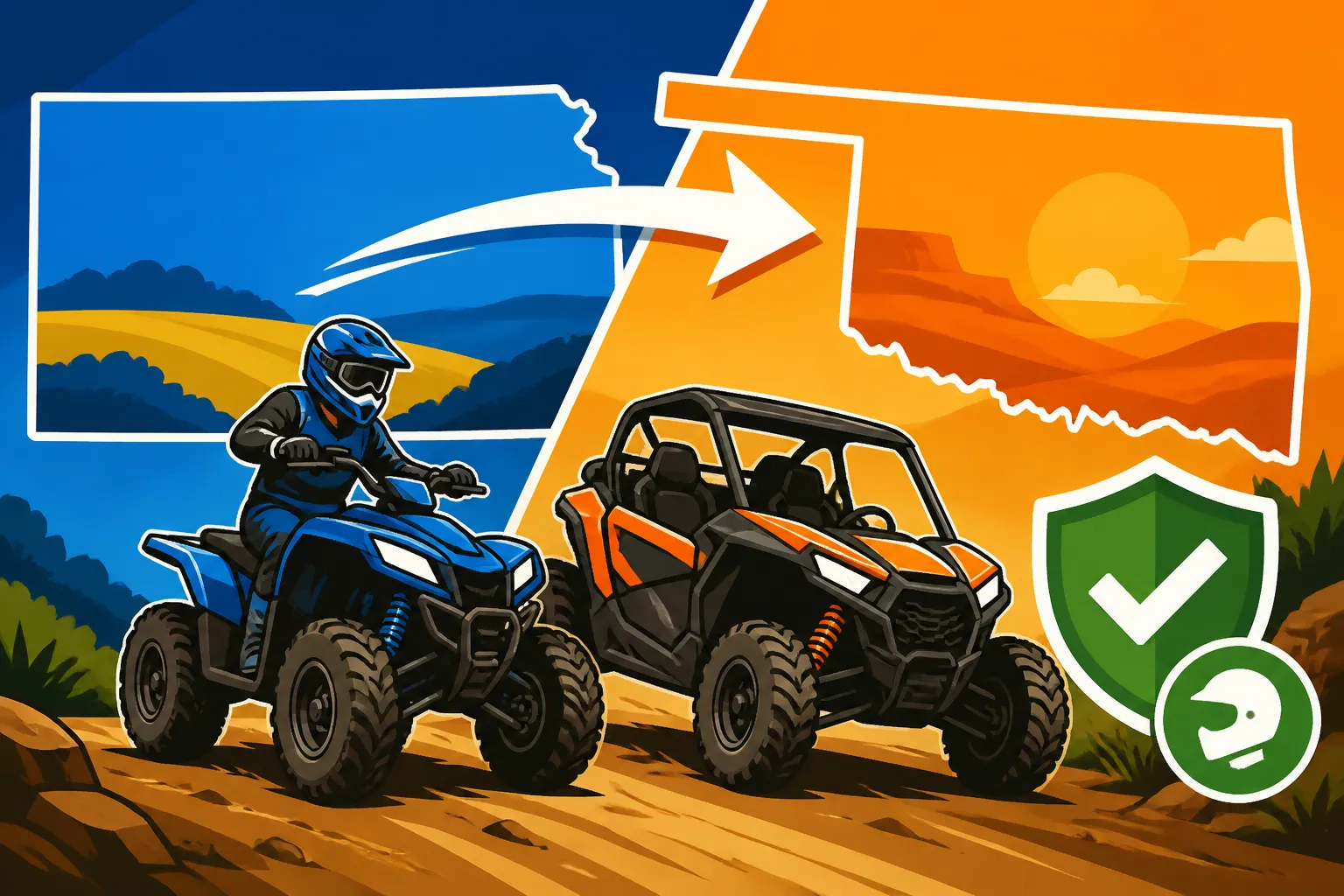
This is often one of the first questions out-of-state riders have, and it's a good one! The short answer for most visiting Kansas riders is: No, you do not need to register your ATV or UTV in Oklahoma if it is properly registered or legally operated in your home state of Kansas. Oklahoma generally extends reciprocity to out-of-state registrations, meaning if Kansas considers your machine good to go, Oklahoma will too, for off-highway use within its borders. This is a huge relief for many riders, as it spares you the hassle and cost of dealing with temporary or duplicate registrations.
However, "properly registered or legally operated" is the key phrase. Make sure your Kansas registration, if required there, is current and readily available. If Kansas doesn't require registration for your specific machine or use case, then you just need to ensure you can prove ownership, usually with your title or a bill of sale. Oklahoma's system for its own residents, like [Oklahoma ATV Registration You Pay Once], is quite unique, but as a visitor, you generally fall under the reciprocity umbrella for off-road use. Just be prepared to show proof of your Kansas bona fides if a game warden or park ranger asks to see them.
Where Can You Actually Ride? Public Lands & Private Parks
Oklahoma boasts a fantastic array of riding opportunities, from vast sand dunes to challenging forest trails. But unlike Kansas, where you might have more open land or different access rules, Oklahoma has specific designations for where OHVs are permitted. Knowing these spots and their particular rules is essential for a smooth and enjoyable trip.
Conquering the Dunes at Little Sahara and Other State Parks
If you're coming from Kansas, there's a good chance Little Sahara State Park is on your radar – it's practically a pilgrimage site for dune riders! This incredible 1,600-acre park near Waynoka offers towering dunes that rise 25 to 75 feet high, and it's open for riding day and night. However, this isn't a free-for-all. Little Sahara, like other state-managed OHV areas such as Robbers Cave State Park, has specific requirements for riders. You'll need to pay a day use fee or purchase an annual pass. For example, [Little Sahara's Day Fees in Oklahoma] details the costs involved.
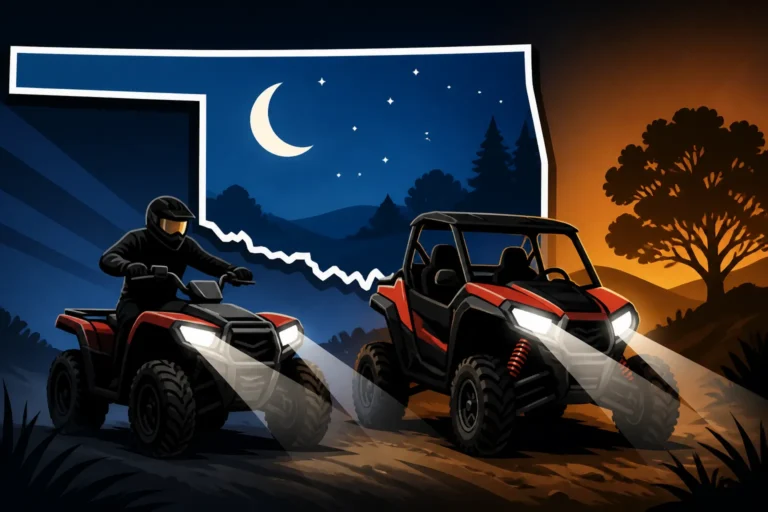
Crucially, Little Sahara mandates certain safety equipment: a 10-foot whip with a bright orange flag (at least 6×12 inches) attached near the top. This is non-negotiable for visibility in the dunes. While many riders get their whips and flags from places like SuperATV, ensuring compliance is your responsibility. Riders under 18 must wear a helmet that meets federal standards. Additionally, there are rules about lighting for night riding (white lights in front, red in back) and strict alcohol prohibitions within the dune area. Always check the park's specific rules before you go, as they can sometimes change or be updated, and park rangers are diligent about enforcement.
Exploring Wildlife Management Areas and Timber Company Lands
Oklahoma offers extensive opportunities to ride on public lands managed by the Oklahoma Department of Wildlife Conservation (ODWC) in the form of Wildlife Management Areas (WMAs), and also on vast tracts of timber company land that are open to the public through access agreements. However, riding on these lands comes with very specific rules, often tied to hunting seasons and permits. For instance, [Honobia Creek WMA Riding in Oklahoma] and [Three Rivers WMA Riding in Oklahoma] are popular examples.
Generally, riding on these lands is restricted to designated roads and trails, often only during specific hunting seasons (typically October through January 15th). You'll usually need an Oklahoma Land Access Permit to ride here, even as a nonresident, and if you're hunting, you'll need the appropriate hunting license too. Speeds are often capped, usually around 25 mph on timber company roads, and off-road travel is extremely limited, often only for retrieving downed game within a short distance (e.g., half a mile). Don't expect to just show up and freely explore. These areas are managed primarily for wildlife conservation and timber production, so recreation is a secondary, highly regulated use. Always consult the ODWC regulations or specific WMA maps before planning your trip to these areas.
The Allure of Private Off-Road Parks
Beyond state parks and WMAs, Oklahoma is also home to a growing number of private off-road parks. These parks, like Cross Bar Ranch, offer a variety of terrains, from rocky climbs to wooded trails, and cater specifically to OHV enthusiasts. The beauty of private parks is that while they still have rules, they are often designed with the rider experience in mind and can be a bit more flexible than state-run areas. [Cross Bar Ranch's Day Rates in Oklahoma] gives you an idea of what to expect for entry fees.
Each private park will have its own unique set of rules regarding age limits, helmet requirements (some might require them for all riders, not just minors), passenger policies, and even machine modifications. You'll almost certainly be required to sign a liability waiver before riding. These parks are fantastic because they often offer amenities like camping, restrooms, and sometimes even repair facilities. Many riders enhance their machines with durable parts from companies like SuperATV to tackle the varied terrain found in these parks, ensuring their vehicle can handle the challenge. Always check the park's website or call ahead to understand their specific policies and ensure your Kansas setup meets their requirements.
Navigating Oklahoma Roads: What Kansas Riders Need to Know
This is arguably the most critical section for any out-of-state rider: road use. Oklahoma's rules regarding ATVs and UTVs on public roads are strict, with limited exceptions. This is where many riders inadvertently get into trouble, assuming that if it's allowed on roads back home, it's fine here. Not so fast!
The General "No Road Use" Rule for Off-Highway Vehicles
Let's make this crystal clear: In Oklahoma, ATVs and UTVs, by default, are NOT permitted on public streets, roads, or highways. This includes county roads, city streets, and state highways. This is the foundational rule that all visiting Kansas riders must understand. Your machine is an off-highway vehicle, and that's where it's generally expected to stay. Do not assume that because you see one on a road, it's universally allowed. There are exceptions, but they are specific and limited.
Attempting to ride your unregistered (for Oklahoma road use) Kansas ATV or UTV on a paved road will likely result in a citation from local law enforcement or the Oklahoma Highway Patrol. The penalties for these violations can quickly add up, including fines and court costs. Even if you only plan to ride for a short distance to get to a trail, the risk is significant. [What a State Trooper Can Ask to See] might include proof of legal road use if you are stopped on a road.
Understanding Permitted Road Crossings and Agricultural Exceptions
While general road use is prohibited, there are a few very narrow exceptions. You are typically allowed to cross a public road or highway, but only under specific conditions:
- Daylight Hours: Crossings must be made during daylight hours.
- Perpendicular Crossing: You must cross the road at an angle as close to 90 degrees as practicable.
- Safety: You must yield the right-of-way to all oncoming traffic and ensure the crossing can be made safely.
- Speed Limit: This exception applies to highways where the posted speed limit is 35 mph or less. Crossing a 55 mph highway is generally not allowed. [Oklahoma Highway Crossings in Daylight] provides more context.
Another common exception is for agricultural use, often referred to as an "instrument of husbandry." If your ATV or UTV is being used exclusively for farming or ranching operations, it might be permitted on public roads for short distances between fields or properties. However, this is a very specific exemption and is not meant for recreational riding. It also typically requires the machine to be equipped with certain safety features like a slow-moving vehicle emblem. As a visiting Kansas rider, it's highly unlikely this exemption would apply to your recreational trip.
Finally, some individual counties or municipalities may have local ordinances that open certain county roads or city streets to OHV use. This is highly localized and not a statewide rule. You cannot assume a county road is open just because it's unpaved or looks deserted. You would need to check with the specific county commissioners or city hall of the area you plan to ride in, and even then, these ordinances often come with their own set of rules regarding speed, time of day, and required equipment. It's a complex patchwork, and unless you have verified local information, assume roads are closed to OHVs.
What About Street-Legal UTVs from Kansas?
This is a common point of confusion. Many Kansas riders have gone through the process of making their UTVs "street-legal" in their home state, complete with a license plate. You might be wondering if that makes your machine street-legal in Oklahoma. Unfortunately, the answer is generally no, not for general road use.
Oklahoma does have a specific class of "Street-Legal UTVs" that can be registered with the state for road use, obtaining a special annual road plate. However, this process involves Oklahoma-specific registration, titling, and equipment requirements that are designed for Oklahoma residents registering their machines in Oklahoma. Your Kansas street-legal registration and plate will likely not be recognized for general road use here.
Even if your UTV from Kansas meets or exceeds Oklahoma's equipment requirements (like having turn signals, mirrors, a horn, and proper lighting – perhaps all installed with SuperATV parts), the fundamental issue is the Oklahoma registration for road use. Without that Oklahoma road plate, your Kansas-plated UTV is still considered an off-highway vehicle by Oklahoma law when on Oklahoma roads, subject to the "no road use" rule and limited crossing exceptions. If you are stopped by law enforcement, they will look for an Oklahoma road plate, not an out-of-state one, for general road use. [Oklahoma Street Legal UTV Requirements] explains the process for Oklahoma residents.
Safety First: Gear, Age, and Rider Responsibilities
Beyond where you can ride and the paperwork involved, safety is paramount. Oklahoma has specific rules regarding helmets, passengers, and age limits that all riders, including visitors, must adhere to. These laws are in place to protect riders and prevent accidents, and compliance is non-negotiable.
Helmet Laws for Young Riders
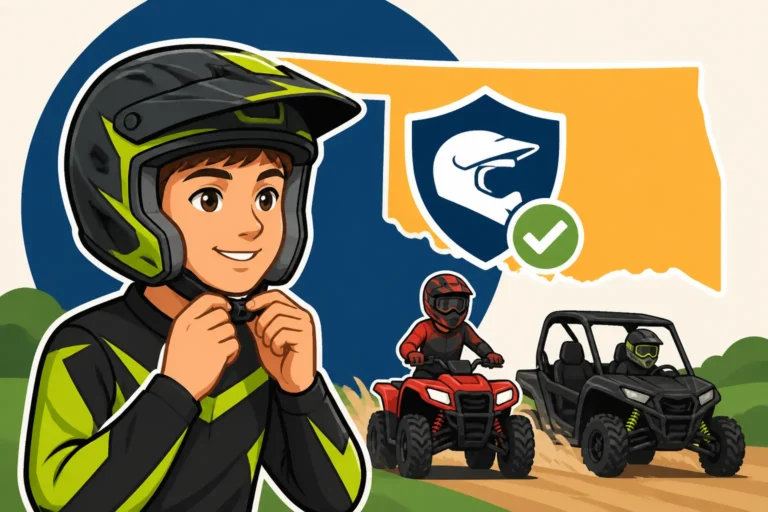
Oklahoma takes the safety of young riders very seriously. If you have riders under the age of 18 in your group, listen up: any person under 18 years of age operating or riding as a passenger on an ATV or UTV in Oklahoma must wear a helmet that meets federal safety standards. This rule applies on all public lands, state parks, and even private riding parks that choose to enforce it. [Oklahoma ATV Helmet Law Age] highlights this critical point.
This isn't just a suggestion; it's the law. Deputies, park rangers, and game wardens will enforce this. Make sure any minors in your party have properly fitting, DOT-approved helmets. This isn't the time to skimp or assume. Even if your side-by-side has a full roll cage, the helmet rule still applies to minors. It's about protecting the most vulnerable riders in your group.
Passenger Rules and Responsible Riding Habits
Oklahoma's rules regarding passengers on ATVs and UTVs are primarily tied to the manufacturer's design. Simply put: you can only carry as many passengers as the machine was originally designed and equipped for by the manufacturer. This means if your ATV has a single seat, it's a single-rider machine – no "riding double" allowed, even if you think you can manage it safely. UTVs are typically designed for multiple passengers, but only up to the number of factory-installed seats with seatbelts.
It's also crucial to remember that riding responsibly extends beyond just following the letter of the law. Always ride within your skill level and the capabilities of your machine. Keep your speeds appropriate for the terrain and visibility. Be mindful of others on the trails, especially at shared-use areas. Pack out everything you pack in, and leave no trace. If you're on a multi-day trip, consider equipping your machine with a sturdy cargo rack or storage box, perhaps from SuperATV, to secure your gear and keep the trails clean.
| Aspect | Oklahoma Rule for Visitors (General OHV Use) | Oklahoma Rule for Visitors (Road Use) |
|---|---|---|
| Registration | Kansas registration recognized for off-road use | Kansas registration NOT recognized for general road use; Oklahoma plate needed |
| Public Roads | Generally prohibited | Generally prohibited; specific exceptions for crossings/ag-use only |
| Road Crossings | Allowed in daylight, perpendicular, yield, speed limit 35 mph or less | Same as general OHV use |
| Street-Legal UTVs | Kansas street-legal status does not confer Oklahoma road legality | Requires Oklahoma-specific registration & annual road plate |
| Helmet (Under 18) | Mandatory on all public lands, state parks, and most private parks | Mandatory if riding on legal crossing or otherwise on road |
| Passengers | Only as many as manufacturer-designated seats | Only as many as manufacturer-designated seats |
| Land Access Permit | Often required for WMAs and timber lands (even for nonresidents) | Not applicable for road use |
| Whip & Flag | Mandatory at Little Sahara State Park; recommended elsewhere for visibility | Not required for legal road crossings |
What to Carry and Expect from Law Enforcement
When you're out riding in Oklahoma, always carry your identification, your Kansas registration/title for your machine, and any required Oklahoma permits (like a Land Access Permit if you're on WMA land). It's a good idea to keep these documents in a waterproof bag on your person or securely on your machine.
Expect that law enforcement, including county sheriffs, state troopers, and game wardens, may stop you to verify compliance with state and local laws. They're primarily concerned with safety and resource protection. Being polite, cooperative, and having your paperwork in order will go a long way in ensuring any interaction is brief and positive. They're not out to ruin your fun, but to ensure everyone is riding responsibly and legally. Understanding rules like Oklahoma Rules for a Visiting Kansas Rider will help you feel more confident if you are approached.
Disclaimer
This article is for general informational purposes only and does not constitute professional advice. Laws, prices and regulations vary by location and change over time. Consult a qualified professional for guidance on your specific situation.