What License a 16-Year-Old Needs for a Street UTV
It's completely understandable if you're feeling a bit lost trying to figure out the exact licensing requirements for a 16-year-old who wants to drive a street-legal UTV in Oklahoma. The rules for off-road machines, even when they get a road plate, can seem like a tangled mess compared to regular cars. This guide aims to clear up that confusion, giving you a straightforward look at what's truly needed for your young driver to legally and safely navigate the open roads in their side-by-side.
The Journey to Street-Legal UTVs in Oklahoma
Before we dive into the nitty-gritty of licenses, it's helpful to understand how Oklahoma even got to the point of having street-legal UTVs. For years, driving an ATV or UTV on public roads was largely a no-go, outside of specific agricultural exemptions or very limited crossings. This created a lot of frustration for riders who saw the utility and versatility of their machines and wished they could use them for short trips to the store, connecting trails, or just getting around their rural communities without having to load them onto a trailer every single time.
Then, things started to shift. A few years ago, Oklahoma recognized the growing popularity and practical use of UTVs and implemented legislation to create a pathway for them to be legally operated on certain public roads. This wasn't just a small tweak; it was a pretty significant change that carved out a new category for these machines, distinct from traditional passenger vehicles and motorcycles. It meant that with the right equipment and adherence to specific rules, your side-by-side could actually get a road plate and hit the pavement. This legislative change was a game-changer for many owners, offering new freedom but also introducing new responsibilities, especially concerning who can drive them. If you're wondering about the specifics of this new class, you can find a lot more detail in [Oklahoma's Street-Legal UTV Class Explained].
Minimum Age for Street-Legal UTV Drivers
One of the most fundamental questions, especially when you have a younger rider eager to get behind the wheel, is about the age requirement. Oklahoma's law is very clear on this: to operate a street-legal UTV on public roads, the driver must be at least 16 years old. This isn't just a suggestion; it's a hard and fast rule embedded in the legislation that brought these vehicles onto the road.
This minimum age aligns with the state's general requirements for obtaining a driver's license for a standard passenger vehicle. It reflects the understanding that driving on public roads, even in a UTV, requires a certain level of maturity, judgment, and understanding of traffic laws. A 16-year-old might be an incredibly skilled off-road rider, but the environment of public roads, with other vehicles, pedestrians, and different rules of engagement, is an entirely different beast. Ensuring that drivers are at least 16 helps to set a baseline for safety and responsibility, acknowledging the complexities of shared road usage. For more specific details, be sure to check out [Oklahoma Drivers Must Be 16 for a Street UTV].
Why Sixteen? It's About Public Road Safety
You might ask why the age is set at 16, especially if your teenager has been riding ATVs off-road since they were old enough to reach the controls. The reasoning comes down to the nature of public roads. When you're out on a trail or in a private riding park, you're in a more controlled environment, usually with less varied traffic and often with specific park rules or landowner permissions guiding your ride. However, on public streets, you're interacting with cars, trucks, motorcycles, cyclists, and pedestrians, all governed by the same state traffic laws.
The state wants to ensure that anyone operating a vehicle on these shared spaces has reached an age where they've had the opportunity to learn standard driving practices, understand road signs, and develop the cognitive skills needed for safe decision-making in traffic. This isn't about diminishing a young rider's off-road skills; it's about acknowledging the unique demands and risks of public road operation. The age requirement helps to ensure that when a UTV gets its [Oklahoma Road Plates for a Street-Legal UTV], it's being driven by someone who meets the established standards for operating any motor vehicle on those roads.
The Type of License Needed: A Standard Driver's License
Here's where it gets really important and often causes confusion. Many people assume that because a UTV is an "off-road" machine, or because it has a motorcycle-like feel to some, that a special license or a motorcycle endorsement would be required for street-legal operation. Thankfully, in Oklahoma, that's not the case. If a 16-year-old wants to drive a street-legal UTV, they simply need a valid Oklahoma Class D driver's license – the same license they would get to drive a passenger car.
This is a huge relief for many families. It means no additional hoops to jump through, no separate motorcycle written test or riding test to pass, and no need to worry about a "motorcycle endorsement" that might be difficult for a young driver to acquire or even be relevant to the UTV experience. The state has categorized these street-legal UTVs in a way that allows them to be driven with a standard license, streamlining the process significantly. This decision was a deliberate part of the legislation to make street-legal UTVs more accessible, recognizing their utility without burdening drivers with unnecessary or ill-fitting licensing requirements. For more on this specific point, check out [No M Endorsement Needed] and [Oklahoma Skips the Motorcycle Endorsement].
No Motorcycle Endorsement: A Key Difference
Let's really highlight this point because it's a common area of misunderstanding. For many smaller, two-wheeled off-road vehicles that might transition to street use (like dirt bikes that get street-legal conversions), a motorcycle endorsement (often called an 'M' endorsement) on a driver's license is absolutely required. This makes sense for those vehicles, as they require specific handling skills and present different safety considerations than a car.
However, the Oklahoma law for street-legal UTVs explicitly carves out an exception. A UTV, with its four wheels, steering wheel, and often more car-like controls, doesn't demand the same specific skills as riding a motorcycle. Therefore, the state decided that a standard Class D driver's license is sufficient. This simplifies things immensely for a 16-year-old who might already have their learner's permit or full Class D license and wants to transition to driving a street-legal side-by-side. It removes a significant barrier that could otherwise prevent many from enjoying their machines on approved roads.
Essential Companion: Insurance at Registration
While the licensing aspect for a 16-year-old driver is relatively straightforward (standard Class D license), there's another non-negotiable requirement for street-legal UTVs: insurance. Just like any other vehicle that gets a road plate and operates on public roads, a street-legal UTV must be insured.
When you go to register your UTV for street use and obtain its road plate, the tag agency will absolutely ask for proof of liability insurance. This isn't just a suggestion; it's a mandatory step. The insurance requirements will typically mirror those for a standard passenger vehicle, ensuring that if your 16-year-old driver (or any driver of the UTV) is involved in an accident, there's coverage for damages and injuries. This is a critical piece of the puzzle for public safety and financial responsibility. Don't show up to the tag agency without your insurance paperwork ready! For more info on this, see [Oklahoma Insurance at Street Registration] and [Insurance at the Time of Registration].
What Kind of Insurance to Look For
When you're looking for insurance for a street-legal UTV, you'll generally be seeking a policy that provides at least the minimum liability coverage required by the state for motor vehicles. This typically includes bodily injury liability and property damage liability. Some riders also choose to add comprehensive and collision coverage, especially if their UTV is new or a significant investment, to protect against theft, vandalism, or damage to their own machine.
Many major insurance providers offer policies specifically tailored for UTVs, or they can often be added as an endorsement to an existing auto or recreational vehicle policy. It's always a good idea to shop around and get quotes from a few different companies. When talking to an agent, be very clear that you are looking for insurance for a UTV that will be street-legal and licensed for road use in Oklahoma, as this will affect the type and cost of the policy. Ensuring your 16-year-old is covered is just as important as them having the correct license.
Equipment Requirements for Street Legality
While the license itself is standard, the UTV itself needs to meet a specific set of equipment requirements to even qualify for that street-legal designation and road plate. A 16-year-old can only drive a street-legal UTV on the road if the UTV actually is street-legal. These requirements are in place to ensure the UTV is visible, controllable, and safe enough to share the road with other vehicles.
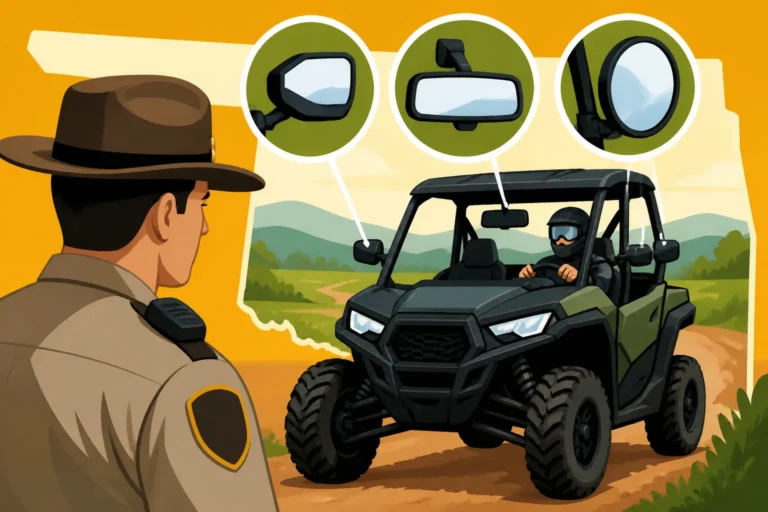
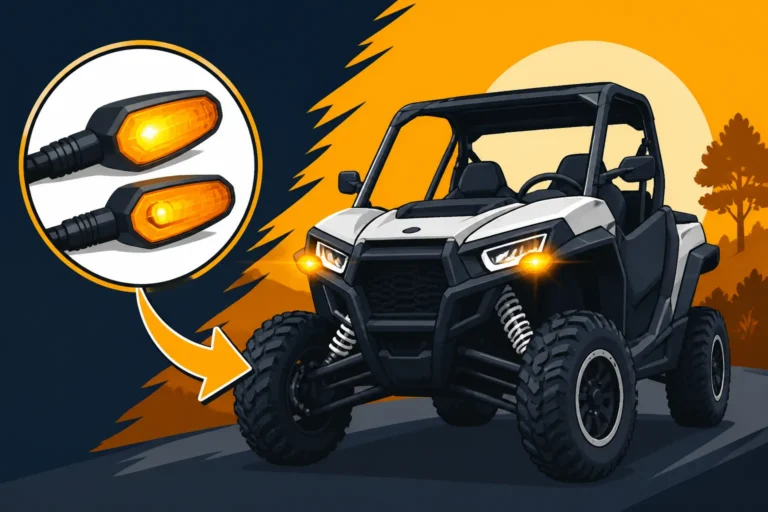
Typical equipment includes things like headlights, taillights, brake lights, turn signals, a horn, mirrors (at least one rearview mirror, and often side mirrors are recommended), and a windshield. The UTV must also have working brakes, a muffler, and tires appropriate for road use. Some riders turn to aftermarket companies like SuperATV for many of these necessary upgrades, as they offer a wide range of accessories designed to help UTV owners meet street-legal standards. It's not just about adding parts; it's about making sure every component functions correctly and meets the state's specifications for safety on public roads. You can learn more about these requirements in [Oklahoma Equipment Required for Street UTVs], [Oklahoma Turn Signals and Mirrors], and [Oklahoma Horns on a Street UTV].
Making Your UTV Road-Ready
Converting an off-road UTV to street-legal status often involves more than just a few bolt-on parts. While items like a horn kit or a turn signal kit from a company like SuperATV can be relatively straightforward installs, ensuring everything integrates properly with your UTV's electrical system and meets specific brightness or size standards is crucial.
For example, your UTV will need to have proper lighting for both day and night use, including high and low beam headlights, and brake lights that clearly activate when the pedal is pressed. Mirrors are vital for visibility, allowing the driver to see traffic behind and to the sides. A functioning horn is essential for signaling other drivers or pedestrians. And, of course, a sturdy windshield is often required to protect occupants from road debris. Think of it as preparing your UTV to pass a vehicle inspection, even if a formal inspection isn't always mandated at the tag agency. The responsibility falls on the owner to ensure their machine complies with all the rules before it hits the asphalt.
Where Street-Legal UTVs Can (and Can't) Go
Even with a 16-year-old driver, a valid license, and a fully equipped, insured, street-legal UTV, there are still limitations on where these machines can actually be driven. It's vital that both the owner and the young driver understand these restrictions to avoid fines, accidents, or other legal issues.
In Oklahoma, street-legal UTVs are generally allowed on most public roads with speed limits of 35 mph or less. However, there are explicit prohibitions: street-legal UTVs are not permitted on interstates or on U.S. highways. This is a safety measure, as these roads typically have much higher speed limits and greater traffic volumes, which can be dangerous for UTVs that often have lower top speeds and different handling characteristics compared to traditional cars.
Furthermore, local control plays a significant role. County commissioners have the authority to open county roads to UTVs, and municipal governing bodies can pass ordinances to allow UTVs on city streets within their jurisdiction. This means that even if your UTV is street-legal, you need to be aware of the specific rules in the county or town you're driving in. What's legal in one rural county might not be in the next, or in a nearby town. Always check local ordinances before sending your 16-year-old out on the roads. For more information, check out [Oklahoma Street UTVs Stay Off Interstates], [Oklahoma Street UTVs Stay Off US Highways], [Oklahoma County Commissioners and ATV Roads], and [Oklahoma Municipal Governing Bodies].
Navigating Local Rules and Restrictions
The patchwork of local rules can be one of the most confusing aspects of street-legal UTV use. Imagine your 16-year-old wants to drive their street-legal UTV from your farm down a county road to a friend's house in a small town. First, you'd need to confirm that your county commissioners have indeed opened that specific county road to UTV traffic. Then, as they approach the town limits, they'd need to know if the municipal governing body has passed an ordinance allowing UTVs on its streets. If not, they'd have to park outside town or trailer the UTV in.
This highlights the importance of doing your homework. Websites for county governments and city halls are often good places to start looking for these ordinances. Local tag agencies or even chatting with law enforcement in the area can also provide valuable insights. The goal is to ensure your young driver is never caught off guard by a local rule, inadvertently breaking the law. Some riders even go as far as printing out relevant ordinances to keep in their UTV, especially when traveling to new areas, just in case they need to clarify the rules.
Summary of Street-Legal UTV Driver Requirements for a 16-Year-Old in Oklahoma
To help visualize everything, here's a quick breakdown of what a 16-year-old needs to drive a street-legal UTV in Oklahoma:
| Requirement | Details |
|---|---|
| Minimum Age | 16 years old. No exceptions for younger drivers, even with a learner's permit for a car. |
| License Type | Valid Oklahoma Class D Driver's License. This is the standard license for passenger cars. |
| Endorsement Needed | None. A motorcycle endorsement ('M' endorsement) is explicitly not required for street-legal UTVs. |
| Insurance | Mandatory liability insurance, meeting state minimums for motor vehicles. Proof of insurance is required at registration. |
| UTV Equipment | UTV must be equipped with street-legal components (headlights, taillights, brake lights, turn signals, horn, mirrors, etc.) and be registered with a road plate. Many parts can be sourced from aftermarket providers like SuperATV. |
| Road Restrictions | Generally allowed on roads with speed limits 35 mph or less. Prohibited on interstates and US highways. Local county/city ordinances dictate specific road access. |
| Registration | The UTV itself must be registered as street-legal, which means obtaining an [Oklahoma Road Plates for a Street-Legal UTV] and keeping [Street UTV Decals Renew Every Every Single Year] on the machine. |
Parental Responsibilities and Encouraging Safe Habits
Even though a 16-year-old might have their driver's license, the responsibility doesn't entirely fall off the parents' shoulders. When a young person is driving a street-legal UTV, particularly for the first time on public roads, parental guidance remains crucial. This means more than just ensuring they have the right license and the UTV is properly equipped.
It involves teaching them about defensive driving techniques, reminding them of the UTV's unique handling characteristics compared to a car (especially its center of gravity and potential for rollovers if driven recklessly), and emphasizing the importance of staying alert and sober. Encourage them to always wear a helmet, even if the law doesn't strictly require it for 16-year-olds in a caged UTV, especially for machines that might be used both on and off-road. Setting clear rules about where and when they can drive the UTV on public roads, and reinforcing the consequences of not following traffic laws, can go a long way in fostering safe driving habits and preventing problems down the line.
Ultimately, driving a street-legal UTV on public roads is a privilege, not a right, for a 16-year-old. It offers incredible freedom and utility, but it comes with serious responsibilities. By understanding the specific licensing, insurance, and equipment requirements, as well as the road restrictions, you can ensure your young driver is set up for a safe and legal experience behind the wheel.
Disclaimer
This article is for general informational purposes only and does not constitute professional advice. Laws, prices and regulations vary by location and change over time. Consult a qualified professional for guidance on your specific situation.