Who You Must Notify After an ATV Crash
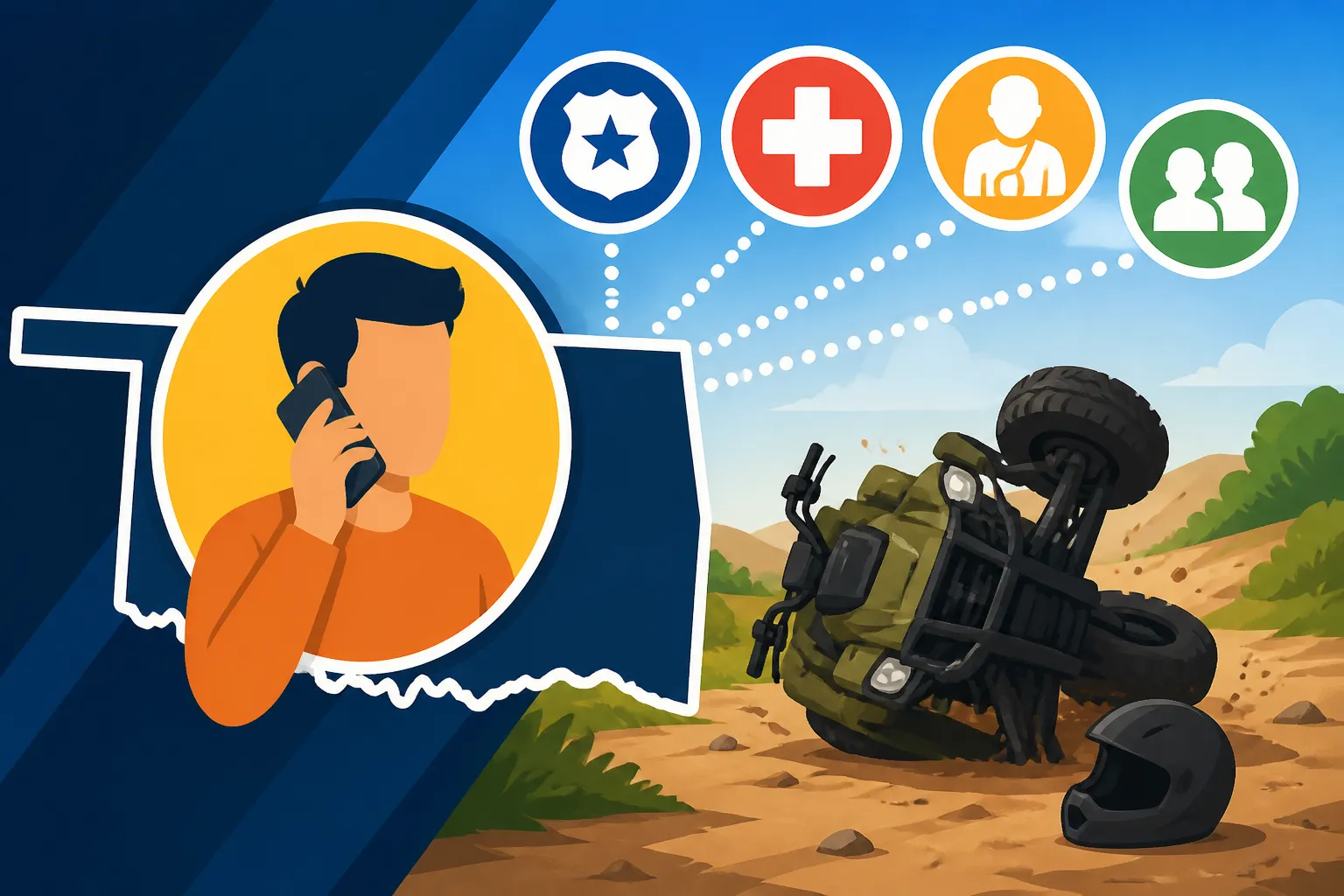
It's an experience no ATV or UTV rider ever wants to face: the sudden, jarring reality of a crash. One minute you're enjoying the thrill of the trail or getting work done on the ranch, and the next, everything changes. In those chaotic moments right after an incident, it's incredibly easy to feel overwhelmed, confused, and unsure of what to do next. Beyond just checking on yourself and others, a critical question immediately pops up: "Who in the world do I need to call, and in what order?" This guide is here to cut through that confusion, walking you through exactly who you must notify after an ATV or UTV crash in Oklahoma, ensuring you handle the situation effectively and protect yourself and your riding buddies.
Immediate Steps After an ATV or UTV Crash in Oklahoma
When a crash happens, whether it's a minor rollover on a tricky trail or something more serious, your priority isn't paperwork or phone calls. It's about safety, first and foremost. Taking a moment to follow a few critical immediate steps can make all the difference in the aftermath.
Prioritizing Safety and Assessing Injuries
The very first thing you need to do, if you're able, is to take a deep breath and assess the situation. Is anyone hurt? Start with yourself. Do you have any pain, dizziness, or visible injuries? Then, quickly check on anyone else involved—passengers, other riders, or even bystanders. This isn't the time to be stoic; even a seemingly minor bump can lead to bigger problems later. If anyone is injured, even if it seems minor, call 911 immediately. Don't hesitate. Emergency medical services can assess injuries, provide immediate care, and transport anyone who needs further attention. It’s always better to be safe than sorry, and getting medical professionals involved ensures that injuries are properly documented from the outset.
Next, if you're in a position to do so safely, try to move yourself and any injured parties to a secure location away from the immediate crash site. This could mean getting off the trail if there's a risk of other machines coming through, or moving away from any potential hazards like leaking fuel. The goal is to prevent any secondary incidents and ensure everyone is out of harm's way while you wait for help.
Securing the Scene and Preventing Further Harm
Once immediate safety and injury assessment are handled, if possible and safe to do so, take steps to secure the crash scene. Turn off the engine of any involved ATV or UTV. This prevents potential fuel leaks from becoming fire hazards and stops the machine from moving unintentionally. If you're on a public trail or road, and you have safety equipment like flares, reflective triangles, or even just brightly colored clothing, use them to warn approaching riders or vehicles. This is especially crucial on blind corners or crests of hills where visibility is limited.
While you don't want to disturb the scene too much before law enforcement or park officials arrive, if there are any immediate dangers like unstable terrain or downed power lines, these should be identified and avoided. If you have a phone, and it's safe, take a few quick pictures of the scene before anything gets moved. These initial photos can be invaluable later when dealing with insurance or investigations. Remember, your safety and the safety of others always come first, so don't put yourself in further danger just to document the scene.
Official Notifications: Law Enforcement and Beyond
Once the initial shock begins to wear off and immediate safety is addressed, you'll need to start thinking about official notifications. This is where many riders get confused, wondering if an ATV crash even warrants calling the police. The answer, often, is a resounding yes.
When to Call the Police or Sheriff's Department
In Oklahoma, the decision to call law enforcement after an ATV or UTV crash isn't always optional; it's often legally required. You absolutely must call the police, sheriff's department, or Oklahoma Highway Patrol if:
- Anyone is injured: Even a seemingly minor injury requires a police report. This protects you and others involved, providing official documentation for medical treatment and potential insurance claims.
- There is significant property damage: This includes damage to your own ATV or UTV that goes beyond a scuff, damage to another vehicle, a fence, a public sign, or any other property. What constitutes "significant" can be subjective, but if repairs will be costly or if it's not just cosmetic, make the call.
- A public road or public land is involved: If the crash occurs on a county road, a state highway (even just crossing it), or any other public right-of-way, law enforcement needs to be notified. This also extends to accidents on public trails, though sometimes park rangers might be the primary contact.
- There's a dispute over fault: If you and another party can't agree on what happened, or if someone is unwilling to exchange information, involving law enforcement ensures an objective party investigates and documents the incident.
- You suspect impairment: If you believe another rider (or you yourself) might be under the influence of alcohol or drugs, it's crucial to get law enforcement involved. [Oklahoma DUI Law and Off-Road Machines] applies on and off public roads.
When officers arrive, they will secure the scene, take statements from all involved parties and witnesses, and collect evidence. They’ll likely ask for your identification, registration information (if applicable, though off-road machines are often exempt from annual renewal in Oklahoma, an initial [Oklahoma ATV Registration Cost] means it was titled), and details about what led to the crash. This process leads to an official incident or accident report, which is vital for any subsequent insurance claims or legal proceedings. Don't be surprised if they ask [What a State Trooper Can Ask to See], even off-road.
State Parks, WMAs, and Other Public Riding Areas
Oklahoma offers fantastic riding opportunities in places like Little Sahara State Park or within the Honobia Creek WMA. If your crash occurs within the boundaries of such a managed public riding area, there's an additional layer of notification. In these instances, you should notify the park rangers or WMA staff immediately, in addition to calling 911 if injuries or significant damage are present.
These officials are often the first responders within their specific jurisdictions and are trained to handle off-road vehicle incidents. They can provide immediate assistance, help secure the area, and facilitate communication with local emergency services if needed. Each park or WMA may have its own specific reporting requirements and procedures, which are crucial for compliance and for the park's own incident tracking. For example, [Oklahoma Park Rangers as Enforcers] have the authority to issue citations and manage incidents within state parks. For areas like [Oklahoma WMA Access for a Quad], specific rules regarding access and incident reporting often apply and should be understood before you ride. Always check the specific rules of the riding area before you head out, as they often have unique regulations for everything from flags and whips to incident reporting.
Incident Reporting for Private Riding Parks and Leased Land
Beyond public lands, many riders enjoy private off-road parks or have access to leased land for riding, whether for recreation or agricultural purposes. If a crash happens on one of these private properties, your primary immediate notification, after ensuring safety and calling 911 for injuries, is to the landowner or private park management.
Private parks, like Cross Bar Ranch near Davis, often require riders to sign liability waivers (see [Oklahoma Private Ranch Waivers]) and have their own internal incident reporting procedures. Notifying them promptly is crucial for several reasons:
- Liability: It helps clarify responsibility and ensures they are aware of any potential damage to their property or injuries that occurred on their premises.
- Assistance: Park staff can often provide immediate assistance, including first aid, vehicle recovery, or guidance on contacting local emergency services.
- Rules and Regulations: Failing to report an incident to private park management could violate their rules, potentially leading to future access restrictions or other penalties.
Similarly, if you're riding on private land that you've leased or have permission to use, informing the landowner is a matter of courtesy and often a requirement of your agreement. They need to know what happened, especially if there's damage to their property (e.g., fences, crops, or structures) or if emergency services need access to their land. Establishing clear communication and following their reporting wishes can maintain a good relationship and ensure continued access for future rides.
The Role of Insurance Companies
After addressing immediate safety and contacting law enforcement or property owners, your next critical step in the notification process almost always involves your insurance company. Many off-road riders mistakenly believe their ATV or UTV isn't "important" enough for insurance, or that their regular auto policy covers it. Don't make that assumption!
When to Contact Your Insurance Provider
Whether or not law enforcement created an official report, if your ATV or UTV sustained damage, if you or a passenger were injured, or if another party's property was damaged, you should notify your insurance provider as soon as reasonably possible. This holds true even if you believe the incident was minor. Timely notification is a standard clause in most insurance policies, and delaying could potentially jeopardize your claim.
Modern off-road machines, especially UTVs equipped with parts from companies like SuperATV, can represent a significant investment. Specialized ATV and UTV insurance policies exist to protect that investment, offering coverage types similar to auto insurance:
- Liability Coverage: Essential if you're deemed at fault for an accident that injures another person or damages their property. This can cover medical expenses and repair costs for others.
- Collision Coverage: Pays for damage to your own ATV or UTV resulting from a collision with another vehicle or object, or even a rollover.
- Comprehensive Coverage: Protects against non-collision incidents like theft, fire, vandalism, or striking an animal. For example, [Oklahoma Comprehensive Coverage for a Quad] could be invaluable if your machine is stolen from your garage.
- Uninsured/Underinsured Motorist Coverage: Protects you if the at-fault party doesn't have adequate insurance to cover your damages.
Even if you only have liability coverage, notifying your insurer is important because they can help guide you through the process if another party is making a claim against you. Understanding your [Oklahoma ATV Insurance Costs] and what they actually cover before a crash happens is always the best approach.
Information Your Insurer Will Need
When you contact your insurance company, be prepared to provide as much detail as possible. The more information you can offer, the smoother the claims process will be. Here's what they'll typically ask for:
- Date, time, and exact location of the crash.
- A detailed description of how the incident occurred. Be factual and avoid speculating or admitting fault.
- Details of any injuries sustained by you or others.
- A description of the damage to your ATV/UTV, other vehicles, or property.
- Contact information for any other involved parties (names, phone numbers, insurance details).
- Names and contact information of any witnesses.
- The police report number, if law enforcement was called, and the agency involved.
- Photographs or videos you took at the scene.
Being thorough at this stage can significantly speed up the claims process and help ensure you receive the proper compensation for damages or injuries.
Dealing with Other Parties' Insurance
If your crash involved another party, and you believe they were at fault, you'll be interacting with their insurance company, or your own insurer will do so on your behalf. Exchange insurance information at the scene (policy number, company name, contact person if available) just as you would in a car accident.
It's generally advisable to let your own insurance company handle the communication with the other party's insurer. They are experts in negotiation and understanding liability. Be cautious about giving recorded statements to the other party's insurance company without consulting your own insurer first, as anything you say could potentially be used against you.
If the other party is uninsured, your uninsured motorist coverage (if you have it) would kick in. If not, you might have to pursue recovery through other legal means, which can be a more complex and drawn-out process. This highlights why comprehensive insurance coverage is so important for ATV and UTV owners. Knowing how to begin [Filing an Insurance Claim After a UTV Collision] is a crucial piece of knowledge for any rider.
Other Important Notifications and Documentation
Beyond the official channels of law enforcement and insurance, there are other crucial notifications and documentation steps that can support you in the aftermath of a crash.
Notifying Your Medical Provider and Family
If you've been in a crash, even if you initially feel okay or emergency services weren't called, it's wise to notify your primary medical provider as soon as possible. Adrenaline can mask pain, and some injuries, like whiplash or concussions, may not present symptoms until hours or even days later. Getting a professional medical check-up ensures that any underlying issues are identified and documented, which is crucial for your health and for any potential insurance claims. If your machine, perhaps enhanced with SuperATV suspension parts, took a hard hit, your body likely did too.
Equally important is notifying your family or close friends. They need to know what happened, where you are, and if you need any assistance. If you're seriously injured, they can help manage communications, handle logistics, and provide emotional support. It's a good practice to have an emergency contact list readily available, perhaps programmed into your phone or even on a laminated card in your riding gear.
Documenting the Scene and Damages Extensively
This cannot be stressed enough: document everything. Your memory can fade, details can blur, and having concrete evidence is invaluable. If it's safe to do so, use your phone to take photographs and videos of:
- The overall crash scene: From multiple angles, showing the positions of the machines and any other involved elements.
- Damage to your ATV/UTV: Close-ups of every dent, scratch, broken component. Document any specific aftermarket parts, like those from SuperATV, that were damaged.
- Damage to other vehicles or property: Same as above.
- Tire marks, skid marks, debris: These can provide crucial evidence of what happened.
- Road or trail conditions: Potholes, loose gravel, mud, obstacles, standing water.
- Weather conditions: Sun glare, rain, fog.
- Any relevant signage or landmarks.
- Your injuries: Bruises, cuts, scrapes (if visible and appropriate to photograph).
In addition to photos and videos, write down everything you remember about the incident as soon as you can. Include the date, time, location, direction of travel, speeds, what you saw, heard, and felt. This detailed account will be a valuable reference for police reports, insurance claims, and any legal counsel you might seek.
Witness Information and Contact Details
Independent witnesses can be incredibly helpful in clarifying what happened and supporting your account. If anyone saw the crash, or even arrived immediately afterward, get their full name, phone number, and email address. Politely ask them what they observed and, if they're willing, jot down a brief summary of their statement.
Don't rely solely on law enforcement to collect witness information, as they might not speak to everyone present. A witness's unbiased perspective can be crucial in situations where there's conflicting testimony or unclear liability.
What Happens Next: Investigations and Claims
Once all the initial notifications are made and documentation is gathered, the aftermath of the crash moves into the investigation and claims phase. This can feel like a lengthy process, but understanding the steps can help manage expectations.
Police Investigation and Report Acquisition
If law enforcement was called to the scene, they will conduct an investigation. This involves interviewing parties and witnesses, examining the physical evidence, and potentially recreating aspects of the incident. Based on their findings, they will generate an official police report. This report is a crucial document that will be used by insurance companies and potentially in legal proceedings.
You should inquire about how to obtain a copy of this report. It usually takes a few days or weeks for the report to be finalized and available. You can typically request it from the police department or sheriff's office that responded to the incident. Having this official report on hand is vital for your insurance claim and for any legal actions you might consider. [Oklahoma Accident Reporting for an ATV Crash] outlines the importance of this documentation.
The Insurance Claim Process
Once you've notified your insurance company and provided all the necessary documentation, your claim will move forward. Here's a general overview:
- Claim Assignment: An insurance adjuster will be assigned to your case. They are the primary point of contact for your claim.
- Investigation: The adjuster will review all the information you provided, the police report, and may conduct their own interviews or inspections. They will assess fault and determine coverage.
- Damage Assessment: For damage to your ATV/UTV, the adjuster will arrange for an estimate of repairs. This might involve you taking your machine to a repair shop or the adjuster inspecting it themselves. If you have custom parts, like a lift kit or upgraded winch from SuperATV, make sure these are itemized and included in the damage assessment.
- Settlement: Once the damage is assessed and fault is determined, the insurance company will make an offer to settle the claim. This could be a payout for repairs, replacement of your machine, or compensation for medical expenses.
Throughout this process, maintain clear communication with your adjuster, respond promptly to requests for information, and keep your own detailed records of all communications.
Potential Legal Ramifications and Legal Counsel
Depending on the severity of the crash, especially if there are significant injuries or property damage, there could be legal ramifications. This might involve civil lawsuits for damages, or in some cases, criminal charges if laws were violated (e.g., DUI, reckless endangerment). Even a minor incident can result in a [Oklahoma Fine Cap for ATV Violations], so understanding the rules is critical.
If you find yourself in a situation where fault is disputed, injuries are severe, or you're facing legal action, it's highly advisable to consult with an attorney specializing in personal injury or vehicle accidents. They can provide expert guidance, protect your rights, and represent your interests in negotiations or court. Don't underestimate the complexity of legal issues that can arise from even an off-road incident.
Preventing Future Incidents: Learning From a Crash
Experiencing an ATV or UTV crash is undoubtedly a harrowing experience, but it also presents a unique, albeit painful, opportunity for learning and improvement. Taking the time to reflect on what happened can significantly reduce your risk of future incidents.
Reviewing Riding Habits and Safety Gear
After a crash, it's natural to replay the events in your mind. Use this reflection constructively. Ask yourself:
- Was I riding too fast for the conditions?
- Did I misjudge a turn or obstacle?
- Was my attention fully on the trail?
- Was my machine properly maintained?
- Was I wearing all the recommended safety gear?
This is a critical time to reassess your riding habits. Perhaps a particular type of terrain pushed your limits, or you realized you were distracted. It's also a wake-up call to review your safety gear. Helmets, eye protection, gloves, and sturdy boots are non-negotiable. If your helmet took a hit, it needs to be replaced, even if it looks fine—its structural integrity may be compromised. Consider upgrading to more protective gear, like a full harness if your UTV allows, or a higher-quality helmet. Companies like SuperATV offer a range of safety accessories that could make a difference in future incidents. Remember, [Oklahoma Helmet Law for Riders Under 18] already mandates this crucial protection for young riders, but adults should wear one too.
Inspecting and Maintaining Your Machine
A crash, even a minor one, can reveal weaknesses in your machine or highlight the importance of regular maintenance. After the incident, a thorough inspection by a qualified mechanic is recommended, even if the visible damage seems minimal. Issues with suspension, steering, brakes, or the frame could be lurking beneath the surface, posing a serious safety risk if not addressed.
Beyond crash-related inspections, commit to a consistent maintenance schedule. Regular checks of tire pressure, fluid levels, brakes, and control cables can prevent mechanical failures that might lead to a crash. Investing in proper maintenance is an investment in your safety and the longevity of your machine.
Continuing Education and Safety Courses
Many riders, especially experienced ones, think they know it all. However, there's always something new to learn. While [Oklahoma Has No Mandatory Safety Course] for ATVs, taking a voluntary safety course can significantly enhance your skills and awareness. These courses cover everything from basic maneuvering and obstacle avoidance to understanding trail etiquette and emergency procedures.
Consider signing up for a refresher course, even if you've been riding for years. New techniques, evolving trail conditions, and changes in machine technology mean that continuous learning is always beneficial. A safety course can give you newfound confidence and skills, helping you navigate challenging situations more effectively and safely. Ultimately, the goal is to enjoy the ride and return home safely, and being prepared for the unexpected is a huge part of that.
Summary of Notifications After an ATV Crash
To help you quickly reference who to notify depending on the scenario, here's a brief overview:
| Scenario | Who to Notify Immediately | Secondary Notifications (as applicable) | Key Actions |
|---|---|---|---|
| Minor incident, private property, no injury, minor damage | Landowner / Private Park Management | None (unless insurance is desired for minor repairs) | Prioritize safety, assess machine, document briefly, learn from the incident. Consider notifying insurance for even minor repairs if covered. |
| Injury involved (any severity), any property damage, OR public land/road involved | 911 (Police/Sheriff/Ambulance) | Insurance provider, private park/landowner, family | Ensure safety of all parties, provide first aid if trained, secure the scene, document everything thoroughly (photos, notes), cooperate fully with officials, seek medical attention for all injuries, and contact your insurance company to initiate a claim. |
| Public riding area (State Park, WMA) | Park Rangers / WMA Staff, 911 (if injury/major damage) | Insurance provider, family | Follow specific park/WMA rules, secure scene, document, and cooperate with park officials. Remember that officials like [Oklahoma Park Rangers as Enforcers] have authority in these areas. Your [What Oklahoma's $11 Registration Fee Actually Covers] does not include coverage for damages or injuries. |
Disclaimer
This article is for general informational purposes only and does not constitute professional advice. Laws, prices and regulations vary by location and change over time. Consult a qualified professional for guidance on your specific situation.