Oklahoma Rules for Riding a Section Line
It's incredibly frustrating when you're out on your ATV or UTV, trying to get from one part of your property to another, or maybe just heading to a nearby riding spot, and you hit a section line road. You've heard whispers, seen other riders, and wondered: "Can I actually ride here without getting into trouble?" This guide is here to clear up the confusion around Oklahoma's rules for riding section line roads, giving you a clear picture of what's allowed and what could land you a ticket.
Understanding Oklahoma's Section Line Roads
Oklahoma's landscape is crisscrossed with these invisible lines that often become dusty tracks or gravel paths. They're a fundamental part of the state's survey system, but their legal status for off-road vehicle use can feel like a riddle wrapped in an enigma. Let's break down what these roads truly are and why they're such a hot topic for ATV and UTV owners.
What Exactly is a Section Line Road?
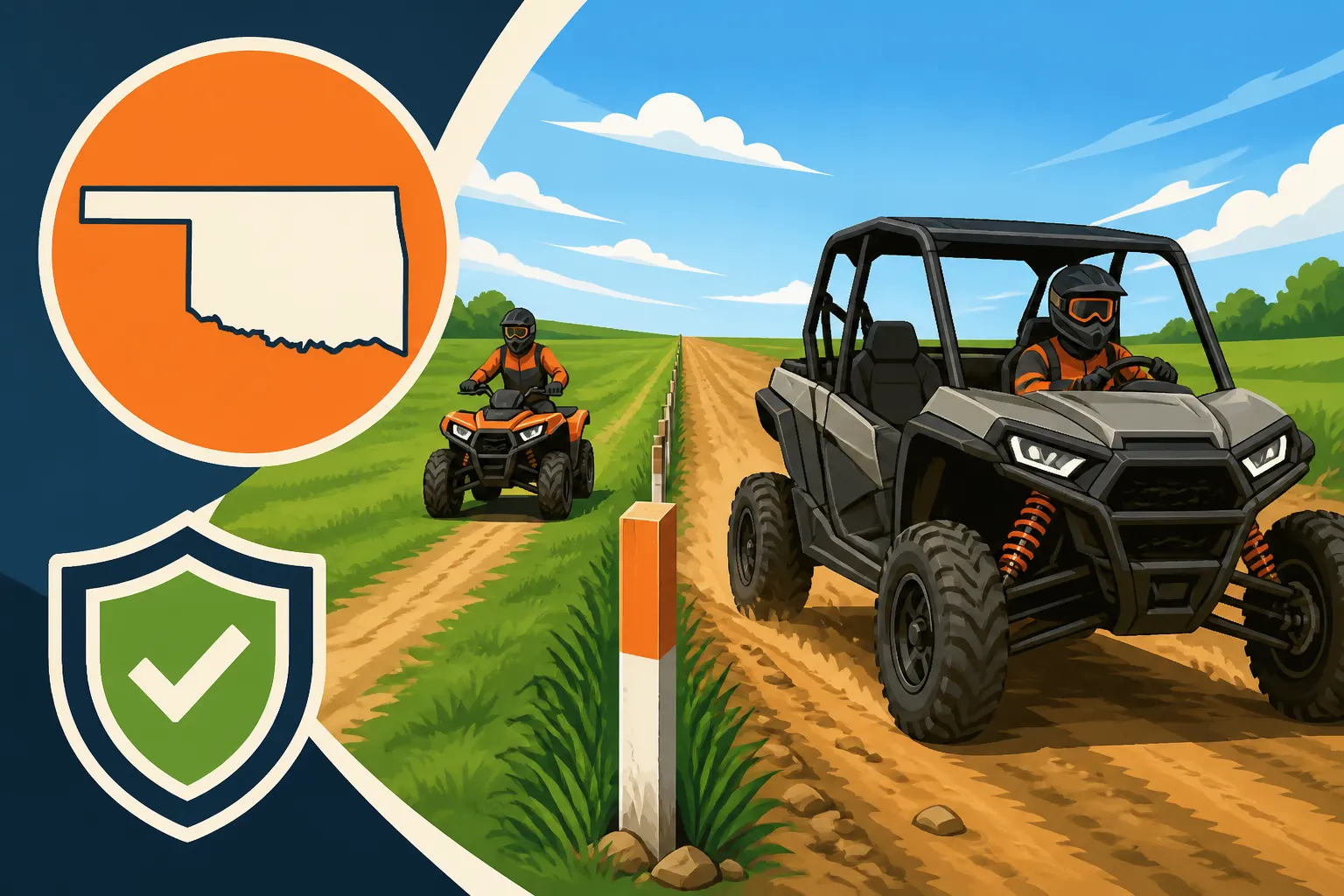
Think of Oklahoma's land as a giant grid. When the state was surveyed, land was divided into townships, and then each township was further divided into 36 sections, each one square mile. The roads that typically run along these section boundaries are what we call "section line roads." Historically, these were often designated public highways, even if they were just dirt tracks, to ensure access to all parcels of land. They might be well-maintained gravel, barely-there two-tracks, or even just a fence line in a pasture. What's crucial to understand is that just because it looks like a private drive, or even if it's completely unmaintained, it can still legally be a public right-of-way. This is a common point of confusion for riders, as the appearance often belies the legal designation.
Many Oklahomans assume if it's not paved, it's not a road, or if it's not regularly driven by cars, it must be private. But the state's original survey and land grants often established these section lines as public access points. This means that while the land next to the road is almost certainly private, the strip of land constituting the section line itself might technically be public domain, managed by the county. This distinction is vital because it determines who has jurisdiction and what rules apply to riding there.
The Legal Status of Section Lines for ATVs and UTVs
Here's where things get tricky for ATV and UTV riders. While many section line roads are technically public rights-of-way, that doesn't automatically mean they're open to all vehicles. In Oklahoma, ATVs and UTVs are generally considered off-road vehicles. This means they are largely restricted from operating on public roads unless specific conditions are met or exceptions apply. The default position is that your quad or side-by-side should not be on a public road, and a section line, regardless of its condition, often falls under this "public road" umbrella.
The law isn't always cut-and-dry, which adds to the confusion. Some section lines are maintained by county commissions, indicating their public status, while others are left to nature. The legal reality is that a public right-of-way remains public, even if it's overgrown or impassable by a sedan. For ATVs and UTVs, the issue isn't whether the road exists, but whether the type of vehicle is permitted on it. Without specific local ordinances or state exemptions, riding your off-road machine on a section line road that's considered part of the public road system could be a violation. It’s a point of contention for many riders who feel these rural routes are perfect for their machines, but the letter of the law can be quite restrictive.
Common Misconceptions About Section Line Access
One of the biggest misconceptions riders have is, "Everyone rides here, so it must be okay." This line of thinking can lead to a heap of trouble. Just because you've seen others doing it, or have even done it yourself for years without incident, doesn't make it legal. Enforcement can be inconsistent, but that doesn't mean the law doesn't exist. Another common belief is that if a section line isn't graveled or paved, it automatically reverts to private property or becomes an "off-road trail." As discussed, this isn't necessarily true. The legal designation often dates back decades, if not a century, and isn't based on current maintenance or appearance.
Some riders also mistakenly believe that if they have permission from the landowners on both sides of a section line, they can ride it freely. While landowner permission is absolutely essential if you’re riding on private land, it doesn't override state or county regulations concerning the public right-of-way of the section line itself. The land under the section line road might technically be owned by the adjacent landowners, but it's encumbered by a public easement. This means the public (and thus the county or state) has a right to use and maintain it as a road, even if it's unpaved. The complexities often leave riders scratching their heads, feeling like the rules are designed to confuse rather than clarify.
Navigating the Rules: When Can You Actually Ride?
So, if the default is "no," when exactly can you ride your ATV or UTV on a section line in Oklahoma? Thankfully, there are specific circumstances and legal allowances that provide some clarity for off-road enthusiasts. Understanding these exceptions is key to staying on the right side of the law.
The Instrument of Husbandry Exception
This is probably the most significant exception for many rural Oklahoma riders. The "instrument of husbandry" rule allows ATVs and UTVs to be operated on public roads, including section lines, when they are being used for agricultural purposes. Think of a farmer driving their side-by-side to check cattle in the back forty, or a rancher moving equipment between fields. This exception is designed to facilitate farm and ranch operations, recognizing that these machines are often essential tools for agricultural work. However, there are crucial limitations.
The machine must truly be engaged in an agricultural purpose. You can't just slap a hay bale on the back and go joyriding. The law generally implies a direct, necessary route for a specific task. For example, moving an implement from one field to another, checking fences, or transporting feed would typically qualify. Crucially, the law also states that these machines can only be operated on public roads for "such distances as necessary to accomplish the purpose." This means you can't take a scenic tour of the entire county. It’s meant for short, direct trips. If you're riding your UTV loaded with tools to fix a fence a quarter-mile down a section line from one pasture to another, you're likely covered. If you're riding for recreation, even with a small bag of feed on the rack, you're probably not. [Oklahoma Instrument of Husbandry Exception] offers a deeper dive into this specific rule.
The Role of County Commissioners
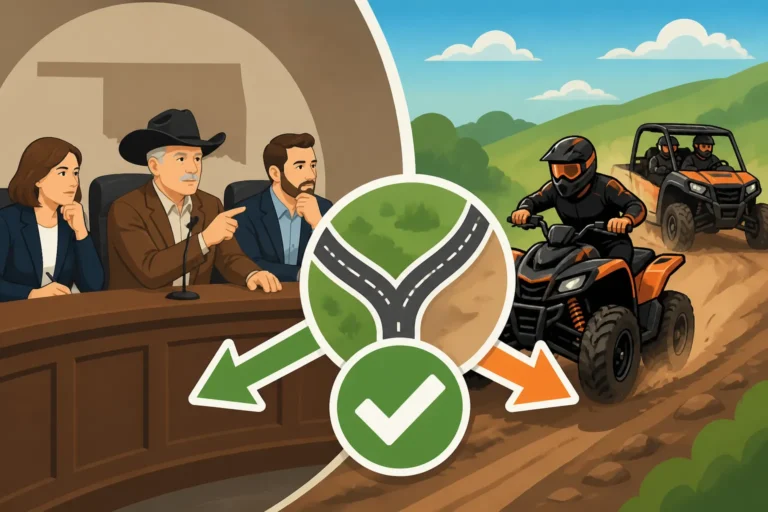
While the state sets the overarching framework, local authorities have a significant say in how ATVs and UTVs are used on roads within their jurisdiction. In Oklahoma, county commissioners have the power to designate specific county roads, which often include section lines, as open for ATV and UTV use. This means that what's legal in one county might not be legal in the next, leading to a patchwork of rules across the state. It's a huge source of confusion for riders, especially those who frequently cross county lines.
A county commission must pass a specific resolution or ordinance to open these roads. They don't just become open by default. These ordinances might specify speed limits, daylight-only operation, or require certain safety equipment. If you're planning to ride a section line road for recreational purposes, it is absolutely essential to check with the county commissioner's office in that specific county. Don't rely on hearsay or the actions of others. A quick call or visit to the county courthouse can save you a lot of hassle. Some counties have embraced off-road recreation and opened many of their section lines, while others remain strictly closed. For more on this, check out [Oklahoma County Commissioners and ATV Roads].
Crossing Section Line Roads
Even if a section line road isn't open for continuous riding, there are rules that allow ATVs and UTVs to cross them under specific conditions. This is vital for riders who need to access private land on the other side of a public road. Oklahoma law permits off-road vehicles to cross a public road if the crossing is made at an angle of approximately 90 degrees to the roadway. This means you can't ride down the road parallel to it for any distance before turning off. You must go straight across.
Additionally, these crossings are generally restricted to daylight hours. Riding across a public road, even a section line, after dark is usually prohibited. Another key stipulation is the "35 mph rule." You can only cross a road if the posted speed limit on that road is 35 miles per hour or less. This excludes higher-speed state highways and often more heavily trafficked county roads. The intent is to allow riders to cross safer, less busy roads where visibility and reaction time are less critical. It's a quick dash across, not a casual traversal. Always yield to any oncoming traffic and ensure the path is clear before attempting a crossing. [Oklahoma Highway Crossings in Daylight] provides more details on these crossing rules.
Practical Considerations and Safety Tips for Section Line Riding
Even when you're legally allowed to be on a section line road, common sense and safety protocols are paramount. These aren't typically designed for high-speed travel or heavy traffic, and conditions can vary wildly. Being prepared and respectful can prevent accidents and help maintain good relations with landowners and law enforcement.
Equipment and Visibility
Section line roads, especially the unmaintained ones, can be incredibly dusty, muddy, or overgrown. Visibility can be a major issue, both for you and for any other vehicles or people sharing the road. This is where appropriate equipment comes in. Even if not legally required for your specific situation, always ensure your ATV or UTV has working headlights, taillights, and brake lights. [Oklahoma Equipment Required for Street UTVs] has some great advice on what's needed for machines that do see road use.
Adding a whip flag, especially if you're riding in dusty conditions or where there's tall vegetation, can significantly increase your visibility to other riders or passing vehicles. Brands like SuperATV offer a range of durable whip flags and mounting solutions that can be easily installed on most machines, helping you stand out. Reflective tape on your machine or helmet can also be a simple, inexpensive way to improve your profile, especially around dawn or dusk, even if you’re technically crossing only in daylight. Keep your windshield clean on your UTV, and wear clear goggles or glasses on your ATV to maximize your own sightlines. Always be aware that other vehicles, farm equipment, or even pedestrians could be present, especially around driveways or field entrances.
Respecting Private Property
It's absolutely critical to remember that while the section line itself may be a public right-of-way, the land directly adjacent to it is almost certainly private property. This means no venturing off the section line, no cutting across fields, and no stopping on private land without explicit permission. Farmers and ranchers depend on their land, and trespassing, even accidentally, can cause significant problems and erode goodwill towards all ATV and UTV riders. A simple mistake can lead to strained community relations or even legal action.
Pay close attention to fences, gates, and "No Trespassing" signs. If a gate is closed, leave it closed. If it's open, proceed with caution and consider closing it if it looks like livestock might escape. Never leave trash behind, and avoid excessive noise, especially near homes or livestock. If you encounter a landowner or resident, be courteous and respectful. A friendly wave and a nod go a long way. This also applies if you’re moving between different parcels of your own property; your neighbors still deserve peace and quiet. For machines used solely on private farm ground, rules are different, as covered in [Oklahoma Rules for Riding Farm Ground] and [Oklahoma Rules for Riding a Pasture].
Potential Penalties and Enforcement
Ignoring the rules for section line riding can lead to various penalties. Law enforcement, including county sheriffs, state troopers, and sometimes even game wardens, have the authority to enforce these regulations. The specific charge could range from a simple traffic citation for operating an off-road vehicle on a public road to more serious charges like trespassing if you stray from the right-of-way. Fines can vary, but generally, ATV violations in Oklahoma are capped, as discussed in [Oklahoma Penalties Capped at $25], but court costs can add up.
Beyond the direct legal consequences, there's also the risk of having your machine impounded, which incurs additional fees and a major headache. An officer might issue a warning, but they are well within their rights to issue a ticket or take further action. The best defense is always to know the rules for the specific area you're riding in and to adhere to them strictly. Don't assume you can talk your way out of a ticket just because it's a "country road." Staying informed and riding responsibly is not just about avoiding trouble, but also about protecting the future of off-road riding access for everyone.
Below is a quick reference table summarizing common scenarios for section line riding in Oklahoma:
| Scenario | Legal Status | Key Considerations |
|---|---|---|
| Agricultural Use | Generally Permitted (Instrument of Husbandry) | Must be for a direct, necessary farm/ranch purpose. Limit distance. |
| Recreational Use | Restricted by Default | Requires a county commission ordinance to open the road. |
| Crossing a Section Line | Permitted under specific conditions | Must be at ~90 degrees, daylight only, speed limit 35 mph or less. |
| Unmaintained Dirt Track | Still a Public Right-of-Way | Legal status for ATVs/UTVs doesn't change due to condition. |
| Private Land Access | Requires Permission | Do not deviate from the section line onto private property. |
Riding a section line in Oklahoma isn't as simple as just firing up your machine and going. It requires an understanding of the state's off-road vehicle laws, local county ordinances, and a good dose of common sense and courtesy. By adhering to the instrument of husbandry exception, checking local county rules, making safe crossings, and respecting private property, you can enjoy your ATV or UTV without running afoul of the law. Staying informed is your best tool for keeping the tires rolling legally and safely.
Disclaimer
This article is for general informational purposes only and does not constitute professional advice. Laws, prices and regulations vary by location and change over time. Consult a qualified professional for guidance on your specific situation.