Oklahoma Street UTVs Stay Off US Highways
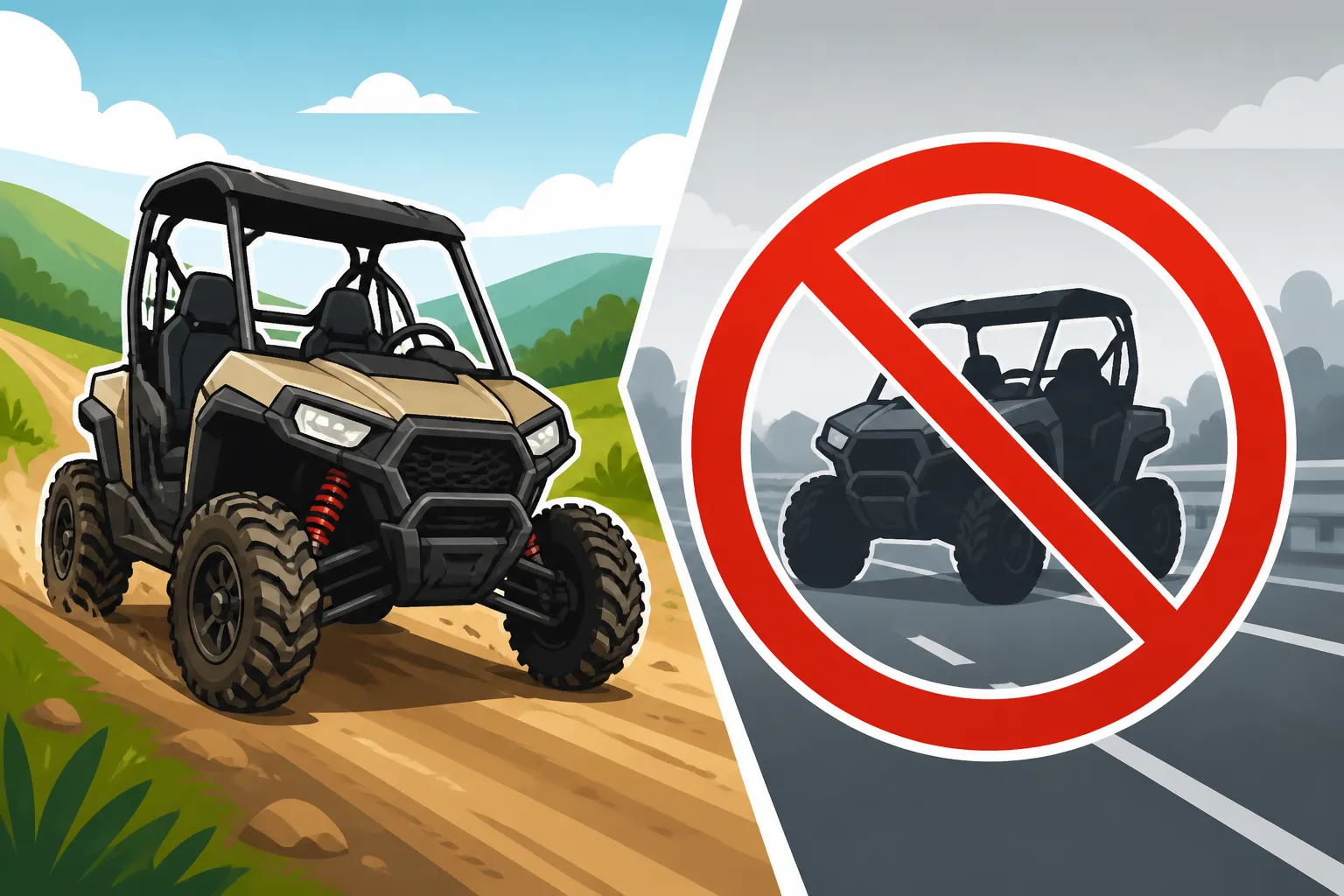
It’s a truly mixed bag when you finally get that coveted road plate for your UTV in Oklahoma. You’ve jumped through all the hoops, added the required equipment, and now your side-by-side is ready to hit some asphalt. But then you run smack into the frustrating reality: certain major roads, like the bustling US Highways, are completely off-limits. This guide is here to walk you through exactly why these restrictions exist, what roads are open to you, and how to navigate the complex world of street-legal UTVs in our great state.
The Frustration of Forbidden US Highways for Street UTVs
There's nothing quite like the dream of riding your UTV from your ranch straight into town for supplies, or taking a scenic route to a favorite fishing spot without having to trailer your machine everywhere. For many of us, getting a street-legal tag for our side-by-side feels like unlocking a whole new level of freedom. However, that excitement can quickly turn to a sigh of exasperation when you realize that even with a road plate, you're still barred from using US Highways. It's a common point of confusion and a genuine pain point for riders across Oklahoma who want to maximize their machine's utility.
Understanding the "Why" Behind the Restriction
The core reason Oklahoma's street-legal UTV statute [Oklahoma's Street-Legal UTV Statute] specifically excludes US Highways and Interstates boils down to safety and the intended design of these machines. While modern UTVs are incredibly capable and robust, they aren't engineered to the same safety standards as passenger vehicles for high-speed, high-volume traffic typical of these major arteries. Imagine trying to keep up with semi-trucks and fast-moving cars on a busy highway when your UTV might only comfortably cruise at 45-55 mph. The speed differential alone creates significant hazards. Lawmakers, when creating the street-legal class, had to strike a balance between allowing UTVs more access and ensuring the safety of all road users.
Furthermore, these restrictions are often tied to federal guidelines and funding for highway construction and maintenance. Federal money comes with specific regulations about what types of vehicles are permitted on certain roads. While states have some leeway to define "street-legal" for vehicles like UTVs, they generally can't override federal stipulations for major highways without risking that crucial funding. It’s not just about what Oklahoma wants; it’s about a bigger picture of road classification and safety standards that apply nationwide, even if it doesn't always feel fair when you're just trying to get from point A to point B on your machine.
The Practical Impact on Riders and Routes
For everyday riders, this restriction means meticulous route planning becomes essential. You can't just hop on the most direct path if it involves a stretch of US Highway. This often leads to longer travel times, navigating smaller, less-maintained county roads, or even having to find alternative transportation for portions of a journey. For someone living in a rural area where a US Highway might be the most convenient link between towns, it forces them to either trailer their UTV or rethink their commute entirely. It can feel like a step forward in freedom, but with a significant caveat that still limits true versatility.
Consider a scenario where you're heading to a popular riding area or even just visiting family a few towns over. What might be a 15-minute drive in your truck could easily turn into a 45-minute meandering journey on your street-legal UTV, dodging gravel, potholes, and slower traffic on secondary roads. This also means you need to be acutely aware of your fuel range, as gas stations might be fewer and farther between on the backroads. It’s a constant reminder that while your UTV can now legally cruise some streets, it's not a direct replacement for your daily driver when it comes to long-distance or high-speed travel, and [Oklahoma Street UTVs Stay Off Interstates] for similar reasons.
What Makes a UTV "Street Legal" in Oklahoma Anyway?
Before you even worry about which roads are open or closed, the first hurdle is making your UTV compliant with Oklahoma's street-legal requirements. This isn't just about slapping on a license plate; it involves specific equipment, proper registration, and understanding who can legally drive these machines on public roads. Many riders assume that if they can get a title, they can ride anywhere, but the reality is much more nuanced for UTVs. It’s a set of rules designed to bring these off-road machines closer to traditional vehicle standards, but not quite all the way.
Essential Equipment for Oklahoma Road Plates
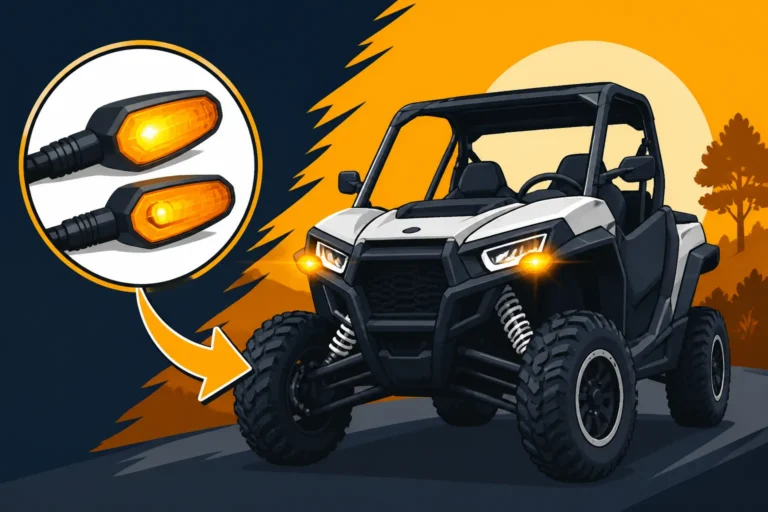
To get that coveted road plate, your UTV needs a whole host of equipment that most stock machines simply don't have. Think of it as essentially transforming your off-road beast into something that can safely share the road with cars and trucks. The list typically includes headlights, tail lights, brake lights, turn signals [Oklahoma Turn Signals and Mirrors], and a horn [Oklahoma Horns on a Street UTV]. You'll also need a windshield, a rearview mirror, and at least one side-view mirror. Many riders turn to aftermarket solutions, like those offered by SuperATV, to get all the necessary components in one go, often packaged as a "street-legal kit." This helps ensure you're not missing anything critical when you go to register.
Beyond the obvious lighting and mirrors, your UTV also needs proper tires for road use, not just knobby off-road treads. While the law might not explicitly dictate road-specific tires, using tires designed for the street significantly improves handling, reduces wear, and enhances safety. Additionally, a functioning speedometer is essential, and sometimes even a parking brake and seat belts are checked. It’s about more than just visibility; it’s about control and the ability to operate predictably in traffic. Overlooking any of these items can lead to a failed inspection and a delay in getting your machine road-ready. For a comprehensive list, check out [Oklahoma Equipment Required for Street UTVs].
Driver Requirements and Vehicle Registration
Once your UTV is properly outfitted, you still need to ensure the driver is qualified and the vehicle is officially registered. In Oklahoma, to operate a street-legal UTV, the driver must be at least 16 years old [Oklahoma Drivers Must Be 16 for a Street UTV] and possess a valid driver's license. Unlike motorcycles, there's no special "M" endorsement required, which is a relief for many who don't want to go through additional testing. However, all the standard rules of the road apply, from obeying traffic laws to using turn signals appropriately. Just because you're in a UTV doesn't mean you get a pass on basic driving etiquette.
For registration, you'll visit a tag agency, much like you would for a car or truck. You'll need proof of ownership, like your title or Manufacturer's Statement of Origin (MSO), along with proof that you meet the equipment requirements. You’ll also need to provide proof of liability insurance [Oklahoma Insurance at Street Registration], which is mandatory for any vehicle operating on public roads in Oklahoma. Unlike the one-time, non-renewable registration for purely off-road ATVs and UTVs, a street-legal UTV requires [Oklahoma Annual Plates for Street UTVs]. This means yearly renewals, complete with associated fees and the expectation that your machine continues to meet all safety standards. It’s a commitment, but one that opens up more riding opportunities.
Navigating Oklahoma's Open Roads: Where You CAN Ride
While the restrictions on US Highways might sting a bit, the good news is that street-legal UTVs are granted access to a significant network of other public roads across Oklahoma. The whole point of the 2021 legislation was to give riders more freedom, and it certainly delivered on that, even if it wasn't an all-access pass. Understanding where you're allowed to go is key to enjoying your machine responsibly and staying on the right side of the law. It’s about being informed and exploring the vast majority of our state's byways.
Exploring County and City Road Options
The primary avenues for street-legal UTVs are county roads and city streets. This is where the true benefit of having a road plate shines. County commissioners [Oklahoma County Commissioners and ATV Roads] have the authority to open or close specific county roads to UTV traffic, and many have embraced the idea, particularly in rural areas where UTVs are common for work and recreation. Similarly, many municipalities have passed [Oklahoma Municipal Ordinances That Open Streets] to UTVs, allowing them to be driven within city limits, often with specific speed limits or time restrictions. This means you can often ride your machine right from your home, through your neighborhood, and out into the countryside.
This expansion of access is particularly beneficial for those who use their UTVs for utility purposes – think ranchers checking fence lines, farmers moving between fields, or just residents needing to run a quick errand to a local store. It reduces the need for trailers, saving time and fuel. Of course, it’s absolutely crucial to always check local ordinances before riding, as rules can vary from one county or city to the next. What’s perfectly legal in one town might not be in an adjacent one, so a little research before you ride can save a lot of headaches later on.
Crossing Highways and Section Lines
Even if you can't drive on a US Highway, there are provisions for crossing them. Oklahoma law allows street-legal UTVs to cross highways, including US Highways, under specific conditions [Oklahoma Highway Crossings in Daylight]. Generally, these crossings must occur during daylight hours, be made at an intersection, and be done at a right angle to the highway, getting across as quickly and safely as possible. You cannot simply drive along the highway for any distance; it’s strictly for traversing from one allowable road to another. This is a vital rule for connecting various county roads and continuing your journey.
Another unique aspect of Oklahoma riding is access to section lines. Many rural areas have section line roads, which are often unpaved or minimally maintained paths that follow property lines. While not always ideal for high-speed travel, these can be legitimate routes for street-legal UTVs, connecting larger roads and providing access to remote areas. However, riders should be mindful of land ownership, local regulations, and the condition of these paths. Just because it's a section line doesn't always mean it's a public right-of-way, so always exercise caution and respect private property.
The Legislative Landscape: How These Rules Came to Be
The ability to even consider riding your UTV on public roads in Oklahoma is a relatively recent development. For years, UTVs were strictly off-road vehicles, relegated to private property or designated OHV parks. The shift came with new legislation, a testament to the growing popularity and utility of these machines, as well as persistent advocacy from the riding community. Understanding the legislative journey helps explain why the rules are structured the way they are, including the limitations on US Highways.
The 2021 Bill and Its Intent
The significant change for UTVs in Oklahoma arrived with a bill passed in 2021 [How Oklahoma Created a Street-Legal UTV Class]. This legislation was a game-changer, formally recognizing a class of "street-legal" utility vehicles and outlining the specific requirements for them to operate on certain public roads. The primary intent behind this bill was multi-faceted: to enhance the utility of UTVs for agricultural and recreational purposes, to provide more options for rural transportation, and to offer a clearer legal framework for machines that were often used on roads informally anyway. Lawmakers wanted to bring clarity and safety to an existing practice, rather than completely rewrite vehicle codes.
However, as with most new legislation, it came with compromises. The exclusion of US Highways and Interstates was part of that compromise, balancing expanded access with public safety concerns. It was recognized that UTVs, even with added safety equipment, still presented different challenges compared to traditional automobiles, especially at higher speeds or on roads with heavy traffic. The bill sought to create a practical solution for local travel while avoiding the higher-risk environments of major federal routes. This deliberate choice is why you won't see a street-legal UTV cruising down I-35 or a major US Highway within Oklahoma.
Differences from Traditional ATV/UTV Registration
It’s important to distinguish the street-legal UTV registration from the standard off-road ATV/UTV registration that has existed for a while. The traditional registration [Oklahoma ATV Registration You Pay Once] is a one-time fee, and it never needs to be renewed [Oklahoma Registration Never Renews]. It's primarily for identification and to signify ownership, and it comes with a decal that goes on the front of your machine [Oklahoma Decals on the Front of a Machine]. This registration does not grant you any permission to ride on public roads, outside of very limited agricultural exemptions or specific crossing rules.
The street-legal UTV registration, by contrast, is a yearly process, much like a car. It requires all the additional safety equipment, proof of insurance, and implies that your machine meets a higher standard for road use. It essentially creates a separate category for UTVs that are intended for both off-road and limited on-road use, recognizing their dual nature. This distinction is crucial, as many riders mistakenly believe their one-time registered ATV or UTV is street legal, leading to potential fines and citations. Always be clear about which type of registration your machine carries and what that permits.
Planning Your Ride: Tips for Street-Legal UTV Owners
Having a street-legal UTV is exciting, but it also comes with a responsibility to plan your rides carefully and safely. You're no longer just tearing up dirt trails; you're sharing the road with cars, trucks, and sometimes even bicycles. Thoughtful preparation can make all the difference in having an enjoyable and compliant experience. From understanding local rules to making your machine as visible as possible, a little extra effort goes a long way.
Checking Local Ordinances and Maps
One of the most critical steps for any street-legal UTV owner is to thoroughly research the specific rules in your riding area. As mentioned, [Oklahoma Municipal Ordinances That Open Streets] can vary wildly. What's allowed in one town might be forbidden in the next. Many counties publish maps or lists of approved roads for UTVs. Websites for county commissioners or city halls are good starting points. Don't rely on assumptions or what you heard from a friend; verify the information yourself. A quick phone call to the local sheriff's department or city clerk's office can clarify any doubts.
Beyond legality, consider the practicalities of the roads. Are they paved or gravel? What are the speed limits? Are there blind corners or heavy traffic areas you should avoid? Planning your route using mapping apps that allow you to select for non-highway roads can be incredibly helpful. You might also find local riding groups or forums that share valuable insights on good routes and areas to avoid. Remember, your UTV, even if street-legal, isn't a car, and its handling characteristics mean you need to be extra cautious, especially on unfamiliar public roads.
Enhancing Safety and Visibility for Road Use
While your UTV might meet the minimum equipment requirements, going above and beyond for safety and visibility is always a wise choice when riding on public roads. SuperATV, for example, offers a range of accessories that can boost your machine's road-worthiness, from enhanced lighting kits to full enclosures that offer better protection from the elements and other vehicles. Think about adding reflective tape, brighter LED lights, or even a brightly colored flag, especially if you're riding in an area with a lot of larger vehicles. Anything that makes you more noticeable to other drivers is a significant advantage.
Wearing appropriate safety gear is also non-negotiable. While Oklahoma doesn't require helmets for adult UTV riders, for those under 18, helmets are mandatory [Oklahoma Helmet Law for Riders Under 18]. However, wearing a helmet yourself, along with eye protection, gloves, and sturdy footwear, is always recommended. Accidents can happen, and proper gear can dramatically reduce the risk of serious injury. Always assume other drivers might not see you, and ride defensively. Your safety on the road is paramount, and it's up to you to take every precaution possible to protect yourself and your passengers.
Common Misconceptions and Rider FAQs
Despite the clear legislation, there's still a lot of confusion surrounding street-legal UTVs in Oklahoma. Riders often come across conflicting information or make assumptions based on how other states operate. Clearing up these common misconceptions is essential for responsible riding and avoiding unnecessary trouble. Let's tackle some of the most frequently asked questions and clarify the lines between what's allowed and what's not.
Differentiating Street-Legal from Off-Road Only Machines
One of the biggest sources of confusion is distinguishing a true street-legal UTV from an off-road only machine that simply has a traditional ATV/UTV registration. As we've covered, the standard off-road registration [Oklahoma ATV Registration Cost] gives you no blanket right to ride on public roads. It's essentially a state record of ownership, similar to how a boat or certain farm equipment might be recorded. Many riders confuse this with being "street legal" because they have a decal. This is a critical misunderstanding.
A street-legal UTV, by contrast, has been explicitly equipped to meet specific road-use standards, has been issued an annual road plate, and carries liability insurance. If your UTV only has the one-time off-road decal and no annual plate, you are generally restricted to private property, designated OHV areas, or very limited agricultural and crossing exemptions. You cannot just add a horn and some turn signals to your off-road machine and call it "street-legal" without going through the full titling and annual registration process. Knowing the difference can save you a ticket and ensure you're compliant with Oklahoma law.
What to Do If You're Pulled Over
Even if you're confident your UTV is street-legal and you're riding on an approved road, there's always a chance you might be pulled over by law enforcement. It could be for a minor traffic infraction, a random check, or simply because an officer isn't fully aware of the street-legal UTV laws (which are still relatively new in some areas). The most important thing is to remain calm, cooperative, and respectful. Pull over safely to the side of the road, turn off your engine, and keep your hands visible.
When asked for documentation, have your driver's license, proof of insurance, and your UTV's registration and title readily available. If the officer seems unfamiliar with the street-legal UTV laws, you can politely explain that your vehicle is registered as a "street-legal utility vehicle" under [Oklahoma's Street-Legal UTV Statute] and point out your annual road plate. Avoid arguing or becoming confrontational. If you believe you've been unfairly cited, you'll have the opportunity to contest the ticket in court, but roadside isn't the place for a debate. Staying calm and providing documentation is your best first step.
| Feature | Off-Road Only UTV/ATV | Street-Legal UTV |
|---|---|---|
| Registration Type | One-time, non-renewable ATV/UTV registration | Annual, renewable road plate registration |
| Cost | $11 (plus titling) [The $11 Registration You Pay Once and Never Renew] | Annual renewal fees (plus titling & excise tax) |
| Decal/Plate | Front decal only [Oklahoma Issues a Front Decal, Not a Plate] | Annual rear license plate, front decal (often) |
| Road Access | Limited to private land, OHV parks, specific farm use, highway crossings (very restricted) | County roads, city streets (where permitted by ordinance), highway crossings (restricted) |
| US Highways/Interstates | No | No |
| Equipment | Varies; generally minimal for off-road use | Headlights, tail lights, brake lights, turn signals, horn, mirrors, windshield, seat belts, speedometer |
| Driver's License | Not required for off-road use | Valid driver's license required |
| Insurance | Not required by state law (recommended) | Mandatory liability insurance required for road use |
| Purpose | Recreation, farm work on private land | Recreation, utility, limited transportation on public roads |
Disclaimer
This article is for general informational purposes only and does not constitute professional advice. Laws, prices and regulations vary by location and change over time. Consult a qualified professional for guidance on your specific situation.