Carrying a Firearm on an ATV While Hunting
Navigating the ins and outs of Oklahoma's hunting regulations can feel like trying to track a ghost through a thicket. When you throw an ATV or UTV into the mix, especially with a firearm onboard, it's easy to get tangled up in what's allowed and what could land you a hefty fine. This guide will cut through the confusion, helping you understand the specific rules and best practices for responsibly carrying a firearm on your off-road machine while hunting in the Sooner State.
Understanding Oklahoma's General Hunting Regulations for Firearms
Before we even think about mounting a scabbard to your side-by-side, it's crucial to have a solid grasp of Oklahoma's overarching hunting regulations concerning firearms. These aren't just suggestions; they're the bedrock of safe and legal hunting in our state, and knowing them inside and out will prevent a lot of headaches down the road.
The Basic Rules of Carrying Firearms While Hunting
Oklahoma has a pretty straightforward approach to firearm carry during hunting, but the devil is always in the details. Generally, during an open hunting season, a hunter is permitted to carry a firearm suitable for the game they are pursuing. This sounds simple enough, right? But the nuances come into play with things like whether the firearm can be loaded, what type of ammunition is permitted, and if it needs to be cased. For instance, when you're actively stalking game or set up in a blind, carrying a loaded, uncased firearm is standard practice. The key is to ensure you're in a lawful hunting area, during an open season for the species you intend to harvest, and using a legal method of take. This includes understanding minimum caliber requirements for certain big game animals, or shot size restrictions for migratory birds. It's not just about having a gun; it's about having the right gun, in the right place, at the right time, and using it in the right way. Always remember that safety rules apply universally: keep the muzzle pointed in a safe direction, keep your finger off the trigger until ready to shoot, and be sure of your target and what's beyond it.
Distinguishing Between Public and Private Land Rules
Oklahoma offers a fantastic variety of hunting opportunities, from expansive private ranches to the diverse landscapes of our Wildlife Management Areas (WMAs) and national forests. However, the rules for firearm carry and ATV/UTV use can shift dramatically depending on whether you're on public or private land. On private land, with the landowner's explicit permission, you often have more flexibility regarding where you can ride your machine and how you transport your firearm, within the bounds of general state hunting and firearms laws. It’s always critical to have [Getting Written Permission Before Riding Private Land] documented. However, when you venture onto public lands managed by the Oklahoma Department of Wildlife Conservation (ODWC) or federal agencies, the regulations become much more specific and often more restrictive. These areas are designed for conservation and public access, and as such, they have their own sets of rules that govern vehicle use, open seasons, and even how firearms must be transported. For example, some WMAs might prohibit loaded firearms on any vehicle, including ATVs and UTVs, or require them to be cased at all times while in transit. Always check the specific regulations for the WMA you plan to hunt in; the rules for [Honobia Creek WMA Riding in Oklahoma] might be very different from those at [Three Rivers WMA Riding in Oklahoma]. Ignoring these specific rules on public land is an easy way to end up with a citation from a game warden, which is certainly not the kind of "trophy" you want to bring home.
Specifics of Carrying Firearms on ATVs and UTVs in Oklahoma
Now that we've covered the general hunting rules, let's zoom in on what happens when your trusty ATV or UTV enters the picture. These machines are invaluable tools for hunters, allowing access to remote areas and making game retrieval much easier. But their use, especially in conjunction with firearms, comes with its own set of very particular rules in Oklahoma.
Legalities of Loaded Firearms on OHVs
This is where many hunters find themselves confused, and for good reason. In Oklahoma, the general rule of thumb for ATVs and UTVs on public lands (and often implied on private lands when moving) is that you should not be operating your machine with a loaded, uncased firearm. While the exact wording can sometimes be interpreted broadly, game wardens prioritize safety and preventing "road hunting" or "vehicle hunting." The intent behind the law is to prevent someone from driving around with a ready-to-fire weapon, potentially shooting from the vehicle or immediately upon stopping, which is often illegal.
Think of it this way: your ATV or UTV is a means of transportation to get you to your hunting spot, not a mobile hunting blind (unless specifically designed and used in a stationary, legal hunting manner, which is rare for ATVs/UTVs). If you're moving, your firearm should ideally be unloaded and cased. Once you've reached your destination, parked your machine, and are ready to begin actively hunting on foot, then you can uncase and load your firearm. There are exceptions for certain disabilities or specific permits, but for the vast majority of hunters, this is the safest and most legally sound approach. It's about distinguishing between a firearm "in possession" (which is generally allowed if you're a legal gun owner) and a firearm "in use" or "ready for immediate use" while operating a vehicle. The latter is usually where the trouble starts.
Safe Storage and Transport Solutions for ATVs/UTVs
Given the restrictions on loaded firearms while moving, proper storage and transport are paramount. You can't just toss your rifle across the seat of your side-by-side or strap it loosely to the rack of your quad and expect it to be safe or legal. The terrain in Oklahoma can be unforgiving, and a jostled, uncased firearm is a recipe for disaster.
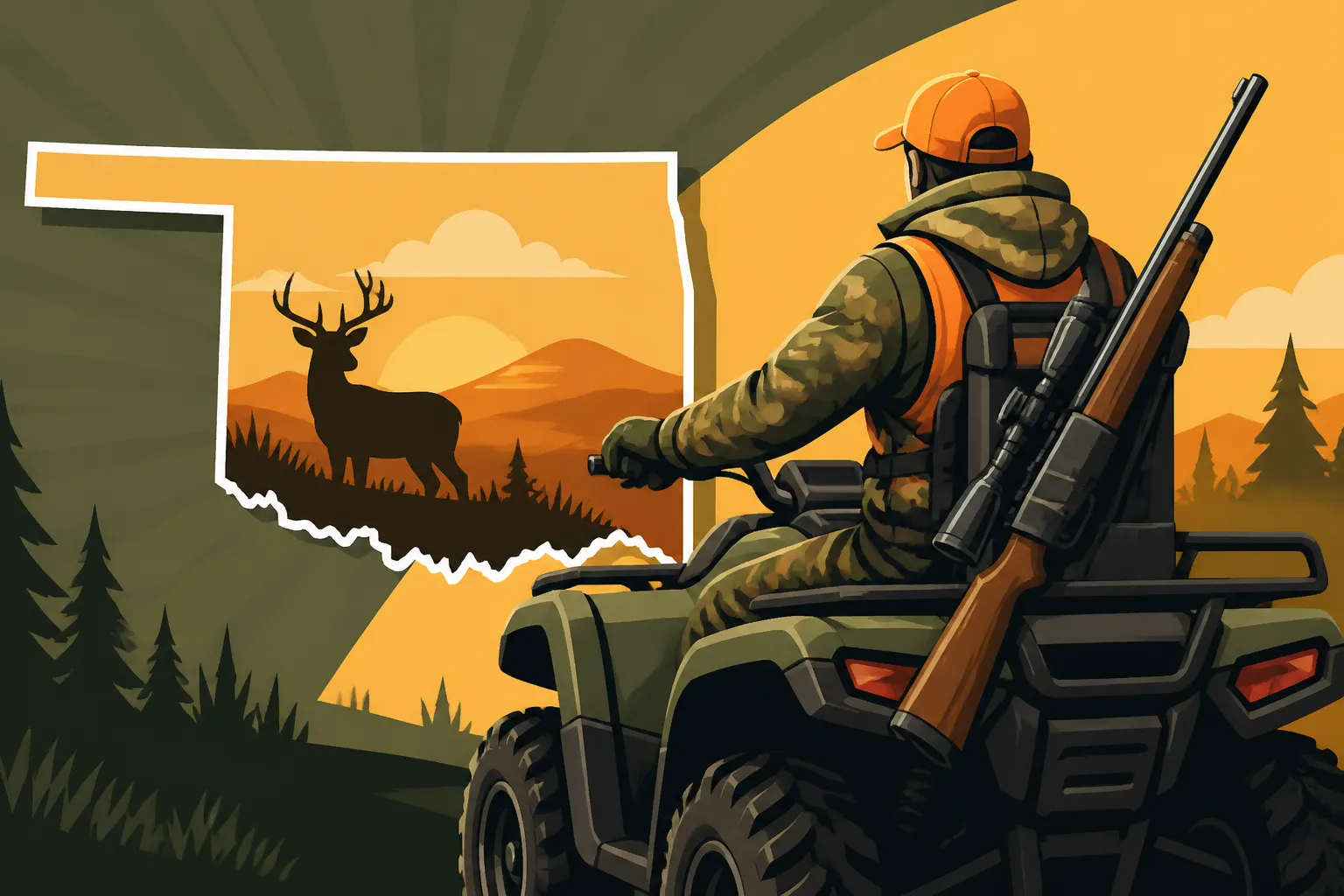
This is where dedicated ATV and UTV firearm accessories really shine. Many riders opt for robust aftermarket solutions to securely mount their firearms. These include hard cases that offer excellent protection from bumps, dust, and moisture, or soft cases that provide a good balance of protection and lighter weight. Scabbards, which are essentially custom-fit sleeves for your rifle or shotgun, are incredibly popular. Brands like SuperATV offer a range of durable mounting brackets and gun scabbards designed to integrate seamlessly with various ATV and UTV models. You'll find options that mount to roll cages, cargo racks, or even inside the cab of a UTV, keeping your firearm secure and out of the way. When choosing a system, consider how easily you can access the firearm (when legally appropriate), how well it protects against the elements, and how securely it holds the weapon, preventing any movement that could cause wear or accidental discharge. A good mounting system not only keeps you compliant with the law but also protects your valuable firearm from damage and ensures it's safe until you're ready to use it. Remember, whether it's a simple soft case or a rugged hard case from SuperATV, the goal is to transport your firearm safely and legally. For more specific advice on what kind of firearm is generally allowed, check out [Oklahoma Rules for Carrying a Rifle].
Navigating Special Hunting Areas and Exemptions
Oklahoma's diverse hunting landscape means that a one-size-fits-all approach to firearm and ATV/UTV use just won't cut it. Different types of land come with different layers of regulations, and understanding these can prevent unwelcome surprises when you're deep in the woods or across a pasture.
Rules for Wildlife Management Areas (WMAs) and Refuges
When you head to an ODWC-managed WMA or a federal wildlife refuge, you're entering an area with its own rulebook. These public lands are crucial for wildlife conservation and public recreation, but that means they often have stricter guidelines than private property. For example, many WMAs have explicit rules regarding the use of ATVs and UTVs – often restricting them to designated trails or roads, and sometimes limiting access to certain times of the year, like during specific hunting seasons. When it comes to firearms, it's common for WMAs to require all firearms to be unloaded and cased while being transported on any vehicle, including your quad or side-by-side. This isn't just a suggestion; it's a rule enforced by game wardens to ensure safety and prevent illegal hunting activities.
Imagine you're trying to access a remote part of a WMA for deer season. While your ATV might be allowed on specific interior roads, you would likely need to ensure your rifle is unloaded and secured in a scabbard or case, perhaps a heavy-duty one from SuperATV, until you reach your chosen hunting spot and are ready to proceed on foot. It’s absolutely essential to consult the specific WMA regulations for the area you plan to visit, as they are updated periodically. You can often find these detailed maps and rule pamphlets on the ODWC website or at the entrance to the WMA itself. Ignoring these WMA-specific rules can lead to fines, loss of hunting privileges, or even confiscation of your machine or firearm. For more details on accessing these areas, you might find [Oklahoma Hunting Access by Machine] helpful, and it’s good to know [Oklahoma Game Wardens Check on Public Land].
Instrument of Husbandry and Farm Use Exemptions
Oklahoma has a special designation called "instrument of husbandry," which is primarily intended to allow farm equipment, including ATVs and UTVs used for agricultural purposes, to operate on certain public roads. This exemption is incredibly useful for farmers and ranchers moving machines between fields or to market. However, it's a common misconception that this designation automatically extends to hunting activities or alters firearm carry laws.
The "instrument of husbandry" rule primarily addresses the road use aspect of your machine, allowing it to traverse county roads for bona fide farm or ranch work under specific conditions, like daylight hours and low speed limits. It typically does not provide a blanket exemption for firearm transport rules or hunting regulations. If you're using your ATV or UTV on your farm or ranch for both agricultural tasks and hunting, you still need to adhere to all state and WMA hunting and firearm laws. For example, if you're riding your machine down a county road under the instrument of husbandry exemption to get to a different part of your property where you plan to hunt, your firearm should still be unloaded and cased. The exemption is about the machine's purpose on the road, not about the weapon's status. So, while your ranch machine might qualify for [Oklahoma Farm Use on County Roads], that doesn't necessarily mean you can drive it loaded with a firearm. Always separate the rules for your machine's road legality from the distinct rules governing firearm possession and hunting activities. For clarity on specific machine usage, you can refer to [Oklahoma Rules for a Farm Machine on Roads].
Avoiding Common Mistakes and Ensuring Compliance
Hunting with an ATV or UTV in Oklahoma offers unparalleled access and convenience, but it also means carrying a greater responsibility to understand and abide by the rules. The last thing any hunter wants is to have a fantastic day in the field ruined by a citation that could have easily been avoided.
The Importance of Checking Local Regulations
It's tempting to think that if you know the statewide hunting regulations, you're good to go. However, that's a common trap many hunters fall into. While state laws provide the foundation, specific counties, cities, and especially Wildlife Management Areas (WMAs) often have their own unique ordinances and rules that can either supplement or even override the general state guidelines. For example, some counties might have specific restrictions on ATV use on certain section-line roads, which could impact your access to a hunting spot. Cities might have ordinances regarding firearm discharge within their limits, even if you're on private land on the outskirts.
The Oklahoma Department of Wildlife Conservation (ODWC) is the primary source for hunting and fishing regulations, but even their booklets and website will direct you to check local WMA-specific rules. Never assume. Before you head out, make it a habit to check the ODWC's current regulations for the specific WMA or hunting area you're targeting. A quick call to the local game warden's office for clarification is always a good idea, as they are the experts on their specific jurisdiction. Taking the extra step to verify local rules, including those found through [Oklahoma Ordinance Lookups Before You Ride], can save you a lot of grief and ensure your hunting trip is both successful and fully compliant with all applicable laws.
Practical Tips for a Responsible Hunter
Beyond just knowing the letter of the law, being a responsible hunter who uses an ATV or UTV involves a healthy dose of common sense and ethical practice. Here are a few practical tips to keep in mind:
- Safety First, Always: Even when legally unloaded and cased, always handle firearms with the utmost respect. Ensure the action is open and empty until you're ready to hunt on foot. When mounting a scabbard or case, make sure the muzzle is pointed in a safe direction, away from passengers or the driver.
- Secure Your Load: The trails in Oklahoma can be rough. Invest in quality mounting equipment, like those offered by SuperATV, and ensure your firearm is securely fastened. You don't want your rifle bouncing around, getting damaged, or worse, falling off your machine in a remote area.
- Carry Your Documents: Always have your hunting license, any required permits (like WMA permits), and your ATV/UTV registration readily accessible. A game warden or state trooper may ask to see these at any time, especially if you're on public lands or county roads. Knowing [What a State Trooper Can Ask to See] is essential.
- Be Visible: If you're using your ATV/UTV to access hunting land, especially during hunting season, consider wearing highly visible hunter orange, even if you're just driving. This helps prevent accidents and makes you more noticeable to other hunters and passing vehicles.
- Respect the Land and Other Hunters: Stick to designated trails and roads. Don't create new trails or damage property. Be mindful of noise, especially during early morning or late evening hours when animals are most active and other hunters might be nearby. Remember, even if you’re using your ATV for deer retrieval, there might be specific [Oklahoma WMA Road Rules for Riders] to follow.
By following these guidelines, you not only ensure you're in compliance with Oklahoma's laws but also uphold the highest standards of safety and sportsmanship.
| Firearm Transport Method | Pros | Cons | Best Use Case |
|---|---|---|---|
| Soft Case | Lightweight, flexible, easy to store | Less impact protection, minimal weather resistance | Short distances, clear weather, well-maintained trails |
| Hard Case | Excellent protection from impact and weather | Bulky, heavier, can be more difficult to mount | All-weather, rough terrain, long trips, valuable firearms |
| Gun Scabbard | Quick access (when legal), secure, good protection | Less protection than hard case, specific to firearm type | Designated mounting points, specific hunting scenarios |
| Over-the-Shoulder/Sling | Immediate access (if legal), no mounting needed | Unsafe on moving OHV, easily damaged, illegal while moving loaded | Only when stationary and actively hunting on foot |
Disclaimer
This article is for general informational purposes only and does not constitute professional advice. Laws, prices and regulations vary by location and change over time. Consult a qualified professional for guidance on your specific situation.