No Motorcycle Endorsement Required
Driving your UTV on public roads in Oklahoma can feel like navigating a maze, especially when it comes to understanding the specific licensing requirements. Many riders automatically assume that because an off-road vehicle like a UTV is now road-legal, it must fall under the same rules as a motorcycle, demanding a special "M" endorsement on their driver's license. This common misconception often creates unnecessary stress and confusion, making riders hesitant to embrace the convenience of a street-legal side-by-side. The truth is, for most street-legal UTVs in Oklahoma, you won't need that motorcycle endorsement. This guide will clarify the licensing landscape, easing your worries and helping you confidently take your UTV from the dirt to the pavement.
Understanding Oklahoma's Street-Legal UTV Class
Oklahoma has carved out a specific niche for certain UTVs, allowing them to be driven on public roads under specific conditions. This isn't just about slapping a license plate on your utility vehicle and calling it a day; it involves a clear set of equipment requirements and, crucially, distinct driver licensing rules that differ significantly from those for motorcycles. The whole point was to give riders more flexibility, but it comes with its own set of rules.
The Driver's License You Actually Need (and Don't Need)
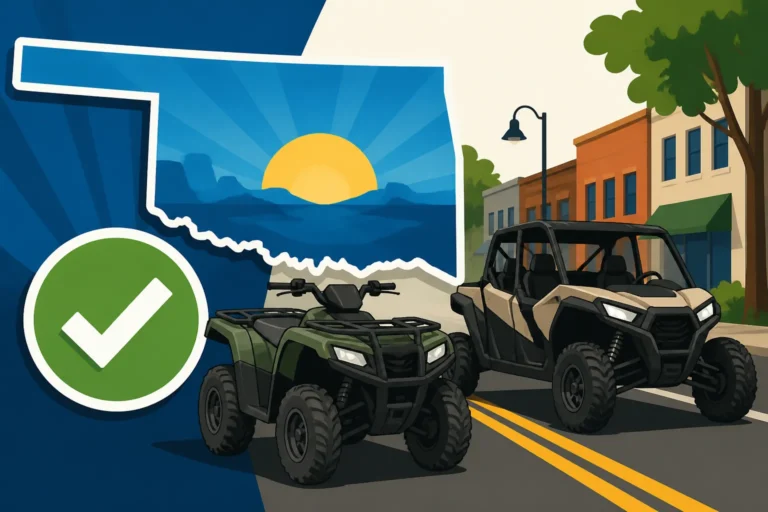
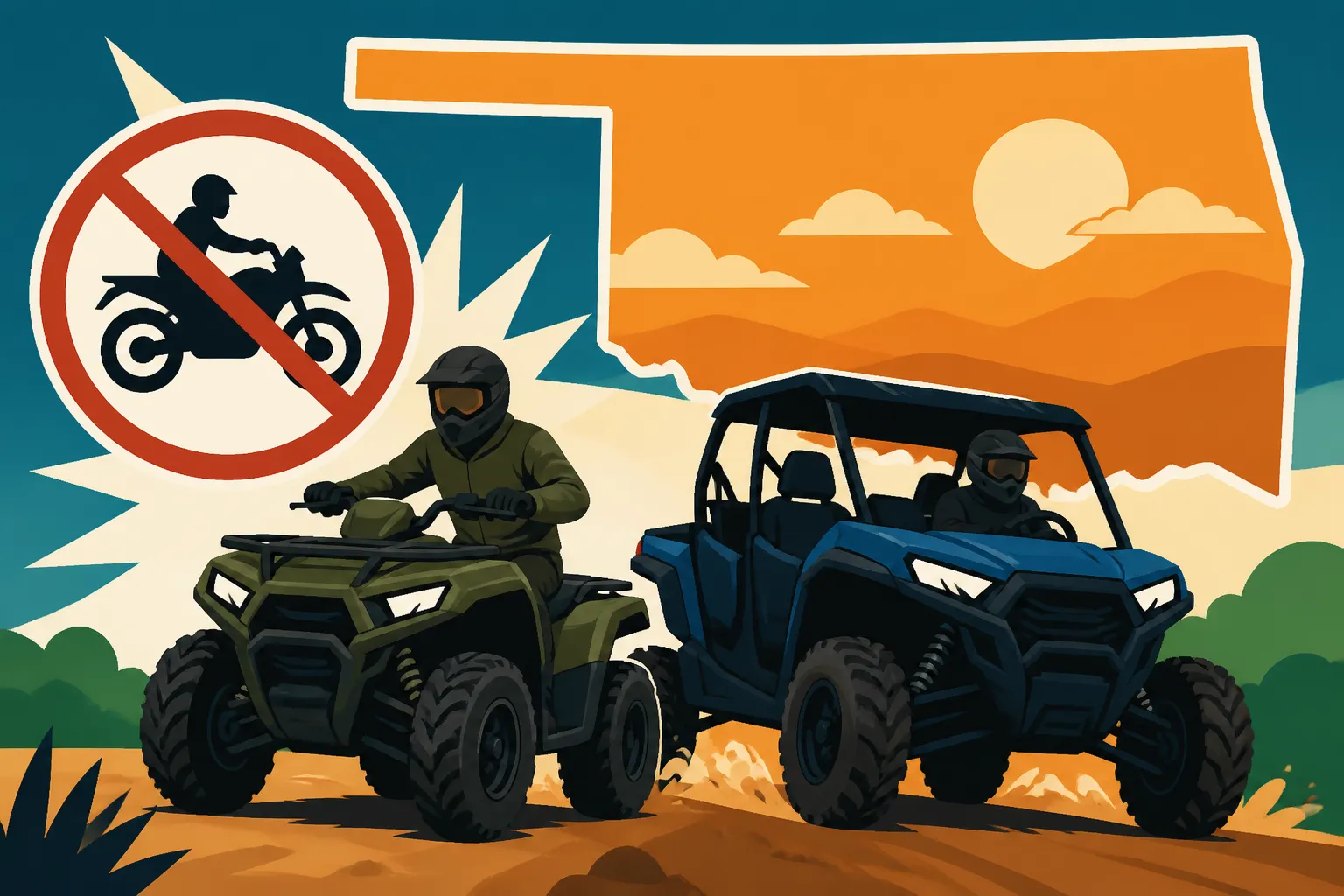
This is the big one, the question that keeps many UTV owners up at night: "Do I need a motorcycle endorsement to drive my street-legal UTV?" The definitive answer in Oklahoma is no, you do not need a motorcycle endorsement. If you possess a valid Class A, B, C, or D driver's license issued by the State of Oklahoma – essentially, any standard driver's license that allows you to operate a car or truck – you are legally permitted to operate a street-legal UTV on approved roads. This is a huge relief for many, as it removes a significant barrier to entry for street legality.
Think about it this way: when lawmakers crafted the rules for street-legal UTVs, they recognized that these vehicles, while sharing some open-air characteristics with motorcycles, are fundamentally different in their operation. They have a steering wheel, foot pedals for acceleration and braking, and often a more car-like seating arrangement, even if it's a bench seat. This operational similarity to a car, rather than a motorcycle, is what dictates the type of license required. It's not like riding a two-wheeled machine that requires a different set of balance and handling skills. The state saw the distinction and regulated accordingly, meaning you can leave that "M" endorsement worry behind. You'll still need to meet the age requirement; [Oklahoma Drivers Must Be 16 for a Street UTV], which is another standard car-driver rule.
Key Equipment for Street Legality
While you don't need a special license endorsement, your UTV absolutely needs to meet certain equipment standards to be considered street-legal. This isn't optional; it's what makes the "street-legal" designation possible in the first place. You can't just drive your stock trail machine onto the highway. These requirements transform your off-road warrior into a road-appropriate vehicle, ensuring safety for you and others.
Here's a quick rundown of the essentials your UTV needs:
| Feature | Requirement | Purpose |
|---|---|---|
| Headlights | White, working, visible from 500 feet | Illuminate the road, make vehicle visible to others |
| Taillights | Red, working, visible from 500 feet | Alert drivers behind you, especially at night |
| Brake Lights | Red, activate with brake pedal | Signal when you are slowing or stopping |
| Turn Signals | Front (amber/white) and rear (amber/red), flashing | Indicate intended turns, crucial for road safety |
| Horn | Audible from 200 feet, working | Alert pedestrians or other drivers to your presence |
| Rearview Mirrors | At least one, securely mounted, unobstructed view | Monitor traffic behind and to the sides |
| Windshield | Safety glass or equivalent, if original equipment | Protect occupants from debris (often aftermarket add-on) |
| Seatbelts | For all occupants, securely mounted, functional | Restrain occupants in case of collision |
| Tires | DOT-approved for street use | Ensure proper grip and durability on pavement |
| Muffler | Working, no excessive noise | Reduce engine noise to acceptable levels |
| License Plate Light | Illuminates rear license plate | Ensure plate visibility at night |
Many riders turn to aftermarket companies like SuperATV for their street-legal conversion kits and individual components. Whether you're adding [Oklahoma Turn Signals and Mirrors] or upgrading your horn, these parts are vital. Ignoring these requirements isn't just a technicality; it's a safety hazard and an easy way to get a ticket. Your UTV needs to be treated like any other motor vehicle when it comes to signaling, stopping, and seeing around you. For a comprehensive overview, check out [Oklahoma Street Legal UTV Requirements] and [Oklahoma Equipment Required for Street UTVs].
Why No Motorcycle Endorsement? Deconstructing the Law
It's natural to wonder why a powerful, open-air vehicle like a UTV, when driven on the road, doesn't require the same licensing as a motorcycle. The answer lies in how Oklahoma's statutes define and categorize different types of vehicles, along with the legislative efforts that created the street-legal UTV class in the first place. It wasn't an oversight; it was a deliberate choice by lawmakers.
How Oklahoma Distinguishes UTVs from Motorcycles
The key to understanding the licensing difference is in the state's legal definitions. Oklahoma's motor vehicle code clearly differentiates between "motorcycles" and "utility vehicles" (or "all-terrain vehicles," which UTVs sometimes fall under for titling purposes, depending on cutoff dates). A motorcycle is generally defined as a motor vehicle having a seat or saddle for the use of the rider and designed to travel on not more than three wheels in contact with the ground. This definition immediately separates it from a UTV, which typically has four or more wheels, a steering wheel, and often side-by-side seating.
Because UTVs operate more like small cars or trucks than traditional motorcycles, requiring a standard driver's license makes logical sense. The skills required to operate a UTV – steering, braking, accelerating, signaling – are very similar to those needed for a passenger car. You don't lean into turns, you don't balance on two wheels, and you're not operating a clutch and shifter with your hand and foot in the same way. The state recognizes that a driver who can safely operate a car already possesses the fundamental skills to navigate a UTV on the road, provided the UTV itself meets the necessary equipment standards. This distinction ensures that the licensing requirements are appropriate for the vehicle's design and operation.
Historical Context: How the Rules Evolved
The ability to register and operate UTVs as street-legal vehicles in Oklahoma is a relatively recent development, largely stemming from a significant legislative change. Before 2021, road use for UTVs was far more restrictive, often limited to specific municipal ordinances or agricultural exemptions. Riders had to jump through hoops, and statewide consistency was a pipe dream.
A key bill passed in 2021 fundamentally changed the landscape, creating the "street-legal UTV" classification. This legislation addressed many of the ambiguities surrounding UTV road use, specifying not only the equipment requirements but also the licensing standards. By explicitly stating that a standard driver's license was sufficient, the lawmakers aimed to simplify the process and encourage compliance. They understood that many rural residents and outdoor enthusiasts desired to use their UTVs for both recreation and utility on local roads without the added burden of obtaining a motorcycle endorsement. This was a direct response to the growing popularity of UTVs and the practical needs of Oklahoma residents. This legislative push also clarified many other aspects of road use, such as how you get [Oklahoma Road Plates for a Street-Legal UTV] and that [Street UTV Decals Renew Every Single Year].
Practical Implications for Oklahoma Riders
So, you've got your standard driver's license, and your UTV is decked out with all the necessary street-legal gear. What does this "no motorcycle endorsement" rule really mean for you on a day-to-day basis? It means freedom and convenience, but it also comes with responsibilities. Understanding these practical implications is crucial for a smooth and legal riding experience.
What You Do Need to Carry When Riding
Even though you don't need a special endorsement, you absolutely need to have certain documents with you whenever you're operating your street-legal UTV on public roads. Think of it like driving your truck; you wouldn't leave home without your wallet and paperwork. A state trooper or local deputy will expect to see these, and not having them can lead to citations, even if you're otherwise compliant.
Here's what you should always have accessible:
- Valid Driver's License: Your standard Oklahoma Class A, B, C, or D driver's license is your golden ticket. Make sure it's current and not expired.
- Proof of Insurance: [Oklahoma Insurance at Street Registration] is a mandatory requirement for street-legal UTVs. You'll need to carry proof, just like with any other vehicle. This is non-negotiable for road use.
- Current Registration and Decal: Your UTV must be properly registered as a street-legal vehicle with the state, and you'll have a specific decal (often a small annual sticker) that indicates its street-legal status. Remember, [Oklahoma Annual Plates for Street UTVs] are a thing for these machines. You will have a registration document that goes with that decal.
- Bill of Sale or Title (Optional but Recommended): While not strictly required to carry on your person once registered, having a copy of your title or bill of sale can be helpful in certain situations, such as proving ownership if questions arise. It's an extra layer of peace of mind.
Keeping these documents readily available – perhaps in a waterproof pouch in your glove box or under the seat – can save you a lot of hassle during a routine stop. [Can You Drive a UTV on the Road in Oklahoma?] depends heavily on having all your paperwork in order.
Common Misconceptions and What to Watch Out For
Despite the clear rules, some misconceptions still persist among riders and even, occasionally, law enforcement who might not be fully up-to-date on the latest UTV statutes. Being aware of these can help you confidently assert your rights and understand the boundaries.
One common myth is that all UTVs, regardless of their street-legal status, are simply glorified golf carts and can be driven anywhere a golf cart can. This isn't true. While some local ordinances might allow golf carts on certain streets, a street-legal UTV is a distinct class of vehicle with broader (but still regulated) access. Don't assume.
Another point of confusion revolves around where you can actually ride. While your street-legal UTV can now access many county and municipal roads, it's generally still prohibited from major highways like interstates and most U.S. highways. Always double-check local ordinances in cities or counties you plan to ride through, as some areas might have stricter rules or designated routes. Your [Oklahoma Street-Legal UTV Class Explained] is a great resource, but it doesn't mean every road is open.
Finally, remember that while the endorsement isn't needed, your driving behavior and vehicle condition are still subject to all standard traffic laws. This includes speed limits, rules of the road, and ensuring your equipment (like [Oklahoma Horns on a Street UTV] or [Oklahoma Turn Signals and Mirrors]) is always functioning. Just because you don't need a motorcycle endorsement doesn't mean you can drive recklessly or ignore maintenance.
Getting Your UTV Ready for the Road (Beyond the License)
So, you're clear on the no-motorcycle-endorsement rule, which is fantastic! But getting your UTV genuinely road-ready involves more than just understanding the license requirements. It's about ensuring your machine is safe, compliant, and ready for the different demands of pavement driving compared to trail riding. This proactive approach will save you headaches down the line.
Essential Safety Checks Before Hitting Pavement
Before you ever leave your driveway on a street-legal UTV, a thorough safety check is absolutely non-negotiable. Road riding introduces different speeds, surfaces, and traffic interactions than off-road adventures, making robust vehicle integrity paramount. Many of these checks are simple but can prevent major issues.
Here's a checklist to run through:
- Tires and Air Pressure: Are your tires DOT-approved for street use? Are they inflated to the manufacturer's recommended pressure for road driving? Off-road tires aired down for grip in sand or mud are not safe for pavement at speed. Uneven or low pressure can lead to instability and blowouts.
- Brakes: Test both your front and rear brakes. Do they engage smoothly and stop the vehicle effectively? Check for any sponginess in the pedal or unusual noises. The ability to stop quickly and reliably is critical in traffic.
- Lights and Signals: Confirm that your headlights (high and low beam), taillights, brake lights, and [Oklahoma Turn Signals and Mirrors] are all working perfectly. Test each one. A non-functioning signal light is not just a ticket waiting to happen, it's a significant safety risk. Don't forget the license plate light if you'll be out after dark.
- Steering and Suspension: Check for excessive play in the steering wheel. Is your suspension absorbing bumps properly, or does it feel unusually loose or stiff? Road driving requires precise steering and a stable ride.
- Fluid Levels: Quick check of oil, coolant, and brake fluid. These systems are under different stresses on the road, especially at higher, sustained speeds.
- Horn Function: Give your horn a toot. It needs to be loud enough to alert other drivers or pedestrians to your presence.
- Seatbelts: Ensure all seatbelts are fully functional and properly latching. They are your primary safety device in a collision.
Taking a few minutes for these checks before each road outing can prevent serious problems. Think of it as your pre-flight check before you take to the local streets. You might also consider specific aftermarket accessories like a full-coverage windshield, especially if your UTV didn't come with one. Companies like SuperATV offer a wide range of DOT-approved windshields and other accessories that can significantly enhance safety and comfort for road use.
Navigating Local Ordinances and Speed Limits
While the state has paved the way for street-legal UTVs, it's crucial to remember that local jurisdictions still hold considerable power over road access. Just because you have a street-legal UTV doesn't mean you can drive it on every road. This is where a little homework goes a long way.
- County Roads: Many county commissioners have passed resolutions opening specific county roads to UTV traffic. However, this isn't universal. Some counties might have no ordinances, or very restrictive ones. If you're planning to ride extensively on county roads, especially when traveling between towns or to a trailhead, it's wise to check with the county commissioner's office or sheriff's department in that specific county.
- City Streets: City and town ordinances can be even more varied. Some municipalities have fully embraced street-legal UTVs, allowing them on most non-highway streets. Others might have very limited access, or even outright prohibitions. For instance, a small town that relies heavily on tourism might be UTV-friendly, while a larger city might restrict them to specific routes or ban them entirely from busy commercial districts. Always look up the specific municipal code for the town you intend to visit.
- Speed Limits: Street-legal UTVs are subject to all posted speed limits. However, there may be specific restrictions on roads where the posted speed limit exceeds a certain threshold (e.g., 35 mph or 45 mph). You'll typically find that street-legal UTVs are restricted from high-speed arterial roads and highways. Pay attention to signs and obey the flow of traffic responsibly. For more on this, check out [Oklahoma Rules for Riding a County Road] and [Oklahoma Rules for Riding a City Street].
A good practice is to plan your route in advance, especially if you're venturing into unfamiliar territory. Don't assume that what's legal in one county or town is legal in another. A quick call to the local sheriff's office or city clerk can save you from a potential fine or, worse, an accident. Ultimately, having [No M Endorsement Needed] is a fantastic benefit for Oklahoma UTV riders, but it's just one piece of the puzzle. Understanding all the rules, ensuring your vehicle is safe, and being a responsible driver will make your street-legal UTV experience both enjoyable and compliant.
Disclaimer
This article is for general informational purposes only and does not constitute professional advice. Laws, prices and regulations vary by location and change over time. Consult a qualified professional for guidance on your specific situation.