What Posted Land Means Before You Ride
There’s nothing quite like the open air and the rumble of your ATV or UTV as you head out for a ride in Oklahoma. But that feeling of freedom can quickly turn into a knot in your stomach if you suddenly find yourself on land you shouldn't be, staring at a "No Trespassing" sign or, worse, an unhappy landowner. This guide is all about helping you understand what "posted land" means in our great state, how to avoid accidentally breaking the law, and how to find legal, enjoyable places to ride.
Understanding "Posted Land" in Oklahoma
When you’re out exploring on your ATV or UTV, it’s easy to get carried away by the adventure. One minute you’re on a familiar trail, the next you’re wondering if that fence line you just crossed actually means something. In Oklahoma, the concept of "posted land" is pretty straightforward in principle, but in practice, it can sometimes be a bit murky out in the wild.
The Legal Definition and Signs to Look For
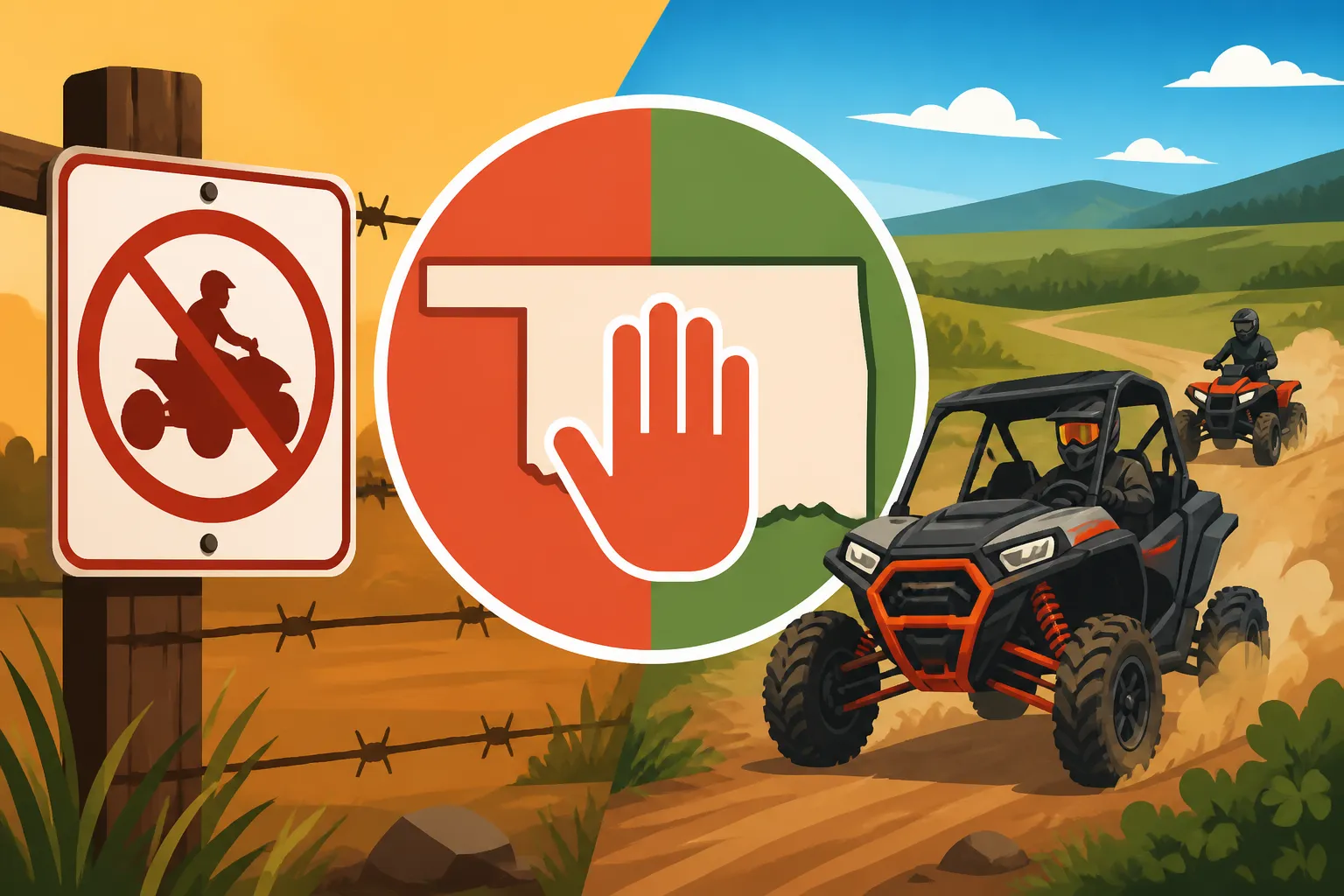
In Oklahoma, "posted land" refers to private property that the owner has clearly marked to indicate that unauthorized entry is prohibited. This isn't just a friendly suggestion; it carries legal weight. For land to be considered legally "posted" against trespassing, the owner generally needs to take specific steps to make their intentions clear.
Traditionally, this means putting up "No Trespassing" signs. These signs should be readily visible and placed at reasonable intervals along the property boundary. Think about it: if someone can easily walk or ride onto your land without seeing a sign, is it truly "posted"? The law aims for clarity. These signs usually state "No Trespassing," "Private Property," or "Keep Out." They're not always shiny new signs, either. You might see weathered, faded signs that have been there for years, or even hand-painted ones. The key is their presence and visibility.
Beyond signs, Oklahoma law also recognizes certain paint marks as a form of posting. This is often referred to as "purple paint law" or "no hunting" purple paint markers. A landowner can mark trees or posts with a purple stripe or spot, and this acts as a legal "No Trespassing" notice. The specific requirements for these paint marks usually involve a certain width, height from the ground, and spacing, ensuring they are consistent and noticeable. The idea is that if you see these signs or purple paint marks, you have a clear, legal notice that you are not welcome to enter without explicit permission. Ignoring them means you are intentionally trespassing, which carries more serious consequences than an accidental stumble across an unmarked property line.
The Importance of Knowing Who Owns the Land
This is where things can get tricky, and it's perhaps the most critical part of avoiding accidental trespassing. While a "No Trespassing" sign is a clear indicator, not all private land is posted, and it's not always obvious where public land ends and private land begins. In Oklahoma, the general rule of thumb is that if you don't know it's public land or if you don't have explicit permission, you should assume it's private. This means exercising caution and sometimes even turning back if you're unsure.
Identifying land ownership isn't always easy when you're out on the trails. Online mapping tools, county assessor websites, and even apps designed for hunters and outdoor enthusiasts can provide property boundary information. These resources are invaluable, but they aren't foolproof, especially in remote areas where cell service might be spotty. It's always a good idea to do some homework before you head out, especially if you're exploring a new area. Trying to figure out land ownership while you're already on the ground, possibly deep in the woods, is a recipe for trouble.
Many riders, especially those new to the hobby or new to an area, often get caught in the trap of assuming open land is fair game. This is a dangerous assumption. Just because a field looks unkempt or a wooded area appears unused doesn't mean it's public property or that the owner doesn't care if you ride there. Every parcel of land has an owner, and unless that owner has granted permission or it's a designated public riding area like [Little Sahara State Park in Oklahoma], it's off-limits. Understanding this basic principle is your first line of defense against trespassing.
Common Scenarios and Misconceptions
There are many common situations where riders mistakenly believe they have a right to be on private land. Let's bust a few myths and clarify some common scenarios.
First, "implied permission" is almost never a thing when it comes to riding ATVs or UTVs. Just because a gate is open, or there isn't a fence, or you see tire tracks, does not mean you have permission. A landowner could have simply forgotten to close a gate, or they might be doing work on their property. Those tire tracks could belong to the landowner, or they could belong to other trespassers. Relying on "implied permission" is a huge gamble that rarely pays off. Always seek [Getting Written Permission Before Riding Private Land].
Another common misconception involves utility easements, old county roads, or trails that look like they should be public. Utility easements, while they allow utility companies access, do not automatically grant the public the right to ride there. The land under those power lines or gas pipelines is still private, and you'd need the landowner's permission. Similarly, an old dirt track might have once been a county road, but if it's no longer maintained by the county and now clearly leads onto private property, its status has likely changed. You can often check with the county commissioner's office or the county clerk's office to clarify the legal status of roads, but it's vital to do this before you ride.
Perhaps the most dangerous assumption is, "everyone else rides here." This is a herd mentality that can lead many riders into hot water. Just because your buddy, or someone you saw on social media, posted pictures from a certain area doesn't make it legal. Those "everyone else" riders might be trespassing too, or they might actually have permission for that specific day or event. You don't know their story, and you certainly can't use "everyone else was doing it" as a legal defense if you get caught. Respecting property boundaries is a personal responsibility.
Many landowners take great pride in their land, whether it's for farming, ranching, hunting, or simply personal enjoyment. An ATV or UTV tearing through their property, especially if it's causing damage or disturbing livestock, is a serious offense in their eyes. Always carry a map and, if possible, a GPS unit loaded with property boundaries. While a high-quality GPS unit can help you stay on track, even the best SuperATV GPS won't tell you property lines unless it's specifically loaded with plat maps from your local county. Your best bet is to clarify ownership and obtain permission before your tires ever touch the ground.
The Consequences of Trespassing with Your ATV or UTV
Riding on posted land without permission isn't just a minor inconvenience; it carries significant legal, financial, and reputational consequences. Many riders don't fully grasp the severity of these repercussions until they're facing them firsthand.
Legal Penalties and Fines
In Oklahoma, trespassing is a criminal offense, and the specific penalties can vary depending on the circumstances. Generally, riding an ATV or UTV on private property without permission can lead to misdemeanor charges. This isn't like getting a parking ticket; a misdemeanor conviction can stay on your record and affect things like employment opportunities.
Oklahoma's specific laws regarding trespassing are designed to protect private property rights. If you ignore clearly posted "No Trespassing" signs or purple paint markings, the intent to trespass becomes easier to prove, potentially leading to stiffer penalties. Fines can range from modest amounts for a first offense to hundreds of dollars for repeat offenders or more egregious violations. And remember, the fine is just one part of the cost; you'll also likely be on the hook for court costs and administrative fees, which can quickly add up.
Who enforces these laws? It's not just local police. [Oklahoma Park Rangers as Enforcers] can issue citations within state parks or adjacent lands. [Oklahoma Game Wardens Check on Public Land] and private lands, especially if you're riding in areas known for hunting or conservation. County sheriffs and local police departments also have full authority to respond to trespassing complaints. They are often called directly by landowners who see or hear vehicles on their property. A citation isn't always the end of it; in some cases, especially with repeat offenses or significant damage, you could face arrest. Understanding [Oklahoma Trespass Law for Riders] is crucial for any off-road enthusiast.
Damage to Property and Civil Liabilities
Beyond criminal charges, trespassing opens you up to significant civil liabilities. If your ATV or UTV causes any damage to the landowner's property, you can be held financially responsible. This isn't just hypothetical; it happens.
Imagine you're cutting across a field, and your tires churn up recently planted crops. Or perhaps you break a fence post, leave a gate open allowing livestock to escape, or even damage a fragile ecosystem like a creek bank. These aren't just minor incidents to the landowner. Crop damage can mean a loss of income for a farmer. A broken fence can lead to cattle wandering onto a highway, creating a dangerous situation and a major headache for the rancher. Repairs to gates, fences, or irrigation systems can be costly.
In these situations, the landowner has the right to sue you in civil court to recover the costs of the damages. This means not only paying for the actual repairs but potentially covering lost revenue or other associated expenses. A civil lawsuit can be far more expensive and drawn-out than a criminal fine, and it adds another layer of stress and financial burden to an already negative situation. This is why having insurance on your ATV or UTV is a good idea, though often personal liability policies have exclusions for illegal activities like trespassing. Before heading out, double-check your machine's setup. Many riders invest in robust skid plates or [Oklahoma Lighting Rules on a Machine] from companies like SuperATV to protect their investment, but no accessory can protect you from the legal repercussions of trespassing.
Machine Impoundment and Reputation Damage
Another serious consequence, and one that often catches riders off guard, is the potential for your ATV or UTV to be impounded. Law enforcement officers, depending on the severity of the offense and local regulations, have the authority to seize your machine as evidence or as part of the enforcement process. This means not only are you stuck, but you'll have to pay impound fees, storage fees, and potentially other costs to get your machine back, assuming it's released to you. These fees can quickly accumulate, adding hundreds, if not thousands, of dollars to your overall penalty.
Beyond the legal and financial hits, there's the damage to your reputation and, more broadly, to the off-road riding community. When landowners experience trespassing and property damage, they often become much less likely to grant permission to any riders in the future. One bad experience can sour an entire community's relationship with landowners, leading to more "No Trespassing" signs, stricter enforcement, and fewer opportunities for legal riding. It paints all ATV and UTV enthusiasts with the same brush, even those who are responsible and respectful. This can even influence [Oklahoma County Commissioners and ATV Roads] decisions.
This negative perception can even affect policy and legislation. When lawmakers hear complaints about damage and irresponsible riding, it can lead to more restrictive laws, increased fees, or even the closure of public access points. Every rider has a responsibility to act as a steward of the sport. A well-maintained machine, perhaps with upgraded suspension components from SuperATV, also shows respect for the land and your fellow riders, demonstrating that you take your riding seriously and responsibly.
| Consequence Category | Description | Potential Impact |
|---|---|---|
| Legal Penalties | Misdemeanor charges, fines, court costs | Criminal record, financial strain, possible jail time |
| Civil Liabilities | Lawsuits for property damage, lost income | Significant financial burden, long-term legal battles |
| Machine Impoundment | Vehicle seized by law enforcement | Retrieval fees, storage costs, loss of riding access |
| Reputation Damage | Loss of trust, stricter land access rules | Fewer riding opportunities, negative public perception |
How to Legally Access and Ride Off-Road in Oklahoma
Now that we’ve covered the pitfalls, let’s talk about how to keep your riding legal, respectful, and enjoyable. There are plenty of ways to explore Oklahoma’s diverse terrain without ever having to worry about trespassing. It all comes down to knowing the rules and seeking appropriate access.
Always Get Written Permission
This cannot be stressed enough: if you plan to ride on private land, you must have explicit, written permission from the landowner. Verbal permission, while seemingly friendly, is almost useless in a legal dispute. Memories fade, people change their minds, and a new property owner might not honor a previous verbal agreement. [Oklahoma Landowner Permission Rules] are designed to be clear for everyone.
A good written permission form doesn't have to be overly complicated, but it should include a few key pieces of information. It should state:
- Who is allowed to ride: Your name, and perhaps the names of others in your riding group.
- What machines are allowed: Specify ATVs, UTVs, dirt bikes, etc.
- When you are allowed to ride: Specific dates, times of day, or a defined season.
- Where you are allowed to ride: Clearly delineate the areas of the property you can access, perhaps with a map.
- Any specific rules or restrictions: Are there areas to avoid? Gates to close? Speed limits?
- The landowner’s contact information and signature: For verification.
Keep this written permission with you at all times when riding on that property. If a landowner or law enforcement officer approaches you, you can immediately provide proof of legal access. This simple step can prevent a tremendous amount of heartache and potential legal trouble. For example, if you're helping a rancher friend move cattle or check fences, a permission slip stating your purpose and allowed areas can protect you. Sometimes, landowners might grant access for specific tasks. For example, if you're helping with fence repairs, having reliable tools or even a utility bed accessory from SuperATV can be a big help, making your visit more valuable and securing future permission.
Utilizing Public Riding Areas and OHV Parks
Oklahoma is fortunate to have some fantastic public and private off-road riding areas. These are your safest and often most exhilarating options for legal riding. These designated areas have clear rules, boundaries, and often staff on hand, so there's no ambiguity about where you can and cannot go.
- State Parks and WMAs: Places like [Little Sahara State Park in Oklahoma] offer vast dune riding experiences, while wildlife management areas (WMAs) like Honobia Creek or Three Rivers allow for specific riding during certain seasons, usually tied to hunting access. It's crucial to check the specific rules and permit requirements for each WMA, as they can be quite detailed and change seasonally. For instance, some WMAs only allow riding on designated roads during deer season and require a [Oklahoma Land Access Permit Cost].
- Private OHV Parks: Oklahoma also has several privately owned and operated off-road parks, such as Cross Bar Ranch near Davis. These parks are set up specifically for off-road enthusiasts, offering a variety of trails, amenities, and a controlled environment. They often charge a day-use fee or an annual pass, and they'll have their own set of rules regarding helmets, age limits, and vehicle types. These are excellent options because the entire facility is designed for legal, safe riding.
The benefits of these dedicated areas are numerous. You don't have to worry about property lines, you're usually riding with other enthusiasts, and they often provide amenities like restrooms, camping, and sometimes even wash stations. Always research the park or area you plan to visit beforehand. Check their websites for current conditions, rules, operating hours, and any required permits or fees. This is the easiest way to ensure you're riding legally and responsibly. Find out more about your options for [Oklahoma ATV Trails: Where to Ride].
Building Relationships with Landowners
Beyond formal written permission, building positive relationships with landowners is a fantastic way to secure long-term riding access and contribute positively to the off-road community. This takes effort and respect, but the rewards are often well worth it.
When approaching a landowner, start with respect. Introduce yourself, explain your interest in riding, and immediately emphasize your commitment to respecting their property. Don't just show up on their doorstep with your machine running. Call ahead, send a letter, or try to meet them in person at a convenient time.
Offer to help. Many landowners, especially those with larger properties, could use an extra hand. Perhaps you could help mend fences, clear brush, or assist with light chores in exchange for riding access. This demonstrates that you value their property and are willing to contribute, not just take. Being a good neighbor goes a long way.
Be a good steward of the land. If granted permission, ride only in the designated areas, follow any rules they set, and leave no trace behind. Pack out everything you pack in, avoid riding in overly wet conditions that could damage trails or fields, and be mindful of noise. If you see something that needs attention, like a downed fence or trash left by others, report it to the landowner. Show them that you are a responsible and trustworthy individual.
Over time, these relationships can lead to incredible riding opportunities that are otherwise inaccessible. It’s about mutual respect and demonstrating that ATV and UTV riders can be responsible, contributing members of the rural community. Ultimately, by understanding "posted land," respecting private property, and seeking legal avenues for riding, you ensure a safer, more enjoyable, and sustainable future for off-road recreation in Oklahoma for everyone.
Disclaimer
This article is for general informational purposes only and does not constitute professional advice. Laws, prices and regulations vary by location and change over time. Consult a qualified professional for guidance on your specific situation.