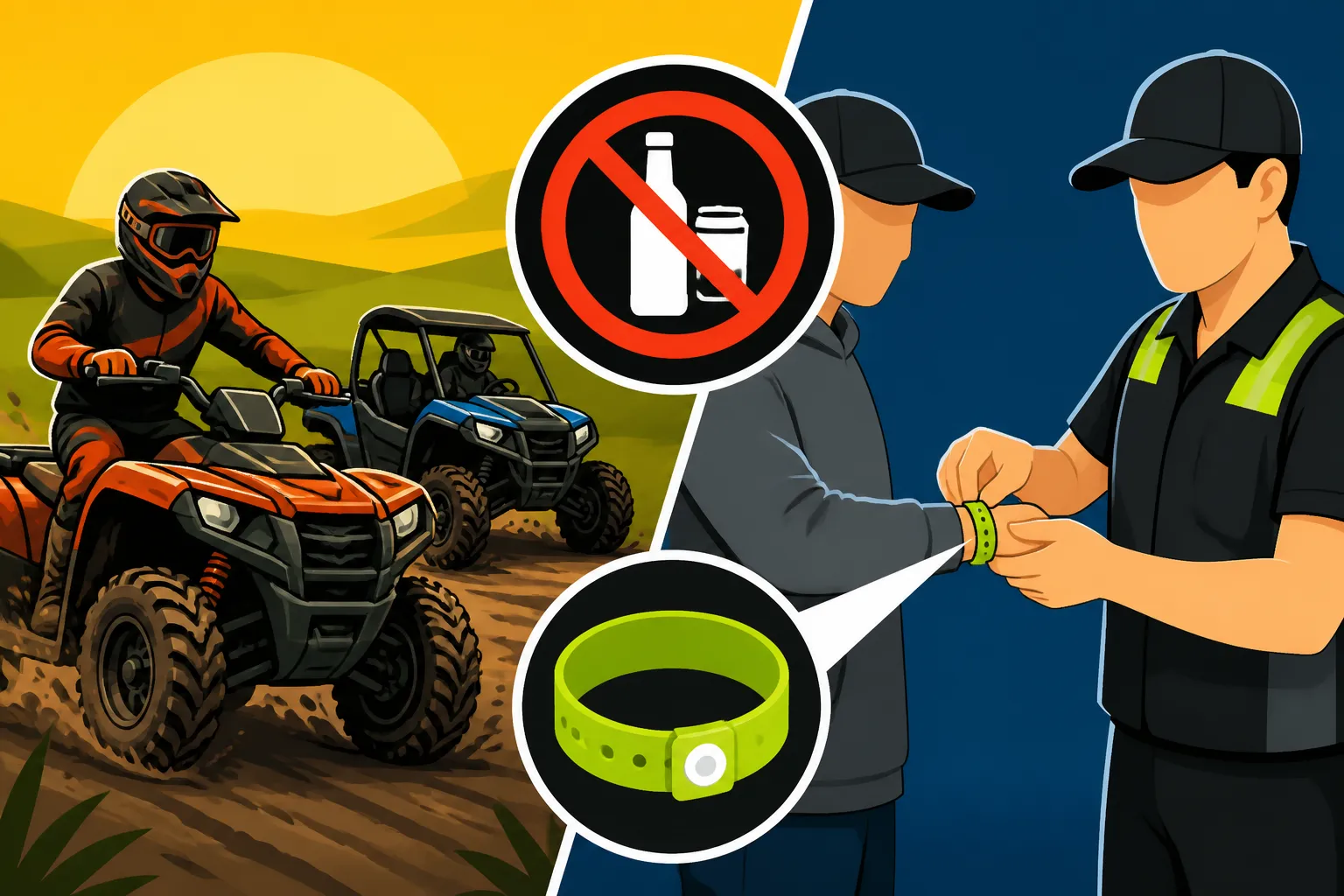
How Wristbands Control Alcohol at a Riding Park
A wristband at an Oklahoma riding park may identify who has passed an age check or may buy alcohol, but it does not mean drinking is allowed everywhere. Parks set their own rules, and a band’s color or meaning can vary. Knowing what to ask at check-in helps you avoid rule violations and keep alcohol separate from riding.
What a Wristband Means at a Riding Park
Private riding parks may use wristbands to help staff distinguish between guests, identify people who meet the park’s alcohol requirements, or manage access to areas where alcohol is permitted. The exact system is up to the park. There is no universal wristband color code for Oklahoma riding parks, so never assume that a particular color means someone is legally allowed to drink.
A band might show that a guest checked in, paid an entry fee, signed a waiver, or had identification checked. In some parks, a separate color or mark may be used for guests who meet the park’s drinking-age requirement. In others, the band may have no alcohol-related meaning at all. A wristband can also help employees spot guests who need to follow special conditions, such as a minor’s check-in requirements.
| What a band may indicate | What you should confirm |
|---|---|
| The guest has checked in | Whether the band must stay on for the entire visit |
| The guest has signed required paperwork | Whether every rider and passenger needs a separate band |
| The guest is permitted to buy or possess alcohol under park policy | Which areas allow alcohol and whether drinks must come from the park |
| The guest belongs to a group or campsite | Whether the band provides access to any restricted area |
| The guest has a particular admission or event status | Whether that status changes the park’s alcohol rules |
The table describes possible uses, not a standard adopted by every park. A wristband is an enforcement aid, not a substitute for checking identification or reading the rules. It also does not override state or local law. If you are unsure what your band means, ask a staff member before drinking or entering a restricted area.
It is useful to distinguish permission to purchase alcohol from permission to drink it anywhere on the property. A park might allow alcohol at a campground or a designated gathering area while prohibiting it on trails, in staging areas, or near a riding event. It might prohibit guests from bringing their own alcohol, even if drinks are permitted in a particular location. Those are park-specific conditions; do not infer them from the band alone.
For more on the broader issue of private-park policies, see Oklahoma Private Park Alcohol Rules. If a park operates as a private ranch or off-road facility, its own rules and admission conditions may matter as much as the wristband system.
How Parks Use Bands to Enforce Alcohol Rules
A wristband gives staff a quick visual signal, but it is only one part of managing alcohol. A typical process may involve checking identification at entry, explaining the rules, and issuing a band after a guest completes the park’s required steps. The park might use different bands for different purposes or might rely on a mark or other check-in record instead. Ask how the system works rather than guessing from what other guests are wearing.
At check-in
Read posted signs and ask staff what the band permits. In particular, clarify:
- Whether the band is proof of age verification, admission, or both.
- Whether alcohol is permitted anywhere on the property.
- Whether drinks can be brought in or must be purchased on site.
- Whether alcohol is limited to a specific area or time.
- Whether the band must remain visible and intact.
- What to do if a band is lost, damaged, or removed.
- Whether rules differ for an event, campground, or riding area.
Some parks may ask for identification before issuing an alcohol-related band. A band should not be treated as a general-purpose substitute for identification, and staff may still ask to see an ID. Do not lend your band to another person or assume that a friend can use it. The park may treat that as a violation, and it can undermine the checks the system is intended to support.
Check-in requirements can also apply to minors and their accompanying adults. A wristband that identifies a minor does not necessarily mean that the minor may enter every area, ride every machine, or participate in every activity. Review [Oklahoma Private Park Minimum Ages] and ask the park about its specific supervision and admission policies.
During the visit
Follow the rules for both alcohol and machine use. A band that allows an adult to drink does not make it safe to operate an ATV or UTV after drinking, and it does not authorize drinking while riding. Treat alcohol and riding as separate activities: finish riding, secure the machine, and only then consider whether drinking is allowed where you are.
A passenger should also avoid putting pressure on the operator to ride after drinking. If a group is sharing machines, identify a sober operator before anyone starts drinking. A passenger who is not operating the machine can still affect safe decisions, so the group should agree on a plan for getting back to camp or leaving the park without relying on an impaired driver.
Staff may use bands to identify who can enter a designated area or purchase a drink, but a visible band does not guarantee that a guest will be served. A business or park may refuse service under its own policy or applicable law. Similarly, wearing a band does not excuse disruptive behavior, unsafe riding, or ignoring staff instructions.
Parks may set consequences for guests who break alcohol rules. These can include being asked to stop drinking, surrendering a drink, leaving a restricted area, or being removed from the property. The details depend on the park’s terms and circumstances. Read the park’s policies before arrival, especially if you are visiting for an organized event. What Gets You Removed From a Riding Park covers the kind of conduct that can turn a visit into an early exit.
Wristbands Do Not Make Riding After Drinking Safe
The most important practical limit is simple: do not operate an ATV or UTV after drinking. A wristband is an administrative tool; it does not measure impairment, certify that someone is safe to ride, or protect a rider from the consequences of an unsafe decision.
Off-road riding calls for balance, judgment, reaction time, and attention to changing terrain. Sand, mud, ruts, traffic at a staging area, other riders, and passengers all add demands. Alcohol can interfere with the skills needed to manage those conditions. Even a short trip from a campsite to a trailhead can create risk if the operator has been drinking.
Make the plan before anyone opens a drink:
- Decide who will operate each machine and keep those operators alcohol-free.
- Park or secure machines before drinking.
- Arrange a sober person to move a machine only if the park permits it and the person is fit to do so.
- Use a designated driver or other safe transportation for leaving the property.
- Keep children and other guests away from machines that could be started or moved.
- Ask staff for help rather than driving if someone is impaired or unsure.
Do not assume that a private road, campsite, or trail is automatically outside the reach of safety rules. The legal treatment of impaired operation can depend on the circumstances and location, and park policies can impose additional consequences. Avoid trying to interpret the law at the trailhead. The safest choice is not to ride after drinking.
Waivers do not change that basic safety decision. A guest may be asked to sign a release before riding, but a signed form is not permission to ride unsafely or ignore park rules. Review Signing a Liability Waiver Before a Private Ranch Ride before you arrive so you understand that admission paperwork and alcohol permissions are separate issues.
If alcohol is part of your group’s plans, agree in advance that riding ends first. Do not rely on someone’s band color, their confidence, or a claim that they only had one drink. When in doubt, keep the machine parked and contact staff about safe options.
Questions to Ask Before You Rely on a Band
A quick conversation with the park can prevent confusion later. Wristband colors and rules may change between locations or events, and online comments from other visitors may describe a different policy. Use the park’s own current instructions.
Ask whether the band is for admission, age verification, alcohol access, or another purpose. Confirm which parts of the property allow alcohol and whether the policy covers drinks brought from outside. Find out whether the rules apply to campsites, trail areas, event spaces, or only a designated location. If you are camping, ask whether quiet hours or campground conditions affect alcohol service or gatherings.
Also ask what happens if the band comes off. A lost or damaged band should be handled through staff, not replaced by borrowing another guest’s band or trying to re-enter without checking in. Keep any required paperwork and follow instructions about visible bands, re-entry, and check-out.
If you are planning a group trip, share the answers with everyone before arrival. One person who misunderstands the rule can cause problems for the whole group, especially if drinks are brought onto the property or machines are still in use. Include minors and passengers in the conversation, and make the sober-operator plan clear before riding begins. For a broader pre-visit checklist, see Questions to Ask the Park Office Before You Go. If passengers are joining, check Passenger Rules Inside a Private Riding Park as well; alcohol permission does not establish who may ride as a passenger.
A wristband can make a park’s system easier to enforce, but it cannot explain every restriction by itself. Treat it as a signal to follow up, not as blanket permission. Confirm what the band means, obey the park’s alcohol boundaries, and keep drinking separate from operating a machine.
Disclaimer
This article is for general informational purposes only and does not constitute professional advice. Laws, prices and regulations vary by location and change over time. Consult a qualified professional for guidance on your specific situation.