Winching a Machine Out of Deep Clay Mud
Deep Oklahoma clay can turn a short ride into a stuck-machine problem fast: the tires spin, the chassis settles, and every attempt to drive out digs it deeper. This guide explains how to assess the situation, set up a controlled winch recovery, protect your machine and riding partners, and plan ahead for muddy trail conditions.
Why Oklahoma clay can trap an ATV or UTV
Spinning tires make a small problem worse
Red clay may look firm at the surface while the ground beneath it is soft and saturated. Once a tire breaks through the crust, it can churn slick mud into the tread and dig a rut beneath the machine. The more you spin, the more likely the ATV or UTV is to settle onto its frame or skid plate, leaving the tires with less traction and the winch with a heavier pull.
Clay also clings to tires and undercarriage parts. That added mud can make it harder to see where the machine is resting and whether a rock, root, or rut is holding it in place. Before doing anything else, stop the wheels and take a moment to look at the whole machine. A patient assessment is usually safer than repeatedly trying the throttle.
After rain, a trail that was manageable earlier in the week may become slippery or deeply rutted. Check the forecast and look for recent trail-condition information before setting out. Why Oklahoma Red Clay Turns Slick After Rain explains why a familiar route can behave very differently after wet weather, and Oklahoma Trail Riding After Heavy Rain is useful when deciding whether the ride should wait.
Read the machine and the ground before choosing a recovery
Check how deeply the machine is stuck. Is it resting on its tires, or has the belly settled into the mud? Are the wheels free to turn, or is a tire wedged against a rut wall? Is the machine leaning toward a ditch, creek, or steep bank? A straight pull on level ground is a different recovery from a sideways pull on a slope.
Look for hazards in the direction you would pull: trees, exposed roots, rocks, fence wire, other riders, and soft shoulders that could give way. If the machine is near water or on a steep, unstable bank, do not assume a winch alone makes the recovery safe. A controlled pull can still shift a machine suddenly, and a tilted UTV may roll if the pull direction is poorly chosen.
Make sure you can reach the machine safely and that the recovery point is accessible. If mud or water hides the frame, do not guess where to attach the line. Consult the machine and winch instructions for designated recovery points. Avoid attaching to a bumper, rack, suspension part, axle, or tow ball unless the manufacturer specifically identifies it as a suitable recovery point.
Setting up a safe winch recovery
Choose a sound anchor and a straight pull
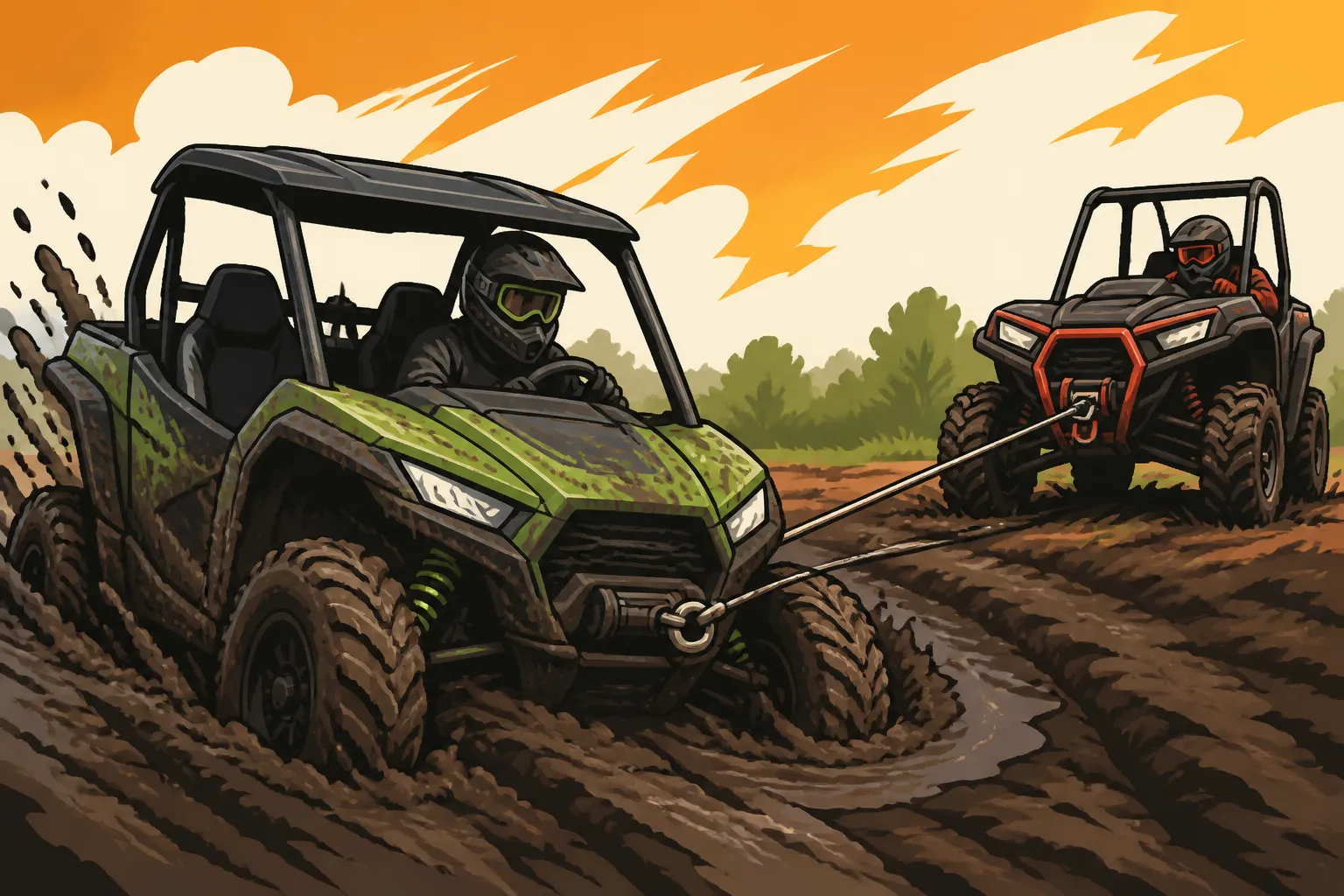
Use an anchor that is stable, appropriate for the load, and positioned to pull the machine toward firmer ground. A suitable tree may work if it is healthy and large enough for the recovery, but protect its bark with a tree-saver strap rather than wrapping a bare cable or rope around the trunk. Follow the winch manufacturer’s instructions for the anchor, line, and recovery equipment.
Whenever possible, aim for a direct pull that lines up with the winch and the machine’s recovery point. A sharply angled pull can place side loads on equipment that may not be designed for them. If the best anchor is off to one side, reassess whether another anchor or a properly rated rigging arrangement would make the pull safer. A pulley or snatch block changes the forces and the setup; use one only when you understand the equipment and its ratings.
Do not treat a tree, another machine, or a recovery strap as automatically safe just because it looks sturdy. Inspect the gear for cuts, fraying, damaged hooks, bent parts, or contamination that could hide damage. Keep the line away from sharp edges and pinch points. If you cannot find a reliable anchor or cannot identify a safe attachment point, stop and seek help rather than improvising.
Keep people clear and control the line
Before pulling, agree on who is operating the winch and who is watching the machine. Keep riders and bystanders out of the line’s path and away from the area where a strap, cable, or rope could recoil if it fails. Use gloves when handling the line, and keep hands clear of the winch drum and other moving parts. A line dampener can help reduce the risk of a line snapping upward, but it does not make standing near a loaded line safe.
Unspool and position the line according to the winch instructions. Avoid letting it pile unevenly on the drum or run across itself in a way that can bind. Take up slack gently, then pause to check that the hook, anchor, and recovery point are seated properly. Nobody should stand between the machine and its anchor or reach over a taut line to adjust it.
Apply power gradually and watch both ends of the setup. If the machine shifts unexpectedly, the anchor moves, the line winds poorly, or the pull becomes unstable, stop and reassess. Do not use a sudden jolt from the throttle to “help” a stuck machine unless the manufacturer’s instructions and the recovery setup specifically allow it. Shock loading can damage equipment and make a controlled recovery unpredictable.
| Situation | Safer approach | Avoid |
|---|---|---|
| Machine is resting on its tires on level ground | Use a suitable recovery point and a steady, aligned pull | Repeatedly spinning the tires |
| Machine is buried to the frame | Clear accessible mud from around the tires and chassis before pulling | Assuming the winch rating alone guarantees an easy pull |
| Anchor is off to one side | Reposition if possible or use properly rated rigging with a clear understanding of the setup | Pulling at a sharp angle without checking equipment limits |
| Machine is leaning near a ditch or bank | Reassess the pull direction and whether the recovery is stable | Pulling in a way that could increase the lean |
| No reliable anchor is available | Stop and arrange suitable assistance | Wrapping a line around an unverified object or using a tow ball |
Reduce the load before pulling
If it is safe to do so, remove loose cargo and have passengers move away from the machine. Clear mud from around the tires and the underside where it is accessible without putting anyone beneath an unstable vehicle. Freeing a tire or easing the chassis off a mound can reduce resistance, but do not dig under a machine that could shift or settle onto you.
Follow the machine and winch manuals for transmission, brake, and power settings. Controls differ between vehicles, and the wrong setting can add strain or create a separate mechanical problem. If the wheels can turn freely and the manufacturer permits it, gentle assistance may help the machine move with the winch; avoid aggressive throttle, which can spin the tires and deepen the rut.
Do not keep pulling against an obstruction you cannot see. A hidden root, rock, or lodged tire can change the direction of force abruptly. If the machine does not move with a controlled pull, stop, inspect again, and consider whether you need a different anchor, a different pull angle, or professional assistance.
Getting unstuck without creating a second problem
Use traction aids and reposition carefully
Once the machine starts moving, keep the pull steady and watch for sudden changes. If the tires begin to climb out, a small amount of controlled wheel movement may help, but spinning tires can quickly dig the machine back in. A spotter should stand well clear of the line and communicate from a position where they can see the machine without being in its path.
Traction boards, suitable mats, or branches may help under a tire when placed safely and used in a way that will not be thrown toward people. Do not put hands or feet beneath a tire while the machine is under load. If you need to reposition the anchor or line, release tension first and follow the winch instructions before handling the equipment.
If the machine is stuck in a deep rut, pulling it straight forward may not be the best option. The tire could catch the rut edge and tip or veer sideways. Look for a route that brings the machine toward stable ground without dragging it across a steep bank. What Tires Work on Loose Sand and Clay can help with preparation choices, but tire setup cannot eliminate the need to slow down and assess muddy terrain.
Know when to stop and call for help
Stop the recovery if an anchor shifts, the machine begins to tip, the winch or line makes unusual noises, or the operator cannot maintain a clear view of what is happening. Also stop if the only available setup involves standing in a hazardous position or attaching equipment to an uncertain part of the machine. A delay is frustrating; an injured rider or damaged vehicle can turn a difficult outing into a much more serious situation.
Do not use a second vehicle as an improvised anchor unless both machines, their recovery points, and the connecting equipment are suitable for the load. Never attach a recovery line to a ball hitch. If you are unsure about the ratings or how a recovery setup changes the load, do not experiment while the line is under tension.
Before a ride, consider how you would get help if a machine became immobilized. Tell someone your route and expected return, keep a charged phone or communication device available, and carry basic recovery equipment that matches your machine. Planning tools such as onX Offroad can help you review an intended route and keep map information available when service is unreliable. Treat the map as a planning aid, not confirmation that a trail is open, passable, or safe after rain.
Preventing deep-mud recoveries on future rides
Choose routes and timing with conditions in mind
If rain has recently fallen, consider a shorter route, a less muddy area, or a different day. Clay can remain slick after the surface appears to have dried, especially in shaded low spots, creek approaches, and deeply worn ruts. Check Oklahoma Trail Conditions Before You Tow and Oklahoma Trail Closures After Rain before loading up. Conditions can vary across a region, so do not assume the trail near the parking area reflects the entire route.
A map can help you understand where a trail goes and where you might turn back, but local rules and conditions still matter. onX Offroad may be useful for reviewing routes before leaving home, particularly when you want to keep trip information available away from cell coverage. Pair that planning with direct checks from the riding area or land manager when possible. The fact that a route appears on a map does not by itself establish that riding is permitted there.
When planning a trip, consider the machine you are bringing and the trail’s terrain. Oklahoma Trails That Allow Side-by-Sides can help UTV riders narrow down options, while Oklahoma Trail Difficulty Ratings is useful when comparing routes with different levels of challenge. If the forecast points to heavy rain or the trail has a history of deep clay ruts, choosing a less demanding route is often the most practical recovery plan.
Pack for a recovery before you need one
Carry recovery gear that is compatible with your winch and machine, and inspect it before the trip. Useful items may include gloves, a tree-saver strap, a line dampener, and rated connection hardware suited to the intended setup. Store equipment so it stays clean and accessible; a recovery strap buried beneath cargo is much less helpful when the machine is already stuck.
Plan navigation and communication, too. onX Offroad can help you prepare a route and save map information for an area where reception may be limited, but bring a backup navigation method and share your plan with someone who is not riding with you. Carrying a Paper Map Where GPS Fails is a good reminder that a phone should not be your only way to understand where you are.
After a muddy recovery, rinse and inspect the winch line, hook, fairlead, and mounting area according to the manufacturer’s care instructions. Clay can hide wear or keep debris trapped around moving parts. Check the machine’s undercarriage, brakes, and other exposed components before riding again. If the winch or line shows damage, do not put it back under load until it has been evaluated and repaired or replaced as appropriate.
The best deep-clay recovery is the one that stays controlled from the first assessment to the last check. Stop spinning, identify the machine’s position and hazards, use a rated setup attached to a proper recovery point, and keep everyone clear of the line. If the pull cannot be made safely, wait for better equipment or help. On Oklahoma’s slick clay, patience can save both a machine and a riding day.
Disclaimer
This article is for general informational purposes only and does not constitute professional advice. Laws, prices and regulations vary by location and change over time. Consult a qualified professional for guidance on your specific situation.